Nolan Ryan and the First $1 Million Baseball Contract: How MLB Free Agency Changed Forever
On November 19, 1979, Hall of Fame pitcher Nolan Ryan made sports history by signing a four-year, $4.5 million contract with the Houston Astros. Yielding an average annual salary of $1.125 million, this landmark deal made Ryan Major Le...
On November 19, 1979, Hall of Fame pitcher Nolan Ryan made sports history by signing a four-year, $4.5 million contract with the Houston Astros. Yielding an average annual salary of $1.125 million, this landmark deal made Ryan Major League Baseball’s first official $1 million-per-year player, permanently altering the financial landscape of professional sports.
Contents
Before Ryan signed this historic agreement, the concept of paying a single professional athlete seven figures annually was viewed by team owners as financially unsustainable. However, the intersection of newly won free-agency rights, an owner willing to invest aggressively, and Ryan’s generational pitching talent created a watershed moment. Ryan’s contract transformed player compensation, established player leverage in contract negotiations, and set off an era of rapid salary expansion across North American professional leagues.
The Historic 1979 Contract Breakdown: Salary, Terms, and Incentives
When Nolan Ryan entered free agency following the 1979 season, he was already recognized as one of the most dominant—and intimidating—power pitchers in baseball history. During his eight seasons with the California Angels, Ryan had thrown four no-hitters, set the modern single-season strikeout record with 383 strikeouts in 1973, and routinely led the American League in both strikeouts and bases on balls.
Despite his star power, Ryan’s market was dictated by the newly established rules of MLB free agency. Houston Astros owner John McMullen, who had recently purchased the franchise, recognized the need for a marquee attraction to draw fans to the Houston Astrodome. McMullen made a bold statement to the rest of the league by offering Ryan an unprecedented financial package.
| Contract Parameter | Details |
|---|---|
| Signing Date | November 19, 1979 |
| Team | Houston Astros |
| Total Contract Value | $4,500,000 |
| Contract Duration | 4 Years (1980–1983 seasons) |
| Average Annual Value (AAV) | $1,125,000 per year |
| Previous Team | California Angels |
| Key Milestones Prior to Signing | 4 No-Hitters, 1973 Single-Season Strikeout Record (383) |
While Pittsburgh Pirates outfielder Dave Parker had signed a five-year, $5 million contract in January 1979, Parker's deal contained significant deferred compensation structured across decades. This lowered its present value and annual cash payout during his playing years. Nolan Ryan’s deal with Houston was distinct: it paid out a true average annual value exceeding $1 million per year directly over the active life of the playing contract. This made Ryan widely acknowledged by sports economists, media outlets, and Major League Baseball as the sport’s first genuine $1 million-per-year athlete.
The Evolution of MLB Free Agency Leading to the Seven-Figure Milestone
Nolan Ryan’s million-dollar breakthrough was not an isolated event; it was the ultimate result of a decade-long legal and labor battle fought by the Major League Baseball Players Association (MLBPA) under the leadership of Marvin Miller.
The Demise of the Reserve Clause
For nearly a century, Major League Baseball operated under the reserve clause, a legal provision in standard player contracts that bound a player to their specific team indefinitely. Even after a contract expired, the team retained the exclusive right to renew the contract unilaterally for another year, effectively trapping players with one franchise for their entire career unless traded or released.
The system began to crumble through a series of pivotal events:
- Curt Flood’s Challenge (1969–1972): St. Louis Cardinals outfielder Curt Flood refused a trade to the Philadelphia Phillies, suing MLB and citing federal antitrust laws. Although the Supreme Court ruled against Flood in 1972, his sacrifice exposed the unfairness of the reserve system and galvanized the players' union.
- The Seitz Decision (1975): Pitchers Andy Messersmith and Dave McNally played out the 1975 season without signing new contracts. Arbitrator Peter Seitz ruled that playing out the one-year option clause rendered them free agents. This ruling destroyed the reserve clause and established open-market free agency.
- Catfish Hunter’s Precedent (1974): Pitcher Jim "Catfish" Hunter became an early free agent due to a contract breach by Oakland Athletics owner Charlie Finley. Hunter signed a five-year, $3.75 million contract with the New York Yankees in December 1974, establishing that open-market competition among owners would drive player compensation upward at unprecedented rates.
By the time Nolan Ryan hit the open market in late 1979, free agency was fully operational. Team owners were no longer setting salary caps unilaterally; instead, they had to compete in an open market for elite talent.
Why the Angels Let Ryan Walk and Why Houston Paid
The transaction that sent Nolan Ryan from California to Houston remains one of the most famous miscalculations in front-office history. California Angels General Manager Emile "Buzz" Bavasi publicly doubted Ryan’s overall worth, questioning his high walk totals and lifetime win-loss record.
When contract negotiations broke down, Bavasi famously remarked to the press that Ryan’s 1979 record (16–14) could easily be replaced by "two pitchers with 10–5 records." That refusal to offer Ryan market value allowed the pitcher to test free agency.
For Ryan, signing with the Houston Astros offered compelling benefits beyond the historic contract size:
- Proximity to Home: Ryan was born in Refugio, Texas, and raised in Alvin, Texas. Joining the Astros allowed him to pitch near his hometown and manage his cattle ranching operations during the off-season.
- Pitching-Friendly Environment: The Houston Astrodome was renowned as a pitcher's park, providing ideal conditions for a power pitcher who relied heavily on an elite fastball and sharp curveball.
- Owner Commitment: John McMullen was determined to build a winning culture in Houston and viewed Ryan not just as a top-of-the-rotation starter, but as a commercial anchor for the franchise.
- Curt Flood Legal Challenge (1969-1972)
- Seitz Arbitral Decision: Reserve Clause Overturned (1975)
- Early Free Agency Boom: Catfish Hunter & Dave Parker (1974-1979)
- Nolan Ryan Signs $4.5M/4-Yr Deal with Houston Astros (Nov 19, 1979)
Comparative Salary Evolution in Major League Baseball
Nolan Ryan’s $1 million threshold represented a rapid acceleration in athlete earnings. To understand the magnitude of his 1979 contract, it helps to examine how the top salary milestone in Major League Baseball evolved over the twentieth and twenty-first centuries.
| Player | Year | Contract Milestone | Notable Context |
|---|---|---|---|
| Babe Ruth | 1930 | $80,000 / year | Famous for earning more than President Herbert Hoover during the Great Depression. |
| Ted Williams | 1958 | $125,000 / year | The first player to clear $100,000 in single-season base pay. |
| Catfish Hunter | 1974 | $750,000 AAV ($3.75M / 5 yrs) | Showcased the immediate impact of early free agency. |
| Nolan Ryan | 1979 | $1,125,000 AAV ($4.5M / 4 yrs) | First player to average over $1 million per year. |
| Kirby Puckett | 1989 | $3,000,000 AAV ($9M / 3 yrs) | First player to reach an average of $3 million annually. |
| Greg Maddux | 1992 | $7,000,000 AAV ($28M / 4 yrs) | Pitching contracts exploded during the early 1990s TV revenue expansion. |
| Alex Rodriguez | 2000 | $25,200,000 AAV ($252M / 10 yrs) | Doubled the previous record for total contract value in North American sports. |
| Shohei Ohtani | 2023 | $70,000,000 AAV ($700M / 10 yrs) | Modern record featuring unprecedented deferrals in MLB history. |
Performance and Value During the Astros Era
Critics at the time questioned whether any pitcher was worth $1 million a season, arguing that pitchers only affected the game once every four or five days. Ryan quickly validated the Astros' financial commitment through elite on-field production.
During his nine-season tenure with the Houston Astros (1980–1988), Ryan delivered outstanding individual performances:
- 1980 Season: Helped lead the Astros to their first-ever National League West title and postseason appearance, pitching to a 3.35 ERA with 200 strikeouts.
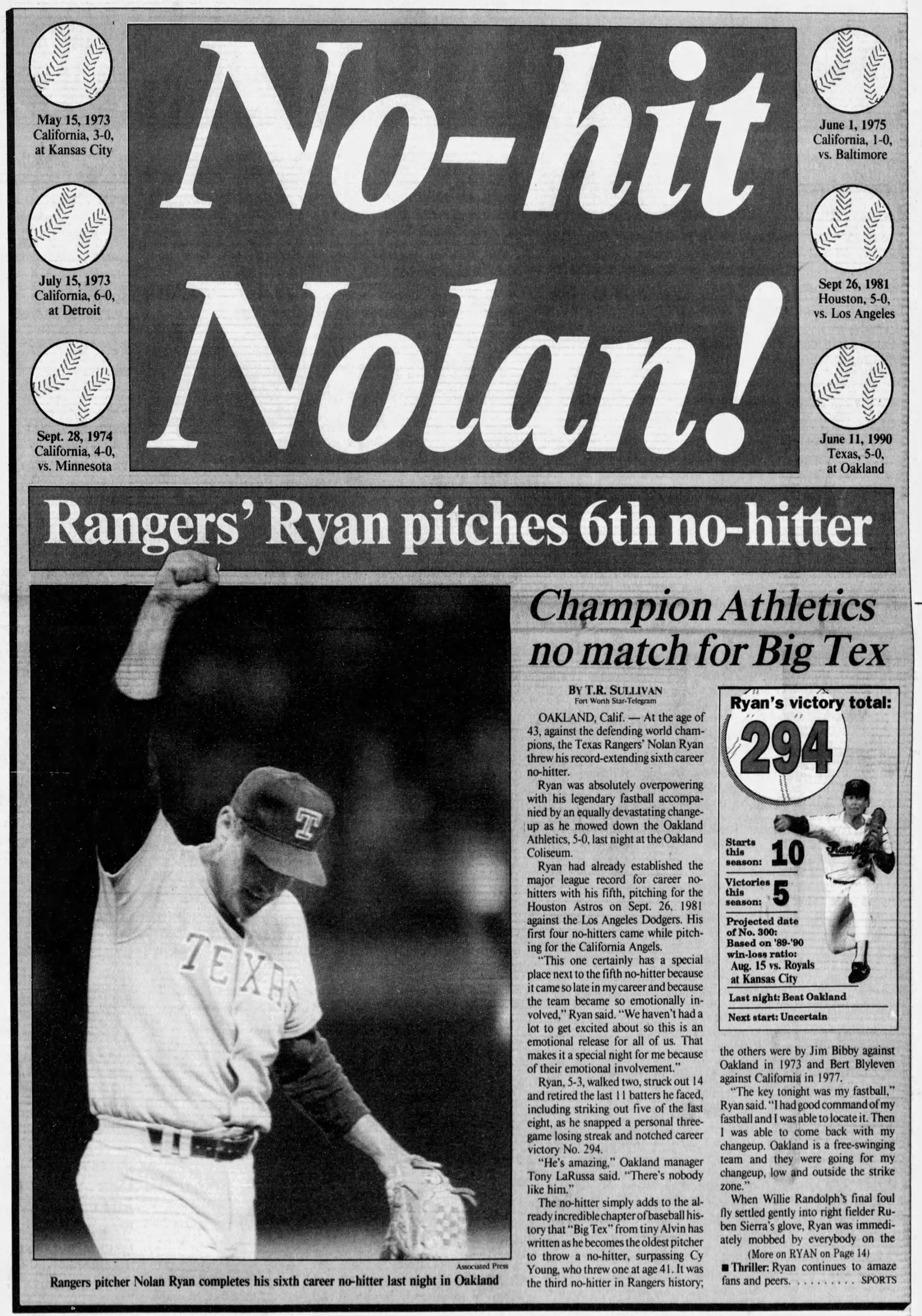
- 1981 Season: Posted an NL-best 1.69 ERA and threw his fifth career no-hitter against the Los Angeles Dodgers on September 26, 1981, breaking Sandy Koufax’s long-standing record.
- 1987 Season: Led the National League in both ERA (2.76) and strikeouts (270) at 40 years old.
Over the course of his Houston contract, Ryan consistently ranked among the league leaders in strikeout rate and hits allowed per nine innings, proving that elite starting pitching offered immense direct value to a franchise's record and attendance figures.
The Ripple Effect: How Ryan’s Deal Transformed Sports Economics
Crossing the million-dollar line broke a long-standing psychological barrier for franchise owners, player agents, and executive front offices. Once Nolan Ryan demonstrated that a team could pay a player seven figures annually while remaining financially sound, the market adjusted rapidly.
1. Escalation of Average Player Salaries
In 1979, the average MLB salary hovered around $113,000. By 1989, just ten years after Ryan signed his deal, the average player salary had jumped to over $490,000. By 1992, average salaries topped $1 million across the entire league—meaning the average bench player earned what only the premier superstar in the game had commanded a decade earlier.
2. Emergence of Powerful Player Representation
Ryan’s negotiations underscored the growing importance of skilled legal representatives and player agents, such as Dick Moss, who represented Ryan during his free agency push. Agents realized that television broadcasting rights revenues were swelling league coffers, and they aggressively pursued a larger share of that revenue for their clients.
3. Expansion into Other Professional Leagues
Ryan’s contract resonated beyond baseball. The National Football League (NFL), National Basketball Association (NBA), and National Hockey League (NHL) soon saw their own star players demand million-dollar compensation packages. The standard for top-tier professional athletes shifted permanently from regional wage structures to global entertainment-tier salaries.
Frequently Asked Questions
Was Nolan Ryan the highest-paid athlete in the world in 1980?
While Nolan Ryan became baseball's highest-paid player and the first to average $1 million annually in team sport base salary, high-profile individual athletes like heavyweight boxers (such as Muhammad Ali) earned larger single-event purses. However, Ryan sat at the very top of team-sports earnings in 1980.
Why did the California Angels allow Nolan Ryan to leave in free agency?
Angels General Manager Emile "Buzz" Bavasi felt Ryan’s win-loss record (often affected by low run support and defensive errors) did not justify a record-setting contract. Bavasi believed Ryan's production could be replaced by multiple lower-cost pitchers—a strategic calculation that proved to be a major misjudgment given Ryan's continued dominance in Houston.
How much would Nolan Ryan’s $1.125 million annual contract be worth today?
Adjusted purely for general consumer price index (CPI) inflation, $1.125 million in 1979 equates to roughly $4.5 million to $5 million per year in 2026 dollars. However, when measured against the massive growth of overall sports entertainment revenue and modern MLB payrolls, Ryan's salary relative to league revenue would match top-tier star contracts worth $30 million to $40 million per year today.
Who was the first baseball player to reach $5 million and $10 million per year?
Bobby Bonilla became the first MLB player to earn an average annual salary of $5 million when he signed a five-year, $29 million contract with the New York Mets in December 1991. Albert Belle became the first player to reach $10 million per year when he signed a five-year, $55 million contract with the Chicago White Sox in 1996.
How many total years did Nolan Ryan pitch in Major League Baseball?
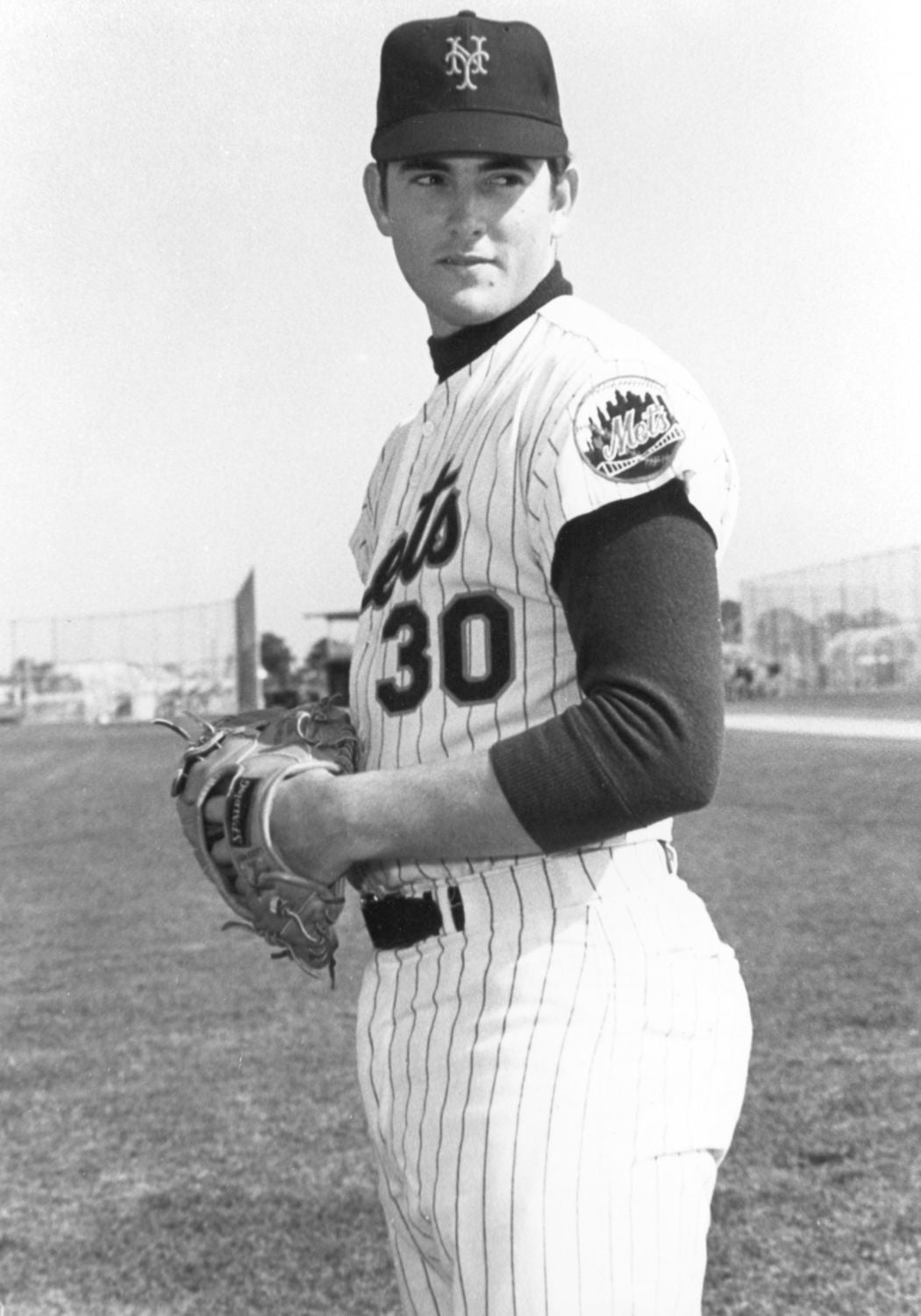
Nolan Ryan pitched a record 27 seasons in Major League Baseball, playing from 1966 through 1993 for four teams: the New York Mets, California Angels, Houston Astros, and Texas Rangers. He retired with 5,714 career strikeouts and seven career no-hitters—both MLB records that stand to this day.
The Legacy of Nolan Ryan's Financial Breakthrough
Nolan Ryan’s 1979 deal with the Houston Astros stands as a definitive benchmark in sports history. It proved that free agency, combined with open market bidding, would accurately price elite talent based on commercial and competitive value. By establishing the $1 million threshold, Ryan did more than secure his personal future; he unlocked a new economic landscape for generations of professional athletes who followed.
Looking back across decades of sports business growth, Ryan's contract remains a pivotal bridge between the low-wage reserve clause era of early baseball and the modern billion-dollar industry of contemporary sports.
Image Gallery