The Investment Gains from a Universal Life Policy Explained
Investment gains in a universal life (UL) policy accrue through the growth of the policy's cash value, which is credited with interest or market-linked returns. Depending on the policy type—fixed, indexed, or variable—these gains accum...
Investment gains in a universal life (UL) policy accrue through the growth of the policy's cash value, which is credited with interest or market-linked returns. Depending on the policy type—fixed, indexed, or variable—these gains accumulate on a tax-deferred basis, providing a flexible financial tool for long-term wealth accumulation and supplemental retirement income.
Contents
Universal life insurance represents a significant evolution in permanent life insurance, moving away from the rigid structures of whole life toward a more modular design. To understand the investment gains from a universal life policy, one must first view the policy as two distinct parts: a term insurance component (the death benefit) and a cash accumulation account. As of 2026, these policies remain a staple in sophisticated financial planning because they allow the policyholder to unbundle the cost of insurance from the investment performance.
The Mechanics of Cash Value Accumulation
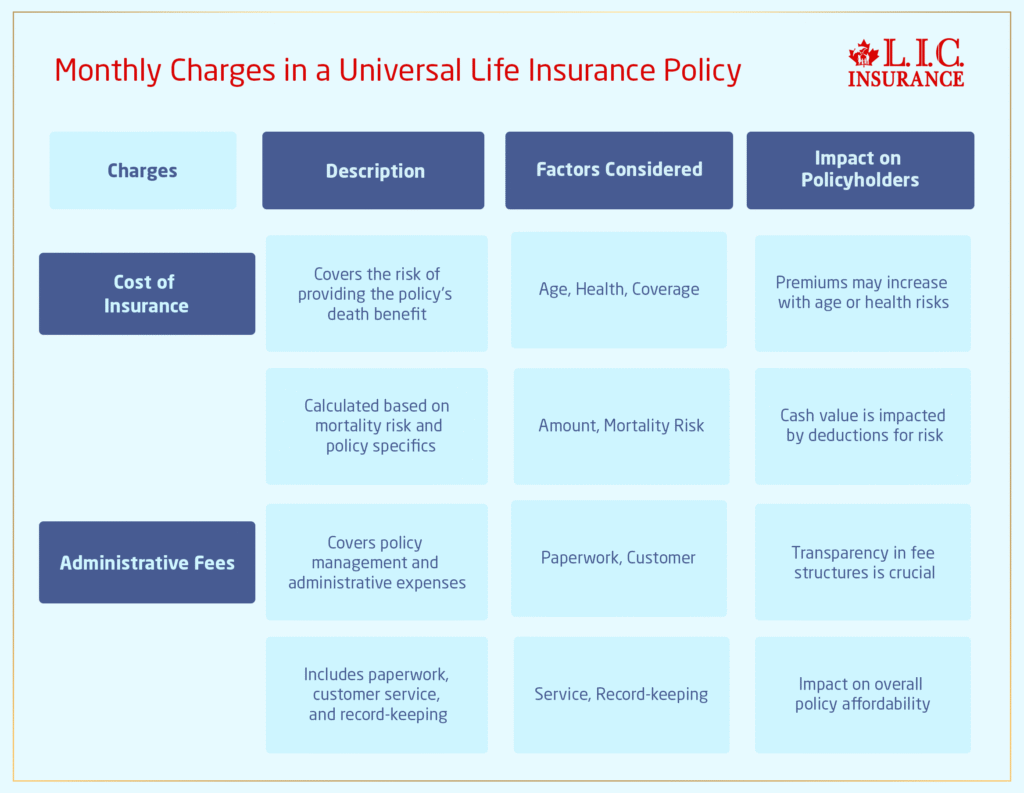
The core of a universal life policy's investment potential lies in its cash value account. When a policyholder pays a premium, the insurance company deducts the current cost of insurance (COI) and administrative fees. The remaining balance is deposited into the cash value account, where it begins to earn interest or investment returns.
Unlike traditional savings accounts, the "gains" in a UL policy are not just the interest earned but the compounding effect of tax-deferred growth. Because the internal revenue code (specifically Section 7702) treats these as life insurance products, the growth within the account is not taxed as long as it remains inside the policy. This allows the principal and the interest to compound more efficiently than in a taxable brokerage account.
The crediting of these gains varies significantly by the specific type of universal life policy chosen. Each offers a different risk-reward profile, ranging from conservative fixed-rate accounts to aggressive, market-exposed sub-accounts.
Fixed Universal Life: Stability and Guaranteed Minimums
In a traditional or "fixed" universal life policy, investment gains are derived from a declared interest rate set by the insurance company. This rate is usually influenced by the insurer’s general account performance, which is heavily invested in high-quality corporate bonds, mortgages, and government securities.
The Crediting Rate vs. The Guaranteed Rate
Fixed UL policies feature two distinct interest rates: the current crediting rate and the guaranteed minimum rate. As of 2026, while market fluctuations occur, most carriers maintain a guaranteed floor (often between 1% and 3%). Even if the broader economy enters a period of extreme volatility, the investment gains on a fixed UL policy will never drop below this floor.
The current crediting rate is typically higher than the floor and is adjusted periodically (usually annually) by the carrier. This provides a predictable, albeit often modest, growth trajectory suitable for individuals prioritizing capital preservation over high-octane growth.
Indexed Universal Life (IUL): Capturing Market Upside
Indexed Universal Life (IUL) has become one of the most popular vehicles for investment gains due to its "best of both worlds" approach. In an IUL policy, the investment gains are not earned through direct investment in the stock market. Instead, the gains are credited based on the performance of a specific financial index, such as the S&P 500 or the Nasdaq-100.
Caps, Floors, and Participation Rates
The gains in an IUL are governed by three primary levers:
- The Floor: This is the most attractive feature for risk-averse investors. Most IULs offer a 0% floor, meaning that even if the underlying index drops by 20%, the cash value does not lose principal. The "gain" for that year is simply zero.
- The Cap: To pay for the floor, insurance companies limit the maximum gain. If the S&P 500 rises by 15% but the policy has a 10% cap, the investment gain credited to the policy is 10%.
- The Participation Rate: This determines what percentage of the index's gain the policyholder receives. If the participation rate is 80% and the index grows by 10%, the gain is 8%.
These mechanisms create a "staircase" growth pattern: the policy captures a portion of the market’s gains during bull years but levels off during bear years, preventing the "reset" of progress that often plagues direct market investments.
Variable Universal Life (VUL): Maximum Growth Potential
For investors seeking the highest possible investment gains, Variable Universal Life (VUL) allows for direct investment in sub-accounts. These sub-accounts function similarly to mutual funds, offering exposure to stocks, bonds, real estate, and money markets.
Because the policyholder's cash value is directly invested in these securities, the investment gains are not capped. If the selected sub-accounts perform exceptionally well, the cash value can grow much faster than in a fixed or indexed policy. However, VULs lack the protection of a floor. If the market crashes, the cash value can decrease, and if it drops too far, the policyholder may be required to pay higher premiums to keep the policy from lapsing.
In 2026, VULs remain under the jurisdiction of both state insurance departments and the Securities and Exchange Commission (SEC), as they are considered securities products.
Comparison of Investment Gain Mechanisms
The following table summarizes how investment gains are calculated and protected across the three primary types of universal life insurance.
| Policy Type | Primary Source of Gains | Risk Level | Upside Potential | Downside Protection |
|---|---|---|---|---|
| Fixed UL | Declared Interest Rate | Low | Low (Stable) | Guaranteed Floor (1-3%) |
| Indexed UL | Market Index Performance | Moderate | Moderate (Capped) | 0% Floor Protection |
| Variable UL | Sub-account Performance | High | Unlimited | None (Market Risk) |
The Impact of Fees on Net Investment Gains
It is a common mistake to view the "crediting rate" as the "net return." In any universal life policy, the actual investment gains are net of various internal costs. To calculate the real growth, one must subtract the following:
- Cost of Insurance (COI): This is the fee for the death benefit. As the insured person ages, the COI increases. If the investment gains do not outpace the rising COI, the cash value will eventually begin to dwindle.
- Premium Load: Many carriers deduct a percentage (often 5-10%) of every premium dollar paid before it ever hits the cash value account.
- Surrender Charges: During the first 10 to 15 years of a policy, withdrawing the investment gains can trigger steep surrender fees, which can wipe out years of growth.
- Mortality and Expense (M&E) Risks: These fees cover the insurance company's risk and administrative overhead.
Understanding these fees is vital for assessing the Internal Rate of Return (IRR) of the policy over a 20- or 30-year horizon.
Tax Advantages and the "7-Pay Test"
The investment gains in a universal life policy enjoy a unique tax status in the United States. Under current tax laws in 2026, these gains are:
- Tax-Deferred: You do not pay capital gains or income tax on the growth annually.
- Tax-Free Access (FIFO): Withdrawals are generally treated on a "First-In, First-Out" basis. You can withdraw your principal (basis) tax-free.
- Policy Loans: Once you have exhausted your basis, you can access the investment gains via policy loans. These loans are not considered taxable income by the IRS, provided the policy remains in force.
However, to prevent these policies from being used purely as tax shelters, the IRS enforces the 7-Pay Test. If you fund the policy too quickly (exceeding specific limits within the first seven years), it becomes a Modified Endowment Contract (MEC). Once a policy is a MEC, the investment gains are taxed on a LIFO (Last-In, First-Out) basis, and withdrawals before age 59½ may incur a 10% penalty, similar to an IRA.
Strategic Uses of Accumulated Gains
Policyholders who have successfully managed their universal life policies for decades often use the investment gains for specific financial goals:
Supplemental Retirement Income
By utilizing policy loans and tax-free withdrawals of the basis, retirees can generate a stream of income that does not increase their taxable income. This can be particularly useful for staying in a lower tax bracket or avoiding higher Medicare Part B premiums.
Infinite Banking and Liquidity
The "cash value" can act as a private bank. Policyholders can borrow against their investment gains to fund business ventures, real estate purchases, or education. While the loan is outstanding, the insurance company often continues to credit interest on the full cash value (including the borrowed portion), a concept known as "arbitrage."
Long-Term Care (LTC) Riders
Many modern UL policies allow the policyholder to "accelerate" the death benefit or use the accumulated gains to pay for long-term care expenses. This adds a layer of health protection to the investment growth.
Common Risks and Troubleshooting
While the investment gains from a universal life policy are attractive, they are not guaranteed to perform as illustrated at the time of purchase.
- Low-Interest Rate Environments: If market interest rates stay lower than the "illustrated" rates for a long time, fixed UL policies may not grow as expected.
- Rising Costs of Insurance: If the cash value growth is too slow, the rising COI may require the policyholder to inject more cash into the policy just to keep it from lapsing.
- Policy Lapse: If a policy lapses with outstanding loans that exceed the basis, the IRS treats those loans as "forgiven debt," resulting in a massive, unexpected tax bill on all the investment gains earned over the life of the policy.
Note: This article is for informational purposes and does not constitute financial, legal, or tax advice. Consult with a licensed financial professional and tax advisor regarding your specific situation.
Frequently Asked Questions
Can I lose money in a universal life policy?
Yes, depending on the type. In a Variable Universal Life (VUL) policy, you can lose principal if the underlying sub-accounts perform poorly. In Fixed and Indexed Universal Life (IUL), your principal is generally protected by a floor, but the cash value can still decrease if the annual fees and cost of insurance exceed the interest credited to the account.
How are investment gains in a UL policy taxed?
Gains are tax-deferred while they remain in the policy. You can withdraw your original premiums (basis) tax-free. If you take a loan against the gains, it is also tax-free, provided the policy remains active until the death of the insured. If the policy is surrendered or lapses, the gains become taxable as ordinary income.
What is the difference between a crediting rate and an internal rate of return (IRR)?
The crediting rate is the gross interest the insurance company applies to your cash value. The IRR is the "real" return you receive after all insurance costs, administrative fees, and premium loads are subtracted. It is common for a policy with a 6% crediting rate to have a much lower actual IRR.
Is an Indexed Universal Life (IUL) policy better than a 401(k)?
Neither is "better" in a vacuum; they serve different purposes. A 401(k) often provides a company match and allows for direct market participation with lower fees. An IUL provides a death benefit and downside protection (the floor) that a 401(k) lacks. Many financial planners suggest using IUL as a complementary tool rather than a replacement for traditional retirement accounts.
How do surrender charges affect my gains?
Surrender charges are penalties for canceling a policy early, usually within the first 10-15 years. These charges can be so high that they exceed the total investment gains, meaning you might receive less than you paid in premiums if you cancel the policy too soon.
Final Recommendations
To maximize the investment gains from a universal life policy, prospective buyers should focus on "maximum funding." By paying in as much premium as the law allows without triggering MEC status, you minimize the relative impact of the cost of insurance and maximize the amount of capital that can compound tax-deferred. Always request an "in-force illustration" every few years to ensure that the current investment gains are still on track to meet your long-term goals and that the policy remains properly funded to avoid a lapse.
Image Gallery