How Much Life Insurance Cover Do I Need Australia Average
Determining how much life insurance cover you need in Australia depends heavily on your debts, living expenses, number of dependents, and existing superannuation balances, though financial advisers commonly suggest a safety net of 10 t...
Determining how much life insurance cover you need in Australia depends heavily on your debts, living expenses, number of dependents, and existing superannuation balances, though financial advisers commonly suggest a safety net of 10 to 15 times your annual income.
Contents
Navigating the financial security landscape in Australia requires an understanding of how much life insurance cover the average Australian actually holds compared to what they genuinely need. Many individuals rely entirely on the default group life insurance bundled inside their superannuation funds, often without realizing that these baseline policies may leave their families vulnerable in the event of an unexpected tragedy. Calculating the right amount of protection is not about guessing an arbitrary figure; it requires a structured assessment of your financial liabilities, future goals, and dependents' needs. This guide explores the factors shaping life insurance calculations in the Australian market, outlines standard benchmarks, and provides actionable steps to ensure you are neither underinsured nor paying for excess coverage.
Understanding the Australian Life Insurance Landscape
The Australian life insurance market is unique because a significant portion of the population holds their policies through industry or retail superannuation funds. This structure, known as group life insurance, typically includes death cover and total and permanent disability (TPD) insurance. While this system makes coverage accessible and cost-effective, the default amounts are often calculated using standardized formulas that fail to account for individual lifestyle choices, debt levels, or family structures.
According to data and industry insights from organizations like the Australian Prudential Regulation Authority (APRA) and the Financial Services Council (FSC), the average underinsurance gap in Australia remains substantial. Many households discover too late that their superannuation-held life insurance only provides a fraction of the capital needed to replace a primary earner's income, pay off a modern metropolitan mortgage, and fund future education for children. Recognizing this protection gap is the first step toward conducting a personalized assessment rather than relying on a generalized national average.
The Core Methodology: Calculating Your Coverage Needs
To move beyond generic averages, you must evaluate your specific financial obligations using a structured needs-analysis approach. This method involves tallying your total immediate liabilities, ongoing income replacement requirements, and future capital expenses, then subtracting your existing liquid assets and current insurance policies.
1. Immediate Debt Liquidation
The first component of any comprehensive life insurance calculation is clearing all outstanding debts. Upon a policyholder's death, surviving family members should not be burdened with servicing major loans on a reduced household income.
- Mortgage Balance: The largest debt for most Australian households is the home loan. The policy payout should ideally clear the remaining principal in full.
- Other Personal Debts: Car loans, credit card balances, personal loans, and tax liabilities must also be factored into the immediate cash-needs total.
2. Income Replacement for Dependents
If your spouse, partner, or children rely on your income to maintain their standard of living, your life insurance must bridge the financial gap until your dependents become financially independent. Financial planners typically calculate this by multiplying your annual contribution to household expenses by the number of years your dependents will require support. For example, if you have young children, you may need income replacement for 15 to 20 years.
3. Future Capital Expenses
Beyond day-to-day living costs and mortgage payments, consider major anticipated future expenses that would otherwise fall squarely on your surviving partner:
- Children’s Education: Private school fees or university funding costs across multiple children can accumulate rapidly.
- Final Expenses: Funeral, burial, or cremation costs, along with associated legal and estate administration fees, typically range from $5,000 to $15,000 in Australia.
4. Offsetting Existing Assets
Once you have calculated your total financial need, subtract your current liquid assets. This includes savings accounts, shares, investment properties (if intended to be sold), and existing life insurance policies held inside or outside of superannuation. The resulting figure is your net insurance requirement.
Benchmark Comparison: Average Cover vs. Recommended Cover
Evaluating how standard default policies stack up against comprehensive calculations highlights the risk of relying strictly on baseline superannuation coverage.
| Life Insurance Component | Default Superannuation Cover | Comprehensive Personal Cover |
|---|---|---|
| Typical Payout Amount | Often $50,000 to $200,000 (varies by fund) | 10x to 15x annual income plus total debt |
| Primary Purpose | Basic baseline protection for fund members | Full family financial security and debt elimination |
| Cost Structure | Deducted automatically from super contributions | Premium paid from super or personal cash flow |
| Customization | Low; strict fund-level tier structures | High; tailored to exact debt and family milestones |
Factors That Influence Your Personal Life Insurance Requirement
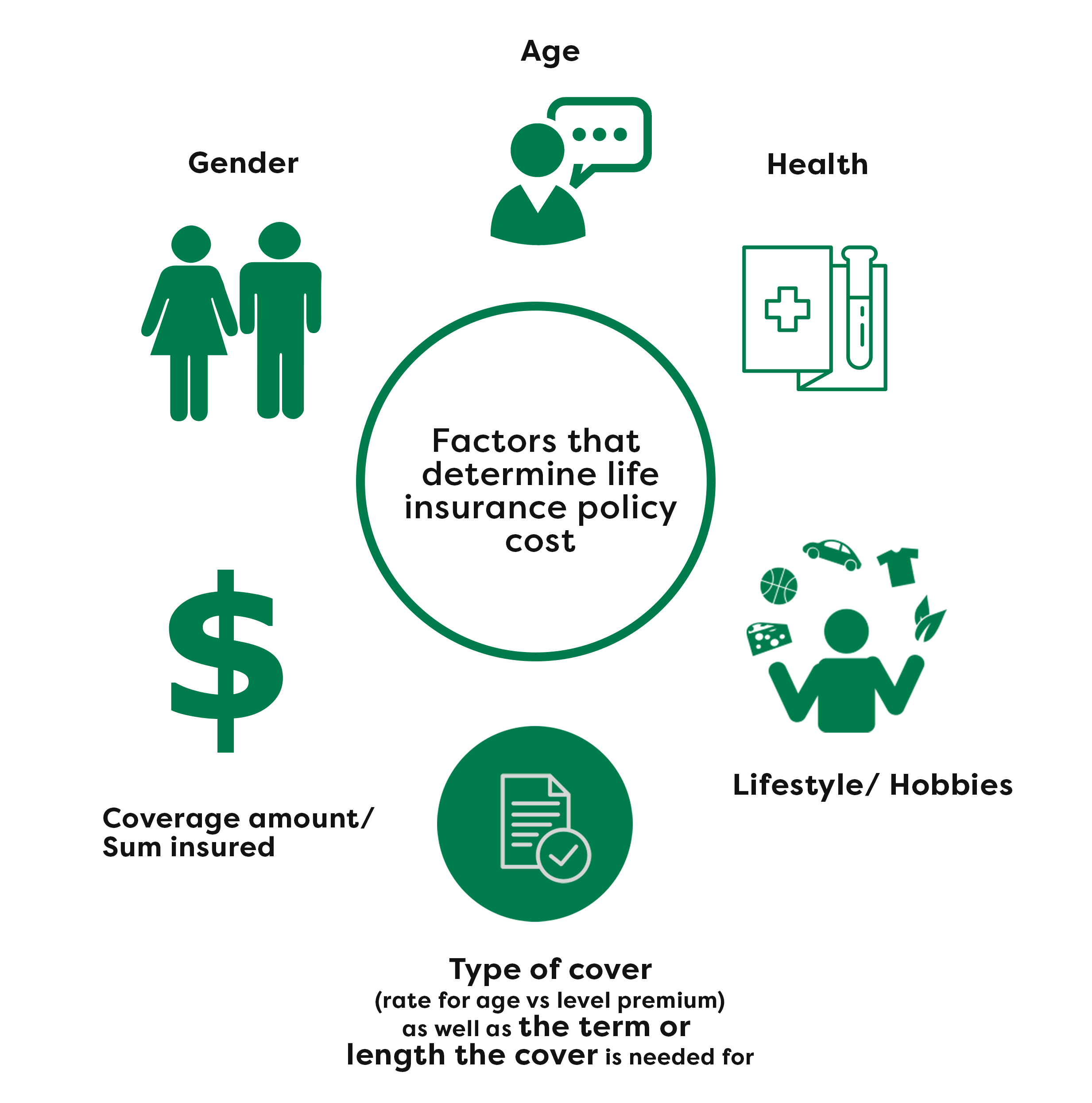
Every individual’s life insurance calculation is shaped by distinct demographic and lifestyle variables. Understanding these factors ensures your policy remains accurately calibrated as your circumstances evolve.
Age and Career Stage
Young professionals without dependents often require minimal life insurance, focusing primarily on income protection or total and permanent disability cover rather than large death benefits. Conversely, individuals in their 30s and 40s with young families and large mortgages generally face peak insurance requirements. As you approach retirement and your mortgage diminishes while children become financially independent, your required death cover naturally decreases.
Number of Dependents and Partner's Earning Capacity
The financial impact of losing a breadwinner depends heavily on the surviving partner's ability to re-enter the workforce or maintain their current employment. Dual-income households with high earning capacities require less income replacement insurance than single-income households where one partner stays home to care for young children.
Cost of Living and Geographic Location
Living expenses vary significantly across Australia. Servicing a multi-million-dollar mortgage in Sydney or Melbourne requires a substantially higher death benefit than covering a modest property footprint in regional areas or smaller capital cities.
How to Check Your Current Superannuation Insurance
Before purchasing standalone retail insurance, examine what you already own. Most Australian superannuation funds allow members to log into their online member portals to view their insurance status, level of cover, and premium deductions.
When reviewing your superannuation insurance, check whether the policy is units-based or fixed-benefit. Units-based cover decreases as you age, which can leave you underinsured during your peak financial liability years. Furthermore, ensure you understand the definition of total and permanent disability attached to your policy, as definitions can vary between "any occupation" and "own occupation," directly impacting your likelihood of a successful payout.
Common Mistakes to Avoid When Buying Life Insurance
Navigating life insurance policies can lead to costly errors if proper care is not taken during the application and review process.
- Underestimating Inflation: Failing to account for inflation over a 15-to-20-year payout period means your beneficiaries' purchasing power will steadily decline. Look for policies with indexation options.
- Ignoring TPD and Income Protection: Focusing exclusively on death cover leaves you unprotected if a serious accident or illness prevents you from working while you are still alive. A robust safety net typically combines life insurance, TPD, and income protection.
- Failing to Disclose Medical History: Non-disclosure during the underwriting stage is a primary reason claims are contested or denied. Always provide complete and accurate health and lifestyle information.
- Not Reviewing Policies After Major Life Events: Buying a policy and never touching it again is a major risk. Review your coverage whenever you buy a home, marry, have a child, or change jobs.
Next Steps and Professional Guidance
Determining your exact life insurance needs requires balancing complex mathematical calculations with personal family goals. While online calculators and industry rules of thumb provide helpful starting points, every household’s financial architecture is unique.
Consider speaking with a licensed financial adviser in Australia who can perform a comprehensive statement of advice (SOA) tailored to your exact asset portfolio, tax obligations, and family requirements. Alternatively, contact your superannuation fund to request a review of your current group insurance bindings and explore upgrade options if your liabilities exceed the default limits.
Image Gallery