Understanding Botox for Spasmodic Dysphonia: Procedure, Efficacy, and Management
Botox injections into the vocal folds serve as the primary, evidence-based treatment for spasmodic dysphonia, a neurological voice disorder that causes involuntary spasms in the muscles of the larynx. By temporarily blocking nerve impu...
Botox injections into the vocal folds serve as the primary, evidence-based treatment for spasmodic dysphonia, a neurological voice disorder that causes involuntary spasms in the muscles of the larynx. By temporarily blocking nerve impulses to these targeted muscles, the treatment reduces strain and breathiness, enabling clearer speech and improved communication for affected individuals.
Contents
Defining Spasmodic Dysphonia and the Role of Botulinum Toxin
Spasmodic dysphonia (SD) is a focal dystonia affecting the laryngeal muscles during speech. It is a chronic, neurological condition characterized by involuntary spasms of the vocal cords. While whispering, singing, or laughing may remain unaffected, normal conversational speech often sounds strained, strangled, breathy, or whispery. Because the underlying neurological signaling originates in the central nervous system, traditional speech therapy alone rarely resolves the physiological spasms, necessitating medical intervention.
Botulinum toxin—commonly known as Botox—acts as a localized neuromuscular blocking agent. When administered in precise micro-doses to the intrinsic muscles of the larynx, it temporarily interrupts the release of acetylcholine at the neuromuscular junction. This localized intervention prevents the overactive laryngeal muscles from contracting too forcefully or inappropriately. Consequently, the procedure reduces the severity of vocal spasms, restores a smoother airflow, and alleviates the physical effort required to speak.
The treatment does not cure spasmodic dysphonia; rather, it provides temporary symptom management. Because the nerve endings eventually regenerate and re-establish communication with the muscle fibers, the therapeutic effects wear off gradually over time. Patients require periodic injections to maintain vocal quality, making long-term management a collaborative, ongoing relationship between the patient, an otolaryngologist (ear, nose, and throat specialist), and a speech-language pathologist.
Subtypes of Spasmodic Dysphonia and Treatment Variations
Spasmodic dysphonia manifests in distinct clinical subtypes, and the precise administration of botulinum toxin depends entirely on which muscle groups are affected. Recognizing these variations is critical for achieving optimal phonetic outcomes and minimizing unwanted side effects.
Adductor Spasmodic Dysphonia
Adductor SD is the most common form, accounting for roughly 80% to 90% of all diagnoses. In this subtype, the vocal folds slam together too tightly and irregularly during speech. This results in a voice that sounds strained, squeezed, or choked, often with abrupt voice breaks on vowel sounds.
For adductor SD, Botox injections are typically administered bilaterally or unilaterally into the thyroarytenoid muscles (the primary vocal fold adductors). Relaxing these muscles prevents them from clamping shut prematurely, allowing air to pass smoothly between the folds during phonation.
Abductor Spasmodic Dysphonia
Abductor SD is less common, representing about 10% to 15% of cases. Instead of clamping shut, the vocal folds open inappropriately during speech, causing prolonged periods of breathiness, whispering, or complete loss of voice.
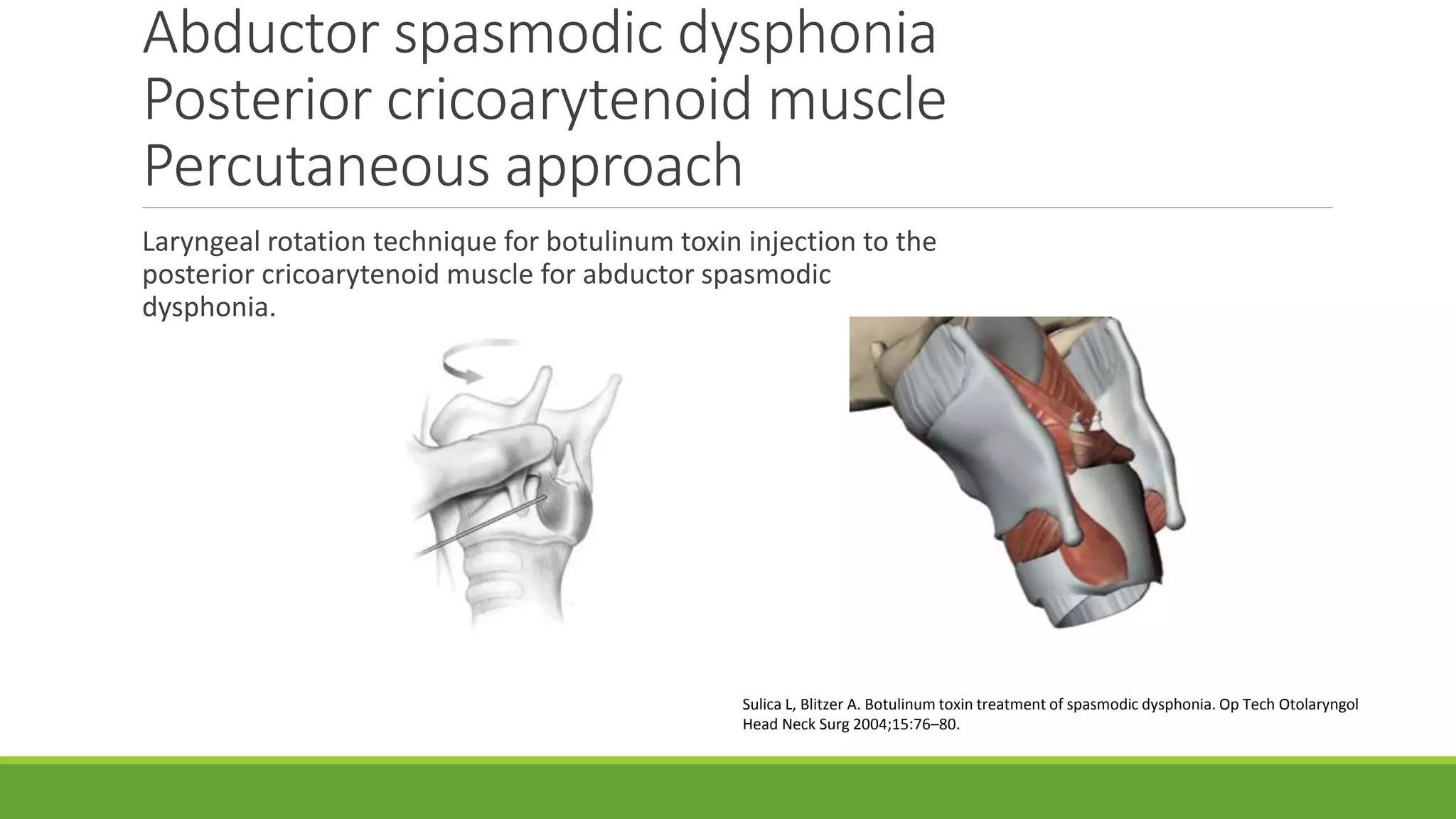
Treatment for abductor SD involves injecting the toxin into the posterior cricoarytenoid muscles, which are the only muscles responsible for opening the vocal folds. Relaxing these openers prevents them from pulling the vocal cords apart at the wrong time, helping the folds come together properly to produce sound.
Mixed Spasmodic Dysphonia
In rare instances, patients exhibit symptoms of both adductor and abductor types. Managing mixed spasmodic dysphonia requires extreme clinical precision, as the physician must carefully balance the relaxation of opposing muscle groups. Treatment plans for mixed presentations are highly individualized and adjusted based on regular post-injection evaluations.
The Injection Procedure: What to Expect
Undergoing a laryngeal Botox injection requires specialized clinical expertise and precise anatomical guidance. Understanding the step-by-step procedure helps alleviate anxiety and prepares patients for what happens inside the clinical suite.
Pre-Procedure Evaluation and Diagnosis
Before any treatment occurs, a comprehensive evaluation must be performed by a multidisciplinary team, typically including a laryngologist and a speech-language pathologist. Diagnosis relies on fiberoptic laryngoscopy or videostroboscopy to visualize the vocal folds in real time while the patient speaks. This visualization rules out other vocal cord pathologies, such as nodules, polyps, or vocal fold paralysis, which can mimic the symptoms of spasmodic dysphonia.
Administration Techniques
The injection itself is typically performed in an outpatient clinic setting without general anesthesia, as the patient’s active voice is required to verify muscle targeting. Two primary guidance methods are utilized:
- Electromyographic (EMG) Guidance: A specialized needle electrode is inserted through the skin of the neck into the targeted laryngeal muscle. The physician listens to the audio feedback of the electrical activity to confirm exact placement before delivering the medication.
- Ultrasonography or Fiberoptic Guidance: Real-time imaging allows the physician to visualize the laryngeal structures externally or internally, ensuring pinpoint accuracy.
The procedure takes only a few minutes, though the preparation and post-injection monitoring add to the total visit time. Patients remain awake and can resume most normal daily activities immediately afterward.
Efficacy, Timeline, and Longevity of Results
The therapeutic journey with Botox for spasmodic dysphonia follows a predictable biological timeline. Patients must navigate an adjustment period as the medication takes effect and gradually wears off.
| Phase | Typical Timeline & Characteristics |
|---|---|
| Immediate Post-Injection | Days 1–3: Mild throat discomfort or temporary breathiness/weakness. |
| Peak Efficacy | Weeks 2–6: Optimal vocal clarity and reduced strain. |
| Tapering Effect | Weeks 8–12: Gradual return of original spasmodic symptoms. |
| Maintenance Cycle | Every 3–6 Months: Scheduled follow-up injections based on individual response. |
During the first few days following an adductor injection, patients frequently experience a temporary period of breathy voice or mild dysphagia (difficulty swallowing), particularly with thin liquids. This occurs because relaxing the vocal folds also temporarily reduces their ability to completely seal off the airway during swallowing. As the medication settles—usually within one to two weeks—the voice reaches its peak clarity, offering a significant reduction in vocal strain.
The duration of the effect varies by individual metabolic response and dosage. On average, the benefits last between three and four months. As nerve terminals sprout new connections, the vocal spasms slowly return. Establishing a predictable maintenance schedule requires tracking the precise window of efficacy so subsequent appointments can be booked before the voice deteriorates entirely.
Potential Side Effects and Risk Management
While botulinum toxin injections for spasmodic dysphonia have a strong safety profile when administered by experienced laryngologists, potential side effects do occur due to the close anatomical proximity of the larynx to swallowing and respiratory pathways.
- Breathy Dysphonia: An overly breathy voice or whispered quality is common during the first week or two post-injection, particularly if the initial dose is slightly too high for the patient's specific muscle mass.
- Transient Swallowing Difficulties: Temporary aspiration or coughing when drinking thin liquids can occur if the vocal folds fail to close tightly enough during a swallow. Patients are often advised to take smaller sips, thicken liquids temporarily, or tuck their chin when swallowing during the peak weakness phase.
- Mild Neck Discomfort: Localized soreness or minor bruising at the needle insertion site on the anterior neck is normal and typically resolves within 48 hours.
- Voice Loss or Fatigue: In rare cases, temporary vocal fatigue may occur, requiring the patient to limit prolonged speaking engagements until the initial adjustment period passes.
Managing these risks involves close titration of the dosage. Physicians routinely start with conservative dose amounts during the initial treatment session and incrementally adjust the units based on the patient's functional feedback during subsequent visits.
Complementary Therapies and Holistic Management
Botox is rarely deployed in isolation. To maximize communication efficacy, patients often integrate complementary support systems into their treatment plans.
Voice Therapy
Speech-language pathologists specializing in upper airway disorders play a vital role in the management continuum. Following an injection, voice therapy helps patients unlearn maladaptive compensatory behaviors developed over years of struggling with spasms. Therapy focuses on breath support, optimal resonance, and maintaining vocal stamina as the Botox effect waxes and wanes.
Psychological Support
Coping with a chronic voice disorder can lead to social isolation, anxiety, and occupational stress. Because the voice is fundamental to human identity and professional life, integrating psychological counseling or joining peer support groups—such as the National Spasmodic Dysphonia Association (NSDA)—can significantly improve overall quality of life and coping resilience.
Frequently Asked Questions
Does Botox cure spasmodic dysphonia?
No, Botox does not cure spasmodic dysphonia. It is a symptomatic, palliative treatment that temporarily interrupts nerve signals to reduce laryngeal muscle spasms. Because the neuromuscular junctions regenerate over time, regular repeat injections are necessary every few months to sustain clear speech.
How long does it take for the voice to return to normal after an injection?
Most patients notice therapeutic changes within 2 to 4 days, with peak vocal clarity achieved around weeks 2 to 6. If a dose causes excessive breathiness or swallowing issues, those side effects typically subside within 10 to 14 days as the initial peak of the medication begins to level off.
Will I lose my voice completely after the procedure?
Complete, permanent loss of voice does not occur from therapeutic laryngeal Botox injections. However, a temporary increase in breathiness or a softer, whispered voice quality is common during the first week or two after an adductor injection. Physicians carefully titrate the dosage to minimize this disruption.
Can anyone with spasmodic dysphonia receive Botox?
Most individuals diagnosed with spasmodic dysphonia are candidates, provided they have a confirmed clinical diagnosis and no contraindications such as neuromuscular junction diseases (e.g., myasthenia gravis), active laryngeal infections, or known hypersensitivity to botulinum toxin products. A comprehensive evaluation by an otolaryngologist is required to determine eligibility.
How much do Botox injections for spasmodic dysphonia cost?
The total cost varies depending on geographic location, clinical facility fees, physician expertise, and insurance coverage. Many health insurance plans and national health services cover botulinum toxin treatments for spasmodic dysphonia when medically necessary, provided the proper pre-authorization documentation is submitted by the treating specialist.
Next Steps for Patients
If you or a loved one suspects spasmodic dysphonia, the essential first step is securing a formal evaluation by an otolaryngologist specializing in voice disorders (laryngologist), ideally working alongside a specialized speech-language pathologist. Prepare for your consultation by documenting when your vocal symptoms began, noting situations that worsen or temporarily improve your voice, and bringing records of previous ear, nose, and throat evaluations. Discussing a tailored management plan that combines botulinum toxin injections with targeted voice therapy offers the most reliable pathway toward restoring functional, confident communication.
Image Gallery