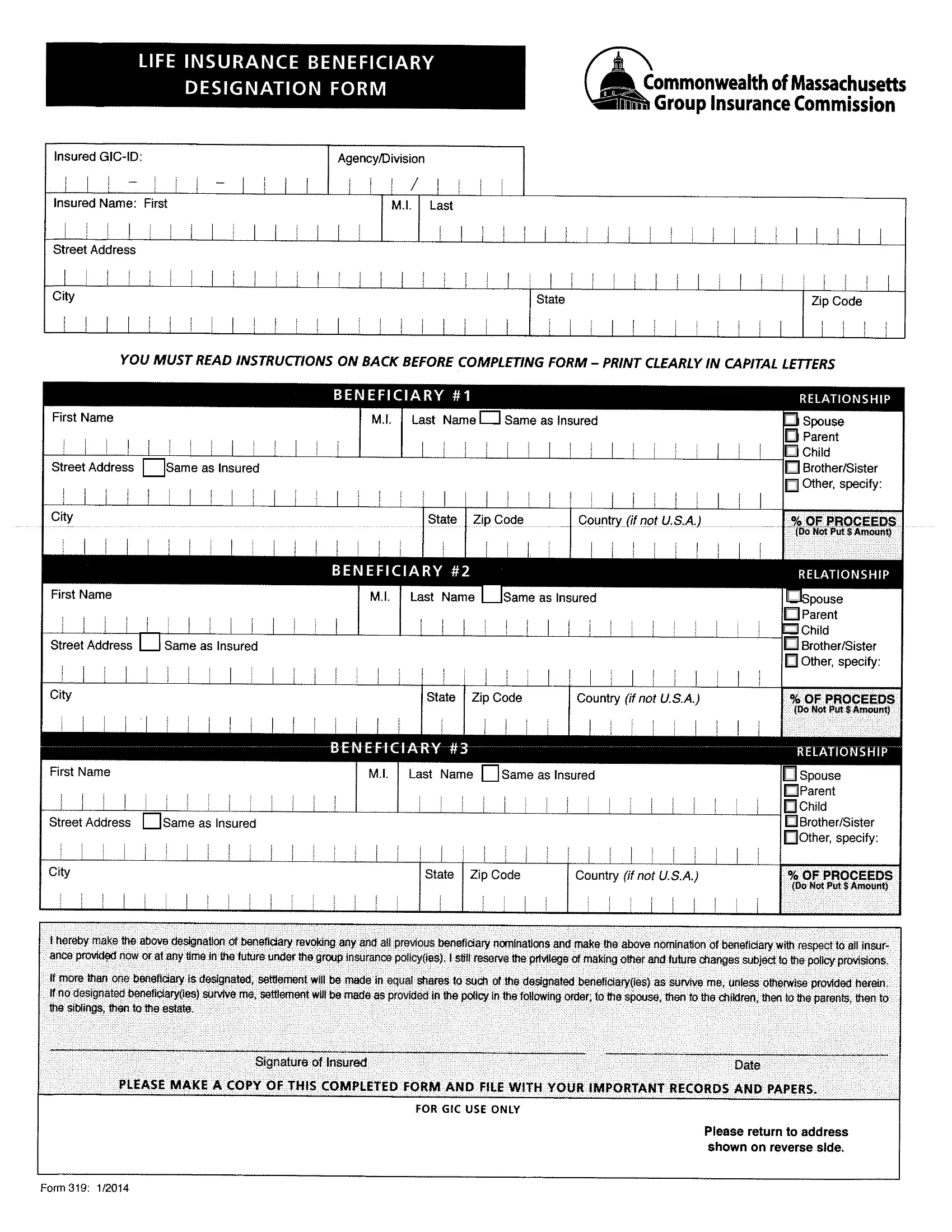
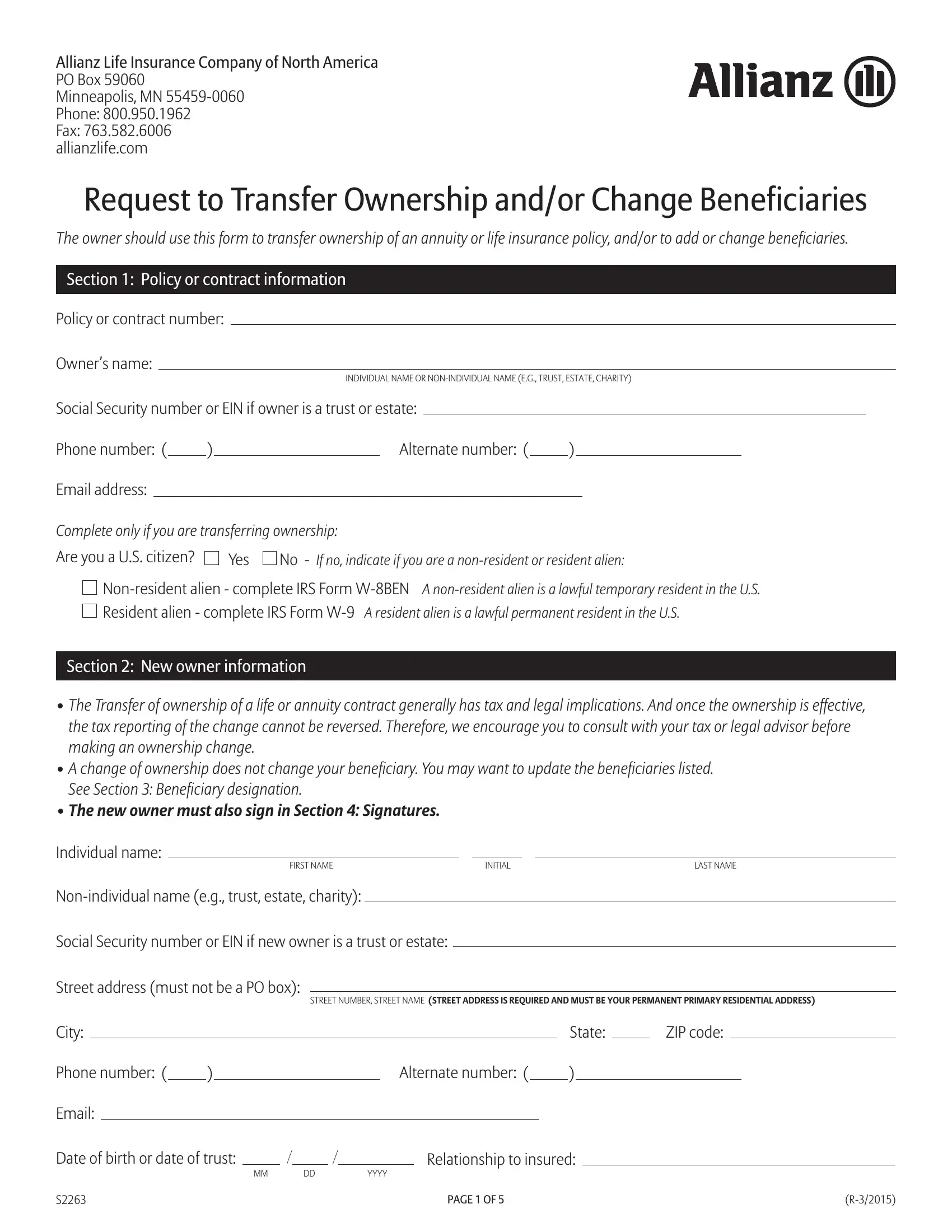
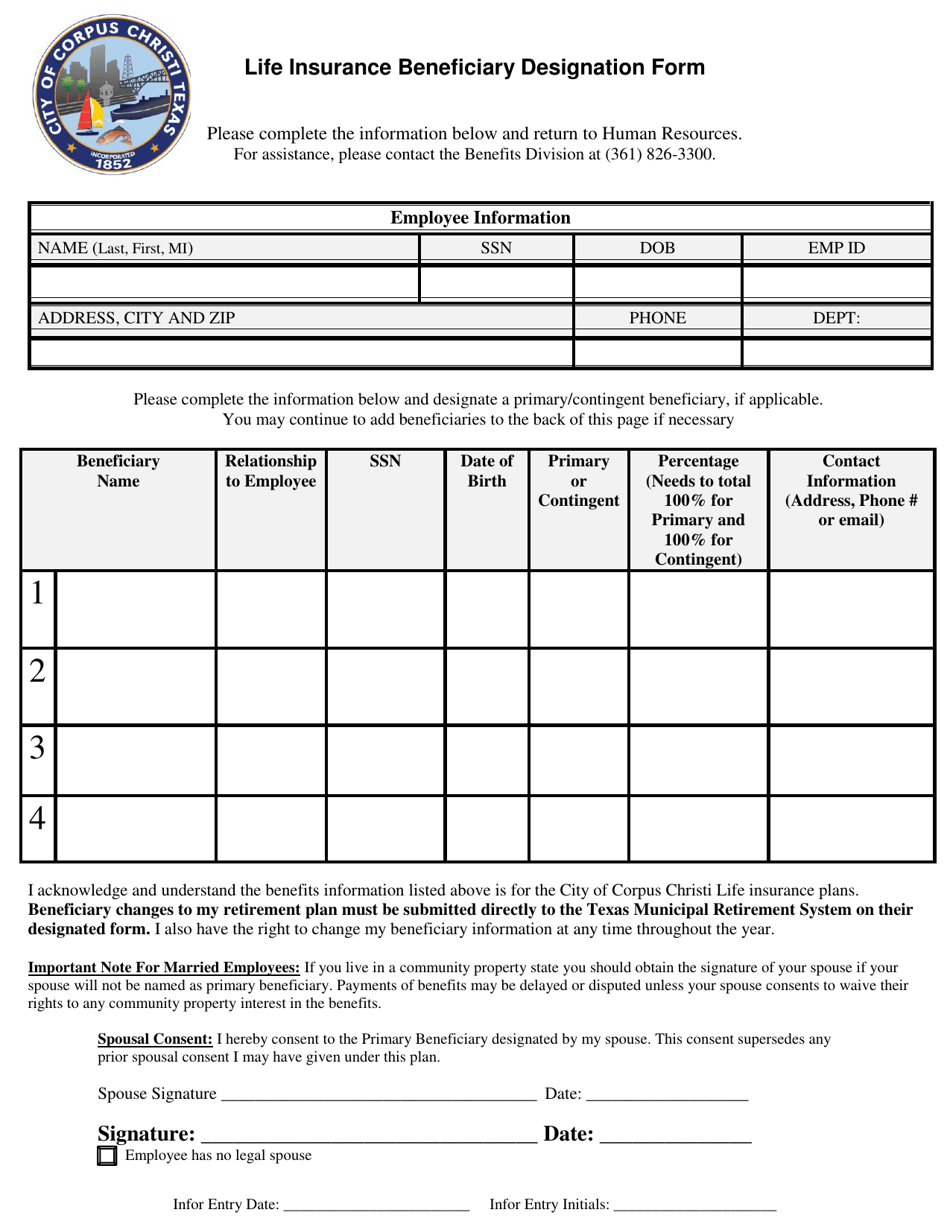
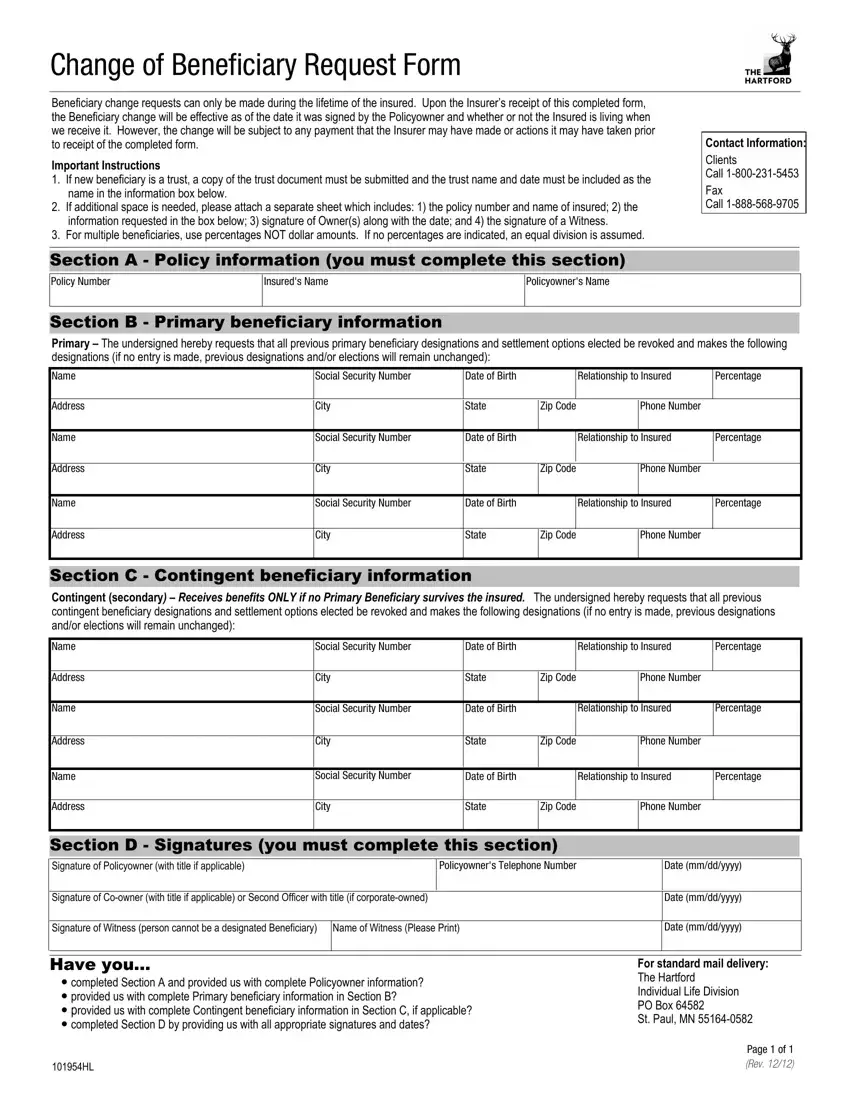
Navigating the Texas Life Insurance Company Change of Beneficiary Form
Updating a life insurance policy requires precision, particularly when executing a Texas life insurance company change of beneficiary form to ensure death benefits transfer to the intended parties without legal complications. Policyown...
Updating a life insurance policy requires precision, particularly when executing a Texas life insurance company change of beneficiary form to ensure death benefits transfer to the intended parties without legal complications. Policyowners frequently need to adjust their primary and contingent designations due to major life events such as marriage, divorce, the birth of children, or the passing of a previously named recipient. Because life insurance contracts function as legal instruments that supersede instructions left in a last will and testament, executing this paperwork correctly is critical. Understanding the administrative requirements, notarization rules, and submission procedures helps prevent delayed payouts and potential probate disputes.
Contents
Understanding the Role and Importance of Beneficiary Designations
A beneficiary designation form dictates who receives the financial proceeds of an insurance policy upon the insured's death. This administrative directive operates independently of a standard will, meaning that if a will names one person while the insurance policy names another, the insurance company is legally bound to disburse funds to the person listed on the official policy record.
When dealing with a Texas life insurance company change of beneficiary form, accuracy is paramount. Insurers process these documents strictly according to internal protocols and state insurance regulations. If a form contains ambiguous language, missing signatures, or conflicting instructions, the carrier may suspend processing or interplead the funds—handing the money over to a court to decide the rightful owner. This can trigger costly legal fees and cause substantial delays for surviving family members during an already difficult time.
Furthermore, designations are generally split into two categories:
- Primary Beneficiaries: The first in line to receive the policy proceeds upon the death of the insured. Multiple primary beneficiaries can be named, and their shares must total exactly 100 percent.
- Contingent (or Secondary) Beneficiaries: Individuals or entities designated to receive the death benefit if all primary beneficiaries have predeceased the insured.
Key Prerequisites Before Completing the Form
Before filling out any modification paperwork, policyowners must gather specific details to ensure the carrier can cleanly execute the update. Attempting to submit incomplete information is one of the leading causes of administrative rejections.
1. Obtain the Correct Company-Specific Document
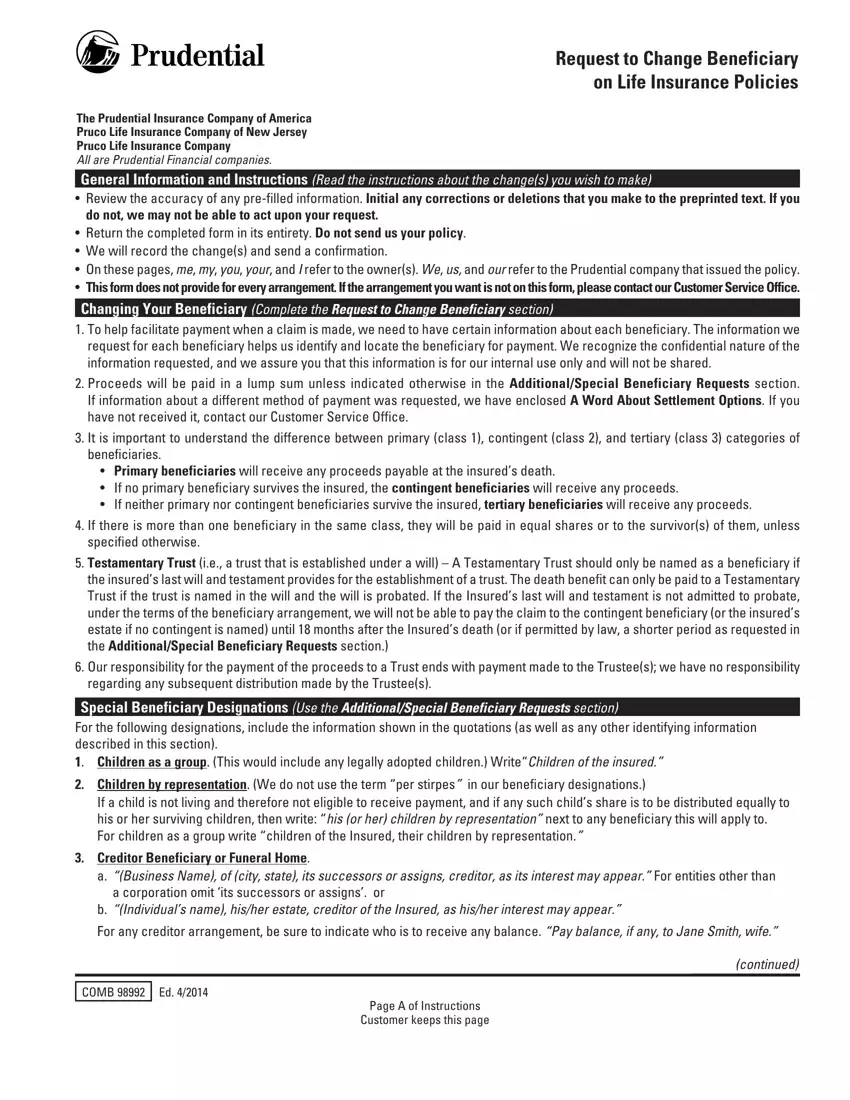
Insurance products are managed by specific underwriting entities, and forms are rarely interchangeable. A policyowner must obtain the exact form corresponding to their specific insurer, often downloadable via the carrier's online customer portal or requested directly through customer service. Generic templates found on independent legal websites will typically be rejected by corporate compliance departments.
2. Verify Policy Ownership Rights
Only the legal owner of the policy has the authority to alter beneficiary designations. While the insured and the owner are frequently the same person, third-party ownership arrangements—such as policies owned by a trust, a business, or another individual—require the signature of the authorized owner rather than the insured party. If an irrevocable beneficiary was previously named, that person must also consent in writing to any subsequent changes, as irrevocable designations grant vested rights that cannot be stripped unilaterally.
3. Collect Accurate Identifying Information
Insurers require precise identifying data for every named recipient to avoid misidentification. Preparing the following details in advance streamlines the completion process:
- Full legal name (avoiding nicknames or abbreviations).
- Current residential addresses and valid telephone numbers.
- Social Security Numbers (SSNs) or Employer Identification Numbers (EINs) for trusts and corporate entities.
- Exact dates of birth to establish clear lineage and identity.
- The specific percentage allocation for each individual or entity.
Step-by-Step Instructions for Filling Out the Form
Executing the Texas life insurance company change of beneficiary form requires methodical attention to detail. Skipping a section or failing to verify math allocations can stall the transaction.
Step 1: Review Existing Policy Terms
Pull the most recent policy statement or previous beneficiary confirmation letter. Review existing designations to understand who is currently slated to receive the funds and whether any prior restrictions apply.
Step 2: Complete Personal and Policy Details
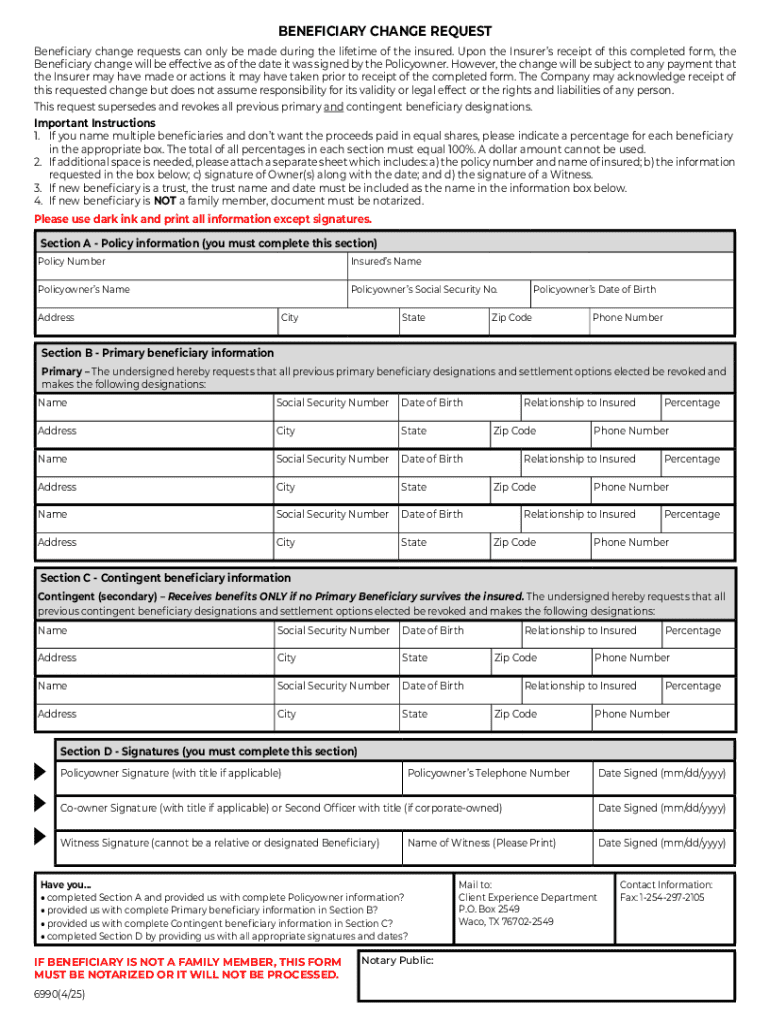
Fill out the header section of the form completely. This typically requires:
- The full name of the insured.
- The full name of the policyowner (if different).
- The unique policy number.
- Contact information for the current owner.
Step 3: Specify New Designations Clearly
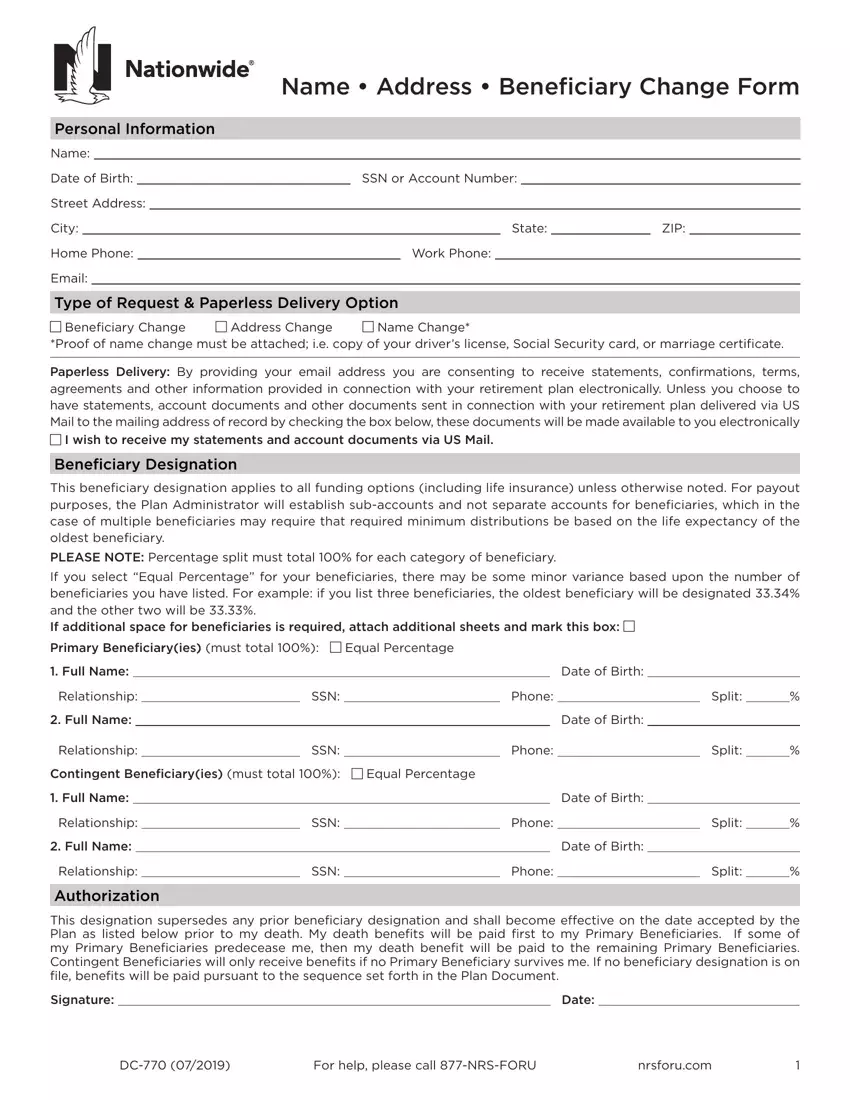
Clearly write out the names, relationship to the insured, SSNs, and percentage shares for both primary and contingent groups. Ensure that the total percentage for primary beneficiaries equals 100%, and the total for contingent beneficiaries equals 100%. If naming multiple tiers or complex structures, use clear fractional or decimal notations.
Step 4: Execute Signatures and Required Witnessing
Most insurance providers require the signature of the policyowner in the presence of a witness or a notary public. This step protects against fraud and undue influence. Review the document's instructions carefully to see if a formal notary acknowledgment stamp is mandatory or if standard witness signatures suffice.
Comparison of Beneficiary Types and Structural Options
Selecting the right structure for a Texas life insurance company change of beneficiary form depends on the policyowner's long-term estate planning goals. The table below outlines common designation types, their operational mechanics, and key considerations.
| Designation Type | Operational Description | Key Advantage | Primary Consideration |
|---|---|---|---|
| Individual (Per Stirpes) | Direct designation to named persons where shares pass to descendants if a beneficiary dies. | Keeps benefits within specific family lines automatically. | Requires explicit legal phrasing to invoke per stirpes rules. |
| Individual (Per Capita) | Direct designation where proceeds are split equally among surviving named beneficiaries. | Simple to administer and understand. | If a beneficiary passes away, their share goes only to surviving co-beneficiaries, excluding their children unless updated. |
| Revocable Trust | Names a living trust as the beneficiary, managed by a trustee according to trust guidelines. | Allows for structured payouts, especially for minor children or complex estates. | Involves legal setup costs and ongoing maintenance of the trust document. |
| Minor Children (Direct) | Naming a minor directly as a beneficiary. | Direct transfer of assets without immediate trust overhead. | Insurance companies generally cannot pay death benefits directly to minors, triggering court-appointed guardianship requirements. |
Common Pitfalls and How to Avoid Them
Even minor administrative oversights can derail an intended beneficiary update. Being aware of frequent mistakes helps ensure the paperwork is processed smoothly on the first submission.
- Failing to Name Contingent Beneficiaries: If all primary beneficiaries pass away before the insured and no contingent is listed, the death benefit defaults to the insured's estate, opening the door to probate court delays and potential creditor claims.
- Using Ambiguous Language: Designations like "my children" without specific names, or generalized terms without clear birthdates and SSNs, often lead to lengthy investigations by the insurer's legal department.
- Overlooking Divorce Decrees: In Texas, state family law and specific policy provisions interact regarding beneficiary status post-divorce. Relying solely on an old designation after a marital dissolution without updating the formal paperwork can result in unintended legal battles.
- Delayed Submission: Completing a form and leaving it in a desk drawer renders it ineffective. The insurance company must receive, log, and formally acknowledge the document during the lifetime of the insured for it to take legal effect.
Verification and Record-Keeping Best Practices
Once the Texas life insurance company change of beneficiary form is mailed, faxed, or uploaded through the carrier's digital portal, the process is not fully complete until formal confirmation is received.
Policyowners should request a written or electronic endorsement notice from the insurance company. This confirmation letter serves as official proof that the carrier has updated its master records. Store this confirmation alongside the original policy documents in a secure, accessible location—such as a fireproof home safe or a digital vault—and inform a trusted executor or family member where these records are kept. Periodically reviewing these designations every few years, or immediately following major life milestones, ensures that the insurance policy continually aligns with the policyowner's current wishes.
Image Gallery