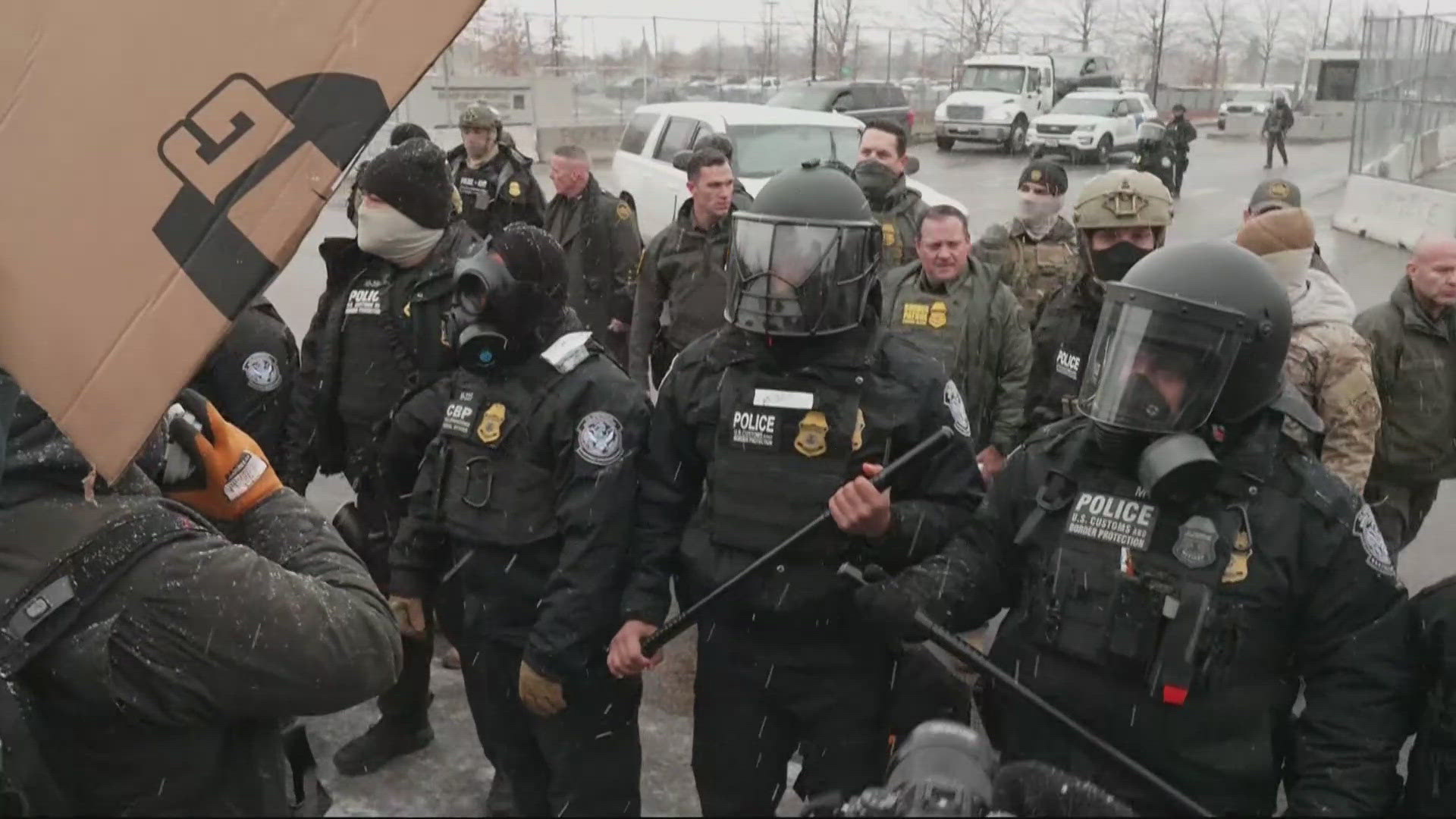
Security in Minneapolis: Current Landscape and Ongoing Debates
As of 2026, the security landscape in Minneapolis is defined by a multi-tiered public safety model that integrates traditional law enforcement with behavioral crisis response and community-led violence prevention. This evolution follow...
As of 2026, the security landscape in Minneapolis is defined by a multi-tiered public safety model that integrates traditional law enforcement with behavioral crisis response and community-led violence prevention. This evolution follows years of federal oversight under consent decrees and a shift toward diversifying emergency responses to improve both accountability and public outcomes.
Contents
The security environment in Minneapolis has undergone a fundamental transformation over the last several years. What was once a debate centered strictly on police staffing has matured into a sophisticated, albeit contentious, discussion regarding the "right response for the right call." Residents, business owners, and visitors in 2026 navigate a city where the Minneapolis Police Department (MPD) remains a central pillar, but no longer the sole actor in maintaining public order.
The Structural Framework: The Office of Public Safety
The most significant change in the current landscape is the operational maturity of the Minneapolis Office of Public Safety (OPS). Established to break down silos between different departments, the OPS now oversees the MPD, the Fire Department, Emergency Management, 911/311 services, and the Neighborhood Safety department.
This integrated approach aims to streamline communication and resource allocation. For example, when a 911 call is placed, the dispatcher now has a broader menu of deployment options. This structural shift was designed to alleviate the burden on police officers, allowing them to focus on high-priority violent crimes while specialized units handle non-violent social or mental health issues. However, the efficacy of this integration remains a point of intense debate, particularly regarding budget distribution and the speed of response times across the different branches.
The Role of the Minneapolis Police Department Under Federal Oversight
In 2026, the MPD operates under the strict requirements of both federal and state consent decrees. Following investigations by the U.S. Department of Justice (DOJ) and the Minnesota Department of Human Rights (MDHR), the department has implemented over 100 specific reforms related to use-of-force policies, stop-and-search procedures, and internal accountability mechanisms.
Staffing Challenges and Recruitment
Despite significant investment in recruitment bonuses and marketing campaigns, the MPD continues to face a staffing deficit compared to pre-2020 levels. The department has focused its efforts on "quality over quantity," adhering to rigorous Peace Officer Standards and Training (POST) requirements. To manage the gap, the city frequently utilizes:
- Overtime Incentives: Current officers often work extended shifts, leading to concerns about burnout and procedural errors.
- Mutual Aid Agreements: Collaboration with the Hennepin County Sheriff’s Office and the Minnesota State Patrol is common for large-scale events or high-crime "hot spots."
- Professional Staffing: Using non-sworn personnel for administrative tasks and scene processing to keep badge-wearing officers on the street.
Training and Technology
Modern policing in Minneapolis now leans heavily on technology. Real-time crime centers utilize license plate readers (LPRs) and expanded camera networks to track suspects. Officers are now trained extensively in de-escalation techniques and the "duty to intervene," which are monitored through mandatory body-worn camera audits.
Behavioral Crisis Response (BCR) and Alternative Policing
One of the most successful components of the current security landscape is the Behavioral Crisis Response (BCR) program. Operated by specialists rather than armed officers, these teams respond to calls involving mental health crises, substance use issues, and welfare checks where no weapon is present.
The BCR teams have proven effective in de-escalating volatile situations without the use of force, significantly reducing the number of arrests related to mental health episodes. In 2026, the debate has shifted from whether the program should exist to how much it should be expanded. Proponents argue for 24/7 city-wide coverage, while skeptics worry that BCR teams are occasionally sent into situations that turn violent, necessitating police backup and complicating the response.
Community-Led Safety Initiatives: The MinneapolUS Model
Beyond official city departments, Minneapolis invests heavily in "Violence Interrupters" through the MinneapolUS program. These are community members, often with deep roots in specific neighborhoods, who work to mediate conflicts before they escalate into gun violence.
These teams operate primarily in high-traffic areas and North Minneapolis, serving as a visible, non-confrontational security presence. Their work is grounded in the theory that violence is a public health crisis that can be "treated" through social intervention. While qualitative reports from community leaders are often positive, critics frequently point to the difficulty of quantifying the exact number of crimes "prevented" by these initiatives when arguing for budget allocations.
Comparative Security Response Matrix
To understand how security is deployed in 2026, it is helpful to compare the primary response entities currently operating in Minneapolis:
| Response Entity | Primary Focus | Training/Background | Typical Equipment |
|---|---|---|---|
| MPD (Police) | Violent crime, felonies, immediate threats | POST-certified law enforcement | Standard firearms, tasers, body cameras |
| BCR Teams | Mental health crises, welfare checks | Social workers, crisis counselors | Medical kits, de-escalation tools |
| Violence Interrupters | Conflict mediation, neighborhood outreach | Community leaders, street-level credible messengers | Radios, branded high-visibility apparel |
| Ambassadors | Downtown hospitality, low-level nuisance | Customer service, safety training | Radios, first-aid kits |
The Ongoing Debates: Accountability vs. Effectiveness
The central conflict in the 2026 security landscape remains the balance between aggressive crime-fighting and civil rights protections. This debate manifests in several key areas:
The "Third Precinct" Legacy
The physical and symbolic rebuilding of the Third Precinct—destroyed in 2020—continues to be a flashpoint. The debate over its location and the philosophy of its "community-centered" design reflects broader disagreements about the presence of police in residential neighborhoods. Some residents demand a local station for faster response times, while others view the facility as a symbol of systemic trauma.
Data Privacy and Surveillance
As the city increases its reliance on AI-driven surveillance and facial recognition technology to compensate for lower staffing levels, privacy advocates have raised alarms. The City Council is currently navigating the "Surveillance Oversight Ordinance," which seeks to limit how data collected by security cameras and LPRs is stored and shared with federal agencies.
The Cost of Liability
A major fiscal debate involves the rising costs of legal settlements related to police misconduct. In 2026, the city is exploring alternative insurance models and personal liability requirements for officers, aimed at protecting the municipal budget while incentivizing professional conduct.
Security for Residents and Business Owners
For those living and working in Minneapolis, the practical experience of security often involves a "private-public partnership." Many business districts, such as the North Loop and Downtown, have formed Warehouse District and Downtown Improvement Districts (DID). These organizations fund private "Ambassadors" who provide a visible presence, assist with directions, and act as "eyes and ears" for both the MPD and the OPS.
Actionable Safety Steps
- Utilize the 311 System: For non-emergency security concerns like abandoned vehicles or broken streetlights that contribute to a sense of disorder, the 311 system is the primary tool for remediation.
- Participate in Court Watch: Many neighborhoods have active Court Watch programs where residents track criminal cases to ensure that repeat offenders are held accountable by the judicial system.
- Home/Business Security Audits: The city offers resources for "Crime Prevention Through Environmental Design" (CPTED), helping property owners reduce vulnerability through better lighting and landscaping.
Future Outlook: The Path to 2030
The 2026 landscape is a transitional state. The success of the Minneapolis security model depends on whether the multi-tiered system can demonstrably lower violent crime rates while maintaining the trust of the community. As the federal consent decree enters its middle phase of implementation, the city will likely face continued scrutiny over its ability to sustain these reforms during economic fluctuations or spikes in seasonal crime.
The ongoing debates are no longer about whether the system should change—that change is already codified in law—but about the speed, cost, and equity of that change. For the Minneapolis security landscape to stabilize, it must move beyond the reactive policies of the past and prove that its integrated model can provide safety for all demographics across every zip code.
Frequently Asked Questions
Is Minneapolis safer now than in 2020? Statistically, violent crime rates in 2026 have stabilized from the peaks seen in 2021-2022, though property crime remains a significant concern in certain sectors. The "safety" of the city is often viewed through the lens of response times, which have improved for high-priority calls but remain slower for non-emergencies due to staffing levels.
Can I specifically request a BCR team instead of police? When calling 911, you can inform the dispatcher that the situation involves a mental health crisis and request the Behavioral Crisis Response team. However, the 911 dispatcher makes the final determination based on safety protocols; if a weapon is mentioned or there is an active threat of violence, police will be dispatched first or alongside the BCR team.
How does the federal consent decree affect everyday security? The consent decree mandates changes in how officers interact with the public. You may notice more detailed explanations for why you are being stopped and a more consistent use of body cameras. It also creates a more robust "Office of Police Conduct Review" (OPCR) where citizens can file complaints that are monitored by federal evaluators.
What is the role of private security in Minneapolis? Private security has expanded significantly, especially in the downtown core and residential high-rises. These firms often have "no-contact" policies and focus on surveillance and reporting. They are not a replacement for police but act as a supplementary layer of deterrent in commercial zones.
Where does the funding for these new safety programs come from? Funding is a mix of the general city budget, state grants for violence prevention, and federal ARPA (American Rescue Plan Act) legacy funds. In 2026, there is an ongoing legislative push at the state level to create a permanent "Public Safety Innovation Fund" to support cities using multi-tiered response models.
Image Gallery