TWA Flight Attendant Legacy and Modern Standards: From Cabin Glamour to Safety Leadership
Trans World Airlines (TWA) flight attendants fundamentally shaped commercial aviation by establishing gold standards for cabin hospitality while simultaneously spearheading landmark legal battles for workplace equality. Today, modern f...
Trans World Airlines (TWA) flight attendants fundamentally shaped commercial aviation by establishing gold standards for cabin hospitality while simultaneously spearheading landmark legal battles for workplace equality. Today, modern flight attendant standards have shifted from restrictive physical criteria to rigorous, Federal Aviation Administration (FAA)-mandated safety qualifications, inclusive grooming guidelines, and comprehensive emergency management.
Contents
The Evolution of Cabin Crew: TWA’s Pioneer Role in Commercial Aviation
The history of cabin crew in the United States is deeply intertwined with Trans World Airlines. In the 1930s and 1940s, TWA—originally Transcontinental & Western Air—helped define the role of airborne hospitality. Initially registered as "hostesses" or "stewardesses," early crew members were required to be registered nurses. This requirement ensured passenger comfort during the early days of unpressurized, turbulent commercial flights.
As commercial aircraft technology advanced into the Jet Age during the 1950s and 1960s, TWA shifted its branding toward luxury, high fashion, and global glamour. Flight hostesses became central figures in TWA’s marketing campaigns, representing international elegance across flagship routes connecting New York, Paris, Rome, and Cairo.
- 1930s–1940s: Registered Nurses
- 1950s–1960s: High Fashion & Jet Age Glamour
- 1970s–Present: Labor Rights & FAA Safety First
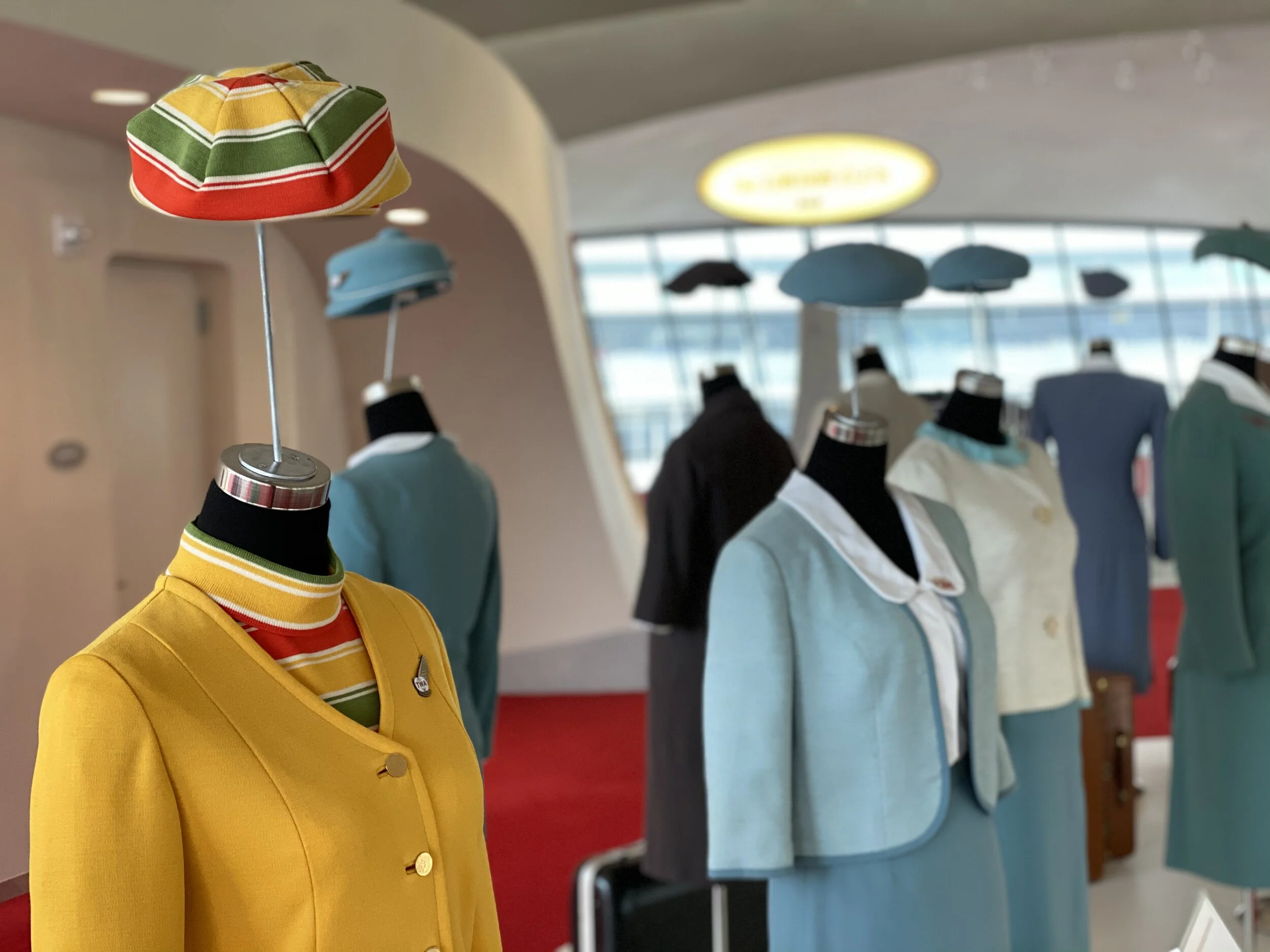
TWA partnered with prominent fashion designers to create iconic cabin uniforms. Renowned couturiers designed custom wardrobes that reflected the prevailing style of each decade:
- Don Loper (1955): Introduced tailored suits with distinct French accents, establishing TWA’s sophisticated international image.
- Balmain (1968): Brought Parisian haute couture directly to the aisles, introducing double-breasted suits and signature coats.
- Oleg Cassini (1974): Designed versatile mix-and-match wardrobes featuring bold patterns and modern synthetic fabrics built for active service.
- Ralph Lauren (1978): Created classic, tailored navy blue and gold designs that set the standard for traditional corporate airline attire through the late 20th century.
However, behind the high-fashion imagery lay extremely strict employment conditions. Airlines enforced stringent age caps, strict weight limits, and mandatory resignation policies upon marriage or pregnancy. TWA crew members were subjected to unannounced weigh-ins, routine appearance inspections, and forced retirement as early as age 32.
Labor Rights, Legal Battles, and the Breaking of Discriminatory Standards
The legacy of TWA flight attendants extends far beyond hospitality and fashion. TWA crew members were pivotal in challenging systemic sex discrimination within the U.S. airline industry, utilizing federal legislation and organized labor activism to dismantle illegal employment practices.
The Impact of Title VII and the EEOC
The passage of Title VII of the Civil Rights Act of 1964 prohibited employment discrimination based on race, color, religion, sex, or national origin. TWA hostesses, alongside colleagues across the industry, filed landmark complaints with the Equal Employment Opportunity Commission (EEOC).
- The Marriage Clause: Prior to the late 1960s, TWA automatically terminated female flight attendants who married. Legal challenges struck down marriage bans as explicit violations of Title VII, ruling that marital status had no bearing on job performance.
- Mandatory Age Terminations: Airlines routinely forced hostesses to retire between ages 32 and 35. EEOC rulings eliminated age caps, allowing flight attendants to establish long-term, lifelong careers in aviation.
- Pregnancy Restrictions: Into the 1970s, pregnancy meant immediate termination. Federal litigation transformed these policies into protected medical leave, permitting crew members to return to work post-childbirth.
- Discriminatory Weight Standards: TWA maintained rigid height-weight charts for decades. Flight attendants faced suspension without pay or termination if they exceeded their assigned weight allowance by even a few pounds. Class-action litigation gradually dismantled these appearance-based metrics, forcing carriers to replace arbitrary scales with job-related functional standards.
Union Activism and the 1986 TWA Strike
Organized labor played a major role in establishing professional dignity for cabin crew. TWA flight attendants were represented by the Independent Federation of Flight Attendants (IFFA), led by union advocates such as Victoria Frankovich.
When corporate raider Carl Icahn took control of TWA in the mid-1980s, management demanded drastic wage concessions, benefit cuts, and altered working conditions targeting the predominantly female flight attendant workforce. In March 1986, the IFFA initiated a high-profile strike. Although TWA hired permanent replacements, prolonged litigation before the National Mediation Board and federal courts eventually forced the airline to reinstate striking crew members with back pay and restored seniority. This battle highlighted the shift of cabin crew from submissive service workers to resilient labor leaders.
Comparing Legacy TWA Requirements vs. Modern Flight Attendant Standards
The transition from 20th-century airline rules to 21st-century aviation regulations reflects a foundational change in priorities—moving from visual conformity to physical capability and safety management.
| Requirement Category | Legacy TWA Era (1950s–1980s) | Modern Flight Attendant Standards |
|---|---|---|
| Primary Job Role | Customer service, luxury dining service, passenger comfort, brand representation. | In-flight safety management, emergency evacuation, aviation security, first aid. |
| Age Restrictions | Hiring capped under age 28–30; mandatory retirement at age 32–35 (until late 1960s). | Minimum age 18 to 21 depending on carrier; no upper age limit. |
| Marital & Family Status | Mandatory single status; immediate termination upon marriage or pregnancy. | Fully protected against discrimination based on marital, family, or parental status. |
| Physical Criteria | Mandatory height-weight charts, body proportion checks, routine weigh-ins. | Functional capability tests (reach test, jumpseat harness fit, exit operation). |
| Regulatory Oversight | Company-internal service standards; basic civil aviation safety rules. | Strict regulatory mandates under FAA 14 CFR Part 121. |
| Grooming & Appearance | Strict makeup guidelines, restricted hair lengths, mandatory girdles and heels. | Inclusive, gender-neutral guidelines; visible tattoos permitted within carrier limits. |
| Labor & Legal Rights | Limited legal protections until Title VII challenges; high turnover enforced. | Unionized protections (AFA-CWA, APFA), federal duty-time limits, non-discrimination laws. |
Modern Flight Attendant Qualifications and Regulatory Frameworks
In contemporary commercial aviation, flight attendants are designated first responders trained to handle cabin emergencies, medical crises, and security threats. The glamour associated with the TWA era remains part of aviation heritage, but modern regulatory compliance dictates every aspect of crew qualification.
FAA Certification and Regulatory Requirements
Under federal regulations, every commercial airline operating aircraft with more than 19 seats must employ FAA-certificated flight attendants. Key regulatory benchmarks include:
- Initial Qualification Training: Candidates complete 4 to 8 weeks of intensive training covering aircraft systems, cabin layout, emergency exits, slide inflation, ditching (water evacuations), and fire suppression.
- Annual Recurrent Training: Certified crew members must complete yearly recurrent training and practical evaluations to maintain active qualification on specific aircraft types (e.g., Boeing 737, Airbus A320, Boeing 787).
- Duty and Rest Period Mandates: FAA rules govern maximum duty periods and mandatory rest cycles. Recent regulatory updates enforce a minimum of 10 consecutive hours of rest between duty periods, matching fatigue management standards long required for flight deck pilots.
- Crew Resource Management (CRM): Modern training emphasizes CRM principles—fostering clear communication, situational awareness, problem-solving, and joint decision-making between cabin crew and pilots.
Functional Fitness Replacing Appearance Metrics
Where legacy carriers like TWA relied on bathroom scales and tape measures, modern airlines evaluate physical qualifications purely on operational safety requirements:
- Vertical Reach Test: Candidates must successfully reach a specific height (typically 80 to 84 inches) barefoot or in flat shoes to demonstrate their ability to access overhead emergency equipment, emergency locator transmitters (ELTs), and fire extinguishers.
- Jumpseat and Harness Clearance: Flight attendants must comfortably fit into all jumpseats and secure the shoulder harness and lap belt without modifications or extensions, ensuring crew safety during severe turbulence or emergency landings.
- Emergency Exit Manipulation: Candidates must demonstrate the physical strength required to manually operate heavy emergency exit doors (weighing up to 60 pounds) and deploy overwing slides quickly during an evacuation.
- Confined Space Agility: Crew members must navigate narrow aisles, stoop, kneel, and maneuver within compact galley spaces and lavatories to render medical aid or extinguish fires.
Inclusivity and Modern Grooming Standards
The airline industry has modernized personal presentation standards to reflect contemporary diversity and inclusion values:
- Gender-Neutral Uniform Guidelines: Major carriers have moved away from strict binary uniform rules. Cabin crew may select uniform pieces—such as pantsuits, dresses, or tailored trousers—based on personal preference rather than assigned sex.
- Visible Tattoos and Piercings: While legacy standards strictly prohibited body art, modern guidelines permit modest visible tattoos on arms or legs, provided they do not feature offensive imagery or text.
- Hair and Grooming Flexibility: Restrictions on hairstyles, length, and natural textures have been largely dismantled. Guidelines focus on neatness and safety—such as keeping long hair secured off the collar to prevent interference with emergency equipment.
- Legacy Focus: Visual Uniformity
- Modern Focus: Operational Safety & Personal Inclusivity
Preserving the TWA Heritage in Today’s Aviation Industry
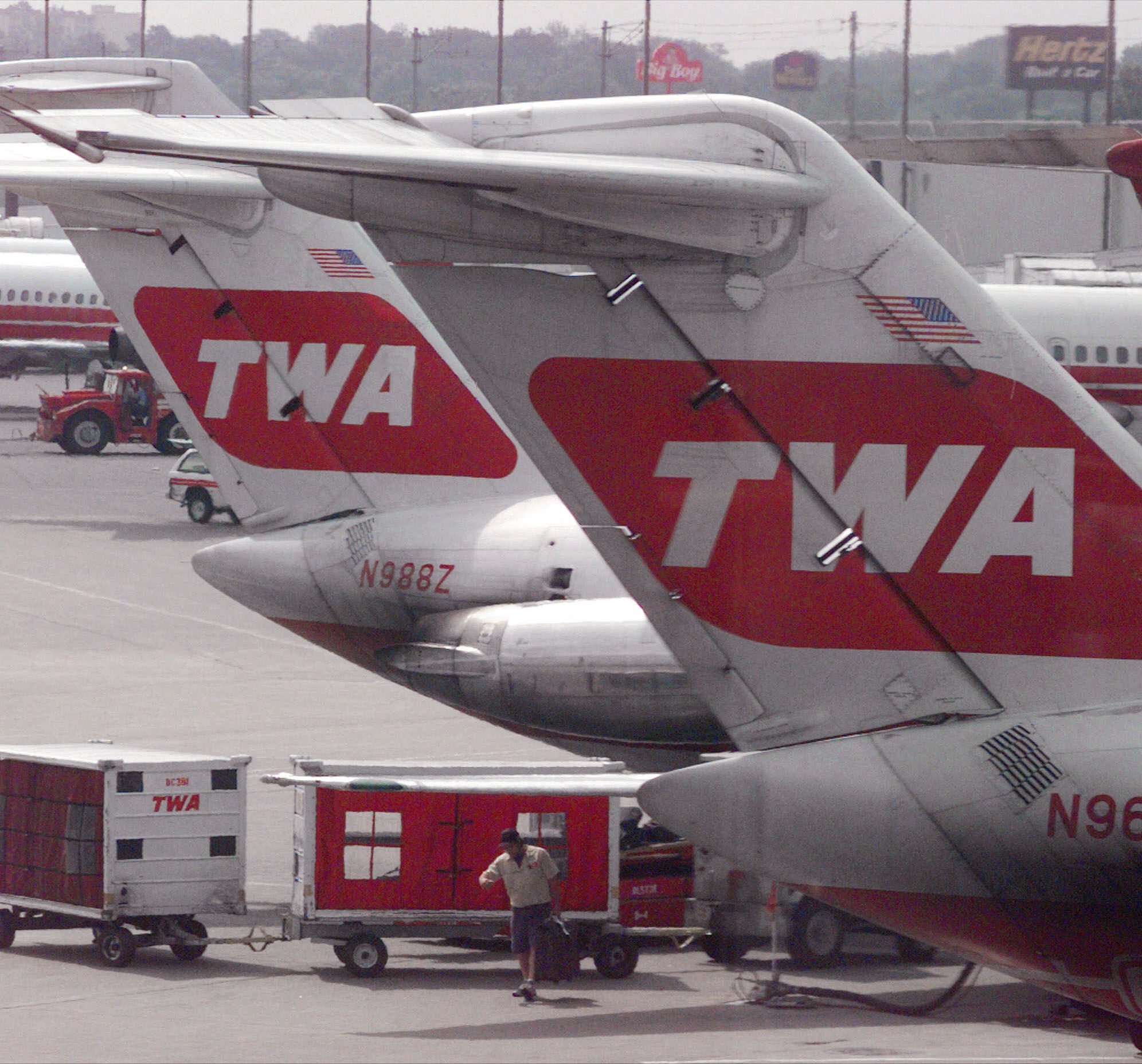
Although TWA ceased independent operations in 2001 following its acquisition by American Airlines, the legacy of TWA cabin crew remains preserved across multiple cultural and educational institutions.
The TWA Hotel at JFK Airport
The conversion of Eero Saarinen’s historic 1962 TWA Flight Center at John F. Kennedy International Airport into the TWA Hotel offers a permanent museum display dedicated to flight attendant history. The exhibit showcases original uniforms designed by Loper, Balmain, Cassini, and Lauren, alongside archival documentation of flight attendant recruitment manuals, training materials, and union advocacy records.
Influence on Modern Labor Organizations
The legal victories forged by TWA crew members directly laid the groundwork for today's major aviation labor unions, including the Association of Flight Attendants-CWA (AFA-CWA) and the Association of Professional Flight Attendants (APFA). Modern collective bargaining agreements covering scheduling predictability, fatigue mitigation, harassment protection, and health benefits trace their lineage to the activism of legacy crew members fighting early discrimination.
Guidance for Aspiring Flight Attendants
For candidates seeking a career in commercial aviation, understanding the shift from legacy history to modern standards is essential for successful application and training.
Application and Assessment Checklist
- Verify Minimum Eligibility: Confirm you meet basic age requirements (at least 20 or 21 for most U.S. carriers), hold a valid passport with unexpired international travel clearance, and possess a high school diploma or equivalent.
- Prepare for Functional Assessments: Practice reach tests and physical flexibility exercises. Ensure you can meet standard vertical reach benchmarks (80–84 inches) comfortably.
- Focus on Safety Communication: Frame interview answers around situational awareness, medical crisis response, de-escalation skills, and customer care under pressure rather than purely hospitality.
- Review Grooming Policies: Research individual airline uniform guidelines regarding visible tattoos, hair styles, and personal presentation to ensure full compliance during interviewing and training phases.
Frequently Asked Questions
What were the original physical requirements for TWA hostesses?
In the mid-20th century, TWA required hostesses to adhere to strict height and weight proportional charts. Candidates were typically required to be between 5'2" and 5'9" tall, maintain a weight relative to their height (often between 100 and 135 pounds), and pass unannounced weigh-ins throughout their employment. These appearance-based requirements were eliminated following Title VII civil rights lawsuits and union action.
How did legal actions by TWA flight attendants change aviation employment law?
TWA flight attendants filed landmark complaints with the EEOC and federal courts challenging discriminatory workplace rules. Their legal action helped establish that terminating employees due to marriage, pregnancy, or reaching age 32 violated Title VII of the Civil Rights Act of 1964. These court rulings permanently changed federal labor law across all U.S. industries.
What is the main difference between legacy stewardess training and modern flight attendant training?
Legacy training focused heavily on etiquette, high-end meal service, posture, personal grooming, and passenger comfort, with secondary instruction on emergency procedures. Modern FAA-approved training programs dedicate over 80% of their curriculum to aircraft safety, emergency evacuations, fire suppression, aviation security protocols, self-defense, and advanced emergency medical care.
Are flight attendant age limits still enforced today?
No. Age caps were ruled illegal under federal anti-discrimination law and the Age Discrimination in Employment Act (ADEA). Applicants need only meet the minimum age requirement (typically 18 to 21 years old). There is no maximum age limit, and many flight attendants maintain successful careers into their 70s and 80s.
How does the FAA regulate modern flight attendant duty hours and safety duties?
The FAA enforces strict limits on flight attendant duty periods and mandatory rest times under Title 14 of the Code of Federal Regulations (14 CFR Part 121). Airlines must provide flight attendants with a minimum of 10 consecutive hours of rest between duty shifts without reduction. The FAA also mandates minimum crew ratios—typically one flight attendant for every 50 passenger seats—on all commercial flights.
Image Gallery