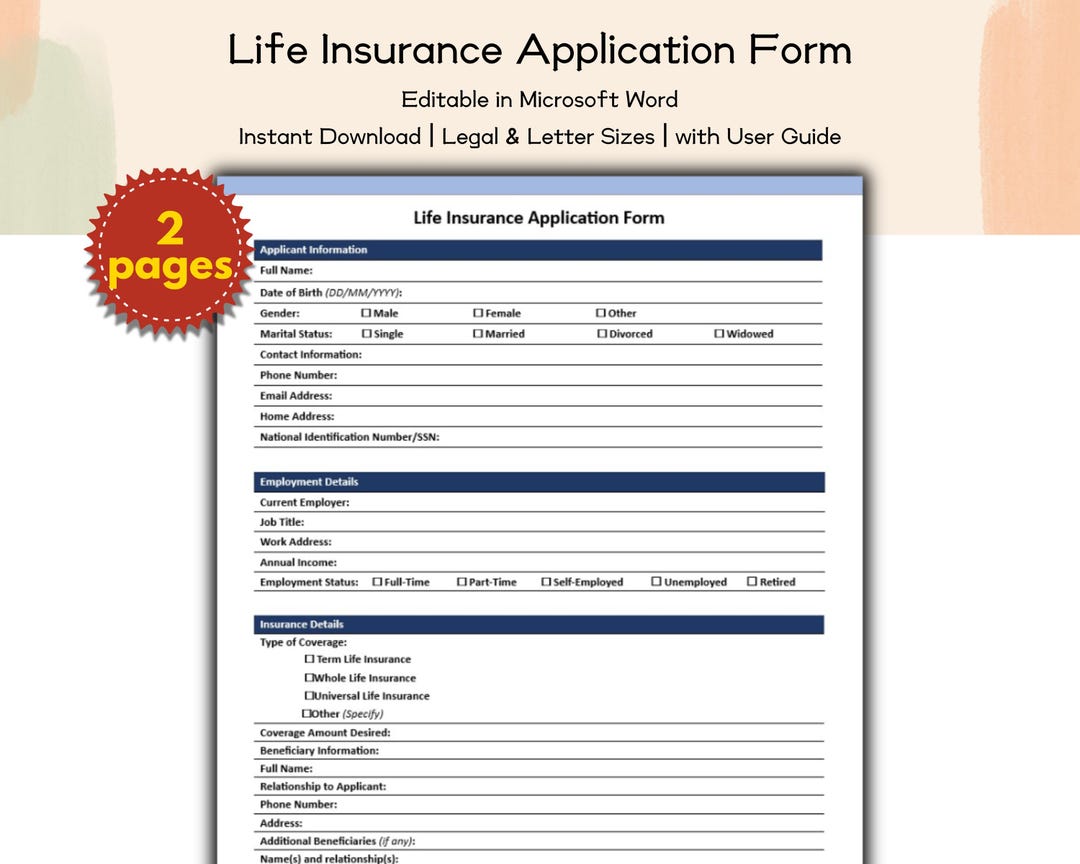
The Role of Statements Made by an Applicant in a Life Insurance Application
Statements made by an applicant in a life insurance application serve as the legal and operational foundation of the insurance policy. Under statutory insurance laws, these statements are treated as representations that allow the insur...
Statements made by an applicant in a life insurance application serve as the legal and operational foundation of the insurance policy. Under statutory insurance laws, these statements are treated as representations that allow the insurer to evaluate risk, determine eligibility, and calculate premium rates. Inaccurate, incomplete, or fraudulent statements can lead to claim denials, policy rescission, or death benefit adjustments.
Contents
Disclaimer: This article provides general educational information regarding life insurance contract principles and underwriting practices. Insurance laws and contract interpretations vary by state, country, and specific policy terms. It does not constitute formal legal or financial advice. For individual cases or dispute resolution, consult a qualified attorney or licensed insurance professional.
The Legal Foundation of Life Insurance Applications
When an individual applies for life insurance, the application forms the basis of a binding legal contract between the policyholder and the insurance company. Unlike general commercial contracts governed primarily by the principle of caveat emptor (buyer beware), life insurance contracts rely on standard legal doctrines established to manage information asymmetry between the applicant and the underwriter.
The Doctrine of Uberrimae Fidei (Utmost Good Faith)
Historically and under modern contract doctrine, insurance policies are contracts of utmost good faith (uberrimae fidei). This principle requires both parties to act with complete honesty and disclose all material facts relevant to the contract.
Because the applicant possesses intimate knowledge of their own personal health history, family medical background, lifestyle habits, and occupation that the insurer cannot independently observe without disclosure, the insurer must rely on the truthfulness of the applicant's answers. Conversely, the applicant relies on the insurer to deal fairly and honor valid claims according to the policy provisions.
Representations vs. Warranties: The Crucial Legal Distinction
In contract law, the distinction between a representation and a warranty determines how strictly an applicant's statements are held to absolute truth:
- Representations: Statements made by the applicant that are true to the best of their knowledge and belief. They are not guaranteed to be literally perfect in every minute detail, but they must be substantially true regarding all material facts.
- Warranties: Strict contractual terms or promises that must be literally and exactly true. A breach of a warranty voids the policy automatically, regardless of whether the statement was material to the risk or made in good faith.
In modern life insurance law across most jurisdictions—including standardized policy rules tracked by the National Association of Insurance Commissioners (NAIC)—statutes mandate that all statements made by an applicant on a life insurance application are considered representations, not warranties, in the absence of intentional fraud. This statutory protection prevents insurers from voiding a policy over harmless technical errors or minor immaterial oversights.
How Statements Impact Underwriting and Risk Assessment
Underwriters evaluate the information provided in the application to place the applicant into a specific risk classification (such as Preferred Plus, Standard, or Substandard/Rated). The answers provided directly dictate the underwriting path, whether the policy requires full medical underwriting, and the exact premium rate charged for coverage.
- Applicant Disclosures (Health, Medical History, Lifestyle, Occupation, Financial)
- Underwriting Evaluation (Risk Classification, Attending Physician Statements, MIB)
- Policy Issuance Terms (Standard/Preferred Rates, Rated Premiums, or Policy Denial)
Medical and Health History Disclosures
The medical section of an application requires detailed disclosures regarding:
- Pre-existing conditions, chronic illnesses, and historical diagnoses (e.g., cardiovascular disease, diabetes, cancer, or hypertension).
- Prescription medications, past surgeries, hospitalizations, and upcoming medical tests or consultations.
- Family medical history, particularly early-onset hereditary conditions like Huntington's disease, heart disease, or familial cancers.
Insurers verify these statements using secondary resources, such as Attending Physician Statements (APS), prescription database queries, and reports from the Medical Information Bureau (MIB). However, undisclosed conditions that do not appear in automated databases rely entirely on the initial statement of the applicant.
Lifestyle, Avocational, and Occupational Disclosures
Risk assessment extends beyond clinical health to daily environment and personal habits. Applicants must accurately answer questions concerning:
- Tobacco and Nicotine Usage: Frequency and form of tobacco or nicotine substitute use (vaping, cigars, patches), which significantly impacts premium tiering.
- Alcohol and Substance Use: Historical and current consumption patterns, including treatments for substance abuse.
- High-Risk Occupations or Avocations: Activities such as commercial aviation, deep-sea diving, rock climbing, or active military deployment.
- Foreign Travel and Residence: Extended travel or planned residence in high-risk foreign regions.
Financial and Existing Coverage Information
Insurers require disclosure of existing life insurance policies and financial status to prevent "over-insurance"—issuing a death benefit inconsistent with the applicant's financial need or income replacement value. Applicants must also disclose any pending applications with other carriers to ensure transparent risk sharing.
The Contestability Period and Legal Protections
To protect insurance companies against fraud while shielding policyholders and beneficiaries from arbitrary claim denials, insurance laws establish a strictly regulated window known as the contestability period.
How the Incontestability Clause Operates
Under standard statutory provisions in most US states and international insurance codes, life insurance policies contain an incontestability clause. This clause stipulates that after a policy has been in force during the lifetime of the insured for a specified duration—typically two years from the policy effective date—the insurer can no longer contest the validity of the contract or deny claims based on misstatements in the application.
Once the contestability period expires, the policy becomes incontestable, and the insurer must pay the death benefit upon proof of death, even if material misrepresentations are discovered later, except in cases of deliberate fraud where permitted by law.
Defining "Material Misrepresentation"
During the two-year contestability period, an insurer has the legal right to audit the original application if the insured dies or if misstatements come to light. However, an insurer cannot void a contract for just any inaccuracy. The misstatement must meet the threshold of a material misrepresentation.
A misrepresentation is considered material if:
- The true facts, if known to the insurer at the time of underwriting, would have led the insurer to refuse the application entirely.
- The true facts would have resulted in the policy being issued at a higher premium rate or under different terms (such as with an exclusionary rider).
The legal test focuses on the impact the disclosure would have had on the underwriter's decision, rather than whether the misstatement directly caused the insured's cause of death. For example, if an applicant fails to disclose a severe heart condition and later dies in an unrelated traffic accident during the contestability period, the insurer may still rescind the policy if knowing about the heart condition would have caused them to decline the application.
- Was the statement inaccurate or omitted?
- Yes: Is the policy within the Contestability Period? (Usually 2 Years)
- Yes: Is the misrepresentation MATERIAL?
- Yes: Policy Rescinded / Claim Denied
- No: Claim Paid in Full
- No: Policy is Incontestable (Claim must be paid, absent limited fraud exceptions)
- Yes: Is the misrepresentation MATERIAL?
- Yes: Is the policy within the Contestability Period? (Usually 2 Years)
Intentional Fraud vs. Unintentional Omission
Courts distinguish between deliberate deception and innocent mistakes:
- Unintentional Omission: An applicant forgets a minor medical visit from five years prior that resulted in no diagnosis or treatment. Courts generally view this as an innocent representation that does not invalidate coverage unless it materially changes the risk profile.
- Fraudulent Concealment: An applicant actively conceals a stage-4 cancer diagnosis, deliberately uses a surrogate for medical exams, or lies about major surgeries. In some jurisdictions, proven intent to defraud allows an insurer to void a policy even after the standard two-year contestability window has elapsed.
Consequences of Inaccurate or Omitted Statements
When an insurer discovers a material misrepresentation during the contestability period, several remedies are available under state insurance regulations and contract law.
Policy Rescission and Premium Refunds
Policy rescission legally voids the insurance contract from its inception (ab initio), treating the policy as if it never existed. If an insurer rescinds a policy due to material misrepresentation:
- The policy coverage is terminated immediately.
- The insurer returns all premiums paid by the policyholder, minus administrative fees where permitted by statutory rules.
- No death benefit is paid to the named beneficiaries.
Claim Denials and Benefit Adjustments
If a claim is submitted during the contestability period and investigation reveals a material misstatement, the insurer may deny the claim in full. Alternatively, if the misrepresentation affected the pricing tier but would not have resulted in an outright declination, some contracts or state statutes permit an equitable adjustment.
Statutory Exceptions: Misstatement of Age or Sex
A notable statutory exception to policy rescission involves the misstatement of age or sex provision. Because misstating age or biological sex alters the actuarial calculation but rarely changes basic insurability, insurance codes treat these errors differently:
If an applicant misstates their age or sex on the application, the policy is not voided or rescinded. Instead, the death benefit is retroactively adjusted to the amount that the paid premiums would have purchased at the correct age or sex based on the insurer's rates at the time of policy issuance.
Overview of Application Statements, Legal Standards, and Outcomes
The following matrix outlines how different types of applicant statements and inaccuracies are evaluated legally and operationally:
| Statement Category | Legal Standard Applied | Discovery Period | Typical Insurer / Legal Outcome |
|---|---|---|---|
| Innocent / Immaterial Oversight | Representation (Best of Knowledge) | Contestability Period (0–2 Years) | Claim paid in full; error does not alter risk rating or acceptability. |
| Material Misrepresentation | Objective Materiality Test | Contestability Period (0–2 Years) | Policy rescission, claim denial, and return of premiums paid. |
| Misstatement of Age or Sex | Statutory Adjustment Rule | Lifetime of Policy (Any Time) | Policy remains valid; death benefit adjusted proportionally to correct age/sex pricing. |
| Intentional Fraud / Identity Theft | Common Law Fraud Standard | Indefinite (Subject to Jurisdiction) | Policy voided ab initio; potential legal forfeiture of premiums in extreme cases. |
| Unannounced Health Changes | Duty to Disclose Prior to Delivery | Policy Delivery Window | Insurer may decline policy delivery or require updated underwriting. |
Practical Guidance: How Applicants Can Protect Policy Validity
To ensure that a life insurance policy provides reliable financial protection for beneficiaries without the risk of future legal challenges, applicants should follow key compliance practices during the application process.
Complete Medical Disclosures Thoroughly
- Review Medical Records First: Obtain personal medical history summaries or contact primary care physicians before completing the medical questionnaire to ensure accurate dates and diagnoses.
- Disclose All Consultations: Report all recent medical evaluations, including routine screenings, specialist visits, and pending test results, even if no formal diagnosis was rendered.
- Detail Prescription Medications: Provide a complete list of current and recent medications, including dosages and reasons for prescription.
Handle Post-Application Changes Promptly
The legal obligation of utmost good faith continues until the policy is formally delivered and the initial premium is paid. If an applicant experiences a change in health, receives a new medical diagnosis, or undergoes a surgical procedure between the date the application is signed and the date the policy is delivered, they have a legal duty to inform the insurer immediately. Failure to disclose interim health changes can invalidate coverage at policy delivery.
Frequently Asked Questions
What happens if I make an honest mistake on my life insurance application?
If an honest mistake is minor and immaterial—meaning it would not have changed the underwriter's decision or the premium rate—it will not invalidate your policy or affect a claim. However, if the honest mistake involves a material factor (such as omitting a major surgery), the insurer may rescind the policy or adjust benefits during the contestability period, regardless of whether the omission was intentional.
How long can an insurer investigate statements made on an application?
Insurers generally have a statutory two-year contestability period from the policy's effective date to investigate the accuracy of statements made on the application. Once this two-year window passes, the insurer cannot void the policy or contest claims based on misrepresentations, except in limited cases involving intentional fraud where state laws allow.
What is the difference between a representation and a warranty in life insurance?
A representation is a statement believed to be true to the best of the applicant's knowledge and must only be substantially true regarding material facts. A warranty is an absolute guarantee of factual truth; any deviation voids the contract. Modern insurance laws treat all applicant statements as representations to protect policyholders from losing coverage over minor errors.
What is considered a "material misrepresentation" on an insurance application?
A misrepresentation is material if the insurer would have charged a higher premium, offered different terms, or declined to issue the policy entirely had the true facts been disclosed during underwriting. The determination depends on whether the truth would have altered the insurer's underwriting decision.
Can a life insurance company deny a claim after the two-year contestability period ends?
After the contestability period expires, an insurer cannot deny a claim due to misstatements or omissions on the application. However, claims can still be denied after two years for reasons unrelated to application statements, such as non-payment of premiums, policy lapses, or specific policy exclusions (such as specific high-risk activity exclusions listed explicitly in the contract).
Final Guidance: Securing Valid and Enforceable Coverage
The statements provided in a life insurance application establish the contractual parameters of the policy. Ensuring absolute accuracy and complete transparency during the application process is the single most effective way to guarantee that policy benefits will be paid without delay or legal friction.
When completing an application:
- Work with a Knowledgeable Agent or Broker: Ensure that questions are answered thoroughly and that non-medical lifestyle disclosures (such as hazardous hobbies or travel) are accurately recorded.
- Request Application Copies: Review the formal application copy attached to the final policy contract upon delivery to confirm that all recorded answers accurately match your disclosures.
- Correct Errors Immediately: If you notice an error or omission on your issued policy document, submit a written amendment to the insurance company right away to update the official record.
By maintaining full compliance with the principle of utmost good faith, policyholders safeguard their coverage against contestability disputes and secure the intended financial protection for their beneficiaries.
Image Gallery