Is the Message Bible a Good Translation? Accuracy, Purpose, and Use Cases
The Message is not a traditional word-for-word translation but a highly idiomatic paraphrase of the original Greek and Hebrew scriptures. While it captures the emotional "tone" and narrative flow of the Bible for modern readers, it is...
The Message is not a traditional word-for-word translation but a highly idiomatic paraphrase of the original Greek and Hebrew scriptures. While it captures the emotional "tone" and narrative flow of the Bible for modern readers, it is better suited for devotional reflection rather than technical theological study or doctrinal verification.
Contents
Defining The Message: Translation or Paraphrase?
To determine if The Message is a "good" translation, one must first understand what it actually is. In the world of biblical scholarship, translations generally fall along a spectrum. At one end is Formal Equivalence (word-for-word), such as the NASB or ESV. In the middle is Functional Equivalence (thought-for-thought), such as the NIV. At the far end is the Paraphrase, which is where The Message resides.
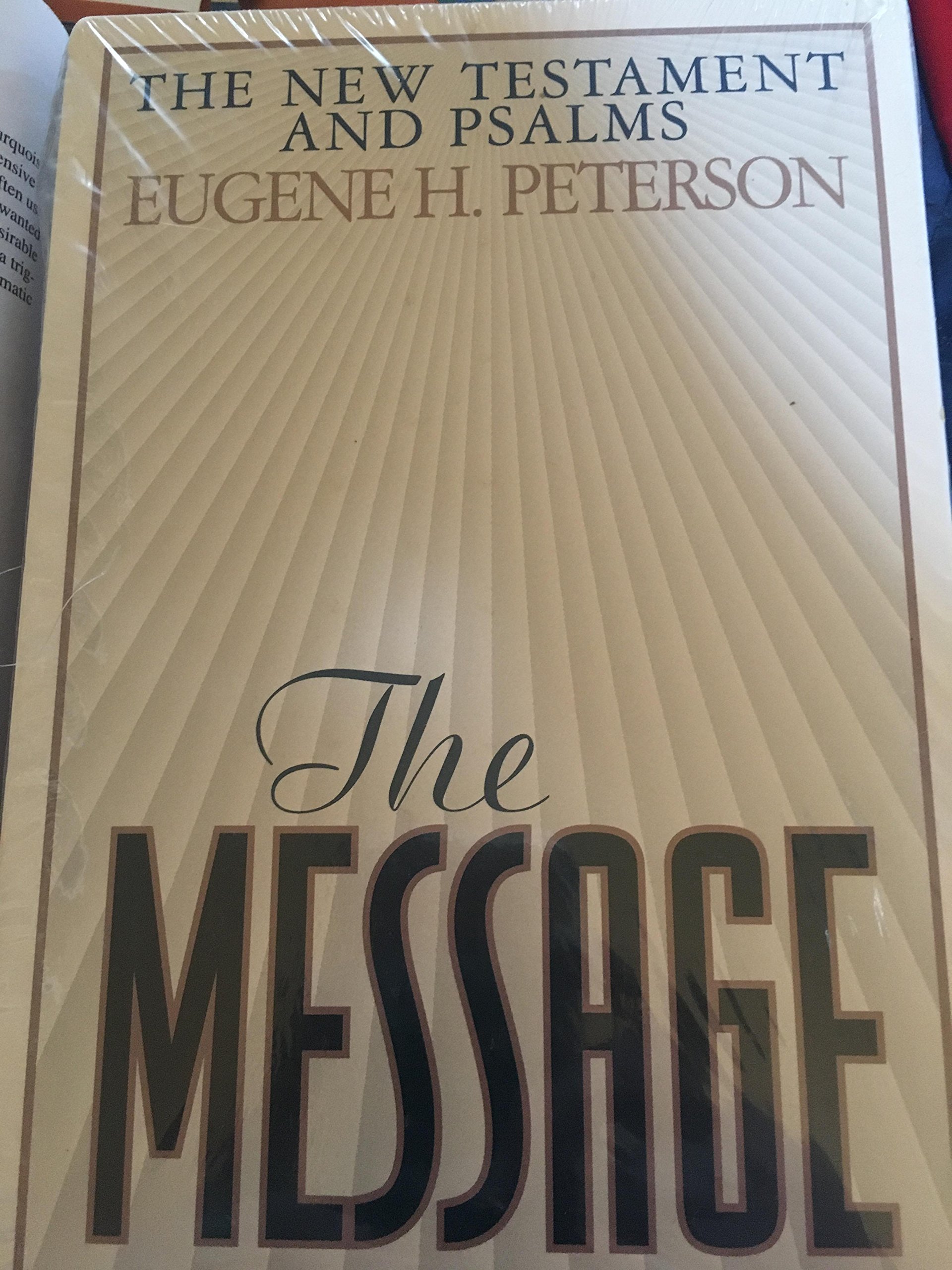
The Message was crafted by Eugene Peterson, a pastor, scholar, and professor of spiritual theology. Unlike many modern translations that are produced by large committees of scholars, The Message was primarily the work of a single individual. Peterson’s goal was not to provide a literal linguistic map of the ancient texts but to "bring the New Testament to life" for those who had become numb to the traditional language of the church.
As of 2026, the distinction between a paraphrase and a translation remains the most critical factor for readers. A translation attempts to bridge the language gap by finding corresponding words; a paraphrase like The Message attempts to bridge the culture and "vibe" gap by using contemporary idioms, slang, and modern metaphors to convey the intended impact of the original author.
The Scholarly Foundation of Eugene Peterson’s Work
A common misconception is that The Message is merely a "re-wording" of the King James Version or another English Bible. However, Eugene Peterson was a trained scholar in Greek and Hebrew. He worked directly from the original languages to create his text. His process involved looking at the original manuscripts and asking, "If the author were speaking to a contemporary American audience today, how would they say this?"
This approach is technically called Dynamic Equivalence taken to its furthest logical conclusion. Peterson wanted to capture the "street language" of the New Testament (Koine Greek), which was the common language of the people, not the high literary language of the elite. By using the vernacular of the 20th and 21st centuries, he aimed to strip away the "stained-glass" feel of the Bible to make it feel immediate and personal.
Strengths of The Message: Why It Resonates
The "goodness" of a translation is often measured by its ability to fulfill its intended purpose. The Message excels in three specific areas: readability, narrative momentum, and emotional resonance.
Enhanced Readability and Narrative Flow
Traditional Bibles are often divided into verses and chapters that can make the text feel fragmented. The Message is designed to be read like a novel. By removing the jarring interruptions of verse numbers in the main body and using fluid, contemporary prose, it allows readers to see the "big picture" of a biblical book. This is particularly helpful for longer narrative sections in the Old Testament or the complex arguments in Paul’s epistles.
Breaking Through "Bible Burnout"
For lifelong Christians, familiar verses can sometimes lose their punch. When a reader sees John 3:16 for the thousandth time, the brain often skims over it. The Message forces the brain to re-engage by using unexpected phrasing. By presenting familiar truths in unfamiliar clothing, it can spark new insights and emotional responses that a literal translation might not trigger in a seasoned reader.
Accessibility for Seekers
For those with no religious background, terms like "justification," "sanctification," or "propitiation" are meaningless jargon. The Message replaces these theological terms with descriptive phrases. While this loses technical precision, it gains accessibility, making it an excellent "entry-point" text for individuals who find traditional Bibles intimidating or incomprehensible.
Critical Analysis: The Risks of a Single-Author Paraphrase
While The Message has many fans, it also faces significant criticism from scholars and theologians. The primary concern is that any paraphrase is, by definition, an interpretation. Because Peterson worked alone, the text reflects his personal theological leanings and pastoral emphases more than a committee-vetted translation would.
Loss of Technical Precision
Because Peterson prioritizes the "mood" of a passage, specific theological nuances are often lost. For example, in the Book of Romans, Paul uses specific legal terminology to explain how humanity is made right with God. The Message often collapses these distinct legal terms into general ideas of "living right" or "getting right with God," which can obscure the finer points of Pauline theology.
Controversial Word Choices
Some of Peterson’s choices have drawn fire for being too "loose." A famous example is his rendering of the Lord’s Prayer in Matthew 6, where "Hallowed be thy name" becomes "Reveal who you are." Critics argue that this changes the focus from God’s intrinsic holiness to a request for a manifestation of His presence. Additionally, his use of gender-neutral language and modern idioms (like "the neighborhood" in John 1:14) can sometimes feel dated or culturally specific in a way that the original text was not.
Comparative Overview of Bible Versions
To understand where The Message fits into your library in 2026, use the following table to compare it against other popular versions based on their translation philosophy and primary use case.
| Version | Philosophy | Reading Level | Best Use Case |
|---|---|---|---|
| NASB 95/2020 | Formal Equivalence | 11th Grade + | Deep word study and doctrinal analysis. |
| ESV | Essentially Literal | 10th Grade | Balanced study and public preaching. |
| NIV | Functional Equivalence | 7th–8th Grade | General reading and personal study. |
| NLT | Dynamic Equivalence | 6th Grade | Easy reading and family devotions. |
| The Message | Paraphrase | 4th–5th Grade | Devotional reflection and fresh perspective. |
How to Use The Message Effectively
The most balanced view of The Message is to treat it as a supplementary tool rather than a primary source. In 2026, most Bible scholars recommend a "multi-translation" approach to scripture reading.
- For Devotionals: Read a passage in The Message to get the "heart" of the message. Let the modern language stir your emotions and help you see the passage's relevance to daily life.
- For Study: Always have a formal equivalence translation (like the ESV or NASB) nearby. If a phrase in The Message strikes you, check the literal translation to see what the original Greek or Hebrew actually said.
- For Comparison: Use The Message when you feel "stuck" in a difficult passage. Sometimes, seeing a complex idea phrased in modern English can provide the "aha!" moment that helps you go back to a literal text with better understanding.
Addressing the "Goodness" of the Translation
Ultimately, whether The Message is a "good" translation depends on your goal. If your goal is to pass a Koine Greek syntax exam or define the exact boundaries of a specific doctrine, The Message is a poor choice. It is too interpretive and lacks the linguistic transparency required for that level of work.
However, if your goal is to be moved by the story of scripture, to hear the Bible speak in the language of the contemporary world, or to read through the Bible in a year without getting bogged down in genealogies and technical jargon, then The Message is an excellent, high-quality resource. It is a pastoral achievement that has helped millions of people engage with a book they otherwise found inaccessible.
Frequently Asked Questions
Is The Message Bible a "real" Bible?
Yes, it contains all the books of the standard Protestant canon. However, it is classified as a paraphrase rather than a formal translation. It is the Word of God filtered through the interpretive lens of a contemporary pastor-scholar.
Can I use The Message for Bible study?
It is not recommended for "inductive" Bible study where you analyze specific words or sentence structures. Because it is a paraphrase, the "words" you are analyzing are Peterson’s, not necessarily a direct reflection of the original syntax. It is best used as a commentary-style supplement.
Why is The Message controversial in some churches?
The controversy usually stems from the fear that paraphrasing "adds to or subtracts from" the Word of God. Some conservative traditions believe that the exact wording of scripture is so sacred that any attempt to modernize it with slang or idioms borders on irreverence.
Did Eugene Peterson mean for The Message to replace other Bibles?
No. Peterson was very clear throughout his life that he did not want people to stop reading the literal translations. He viewed The Message as a "reading Bible" meant to get people interested in the text so they would eventually go deeper with more literal versions.
Does The Message use gender-neutral language?
Yes, in many places where the original Greek uses masculine pronouns to refer to people in general, Peterson uses gender-neutral terms like "friends," "neighbors," or "everyone." This is a common practice in many modern translations (like the NRSV or NLT) to reflect the inclusive intent of the authors.
Recommendation for 2026 Readers
If you are looking to expand your spiritual library this year, The Message is a valuable addition, provided you understand its limitations. Do not make it your only Bible. Instead, use it alongside a more literal version. Read the literal version for truth and precision; read The Message for passion and perspective. This dual approach ensures that you stay grounded in the actual text while remaining open to the transformative power of its story.
Image Gallery