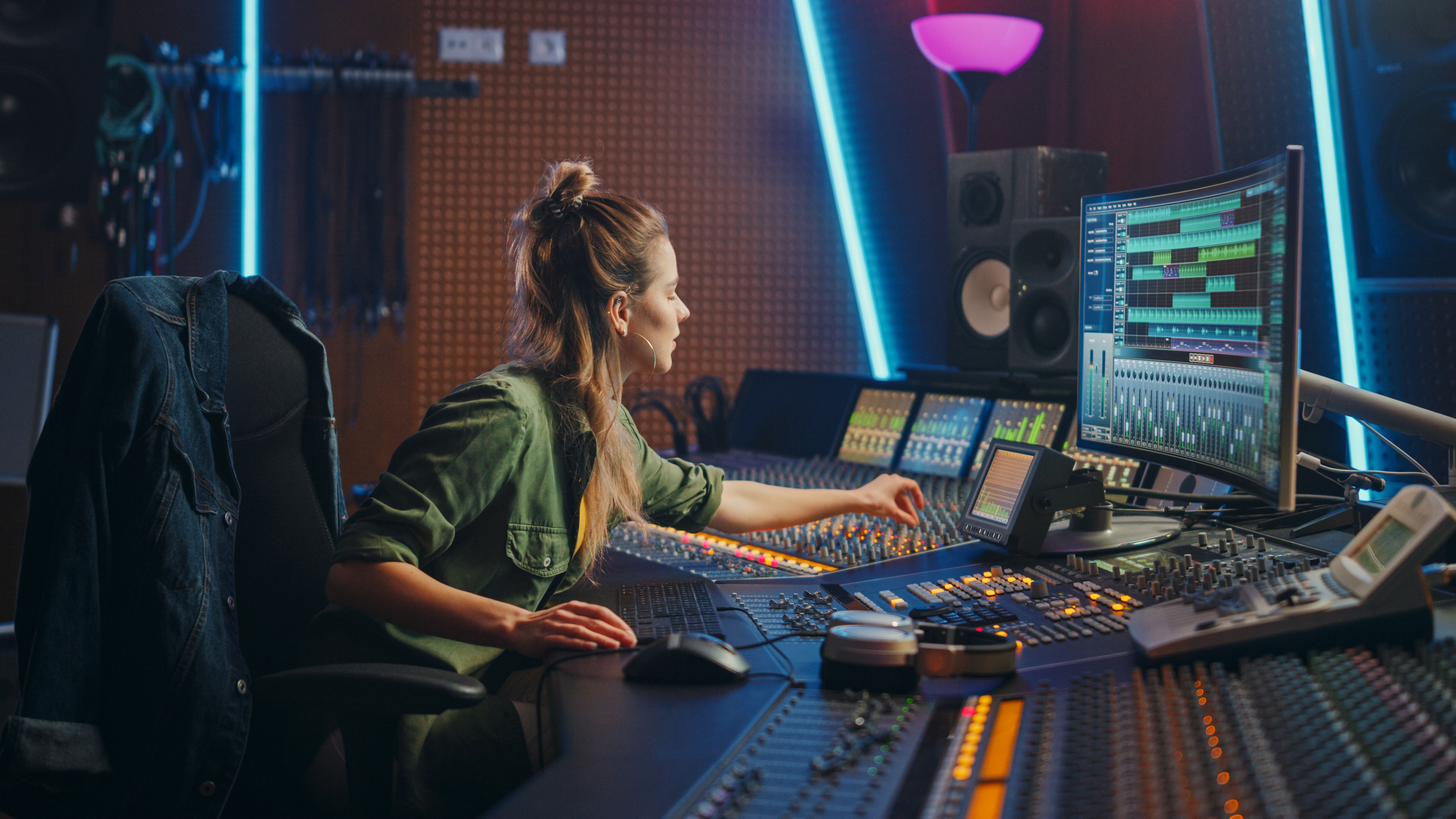
What Is Audio Engineering Really About? The Reality Behind the Sound
Audio engineering is the technical and creative discipline of capturing, manipulating, and reproducing sound through the mastery of acoustics, electronic signal processing, and psychoacoustics. It is the bridge between raw sonic energy...
Audio engineering is the technical and creative discipline of capturing, manipulating, and reproducing sound through the mastery of acoustics, electronic signal processing, and psychoacoustics. It is the bridge between raw sonic energy and a polished final product, requiring a deep understanding of physics, high-end technology, and human emotion.
Contents
To the casual observer, audio engineering looks like a glamorous job of sitting behind a massive console and sliding faders. However, if you look deeper into the professional landscape of 2026, you will find that it is a rigorous field defined by high-stakes problem-solving, meticulous attention to detail, and a constant evolution of digital and analog tools. Whether it is a studio recording, a live concert, or sound design for immersive virtual reality, audio engineering is about one thing: the intentional control of sound.
The Three Pillars of Audio Engineering
At its core, the discipline rests on three distinct but overlapping pillars. Understanding these is essential to grasping what an engineer actually does on a day-to-day basis.
1. The Physics of Sound (Acoustics)
An audio engineer must understand how sound behaves in physical space. This involves knowledge of acoustics—the study of mechanical waves in gases, liquids, and solids. When an engineer sets up a microphone, they aren't just placing a piece of equipment; they are calculating the reflections of the room, the "standing waves" that might cause muddy frequencies, and the "proximity effect" that changes the bass response based on distance.
In 2026, with the prevalence of home studios and non-traditional recording spaces, the ability to "treat" a room—using diffusers, bass traps, and absorbers—is just as important as knowing how to use a software plugin.
2. The Science of Signal Flow
Once sound is captured by a microphone (the "transducer"), it becomes an electrical signal. Audio engineering is about managing this signal as it travels through preamps, compressors, equalizers, and eventually into a Digital Audio Workstation (DAW).
Engineers must master gain staging, which is the process of managing the volume levels at each stage of the signal path to prevent unwanted noise or distortion. A failure in signal flow management can ruin a multi-million dollar production, making this technical "boring" side of the job the most critical for professional results.
3. The Art of Psychoacoustics
This is where the "magic" happens. Psychoacoustics is the study of how humans perceive sound. Our ears and brains do not hear sound "flat"; we are more sensitive to certain frequencies than others. An engineer uses this knowledge to trick the brain. For example, they might use "stereo imaging" to make a sound feel like it is coming from behind the listener, or use subtle saturation to make a vocal feel "warm" and "intimate" even if it was recorded in a cold, sterile booth.
The Different Roles in the Industry
"Audio Engineering" is a broad umbrella. Depending on the specific niche, the daily tasks can look drastically different.
Studio Recording and Tracking
The recording engineer is responsible for the "capture" phase. Their primary goal is to get the best possible raw performance onto a hard drive. This involves selecting the right microphone for a specific voice, choosing the right outboard gear to "color" the sound, and managing the psychology of the artist to ensure they feel comfortable enough to give a great performance.
Mixing: The Architecture of Sound
A mixing engineer takes the multi-track recordings (which might be 100+ individual tracks for a modern pop song) and blends them together. They use EQ to carve out space for every instrument, compression to control dynamics, and spatial effects like reverb and delay to create depth. In 2026, mixing is increasingly focused on spatial audio (such as Dolby Atmos), where the engineer must place sounds in a 3D environment rather than just a left-right stereo field.
Mastering: The Final Gatekeeper
Mastering is the final step in the chain. A mastering engineer looks at the song as a whole. They ensure the track meets technical loudness standards for streaming platforms, correct any final frequency imbalances, and ensure the song sounds consistent whether played on high-end monitors or cheap smartphone speakers. They are the quality control department of the music world.
Live Sound Engineering
Live sound engineers work in venues ranging from small clubs to massive stadiums. They deal with the chaotic variables of live performance: feedback loops, changing humidity (which affects sound travel), and the physical safety of massive speaker arrays. Unlike studio engineers, they don't get a "second take."
| Role | Primary Objective | Key Tools | Environment |
|---|---|---|---|
| Recording Engineer | High-fidelity capture | Microphones, Preamps, DI Boxes | Recording Studio |
| Mixing Engineer | Balance and Texture | DAW, Plugins, Automation | Mix Suite / Home Office |
| Mastering Engineer | Final polish & Standards | High-end AD/DA Converters, Precision EQ | Tuned Mastering Room |
| Live Sound (FOH) | Audience experience | Digital Consoles, PA Systems | Concert Venues / Arenas |
| Game Audio Engineer | Immersive interactivity | Middleware (Wwise, FMOD), Spatializers | Game Development Studios |
The Impact of Technology and AI in 2026
By 2026, the role of the audio engineer has shifted due to the integration of Artificial Intelligence and Machine Learning. However, these tools have not replaced the engineer; they have changed the nature of the labor.
AI-assisted processing now handles many of the "corrective" tasks that used to take hours. For example:
- De-noising: AI can now perfectly strip away a hum or a siren from a vocal take without affecting the tone.
- Spectral Editing: Engineers can "see" sound in a 3D spectrogram and literally paint out unwanted noises.
- Automated Balancing: AI can provide a "starting point" mix based on millions of analyzed hit songs, allowing the human engineer to focus on the creative flourishes rather than the basic leveling.
The "real" part of audio engineering in this era is knowing when the AI is wrong. An AI might suggest a perfectly "clean" sound, but the engineer knows that a specific song needs "grit" and "imperfection" to feel authentic.
Audio Post-Production: Sound for Moving Pictures
A significant portion of the audio engineering world has nothing to do with music. Audio Post-Production involves creating the sonic world for films, television, and advertisements.
This includes:
- ADR (Automated Dialogue Replacement): Recording actors in a studio to replace lines that were poorly captured on a noisy set.
- Foley: The art of creating everyday sound effects (footsteps, cloth rustling) in a synchronized studio environment.
- Sound Design: Creating sounds that don't exist in the real world, such as a laser blast or a dragon's roar.
In this niche, audio engineering is about storytelling. The engineer must use sound to guide the viewer's emotions, often subconsciously. A low-frequency hum can build tension, while a sudden silence can create a sense of shock or awe.
The Practical Path: How to Become an Audio Engineer
Contrary to popular belief, you do not necessarily need a four-year degree to become an audio engineer, though formal education in Electrical Engineering or Music Technology provides a strong foundation.
Essential Skills for 2026
- Technical Proficiency: You must be "fluent" in at least one major DAW (Pro Tools remains the industry standard for recording, while Ableton Live and Logic Pro are favorites for production).
- The "Golden Ear": This isn't a gift; it's a trained skill. Professional engineers spend years learning to identify specific frequencies (e.g., "That snare has too much 400Hz").
- Soft Skills (The Session Psychologist): Perhaps the most underrated part of the job is managing people. You are often in a small room with high-strung artists for 12 hours a day. Keeping the mood positive and the session moving is just as important as knowing which compressor to use.
- Networking: Most audio work is freelance. Your reputation is your resume.
Common Misconceptions About the Field
"It's all about the gear." While high-end microphones and vintage compressors are nice, they are useless in the hands of someone who doesn't understand the fundamentals. A great engineer can make a professional-sounding record with a $200 microphone and a laptop. A bad engineer can make a $10,000 microphone sound like a tin can.
"The computer fixes everything." The phrase "we'll fix it in the mix" is a dangerous trap. While digital tools like Auto-Tune and time-alignment are powerful, they often introduce artifacts that degrade the overall quality. Real audio engineering is about getting it right at the source.
"It's a party environment." While you are working with musicians, the engineer is the "sober" professional in the room. It is a service-industry job that requires extreme focus, long hours of sitting, and the risk of hearing fatigue. It is physically and mentally demanding work.
Frequently Asked Questions
Do I need to be a musician to be an audio engineer?
No, but it helps immensely. You don't need to be a virtuoso, but understanding music theory, rhythm, and the "language" of musicians allows you to communicate more effectively and make better creative decisions during a mix.
Is the industry over-saturated?
The "traditional" music studio industry is highly competitive, but the demand for high-quality audio is actually at an all-time high. Between podcasts, video games, streaming content, and corporate media, there are more opportunities for skilled audio engineers than ever before—they just aren't always in a music studio.
How do I protect my hearing?
Hearing is an engineer’s most valuable asset. Professionals use calibrated monitoring levels (usually around 85dB SPL), take frequent "ear breaks" every hour, and wear custom-molded earplugs when attending live events or working in loud environments.
What is the most important piece of software to learn?
While it varies by industry, Avid Pro Tools remains the standard for high-end recording and film post-production. For electronic music and production, Ableton Live is dominant. However, the principles of audio (EQ, compression, routing) are the same across all software.
Final Recommendation
If you are interested in audio engineering, start by focusing on the fundamentals of sound rather than buying expensive equipment. Learn how to use your ears to identify frequency ranges and dynamic changes. Download a trial version of a DAW, record something simple, and try to make it sound like a professional record using only the built-in tools. Audio engineering is a lifelong pursuit of learning; the technology will change, but the physics of sound and the human emotional response to it remain constant.
Image Gallery