What Is the Standard Bank Branch Code? Universal Code and Transfer Guide
The universal branch code for Standard Bank South Africa is 051001. This 6-digit generic code applies to all domestic Electronic Funds Transfers (EFT), direct debits, and online banking transactions across South Africa, regardless of w...
The universal branch code for Standard Bank South Africa is 051001. This 6-digit generic code applies to all domestic Electronic Funds Transfers (EFT), direct debits, and online banking transactions across South Africa, regardless of where the specific bank account was physically opened.
Contents
Understanding the Standard Bank Universal Branch Code (051001)
When initiating an electronic interbank transaction in South Africa, banking systems require both a beneficiary account number and a routing identifier known as a branch code. Historically, financial institutions issued distinct 6-digit identifiers to every physical branch location across the country. However, Standard Bank, along with other major South African banks under guidelines established by the Payments Association of South Africa (PASA), transitioned to a simplified universal branch code system.
The universal code for Standard Bank South Africa is 051001 (sometimes formatted with a hyphen as 051-001 depending on the online interface).
- Standard Bank Universal Branch Code: 051001
- Formatted Alternative: 051-001
- Bank Name: Standard Bank of South Africa
- Applicability: All domestic EFTs, direct debits, payrolls
Using a universal code streamlines payment processing. Instead of forcing consumers and business owners to search for a specific suburban or city branch number, online banking platforms and corporate payment systems automatically route transactions to Standard Bank using 051001. The bank's central clearing system then routes the payment directly to the correct individual or business account using the unique account number.
Universal Branch Code vs. Specific Physical Branch Codes
Before the widespread adoption of digital banking and centralized payment clearing, every physical Standard Bank location maintained its own individual branch code. For example, a branch in Sandton City, Cape Town Central, or Durban Main had its own distinct numeric identifier.
While legacy branch codes still exist inside Standard Bank’s administrative records and older system databases, they are generally unnecessary for day-to-day transactions.
Standard Bank Branch Code Architecture:
- Universal Branch Code (051001)
- Used for: All digital payments, online banking, EFTs, mobile app transfers
- Advantage: Eliminates processing delays caused by wrong branch selections
- Legacy / Physical Branch Codes (e.g., 020909, 000205)
- Used for: Internal administrative filing, legacy payroll databases
- Status: Replaced by 051001 for digital clearing
Why Universal Codes Were Introduced
- Error Reduction: Manual branch selection frequently led to returned payments or failed clearing files when senders selected incorrect physical branches.
- Automated Interbank Clearing: Modern payment clearing networks focus on account numbers and bank identifiers rather than geographic branch locations.
- Digital Account Opening: Accounts opened online or via mobile banking apps do not have a traditional "home branch" in a physical sense. Assigning
051001ensures these accounts receive funds seamlessly.
If an older payment form, third-party debit order mandate, or international system asks for a branch code, entering 051001 is almost always the correct and accepted procedure for Standard Bank South Africa.
Standard Bank Branch Codes for International Transfers (SWIFT / BIC)
A common mistake when transferring money across international borders is entering the domestic 6-digit branch code (051001) into a field designated for international routing. Domestic branch codes are designed exclusively for South African clearing systems.
For international telegraphic transfers (wire transfers) into a Standard Bank account from abroad, the sender must use Standard Bank’s SWIFT code (also known as a Business Identifier Code or BIC), rather than a domestic branch code.
Standard Bank SWIFT Code Details
- Primary SWIFT / BIC Code:
SBZA ZA JJ - 8-Character Identifier:
SBZAZAJJ(Used for general routing) - 11-Character Identifier:
SBZAZAJJXXX(Used when a specific 3-digit branch modifier is required;XXXrepresents the main head office routing)
International Transfer Requirements for Standard Bank South Africa:
| Transfer Field | Required Value |
|---|---|
| Beneficiary Bank | The Standard Bank of South Africa Limited |
| SWIFT / BIC Code | SBZAZAJJ or SBZAZAJJXXX |
| Domestic Branch Code | 051001 (If explicitly requested) |
| Account Number | Beneficiary's 9- to 11-digit account no. |
| Account Type | Savings, Cheque, or Current |
| Country Code | ZA (South Africa) |
Does South Africa Use IBAN Numbers?
No. South Africa does not participate in the International Bank Account Number (IBAN) system used extensively throughout Europe and the Middle East. When sending money to a Standard Bank account from an international bank that requests an IBAN, the sender should specify that South Africa uses standard local account numbers combined with the SWIFT code SBZAZAJJ.
Standard Bank Codes Across African Regional Operations
Standard Bank Group operates across multiple African nations, often trading under the name Stanbic Bank outside South Africa. It is critical not to use the South African universal code (051001) for Standard Bank or Stanbic accounts located in other countries.
Each regional entity operates within its country's distinct central banking infrastructure and maintains its own national branch codes and SWIFT identifiers.
Regional Entity Summary: Standard Bank Group
| Entity / Location | National Code Type | SWIFT / BIC |
|---|---|---|
| Standard Bank South Africa | Universal: 051001 | SBZAZAJJ |
| Standard Bank Namibia | Local Branch Code | SBNA NA NX |
| Standard Bank Eswatini | Local Branch Code | SBIC SZ MB |
| Stanbic Bank Kenya | Clearing Code | SBIC KE NX |
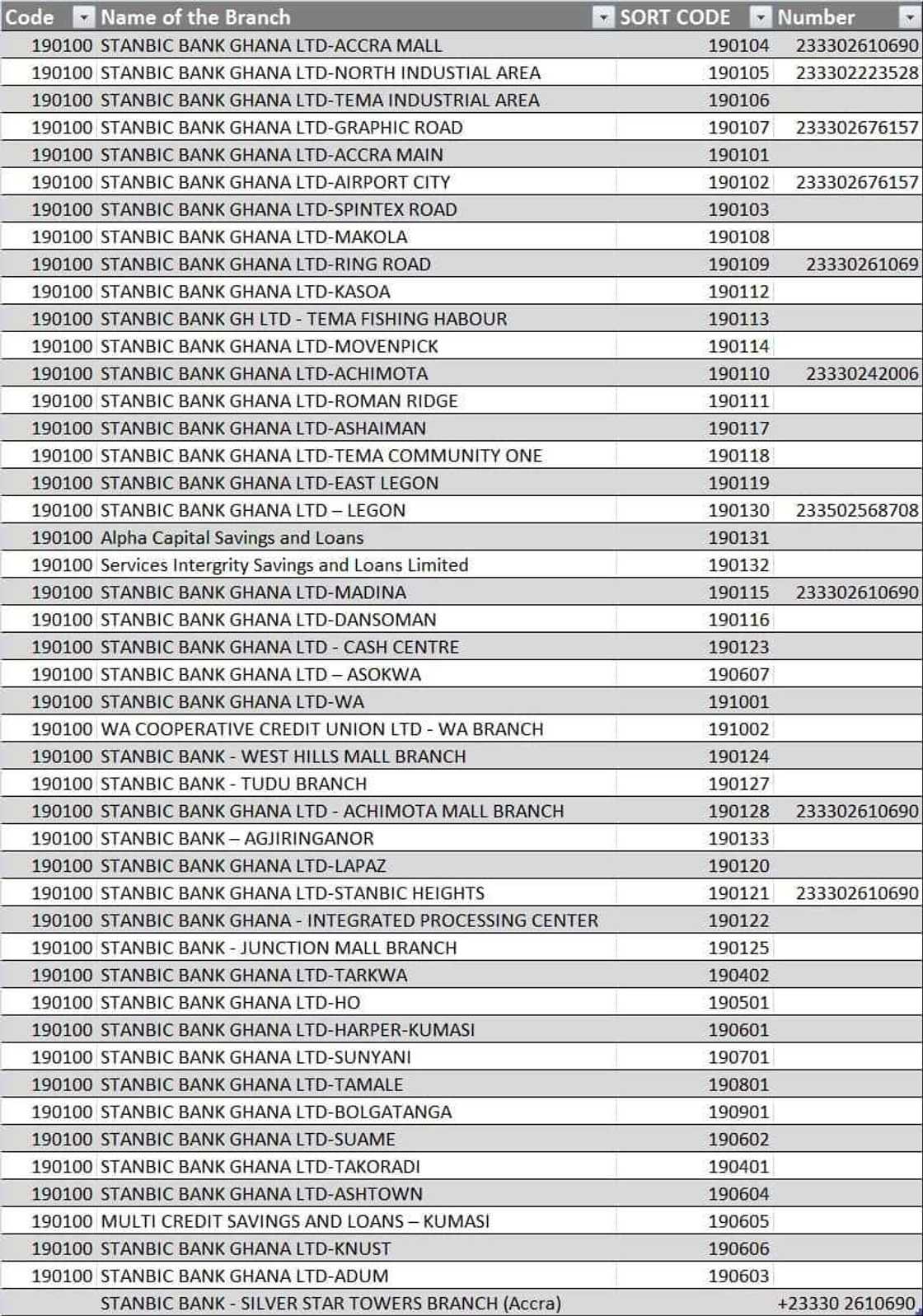
| Stanbic Bank Ghana | Sort / Branch Code | SBIC GH AC |
| Stanbic IBTC Bank (Nigeria) | NIBSS Sorting Code | SBIC NG LA |
Note: Always verify local national routing codes directly with the specific regional institution before authorizing cross-border cross-currency transfers.
Step-by-Step: How to Perform a Transfer to Standard Bank
Sending funds to a Standard Bank account in South Africa via online banking or mobile application is a straightforward process when using the universal code.
Step 1: Select the Destination Bank
Log into your originating bank's digital interface (e.g., ABSA, First National Bank, Nedbank, Capitec, or Discovery Bank). Navigate to the Pay Beneficiary or Transfer screen. Select Standard Bank from the pre-populated bank list.
Step 2: Input or Confirm the Branch Code
In modern banking portals, selecting "Standard Bank" automatically populates the branch code field with 051001. If your platform requires manual entry, type 051001 or 051-001.
Step 3: Enter Beneficiary Account Details
Input the recipient's account number accurately. Standard Bank account numbers typically range from 9 to 11 digits. Specify the account type (Cheque/Current, Savings, or Transmission) if prompted.
Step 4: Define Payment References
Enter both the My Reference (what appears on your bank statement) and Their Reference (what appears on the recipient's Standard Bank statement). For bill payments or commercial transactions, ensure "Their Reference" accurately reflects your account or invoice number.
Step 5: Verify and Authorize
Double-check all entered numbers. Perform the necessary multi-factor authentication (such as an in-app approval or OTP) to clear the transaction.
Transfers Flow Summary:
- Sender Banking Portal
- Bank Selection: Standard Bank
- Branch Code: 051001
- Account Number: XXXXXXXXX
- Account Verification
- Funds Cleared via PASA
Key Standard Bank Routing Specifications
The following reference table summarizes routing codes, system behaviors, and operational standards for Standard Bank South Africa.
| Payment Mechanism | Required Routing Identifier | System Formatting | Expected Clearing Timeframe |
|---|---|---|---|
| Domestic Interbank EFT | Universal Branch Code | 051001 |
Same day to 48 business hours |
| Real-Time Clearing (RTC) | Universal Branch Code | 051001 |
Immediate (Within minutes) |
| Internal Standard-to-Standard | Universal Branch Code / Automatic | 051001 |
Instantaneous |
| Direct Debit Orders | Universal Branch Code | 051001 |
Scheduled processing dates |
| International Wire Transfer | SWIFT / BIC Code | SBZAZAJJ |
1 to 5 business days |
| Legacy Payroll Integration | Legacy or Universal Code | 051001 / 020909 |
Scheduled batch clearing |
Troubleshooting Common Branch Code Errors
Despite the simplicity of using a single universal branch code, payment failures can still occur due to data entry errors or legacy system constraints.
1. "Invalid Branch Code" Error
If an online system flags 051001 as invalid:
- Check Formatting: Some systems require a hyphen (
051-001), while others strictly require a continuous 6-digit string (051001). - Leading Zero Issues: Ensure the leading zero (
0) is not cut off by text boxes or spreadsheet auto-formatting (which might convert051001to51001). - Bank Name Selection: Confirm that you selected Standard Bank South Africa and not an international affiliate like Stanbic Bank.
2. Payment Rejected or Funds Returned
If an EFT fails after entering 051001, the issue is rarely the branch code itself. Primary reasons for returned payments include:
- Mismatched Account Numbers: Transposing numbers in the beneficiary account field.
- Account Type Mismatch: Selecting "Savings" instead of "Cheque" when mandatory for certain system verifications.
- Closed Account: The underlying recipient account is inactive or frozen.
3. Account Verification Service (AVS) Mismatches
Businesses conducting high-value payouts or debit orders often run Account Verification Services (AVS) before releasing funds. AVS checks whether the beneficiary name, identity number, and account number match Standard Bank’s registry under branch code 051001. If a legacy branch code was hardcoded into an old database profile, updating the profile code to 051001 usually resolves verification flags.
Frequently Asked Questions
What is the universal branch code for Standard Bank South Africa?
The universal branch code for Standard Bank South Africa is 051001. It is used for all domestic electronic transfers, online banking payments, and automated direct debits across the country.
Do I need a specific branch code if I opened my account at a physical branch?
No. Even if your account was opened at a specific physical branch (such as Rosebank, Durban Central, or Port Elizabeth), you should use the universal branch code 051001 for all electronic payment forms and online transactions.
What is Standard Bank's SWIFT code for international payments?
The SWIFT code for Standard Bank South Africa is SBZAZAJJ. For systems requiring an 11-digit code, use SBZAZAJJXXX. This code routes incoming international funds transfers from foreign accounts to Standard Bank.
Does Standard Bank use IBAN numbers for international incoming transfers?
No, Standard Bank and South Africa's banking network do not use IBAN numbers. Senders outside South Africa only need the recipient's standard account number, account holder name, and Standard Bank’s SWIFT code (SBZAZAJJ).
What happens if I enter an old physical branch code instead of 051001?
In most domestic transfers within South Africa, modern interbank clearing networks automatically redirect older physical branch codes to the central universal system. However, using 051001 prevents manual review delays or system rejections.
Practical Recommendation
When setting up new payment beneficiaries, configuring payroll systems, or completing electronic funds transfer forms for Standard Bank South Africa, default to 051001 as the standard branch code. If you are receiving funds from abroad, provide the sender with your full account number, account type, and the SWIFT code SBZAZAJJ.
Before confirming high-value payments, double-check that the 6-digit branch code includes its leading zero (051001) and verify the recipient's account number directly with the beneficiary to prevent transaction delays. For complex corporate clearing or specialized commercial transactions, consult Standard Bank South Africa directly or verify routing details within your digital banking platform.
Image Gallery