Why Universal Life Insurance Has Backfired: The Crisis of Depleting Cash Values
Universal life insurance has backfired for many policyholders because the underlying cost of insurance increases with age, while the interest rates credited to the cash value often fell far below the aggressive projections used in the...
Universal life insurance has backfired for many policyholders because the underlying cost of insurance increases with age, while the interest rates credited to the cash value often fell far below the aggressive projections used in the 1980s and 1990s. This combination frequently leads to rapidly depleting cash reserves and massive, unexpected premium hikes to keep the policy in force.
Contents
The Structural Mechanics of a Universal Life "Backfire"
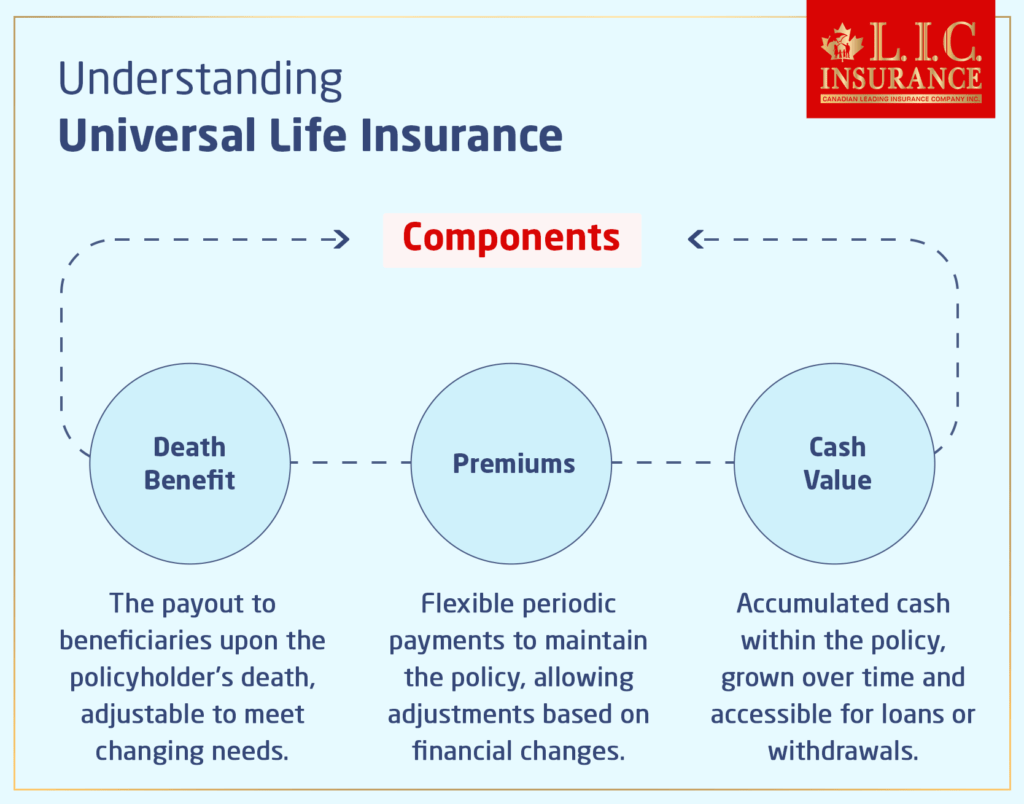
To understand why universal life (UL) insurance has become a financial burden for thousands of retirees in 2026, one must first understand its internal architecture. Unlike whole life insurance, which typically features a level premium and guaranteed death benefits, universal life is "unbundled." It consists of three moving parts: the premium paid by the policyholder, the cost of insurance (COI) and administrative fees, and the cash value account which earns interest.
The "backfire" occurs when the interest earned on the cash value fails to keep pace with the rising COI. In a UL policy, the cost of the actual insurance protection is not fixed; it is based on the insured's attained age. Every year the policyholder gets older, the insurance company charges more for the death benefit. In the early years of a policy, the premiums paid are usually higher than the COI, allowing the excess to build up in a cash value account. This account is intended to act as a reservoir, fueling the policy in later years when the COI eventually exceeds the premium.
However, if the cash value does not grow as projected—due to low market interest rates or the policyholder paying only the "minimum" suggested premium—the reservoir runs dry. When the cash value hits zero, the policyholder is forced to pay the full, current cost of the insurance out of pocket. For an 80-year-old, this "term-like" cost can be ten to twenty times higher than the original premium, often reaching tens of thousands of dollars per year.
The Historical Trap: High Projections and Low Reality
The roots of the current crisis trace back to the high-interest-rate environment of the late 20th century. When universal life was introduced and popularized in the 1980s, interest rates were in the double digits. Insurance agents presented prospective buyers with "illustrations"—financial projections showing how the policy would perform over 40 or 50 years.
These illustrations often assumed sustained interest rates of 10%, 12%, or even higher. At those rates, the cash value grew so quickly that the projections showed the policy becoming "self-funding" within a decade. Policyholders were told they could stop paying premiums altogether because the interest alone would cover the cost of insurance forever.
As the National Association of Insurance Commissioners (NAIC) has noted in various consumer bulletins, these illustrations were not guarantees; they were hypothetical scenarios. When interest rates began a decades-long decline, the actual crediting rates on these policies dropped to 3% or 4%. The "self-funding" dream evaporated. Instead of growing, the cash values were slowly cannibalized to cover the rising mortality costs. By 2026, many of those who purchased policies forty years ago are receiving "lapse notices," informing them that their policies will terminate unless they provide immediate, massive cash injections.
The Rising Cost of Insurance (COI) Escalator
The most misunderstood aspect of universal life is the Cost of Insurance (COI). In a whole life policy, the mortality risk is averaged out over the life of the contract, creating a stable, level premium. In a universal life policy, the COI is "annually renewable term" insurance inside a permanent wrapper.
The COI is calculated based on the net amount at risk—the difference between the death benefit and the cash value. As the insured ages, the probability of death increases, and the insurer increases the COI rate accordingly. If the cash value is high, the "net amount at risk" is lower, which can mitigate the cost. But if the cash value is low or stagnant, the insurer must charge for the full death benefit at the insured's current age.
In recent years, some insurance carriers have exacerbated this issue by unilaterally raising COI rates on older blocks of business. These "COI increases" are often legally challenged, but they remain a primary reason why policies backfire. Carriers argue that lower-than-expected investment returns and increased longevity among policyholders necessitate these hikes to remain solvent. For the policyholder, however, it feels like the goalposts are being moved just as they reach the end of the game.
Comparison of Life Insurance Structures
The following table compares the mechanics of Universal Life against other common structures to highlight where the specific risks of "backfiring" originate.
| Feature | Term Life Insurance | Whole Life Insurance | Universal Life (UL) |
|---|---|---|---|
| Premium Flexibility | None; fixed for term | None; fixed for life | High; can vary or skip premiums |
| Death Benefit | Guaranteed for term | Guaranteed for life | Not guaranteed if cash is zero |
| Cash Value Growth | None | Guaranteed minimums | Variable based on market/rates |
| Primary Risk | Outliving the term | High initial cost | Policy lapse in old age |
| Cost of Insurance | Fixed for duration | Level/Averaged | Increases annually with age |
| Transparency | Simple | Opaque/Bundled | Unbundled/Transparent fees |
Why "Flexible Premiums" Became a Liability
One of the main selling points of universal life was "premium flexibility." Policyholders were told they could pay more when they had extra cash and pay less—or nothing at all—during lean years. This flexibility, while attractive, became a trap for those who did not understand the long-term mathematical consequences.
Many policyholders treated their UL policies like a traditional term policy, paying only the minimum amount required to keep it active in the short term. This prevented the cash value from ever building a sufficient "cushion." Without a robust cash value, the policy had no defense against the inevitable rise in COI.
Furthermore, many policyholders used the cash value as a personal piggybank, taking out "policy loans." While these loans are marketed as tax-free access to cash, they accrue interest. If the loan interest and the COI combined exceed the policy's earnings, the loan balance grows while the cash value shrinks. Eventually, the loan can exceed the cash value, triggering a policy lapse and a significant tax bill for the "forgiven" debt.
Identifying the Red Flags of a Failing Policy
For individuals holding universal life policies in 2026, identifying a potential failure early is critical. A policy does not usually fail overnight; it is a slow "death spiral" that accelerates in the later years. Policyholders should look for the following warning signs in their annual statements:
- Declining Cash Value: If the "surrender value" or "account value" is lower this year than it was last year, despite premiums being paid, the policy is in a deficit.
- Shortened Guarantee Periods: Some statements will include a "Projected Lapse Date." If this date has moved closer (e.g., from age 95 down to age 82), the policy is failing.
- Surging COI Charges: Look at the breakdown of monthly deductions. If the "cost of insurance" or "mortality charge" is increasing significantly every year, the policy's internal costs are beginning to outpace its funding.
- Premium Inadequacy Notices: If the insurance company sends a notice suggesting a "planned premium" increase to keep the policy in force to age 100, it is a sign that the original funding levels are no longer sufficient.
Strategic Options for Policyholders Facing a Backfire
When a universal life policy begins to backfire, the owner is often faced with several difficult choices. There is no one-size-fits-all solution, as the best path depends on the insured’s health, financial goals, and the specific terms of the contract.
1. The 1035 Exchange
If the policy still has significant cash value but is structurally flawed, the owner may perform a Section 1035 Exchange. This allows the tax-free transfer of the cash value into a different type of policy, such as a Guaranteed Universal Life (GUL) policy. A GUL functions more like whole life, with a guaranteed premium and death benefit, but without the emphasis on cash value accumulation.
2. Life Settlements
For seniors over age 75 with declining health, the policy may have value on the secondary market. A life settlement involves selling the policy to a third-party investor for a lump sum that is higher than the cash surrender value but lower than the death benefit. The investor then takes over the premium payments and collects the death benefit when the insured passes away. This is often a viable alternative to letting a policy lapse for nothing.
3. Reduced Paid-Up Insurance
Some policies allow the owner to stop paying premiums and convert the existing cash value into a "reduced paid-up" policy. This results in a much smaller death benefit, but it is guaranteed to remain in force for life without further out-of-pocket costs.
4. Direct Premium Injections
If the death benefit is absolutely necessary and the insured is in poor health, the only option may be to pay the required higher premiums. While painful, this keeps the contract in force. However, it is essential to request an "in-force illustration" from the carrier to see exactly how much cash is needed to sustain the policy to a realistic age, such as 105.
Frequently Asked Questions
Can I sue my insurance company if my policy backfires?
While there have been class-action lawsuits regarding "vanishing premiums" and "COI increases," winning an individual lawsuit is difficult. Most universal life contracts explicitly state that premiums are flexible and interest rates are not guaranteed. Legal success usually requires proving that the company breached the specific terms of the contract or acted in "bad faith" regarding mortality charges.
Is universal life insurance a scam?
No, it is a legitimate financial product, but it is highly complex and carries significant market risk. It was often "mis-sold" as a guaranteed product when it was actually a variable-risk instrument. For certain high-net-worth individuals using it for estate planning with active management, it can still function effectively.
What is the difference between Universal Life and Guaranteed Universal Life?
Standard Universal Life depends on interest rates and cash value to stay active. Guaranteed Universal Life (GUL) is a "secondary guarantee" policy. As long as a specific premium is paid, the policy is guaranteed to stay in force until a certain age (usually 100 or 121), regardless of what happens to interest rates or the internal cash value.
Should I just take the cash surrender value and cancel?
Only as a last resort. Before surrendering, check if the policy has a "waiver of premium" rider you might qualify for due to disability, or look into a life settlement. Also, be aware that surrendering a policy with a loan or cash value above the "basis" (total premiums paid) can trigger a taxable event.
Why didn't my agent warn me about this?
Many agents in the 1980s and 90s genuinely believed the projections they were showing. Others may not have fully understood the long-term impact of rising mortality costs in a low-interest-rate environment. In many cases, the original agent has since retired, leaving the policyholder to navigate the crisis alone.
Practical Recommendation for Policyholders
If you own a universal life policy, your first action should be to request an "In-Force Illustration" from your insurance carrier immediately. Do not rely on the original sales brochure from decades ago. Ask the company to model three scenarios: one at the "current" interest rate, one at the "guaranteed" minimum rate, and one showing what premium is required to keep the policy active until age 100. Once you have this data, consult with an independent financial advisor or a life insurance specialist who does not work for the carrier to evaluate whether the policy is worth saving or if a life settlement or 1035 exchange is a more prudent path forward.
Image Gallery