Tino Martinez Rookie Card Value Insights: Evaluating 1990s Baseball Memorabilia
Tino Martinez rookie cards generally range from under $1 to over $100 for pristine, professionally graded copies, with value heavily dependent on the specific card manufacturer, year of release, overall condition, and whether the card...
Tino Martinez rookie cards generally range from under $1 to over $100 for pristine, professionally graded copies, with value heavily dependent on the specific card manufacturer, year of release, overall condition, and whether the card has been authenticated by a third-party grading service.
Contents
The baseball card market underwent a massive transformation during the late 1980s and 1990s, an era commonly referred to by collectors as the "Junk Wax Era." During this time, manufacturers such as Topps, Upper Deck, Donruss, and Fleer mass-produced millions of cards to meet surging consumer demand. Tino Martinez, a key pillar of the powerhouse New York Yankees championship teams of the late 1990s, entered the Major Leagues during this period. For modern collectors and investors, understanding the nuanced value drivers of a Tino Martinez rookie card requires looking past raw nostalgia and evaluating specific sets, printing quirks, and modern grading standards.
Understanding the Junk Wax Context and Production Volume
To accurately assess the value of any Tino Martinez rookie card, one must first understand the macroeconomic conditions of the baseball card industry between 1988 and 1994. Unlike vintage cards from the 1950s and 1960s, which suffered from high attrition rates due to being discarded, stored poorly, or damaged by children, 1990s cards were hoarded by adults who treated them as investments from the day they were pulled from wax packs.
Manufacturers flooded the market with multiple annual releases per brand, resulting in a massive supply glut. Consequently, raw base cards of even star players like Tino Martinez are rarely scarce. Millions of copies sit in closets and storage units across the United States. Value today is concentrated almost entirely in high-grade specimens—specifically cards graded PSA 10 (Gem Mint) or BGS 9.5 (Gem Mint) and above—as well as rare parallels, insert cards, and certified autographs.
Key Tino Martinez Rookie and Early-Era Cards to Know
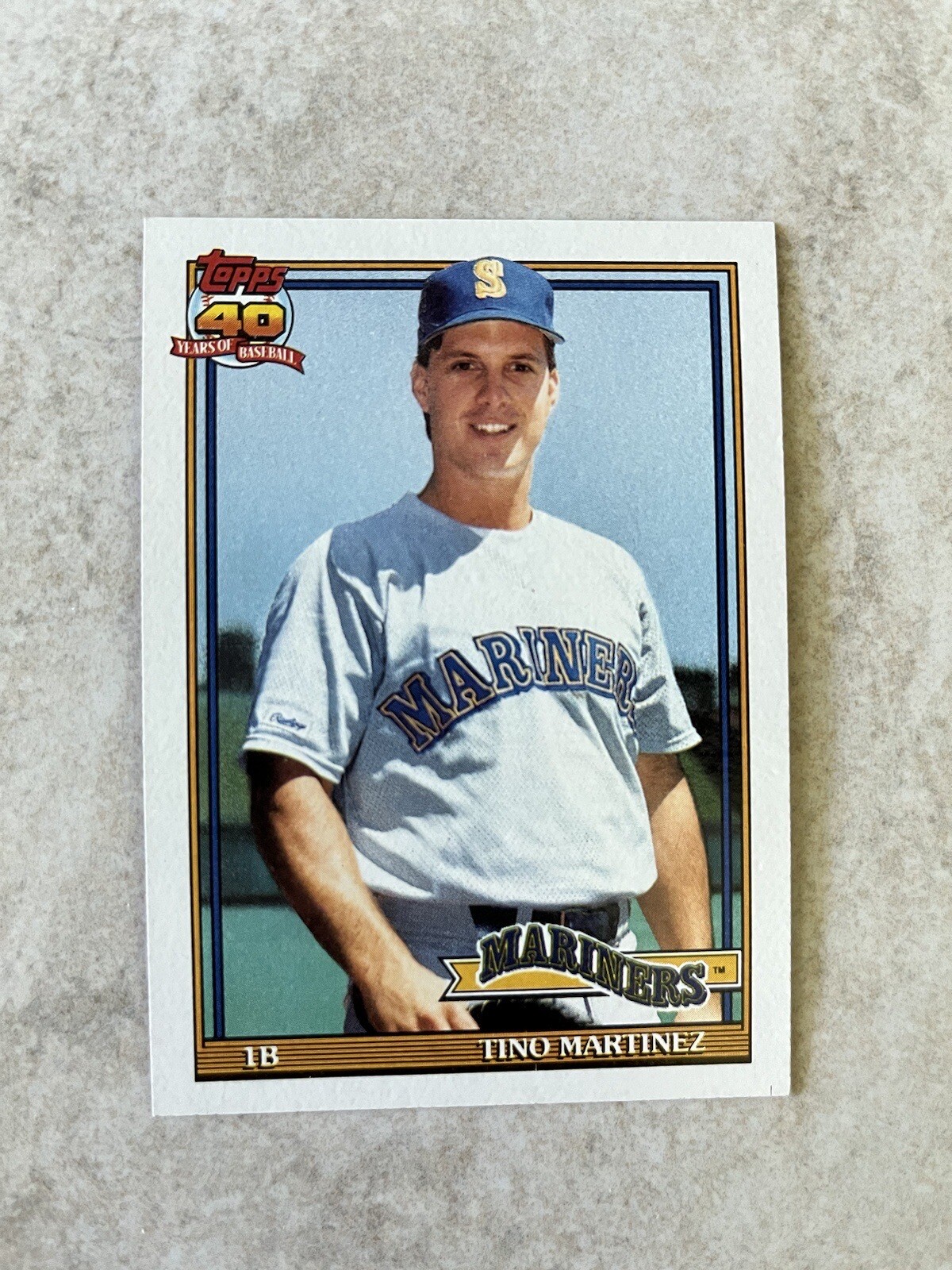
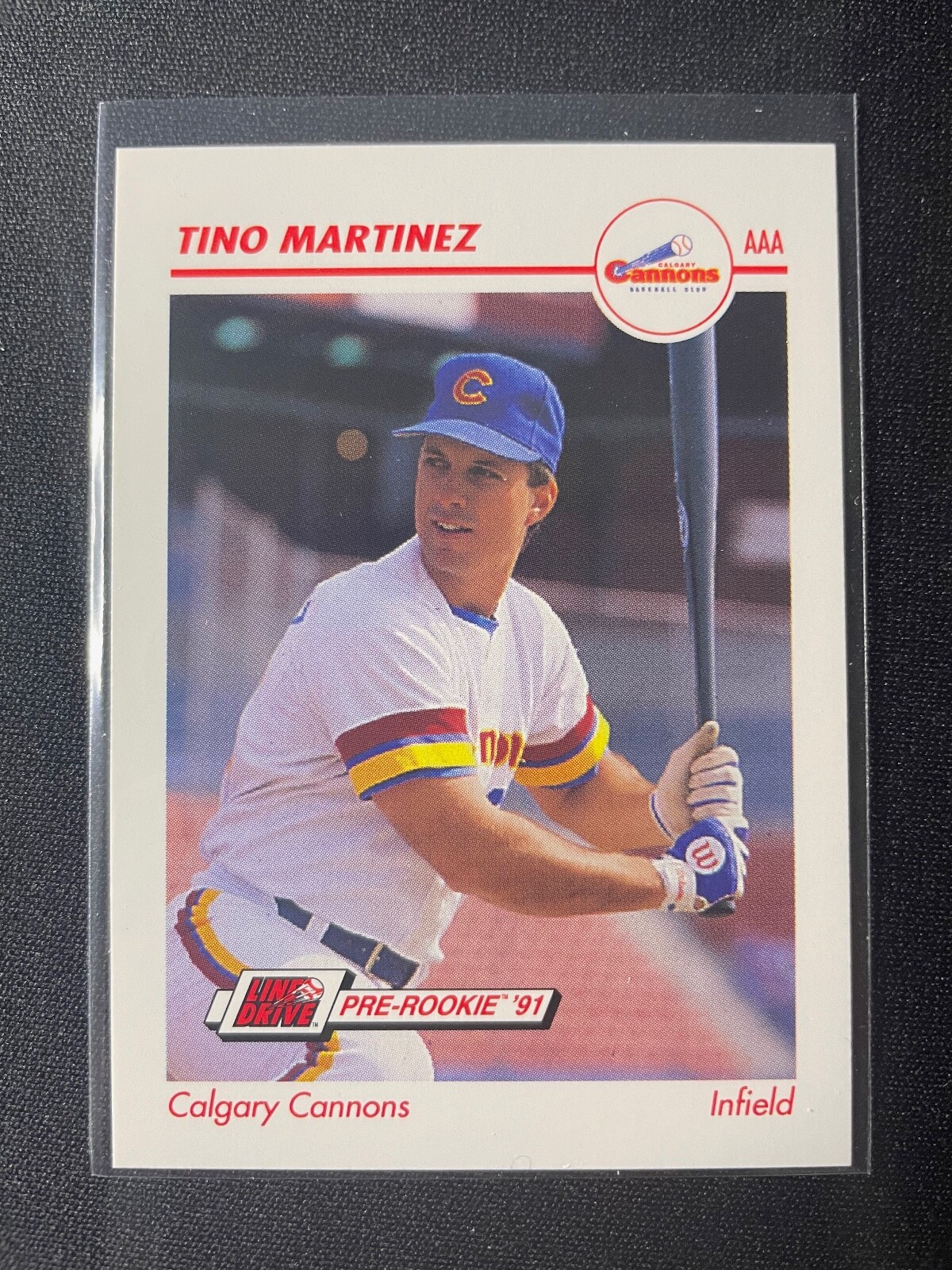
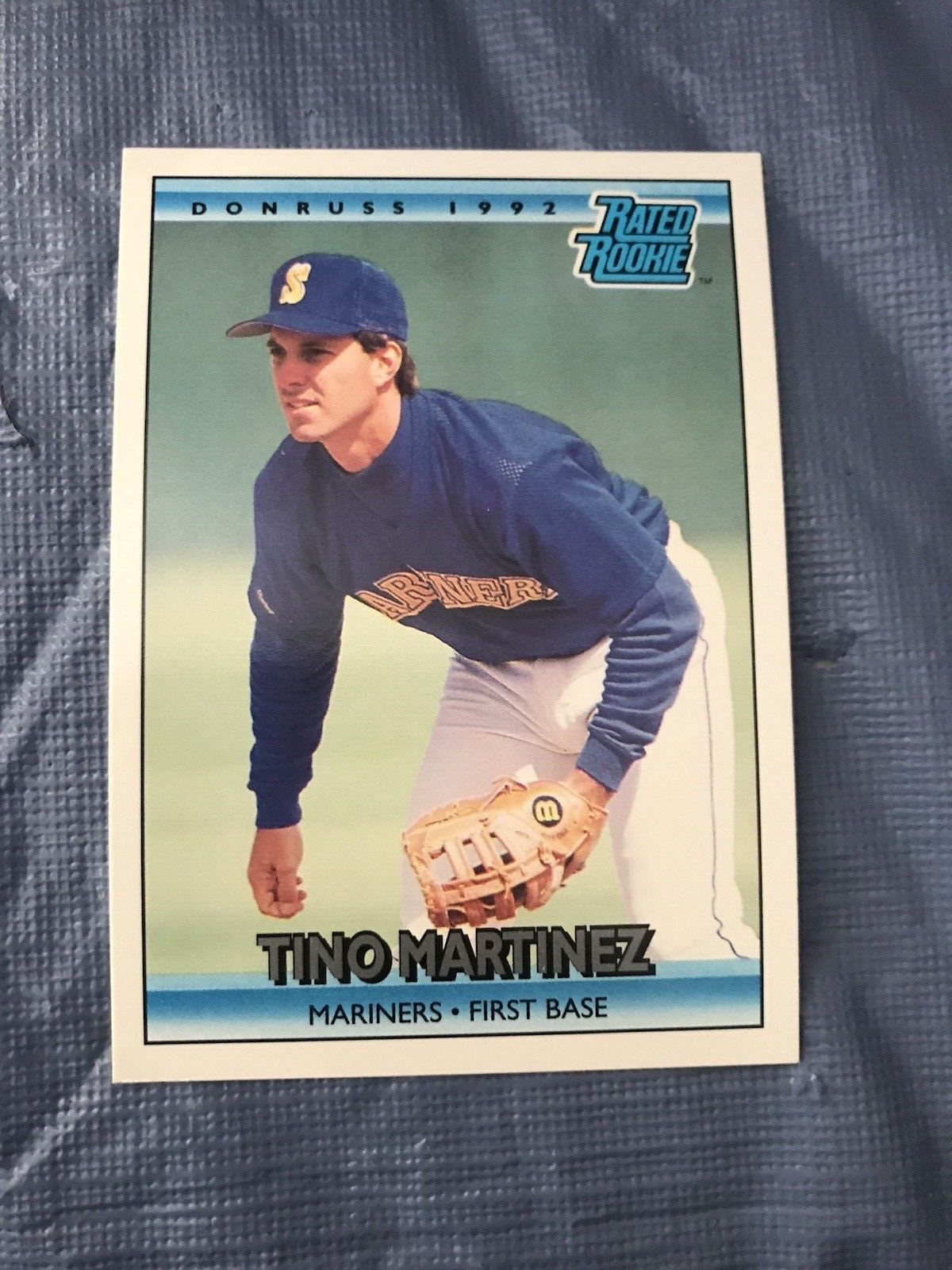
Tino Martinez made his Major League debut with the Seattle Mariners in 1990, but his true mainstream rookie cards generally appeared in 1989, 1990, and 1991 sets, depending on how specific manufacturers defined rookie status at the time. Below is a breakdown of the primary releases collectors encounter.
1. 1989 Topps Traded #64T
Distributed in factory-set form late in the 1989 calendar year, the Topps Traded set captured many future stars in their professional or Olympic uniforms before their official Major League rookie cards hit widespread retail packs. The Tino Martinez 1989 Topps Traded card features him in his Team USA uniform. Because it was distributed as a complete set rather than pulled from individual packs, many copies survived in pristine condition.
2. 1990 Topps #704
As his traditional base rookie card in the flagship Topps release, the 1990 Topps card is ubiquitous. Characterized by its classic wood-grain border design, this card was printed in astronomical quantities. Raw copies command very modest prices, but finding a copy with centered borders and zero surface blemishes remains a fun, low-cost collecting challenge.
3. 1990 Upper Deck #56
Upper Deck revolutionized the hobby in 1989 with high-gloss finishes, crisp photography, and tamper-evident packaging. Their 1990 release continued this trend. The Tino Martinez rookie card from 1990 Upper Deck is a staple of early-90s collections. Holograms on the reverse side helped deter counterfeiting, though millions of copies were still preserved.
4. 1990 Donruss #375 and 1990 Fleer #117
Alongside Topps and Upper Deck, Donruss and Fleer rounded out the major manufacturers of the era. The 1990 Donruss card features the iconic red-and-white border design, while the 1990 Fleer card displays the classic yellow border with blue text. Both sets suffer from extreme overproduction, keeping values low for raw specimens.
Comparative Overview of Tino Martinez Rookie Cards
| Card Release | Primary Distributor / Set Type | Estimated Raw Value | Value in PSA 10 (Gem Mint) | Key Condition Vulnerability |
|---|---|---|---|---|
| 1989 Topps Traded #64T | Factory Set | $1 – $3 | $25 – $60 | Centering and corner softness |
| 1990 Topps #704 | Wax / Jumbo Packs | $0.50 – $2 | $15 – $40 | Chipping on wood-grain borders |
| 1990 Upper Deck #56 | Hobby Packs | $1 – $3 | $20 – $50 | Back centering and surface gloss scratches |
| 1990 Donruss #375 | Wax / Factory Sets | $0.50 – $1.50 | $10 – $30 | Red border fading and edge chipping |
| 1990 Fleer #117 | Wax / Factory Sets | $0.50 – $1.50 | $10 – $25 | Yellow border wear and print dots |
Note: Card values fluctuate based on current market demand, auction results, and overall hobby trends. Prices reflect historical market averages for verified sales.
The Economics of Card Grading: Is It Worth It?
One of the most common questions hobbyists ask is whether they should submit their raw Tino Martinez cards to a professional grading company like Professional Sports Authenticator (PSA), Beckett Grading Services (BGS), or SGC.
Because grading fees typically range from $15 to $30 per card—plus shipping and insurance costs—submitting a raw card that is only worth $2 to begin with results in an immediate financial loss. A grading fee only makes economic sense if the card meets the strict criteria for a Gem Mint (PSA 10 or equivalent) grade, which commands a multiplier high enough to cover the grading expenses and yield a profit.
Before spending money on grading, examine your cards under a strong magnifying loupe and bright light:
- Centering: Measure the borders on the front and back. A card with heavy left-to-right or top-to-bottom border imbalance will almost never receive a Gem Mint grade.
- Corners: Check all four corners for microscopic fraying, whitening, or blunt tips. Even minor factory-cut flaws can dock a card down to an 8 or 9.
- Edges: Look for chipping along the colored borders, particularly on 1990 Donruss and Fleer sets.
- Surface: Inspect the gloss for scratches, print lines, or "fish-eyes" (small circular printing imperfections).
Factors That Influence Long-Term Value
Beyond technical grading scores, several broader economic and cultural catalysts dictate whether sports card values rise, fall, or stagnate.
Player Legacy and Team Association
Tino Martinez enjoyed an exceptional 16-year Major League career, slugging 339 home runs, winning four World Series titles with the New York Yankees, and earning an All-Star nod. However, unlike generational icons such as Derek Jeter or Mariano Rivera, role-oriented sluggers from championship cores often experience softer demand in the broader collector market. Yankees team collectors provide a steady baseline of demand, preventing prices from collapsing entirely, but speculative spikes are rare.
Market Liquidity and Platform Transparency
The rise of digital marketplaces, automated pricing tools, and real-time auction trackers has made it easier than ever to evaluate historical sales data. Collectors no longer need to rely on outdated print price guides. Checking "Sold" or "Completed" listings on platforms like eBay provides the most accurate, real-time reflection of what buyers are actively willing to pay.
Frequently Asked Questions
Are Tino Martinez rookie cards rare?
No. Because Tino Martinez played during the height of the 1990s overproduction boom, millions of base rookie cards were printed and stored in pristine condition. True rarity is found almost exclusively in high-grade professional slabs (PSA 10) or rare parallel and insert variations from later in his career.
Which Tino Martinez rookie card is the most valuable?
In top-tier condition (PSA 10), the 1989 Topps Traded #64T and 1990 Upper Deck #56 cards typically command the highest market prices, generally ranging between $25 and $60 depending on active buyer competition.
Is it better to buy raw cards or graded cards?
For modern and Junk Wax Era cards, purchasing professionally graded cards (PSA 10 or BGS 9.5) is almost always safer and more cost-effective than buying raw cards and hoping to grade them yourself, as the grading and shipping fees often exceed the raw card's value.
How should I store my baseball cards to protect their value?
Store cards in a climate-controlled environment away from direct sunlight and high humidity, which can cause fading and cardstock warping. Use soft sleeves (penny sleeves) placed inside rigid top-loaders or semi-rigid holders (such as Cardboard Gold Card Savers) for optimal physical protection.
Does Tino Martinez sign autographs for collectors?
Yes, Tino Martinez regularly participates in private and public autograph signings, and certified autograph cards issued by manufacturers like Topps and Upper Deck maintain a dedicated following among Yankees team collectors.
Practical Next Steps for Collectors
If you currently own a collection of Tino Martinez cards, begin by sorting them by manufacturer and year. Separate the base cards from any inserts, parallels, or factory sets. Inspect the condition of the top candidates under proper lighting. If you find pristine copies of his 1989 Topps Traded or 1990 Upper Deck cards with sharp corners and flawless centering, compare their raw state against recent online auction sales to determine if professional authentication makes financial sense. For the vast majority of common raw base cards, preserving them in protective top-loaders offers a nostalgic way to enjoy a classic era of baseball history without expecting substantial financial returns.
Image Gallery