Understanding How the Trust Management Software Ecosystem Operates
The trust management software ecosystem operates as an integrated network of automated platforms, cloud service providers, and third-party auditors designed to streamline security compliance. By using API-driven integrations to collect...
The trust management software ecosystem operates as an integrated network of automated platforms, cloud service providers, and third-party auditors designed to streamline security compliance. By using API-driven integrations to collect evidence continuously, these systems replace manual audits with real-time monitoring, allowing organizations to maintain, verify, and share their security posture with stakeholders.
Contents
In the current landscape of 2026, "trust" has evolved from a vague sentiment into a measurable business asset. For modern enterprises, particularly those in the SaaS and FinTech sectors, proving security and regulatory compliance is no longer a periodic hurdle but a constant requirement for doing business. The trust management software ecosystem has matured into a sophisticated infrastructure that bridges the gap between technical security controls and executive-level risk management.
The Architecture of a Trust Management Ecosystem
To understand how this ecosystem operates, one must first look at its architectural foundation. At its core, the ecosystem is built on three distinct layers: the Integration Layer, the Control Mapping Layer, and the Reporting Layer.
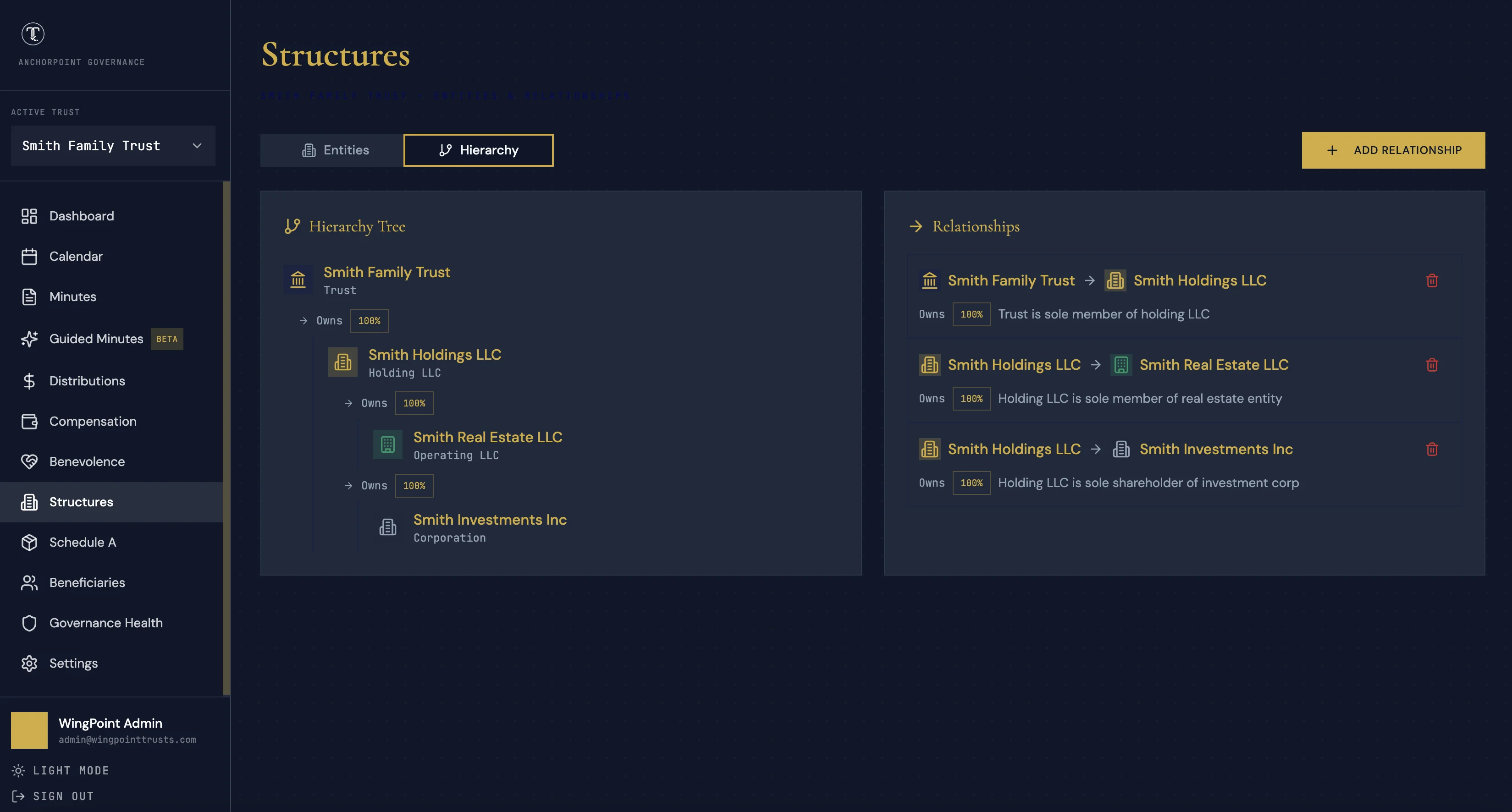
The Integration Layer is the "connective tissue" of the system. In 2026, most trust management platforms offer hundreds of native integrations with the tools companies already use, such as AWS, Google Cloud, GitHub, Jira, and Slack. These integrations operate via "read-only" API access. Instead of a human taking a screenshot of a password policy or a firewall configuration, the trust management software polls these services directly to verify that the settings meet specific security requirements.
The Control Mapping Layer is where the technical data is translated into regulatory language. A single technical action—such as enforcing Multi-Factor Authentication (MFA)—can satisfy requirements for multiple frameworks simultaneously, including SOC 2, ISO 27001, and GDPR. The ecosystem uses intelligent mapping to ensure that one piece of evidence can be "written once and applied many times," drastically reducing the administrative burden on security teams.
Finally, the Reporting Layer provides the interface for both internal stakeholders (security officers and executives) and external parties (auditors and customers). This is often manifested as a "Trust Center" or a real-time dashboard that displays the current health of the organization’s compliance program.
The Shift from Point-in-Time Audits to Continuous Monitoring
Historically, compliance was a "point-in-time" exercise. A company would prepare for an audit for three months, provide a snapshot of their environment, receive a report, and then potentially let their security posture slip until the next year. The modern trust management ecosystem has fundamentally changed this through Continuous Control Monitoring (CCM).
CCM functions as an automated "smoke alarm" for compliance. If a developer accidentally opens an S3 bucket to the public or if a new employee isn't onboarded with the required background check, the trust management software detects the deviation from the "golden state" of compliance immediately.
This real-time operational model provides several advantages:
- Immediate Remediation: Security teams receive alerts the moment a control fails, allowing them to fix issues before they become liabilities or audit findings.
- Audit Readiness: Because evidence is gathered daily, the "audit window" is always open. When it comes time for a formal third-party assessment, 90% of the evidence is already organized and verified.
- Reduced Friction: By automating the collection of logs and configurations, the ecosystem removes the need for "evidence collection marathons" that typically distract engineering teams for weeks at a time.
Key Participants in the Ecosystem
The ecosystem is not just a piece of software; it is a collaborative environment involving several key entities. Understanding how these players interact is essential to understanding the ecosystem's total value.
1. The Platform Providers
These are the central hubs, such as Vanta, Drata, or Thoropass. They provide the software interface, the integration library, and the project management tools needed to track compliance progress. These platforms act as the "Single Source of Truth" for an organization's security claims.
2. The Cloud and Identity Providers
Infrastructure-as-Code (IaC) and cloud providers (AWS, Azure, GCP) are the primary sources of truth. The trust management software monitors these environments to ensure that the actual state of the infrastructure matches the documented security policies. Identity providers like Okta or Azure AD are equally critical, as they provide the data needed to verify user access reviews and offboarding procedures.
3. Independent Audit Firms
A critical, often misunderstood part of the ecosystem is the independent auditor. Even with the most advanced software, frameworks like SOC 2 require an independent CPA to sign off on the report. In the 2026 ecosystem, many audit firms have "tech-enabled" their practices, logging directly into the trust management platform to review evidence rather than requesting documents via email or secure portals.
4. Customers and Prospects
The end-users of the "trust" generated by this ecosystem are the customers. They interact with the ecosystem through Trust Centers—publicly accessible or gated portals where a company can share its latest security certifications, uptime statistics, and sub-processor lists. This transparency speeds up the sales cycle by satisfying the "Security Questionnaire" phase of a deal almost instantly.
Comparing Compliance Management Approaches
The evolution of the ecosystem is best viewed by comparing how organizations manage trust across different levels of maturity.
| Feature | Manual Spreadsheets | Basic GRC Tools | Integrated Trust Ecosystem (2026) |
|---|---|---|---|
| Evidence Collection | Manual screenshots/PDFs | Manual uploads to a portal | Automated API-based fetching |
| Update Frequency | Annual or Quarterly | Monthly / Project-based | Real-time / Continuous |
| Framework Mapping | None (Manual duplication) | Basic cross-referencing | Dynamic AI-driven cross-mapping |
| Audit Experience | High-stress "Audit Season" | Managed document requests | Auditor-in-the-loop platform access |
| Customer Transparency | Reactive (responding to emails) | Semi-automated reports | Proactive (Self-service Trust Centers) |
| Primary Goal | Check-the-box compliance | Risk management | Competitive business advantage |
Security Frameworks and the "Common Control" Model
The trust management ecosystem operates most efficiently when utilizing a "Common Control" model. In the past, companies treated HIPAA, PCI-DSS, and SOC 2 as separate silos. This led to massive redundancies.
The modern ecosystem identifies that a single security control—for example, "Encryption at Rest"—is a requirement across almost every major framework. The software creates a central library of these "Common Controls." When the organization implements a fix or gathers evidence for one, it automatically updates the status for all associated frameworks. This horizontal scaling of compliance allows companies to enter new markets (e.g., expanding from the US to Europe and needing ISO 27001) in a fraction of the time it would have taken five years ago.
Implementation Costs and Operational Considerations
Operating within this ecosystem involves both direct software costs and internal resource allocation. As of 2026, the cost for a mid-market enterprise trust management platform typically ranges from $15,000 to $60,000 per year, depending on the number of integrations and the frameworks required.
However, the "total cost of compliance" must also account for:
- Audit Fees: While the software helps, you must still pay an independent firm for the final certification.
- Remediation Effort: The software will find gaps (e.g., missing hard drive encryption). The cost of fixing these technical issues is an internal operational expense.
- Maintenance: Compliance is not "set it and forget it." A dedicated owner (often in Security or Operations) must still oversee the platform to address alerts and update policies.
Frequently Asked Questions
Does trust management software replace the need for an auditor?
No. While the software automates evidence collection and organization, regulatory frameworks like SOC 2 or ISO 27001 still require a qualified third-party (such as a CPA firm or an ISO registrar) to review the data and issue a formal opinion. The software makes the auditor's job faster and more accurate, but it does not replace the legal requirement for independent verification.
How does the ecosystem handle "non-technical" evidence?
For evidence that cannot be pulled via API—such as an office security walk-through or a physical board meeting—the ecosystem uses manual upload workflows and "task reminders." The software assigns a task to an owner, provides a template for the evidence needed, and stores the resulting document in the same centralized repository as the automated data.
Is the data shared with these platforms secure?
Trust management platforms themselves are subject to the same high standards they enforce. Most platforms use high-level encryption, do not store sensitive customer data (only metadata/configurations), and undergo frequent third-party audits. When selecting a provider, it is standard practice to review their own SOC 2 Type 2 report and "Trust Center" first.
Can this software help with GDPR and privacy compliance?
Yes. Modern trust management ecosystems have expanded to include privacy modules. They can help track Data Processing Agreements (DPAs), manage sub-processor lists, and map data flows to ensure compliance with GDPR, CCPA/CPRA, and other regional privacy laws.
How long does it take to see results from an ecosystem implementation?
Most organizations can integrate their primary tech stack and see their first "gap assessment" within 24 to 48 hours. However, achieving a full certification (like a SOC 2 Type 2) typically takes 3 to 6 months of "observation time," during which the software proves that the controls were operating effectively over a continuous period.
Practical Recommendation for Organizations
For organizations looking to enter or optimize their position within the trust management software ecosystem, the first step is to audit your own tech stack for API compatibility. A trust management platform is only as effective as the data it can ingest. Ensure that your primary cloud providers, identity managers, and HRIS systems are among the "native integrations" supported by your chosen platform.
Furthermore, do not treat the software as a purely technical tool. Compliance is a cultural shift. Use the transparency provided by the ecosystem to foster a "security-first" mindset across all departments—from HR (background checks) to Engineering (secure coding practices). When compliance becomes an automated byproduct of your daily operations rather than a manual interruption, "trust" becomes a powerful engine for business growth.
Image Gallery