Ultimate 2026 ROS Rankings Half PPR: Rest-of-Season Fantasy Football Strategy
(Note: "ROS rankings half ppr" refers to Rest-of-Season fantasy football player valuations in leagues utilizing a 0.5 points-per-reception scoring format for the 2026 NFL season.) Navigating the remainder of a fantasy football season r...
(Note: "ROS rankings half ppr" refers to Rest-of-Season fantasy football player valuations in leagues utilizing a 0.5 points-per-reception scoring format for the 2026 NFL season.)
Contents
Navigating the remainder of a fantasy football season requires a shift from draft-day projections to dynamic, performance-driven asset management. As the 2026 NFL schedule unfolds, managers in 0.5 Points-Per-Receptions (Half PPR) formats must adapt their roster construction. Half PPR sits precisely in the middle of standard (non-PPR) and full PPR leagues. This format strikes a balance where elite volume-based pass-catchers retain high floors, but rushing workhorses and goal-line specialists maintain their week-winning upside. Mastering rest-of-season (ROS) rankings in 2026 means understanding how target distribution, schedule softness, and injury resilience intersect to dictate player value over the final stretches of the campaign.
Understanding the Half PPR Scoring Ecosystem for 2026
The Half PPR scoring setting alters the baseline value of every position. While full PPR inflates the value of slot receivers and pass-catching running backs, Half PPR keeps a healthy tether to traditional yardage and touchdown production.
To evaluate players accurately for the rest of the 2026 season, managers must weigh opportunity metrics differently than they did in September. Early-season production is often noisy, driven by small sample sizes, fluky touchdown rates, and game scripts that regress over a 17-game season. ROS rankings filter out this noise by projecting forward-looking efficiency and high-value touches.
Core Metrics Driving 2026 ROS Evaluations
- Weighted Opportunity Rating (WOPR): Combines a player's share of team targets and a player's share of team air yards to measure their total offensive involvement.
- Red Zone Market Share: Tracking inside-the-10 and inside-the-20 touches provides a clear picture of touchdown regression candidates.
- Offensive Line Block Win Rate: Evaluating upfront protection helps identify which running backs are set for positive regression due to improved blocking or upcoming schedule changes.
- Strength of Schedule (SOS): Analyzing opposing defensive units against specific positions over the final weeks of the fantasy schedule.
Positional Strategy and Tier Breakdown for ROS Success
Building a championship roster requires treating every position through the lens of scarcity and weekly volatility. Below is an analysis of how positional tiers break down for the 2026 home stretch.
Running Backs: The Scarcity Premium
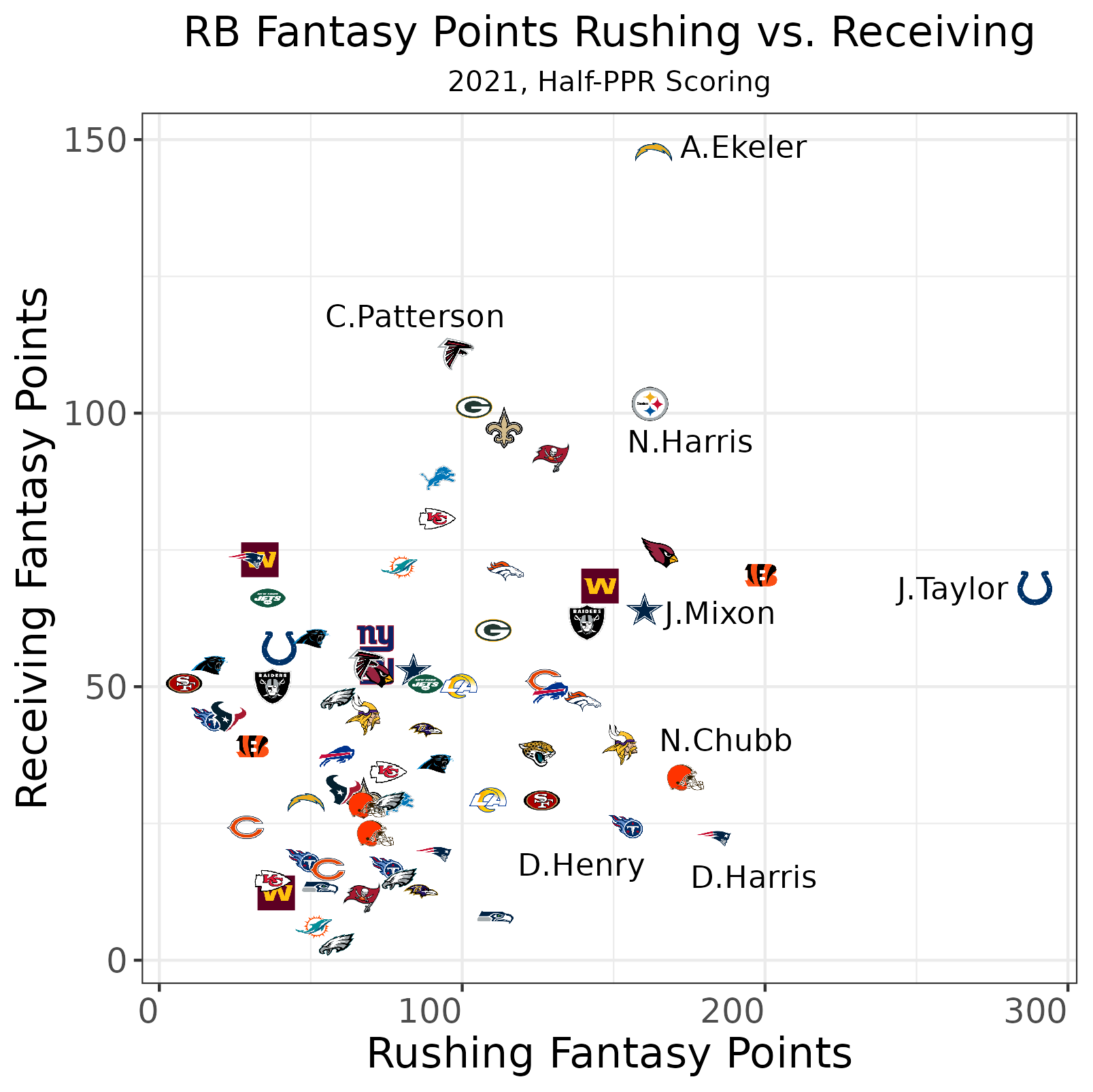
Running backs remain the lifeblood of Half PPR formats. Because receptions are worth 0.5 points, pass-catching specialists like receiving backs retain safe floors, but true bellcow backs who dominate red-zone carries command the highest tier. In 2026, finding a running back with a secure 15-touch baseline transforms a fantasy lineup.
When evaluating running backs for rest-of-season rankings, target share out of the backfield acts as a stabilizing force against injury and poor offensive line play. Backs who command five or more targets per game provide a massive structural advantage in Half PPR.
Wide Receivers: Volatility Management
Wide receivers in Half PPR offer high ceilings, but lower-tier options can suffer from extreme weekly variance. Elite wide receivers who combine high target shares with downfield explosive plays form the foundation of championship rosters. For the rest of 2026, target consistency outweighs pure yardage upside. Slot receivers with high catch rates anchor your lineup safely, while outside vertical threats provide the ceiling needed to win high-scoring matchups.
Quarterbacks and Tight Ends: Positional Leverage
In standard single-quarterback leagues, elite signal-callers who add rushing production create weekly positional advantages. However, streaming matchups based on opposing pass defenses remains a viable strategy if you lack a top-tier option. At tight end, the position is heavily concentrated. Outside of the elite tier who command wide receiver-level targets, the tight end landscape relies entirely on touchdown dependency and red-zone schematics.
Comparative Breakdown: Half PPR Roster Construction Strategies
| Strategy Focus | Primary Objective | Key Positional Target | Risk Factor |
|---|---|---|---|
| Zero-RB Build | Accumulate elite pass-catchers early to dominate WR and Flex slots. | High-volume wide receivers and pass-catching running backs. | Reliance on waiver wire running back depth or injury luck. |
| Hero-RB Build | Secure one foundational bellcow early, then load up on elite receivers. | Elite 3-down running back in rounds 1 or 2. | Injury to your anchor running back depletes positional advantage. |
| Balanced Approach | Draft best-player-available based on positional value and tiers. | Mix of high-floor running backs and upside wide receivers. | Can miss out on elite tier-one difference-makers at the top. |
Step-by-Step Guide to Executing Trades Using ROS Rankings
Relying solely on season-long point totals is the fastest way to lose trades. Total points reflect what a player did, while ROS rankings project what a player will do. Use this systematic approach to upgrade your roster before your league's trade deadline.
- Audit Your Roster Weaknesses: Identify your lineup's weakest starting spots and upcoming bye-week or playoff vulnerability points. Do you need a high-floor player to secure wins, or a high-ceiling boom-or-bust player to overcome a deficit?
- Analyze Opposing Schedules: Target players whose 2026 schedules turn drastically softer in the second half of the season. Conversely, look to trade away players facing a gauntlet of elite top-five secondaries.
- Capitalize on Buy-Low Windows: Identify players who have underperformed their underlying usage metrics due to high drop rates, fluky red-zone fumbles, or game scripts that are bound to normalize.
- Package Assets for Tier-Ups: In fantasy football, depth is often overrated once you have a starting lineup set. Consolidating two good players into one elite tier-one superstar drastically increases your weekly scoring ceiling.
- Execute and Monitor: Send targeted trade offers that directly address the positional needs of your trading partner rather than blind, generic proposals.
Pros and Cons of Utilizing Rest-of-Season Rankings
Strategic Balance Notice
Advantages: Rest-of-season rankings remove historical bias from draft days, allowing managers to capitalize on shifting offensive schemes, new starting quarterbacks, and evolving coaching tendencies. They provide an objective framework for trade deadlines and waiver wire bids.
Disadvantages: Projections are inherently volatile. Unforeseen injuries, sudden coaching changes, and unexpected defensive adjustments can render even the most carefully calculated ROS model inaccurate overnight.
Frequently Asked Questions
What makes Half PPR rankings different from standard and full PPR?
Half PPR awards 0.5 points per reception, balancing the high floor of pass-catching specialists with the touchdown and yardage dominance of traditional rushers. Rankings must weigh target volume against goal-line opportunity carefully.
How should I factor the NFL schedule into my ROS rankings?
Look specifically at defensive matchups during your league's fantasy playoff weeks rather than overall season stats. Facing bottom-tier secondaries or run defenses late in the year can elevate a fringe player into a league-winner.
When is the best time to trade based on ROS rankings?
The optimal window is immediately after a player has a multi-touchdown game driven by unsustainable efficiency, or right before an anticipated schedule softening.
How do injuries impact rest-of-season player valuations?
Injuries to offensive linchpins or starting quarterbacks completely alter target distribution. Always downgrade pass-catchers whose backup quarterbacks cannot sustain a competent passing attack.
Are rookies more valuable in the second half of the season?
Yes, rookies frequently experience a developmental curve, earning larger roles and building trust with their coaching staffs as the season progresses, making them prime targets for late-season surges.
Dominate Your League Down the Stretch
Sustaining success through the 2026 fantasy football season requires proactive management, objective data analysis, and a willingness to part ways with early-season draft investments that no longer serve your roster. Continuously monitor snap counts, target shares, and upcoming matchups to keep your lineup optimized for a championship run.
Image Gallery