Jeep Wrangler vs Toyota RAV4: Which 2026 SUV Fits Your Lifestyle?
Choosing between the 2026 Jeep Wrangler and the 2026 Toyota RAV4 involves a fundamental decision between specialized adventure capability and daily practical efficiency. The Wrangler is a body-on-frame off-roader designed for rugged te...
Choosing between the 2026 Jeep Wrangler and the 2026 Toyota RAV4 involves a fundamental decision between specialized adventure capability and daily practical efficiency. The Wrangler is a body-on-frame off-roader designed for rugged terrain and open-air freedom, whereas the RAV4 is a unibody crossover engineered for comfort, fuel economy, and urban versatility.
Contents
Understanding the Fundamental Differences
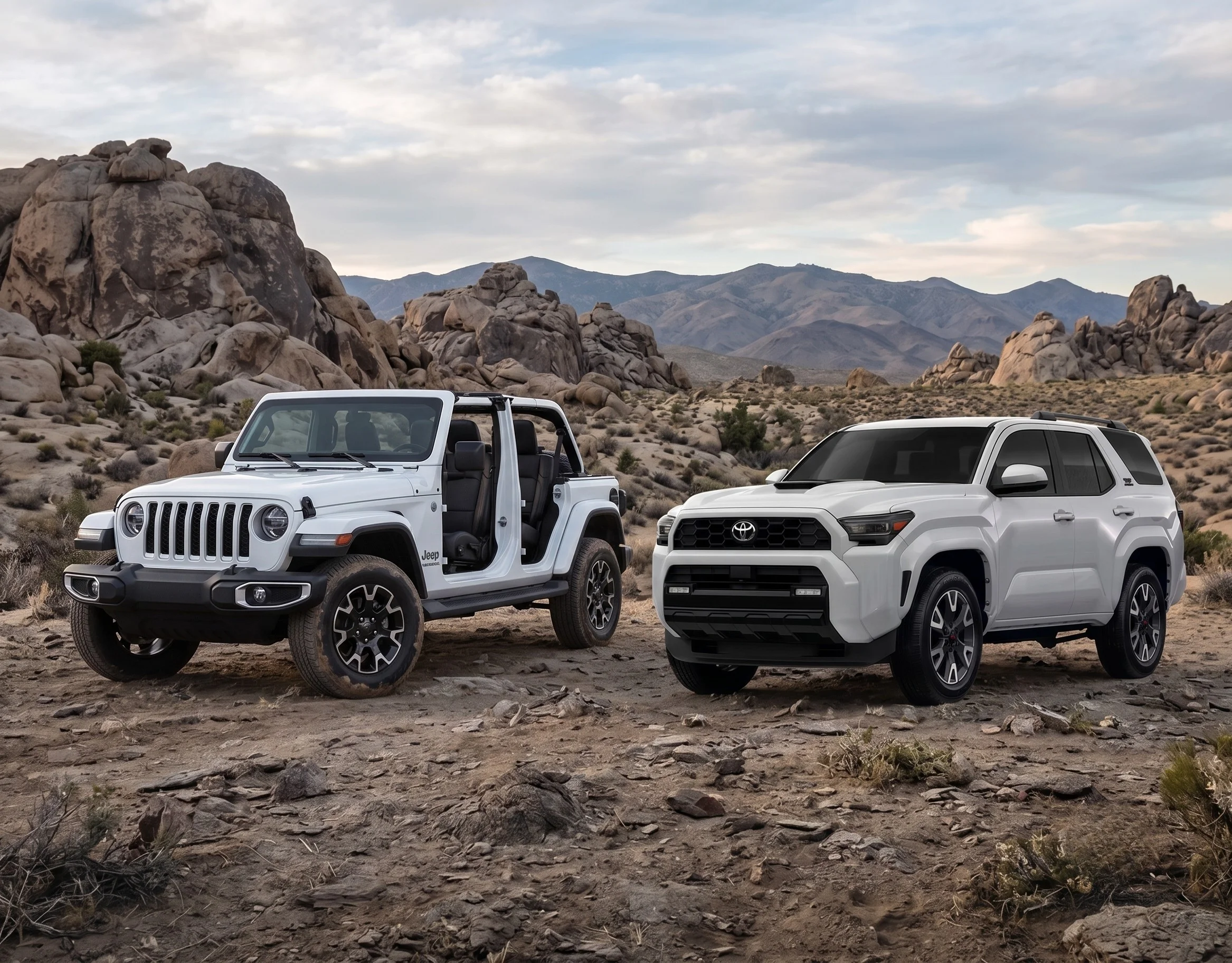
To compare the Jeep Wrangler and Toyota RAV4 is to compare two entirely different philosophies of automotive engineering. The Wrangler is a descendant of military reconnaissance vehicles, prioritizing durability and mechanical simplicity over highway manners. It uses a body-on-frame construction, similar to a pickup truck, which allows the chassis to flex under extreme stress—a vital trait for rock crawling.
The Toyota RAV4, conversely, utilizes the TNGA-K (Toyota New Global Architecture) platform. This unibody design integrates the frame and body into a single solid unit. The result is a vehicle that handles more like a sedan than a truck, offering superior crash safety ratings and a significantly quieter cabin. While the Wrangler is built to be taken apart (with removable doors and roof), the RAV4 is built to stay sealed, keeping road noise and weather out.
Performance and Powertrain Options
As of 2026, both vehicles offer a variety of powertrains, reflecting the industry's shift toward electrification while maintaining traditional internal combustion engines (ICE).
Jeep Wrangler Powertrains
The Wrangler continues to offer the venerable 3.6L Pentastar V6, which is prized for its reliability and linear power delivery in off-road situations. However, the standout for 2026 is the 4xe Plug-in Hybrid (PHEV) system. This setup pairs a 2.0L turbocharged engine with electric motors, providing substantial torque—essential for crawling over obstacles—while allowing for approximately 21 miles of all-electric range.
Toyota RAV4 Powertrains
The RAV4 lineup is dominated by efficiency. The standard 2.5L four-cylinder engine provides adequate power for commuting, but the RAV4 Hybrid and RAV4 Prime (PHEV) are the preferred choices for most buyers. The RAV4 Prime offers a significant electric-only range of up to 42 miles, nearly double that of the Jeep 4xe. Toyota’s Electronic On-Demand All-Wheel Drive (AWD) system uses a dedicated electric motor for the rear wheels, eliminating the need for a heavy mechanical driveshaft.
| Feature | 2026 Jeep Wrangler (4-Door) | 2026 Toyota RAV4 (Hybrid/ICE) |
|---|---|---|
| Base Engine | 3.6L V6 / 2.0L Turbo | 2.5L 4-Cylinder / Hybrid |
| Hybrid Option | 4xe Plug-in Hybrid | Hybrid & Plug-in (Prime) |
| Max Towing | Up to 5,000 lbs | Up to 3,500 lbs |
| Fuel Economy | 17–20 Combined MPG (ICE) | 28–41 Combined MPG |
| Ground Clearance | 9.7 to 12.9 inches | 8.1 to 8.6 inches |
| Drivetrain | Part-time or Full-time 4WD | FWD or Electronic AWD |
Off-Road Capability: Technical Specs
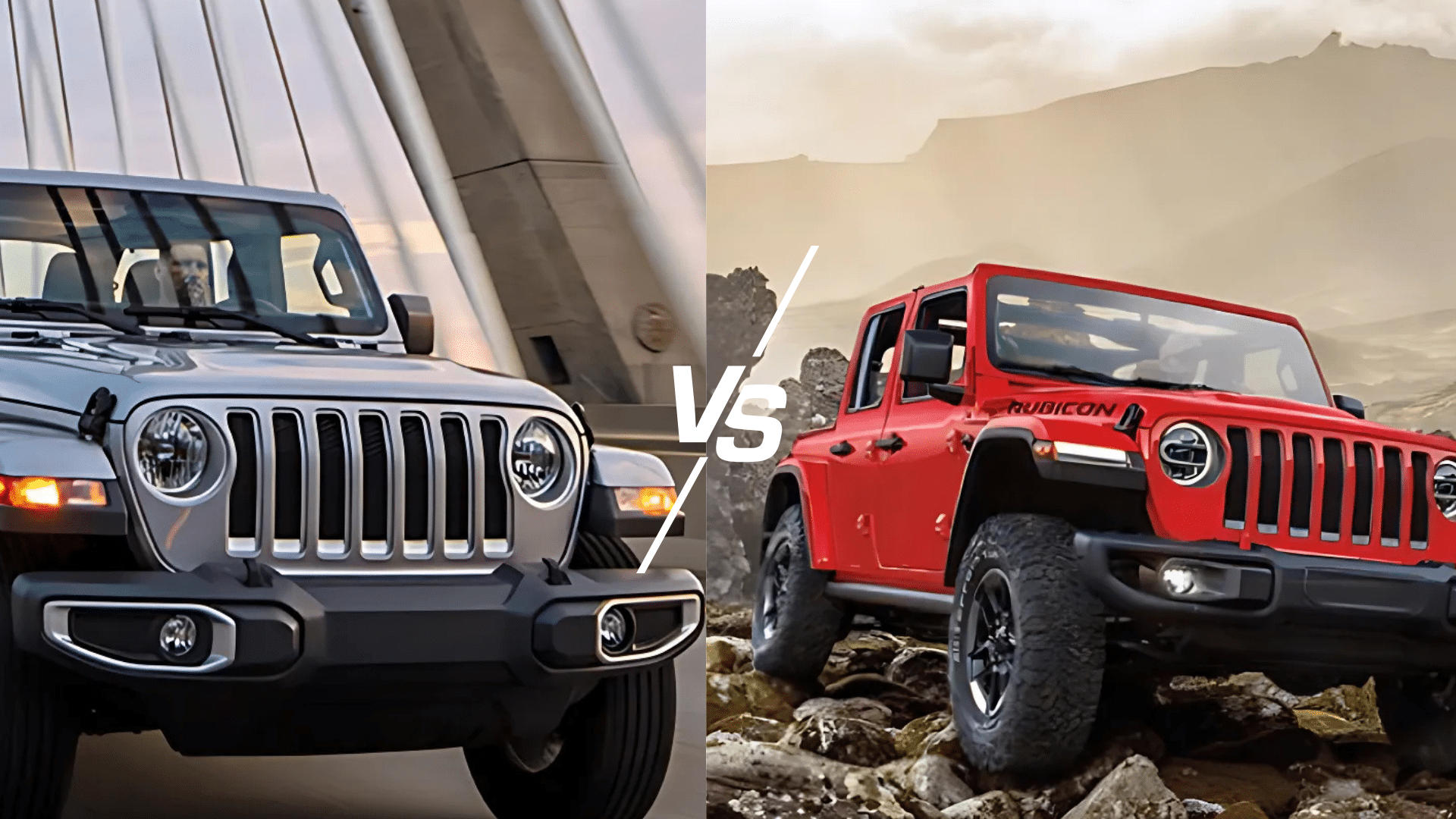
If your primary goal is to tackle the Rubicon Trail or navigate deep mud, the Jeep Wrangler is the undisputed champion. Its technical specifications are designed for "maximalism" in the dirt.
- Articulation: The Wrangler features solid axles front and rear. This allows one wheel to move upward while the other is forced downward, maintaining contact with the ground on uneven surfaces. High-trim models like the Rubicon include an electronic sway-bar disconnect to further increase this movement.
- Gearing: Jeep utilizes a dedicated transfer case with a "4-Low" setting. This provides a massive torque multiplication factor, allowing the vehicle to creep slowly over rocks without burning the clutch or overheating the transmission.
- Geometry: With approach angles often exceeding 40 degrees, the Wrangler can climb steep obstacles that would instantly tear the front bumper off a RAV4.
The Toyota RAV4, specifically in the TRD Off-Road or Woodland Edition trims, is a "soft-roader." It is excellent for gravel paths, forest service roads, and snowy highways. It uses torque-vectoring AWD to manage slip, but it lacks a low-range transfer case and the underbody protection necessary for serious rock crawling. The RAV4's independent suspension provides a comfortable ride but limits wheel travel when the terrain gets technical.
Interior Comfort and Technology
The 2026 models show a narrowing gap in technology, but a wide gulf in comfort. Following its major interior refresh in 2024, the Wrangler now features a standard 12.3-inch Uconnect 5 touchscreen across all trims. It supports wireless Apple CarPlay and Android Auto and even includes built-in off-road trail guides. However, the cabin remains narrow, and the upright windshield creates significant wind noise at speeds above 60 mph.
The Toyota RAV4 interior is the epitome of ergonomics. It offers more shoulder room, more intuitive storage cubbies, and a much quieter environment. The 2026 RAV4 focuses on the Toyota Audio Multimedia system, which emphasizes voice commands and cloud-based navigation. While the Jeep’s interior is designed to be hosed out (featuring drain plugs in the floor), the Toyota’s interior is designed for long-distance fatigue reduction, featuring available heated and ventilated SofTex seats.
Safety and Reliability
Safety is one area where the Toyota RAV4 holds a clear advantage. Because it is a unibody vehicle, it performs better in standard IIHS crash tests, particularly in side-impact and roof-strength evaluations. Every 2026 RAV4 comes standard with Toyota Safety Sense 3.0, which includes:
- Pre-Collision System with Pedestrian Detection
- Full-Speed Range Dynamic Radar Cruise Control
- Lane Tracing Assist
- Proactive Driving Assist
The Jeep Wrangler has improved its safety suite, adding side-curtain airbags and available forward collision warning, but its structural design—specifically the removable doors and roll cage—limits its performance in certain laboratory crash scenarios. For detailed safety ratings, consumers should consult the NHTSA official database.
Regarding reliability, Toyota consistently ranks higher in long-term dependability studies. The RAV4’s hybrid system is world-renowned for lasting 200,000+ miles with minimal intervention. The Jeep Wrangler is mechanically robust in terms of its drivetrain, but owners often report more frequent "nuisance" issues involving electronics or weather seals.
Ownership Costs: Depreciation and Fuel
The financial equation for these two vehicles is counter-intuitive. While the Toyota RAV4 is cheaper to fuel and maintain, the Jeep Wrangler has historically shown some of the lowest depreciation rates in the automotive market. A five-year-old Wrangler often retains 70% or more of its original value, whereas a RAV4 typically follows a more standard depreciation curve.
However, fuel costs must be considered. According to the EPA Fuel Economy guidelines, a Wrangler owner driving 15,000 miles a year will spend significantly more on gasoline than a RAV4 Hybrid owner—often a difference of over $1,500 annually. Insurance premiums also tend to be higher for the Wrangler due to the higher cost of repairing its specialized 4WD components and the frequency of glass claims (the flat windshield is prone to stone chips).
Frequently Asked Questions
Which vehicle is better for driving in the snow?
For most drivers, the Toyota RAV4 is better for winter road conditions. Its AWD system reacts instantly to patches of ice, and its lower center of gravity makes it more stable during emergency maneuvers. The Wrangler is superior only in extremely deep, unplowed snow where ground clearance is the primary obstacle.
Can the Toyota RAV4 tow as much as the Jeep Wrangler?
No. The 2026 Jeep Wrangler 4-door is rated to tow up to 5,000 lbs when properly equipped (particularly the Rubicon trim). The Toyota RAV4 maxes out at 3,500 lbs in the Adventure or TRD Off-Road trims, while the standard Hybrid is limited to 1,750 lbs.
Is the Jeep Wrangler comfortable for long road trips?
The Wrangler is significantly less comfortable than the RAV4 for long highway drives. The solid-axle suspension can feel "flighty" at high speeds, requiring constant steering corrections, and the boxy shape creates substantial wind buffeting. The RAV4 is designed specifically for highway cruising and provides a much more relaxed experience.
Does the RAV4 have a removable roof like the Wrangler?
No. The RAV4 is a fixed-roof vehicle, though it is available with a traditional sunroof or a panoramic glass roof. The Wrangler remains the only mainstream SUV in this comparison that allows you to remove the entire roof, the doors, and fold down the windshield.
Which has more cargo space?
The Toyota RAV4 offers more usable cargo space. It provides approximately 37.5 cubic feet behind the second row, whereas the Wrangler 4-door offers about 31.7 cubic feet. The RAV4's cargo area is also wider and easier to load due to a traditional liftgate versus the Wrangler's side-swinging tailgate and glass hatch.
Final Recommendation
If your daily life involves highway commuting, grocery runs, and the occasional weekend camping trip at a developed state park, the Toyota RAV4 is the superior choice. Its combination of safety, fuel efficiency, and road manners makes it one of the most logical purchases in the 2026 market.
However, if you view your vehicle as a hobby or a lifestyle tool, the Jeep Wrangler is the winner. If you plan to modify your vehicle, join off-road clubs, or spend your summers with the top down and doors off, no amount of RAV4 efficiency can replace the Wrangler’s visceral experience.
Next Action: Before purchasing, test drive both vehicles on the highway at speeds above 65 mph. The difference in cabin noise and steering feel is usually the deciding factor for most buyers.
Image Gallery