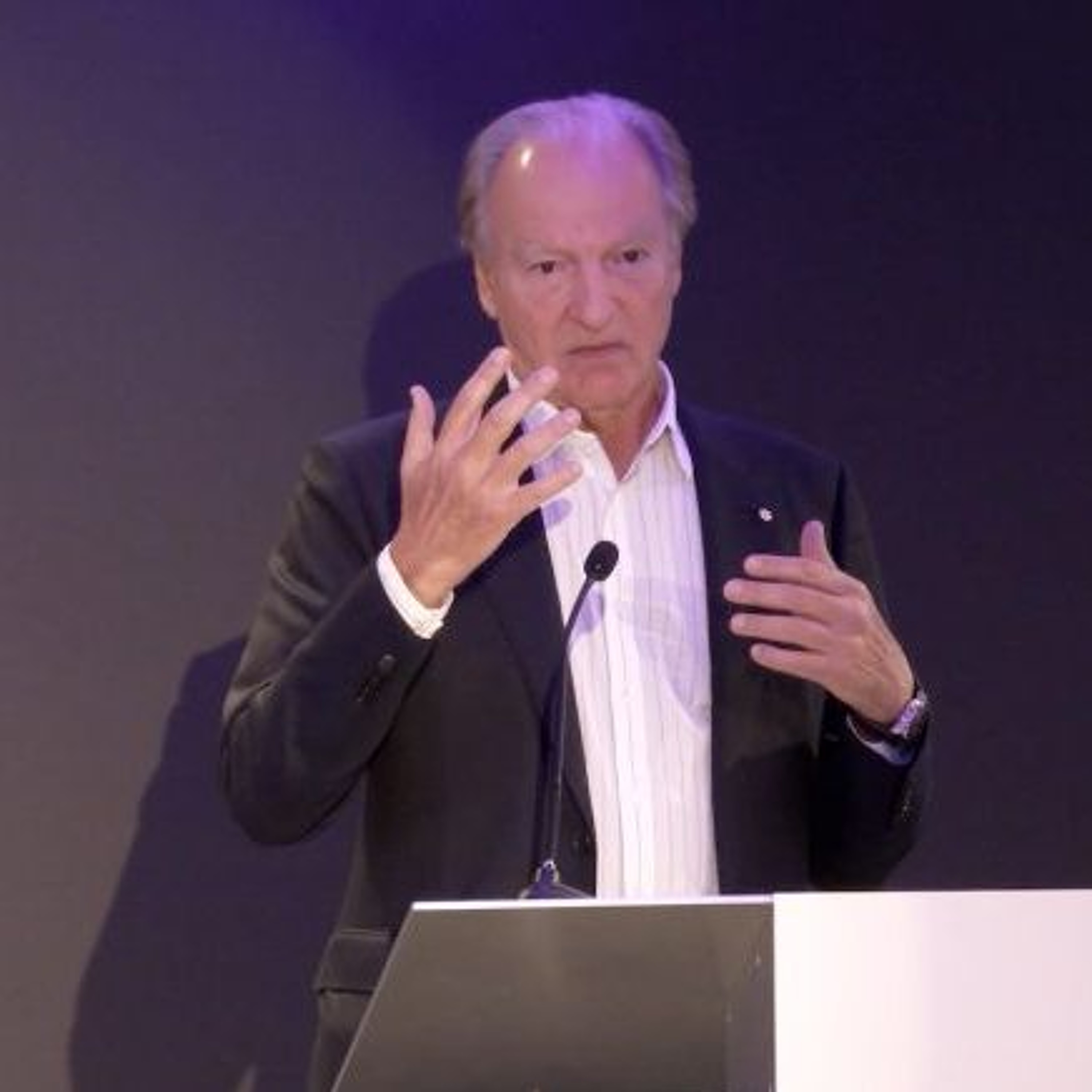
Pierre Lassonde: The Architect of Gold Royalty and Global Mining Leadership
Pierre Lassonde is a legendary Canadian businessman, investor, and philanthropist, best known for co-founding Franco-Nevada, the world’s first gold royalty company. By pioneering the royalty and streaming business model, Lassonde revol...
Pierre Lassonde is a legendary Canadian businessman, investor, and philanthropist, best known for co-founding Franco-Nevada, the world’s first gold royalty company. By pioneering the royalty and streaming business model, Lassonde revolutionized mining finance, providing investors with a low-risk method to gain exposure to precious metals. Beyond his corporate success, he is one of North America’s most significant donors to engineering and entrepreneurial education, with his influence spanning from the Toronto Stock Exchange to the galleries of the Musée national des beaux-arts du Québec.
Contents
Early Life and the Foundation of an Engineering Mindset
Born in Saint-Hyacinthe, Quebec, Pierre Lassonde’s early academic pursuits laid the groundwork for a career that would bridge the gap between technical engineering and high-level finance. He earned a degree in electrical engineering from Polytechnique Montréal in 1971, a discipline that instilled a rigorous, analytical approach to problem-solving. However, Lassonde recognized early on that technical expertise alone was insufficient for the scale of impact he sought in the industrial world.
To complement his engineering background, he moved to the United States to attend the University of Utah, where he earned his MBA in 1973. This period was transformative; it was in Utah that Lassonde was first exposed to the Western American mining culture and the intricate mechanics of capital markets. His time at Utah later became the catalyst for some of his most significant philanthropic endeavors, as he sought to replicate the innovative spirit he experienced during his graduate studies.
Upon returning to Canada, Lassonde began his professional career in the investment sector rather than on a mine site. He joined Beutel, Goodman & Company, a prominent investment management firm, where he managed a gold fund for over a decade. It was here that he developed his deep understanding of precious metals and met his long-time business partner, Seymour Schulich. Together, they would identify a structural inefficiency in the mining industry that would lead to the creation of a multi-billion-dollar asset class.
The Franco-Nevada Revolution: Pioneering the Royalty Model
In the early 1980s, the mining industry was characterized by high capital expenditures, operational volatility, and significant geological risks. Traditional mining companies had to manage labor, machinery, and environmental regulations, often seeing their margins erased by rising costs even when gold prices were high. Pierre Lassonde and Seymour Schulich proposed a radical alternative: Franco-Nevada Mining Corp.
Launched in 1982, Franco-Nevada was designed not as an operator of mines, but as a financial vehicle. The "Royalty Model" involved providing upfront capital to mining companies in exchange for a percentage of the mine's future production or revenue. This model provided three distinct advantages for Lassonde and his investors:
- Elimination of Operating Risk: Franco-Nevada did not pay for diesel, labor, or equipment. If the cost of mining rose, it did not affect the royalty holder’s top-line revenue.
- Geological Upside: If a mining company discovered more gold on a property covered by a Franco-Nevada royalty, Lassonde’s firm received the extra ounces for free, without having to contribute to the exploration costs.
- Scalability: Because a royalty company requires very few employees—mostly lawyers, geologists, and accountants—it can manage a massive portfolio of assets with minimal overhead compared to a traditional mining major.
The success of this model was solidified by the 1986 acquisition of a royalty on the Goldstrike mine in Nevada for a mere $2 million. That single investment eventually generated over $1 billion in revenue, proving that the royalty model was not just viable but arguably the most profitable segment of the entire mining ecosystem.
Leadership at Newmont and Global Industry Influence
The trajectory of Pierre Lassonde’s career took a significant turn in 2002 when Newmont Mining Corp. acquired Franco-Nevada as part of a three-way merger that included Australia’s Normandy Mining. Following the merger, Lassonde was appointed President of Newmont, which at the time was the world’s largest gold producer.
During his tenure at Newmont, Lassonde brought the discipline of the royalty mindset to the operations of a massive multinational corporation. He focused on asset quality and capital allocation, helping the company navigate a period of significant growth in gold prices. His leadership was characterized by a rare ability to communicate the value of gold to institutional investors who had previously viewed the sector with skepticism.
His influence extended beyond individual companies. Lassonde served as the Chairman of the World Gold Council (WGC) from 2005 to 2009. Under his guidance, the WGC launched the SPDR Gold Shares (GLD), the first gold-backed Exchange Traded Fund (ETF) in the United States. This financial innovation democratized gold ownership, allowing retail and institutional investors to trade gold as easily as a stock, which provided a massive tailwind for gold prices in the decades that followed.
The Lassonde Curve: A Blueprint for Resource Investing
One of Pierre Lassonde’s most enduring contributions to the investment community is the Lassonde Curve. While the concepts were developed through industry observation, Lassonde popularized the visual representation of a mining company’s life cycle and its corresponding share price performance.
The Lassonde Curve maps the stages of a mineral discovery:
- Pre-Discovery: High risk, low valuation.
- Discovery/Speculation: A sharp rise in value as a find is announced and the market speculates on its size.
- The Orphan Period: After the initial excitement, the company enters the long, expensive process of feasibility studies and permitting. The share price often languishes or drops significantly as "hot money" exits.
- Development/Production: As the mine is built and cash flow begins, the valuation rises again, reflecting a de-risked, producing asset.
Understanding this curve is essential for investors looking to navigate the junior mining sector. Lassonde’s ability to articulate these market phases helped professionalize mining speculation and provided a framework for evaluating the timing of entries and exits in resource stocks.
Philanthropy and the Legacy of Education
As of 2026, Pierre Lassonde is as well known for his philanthropy as he is for his financial acumen. His giving strategy is deeply rooted in the belief that the intersection of engineering and entrepreneurship is the engine of economic prosperity. He has donated more than $100 million to various institutions, with a focus on creating "hubs" where students can collaborate across disciplines.
The Lassonde Entrepreneur Institute
At the University of Utah, the Lassonde Entrepreneur Institute stands as a global model for student-led innovation. The Lassonde Studios, a $45 million facility, combines student housing with a massive "make space" where engineers, artists, and business students live and work together on startups. This initiative reflects Lassonde’s own journey—recognizing that an engineer with a business mindset is far more effective than one without it.
Canadian Institutional Support
In Canada, his contributions have been equally transformative:
- York University: The Lassonde School of Engineering was established with a $25 million founding gift. It focuses on "Renaissance Engineering," encouraging students to study law, business, and the humanities alongside traditional technical subjects.
- University of Toronto: The Lassonde Institute of Mining is a world-class research center focused on the future of sustainable extraction.
- Polytechnique Montréal: He has consistently supported his alma mater, ensuring that French-language engineering education remains competitive on the global stage.
Arts and Culture
Lassonde’s philanthropy is not limited to the sciences. He is a passionate collector of Canadian art and served as the Chairman of the Board of the Musée national des beaux-arts du Québec (MNBAQ). His contribution led to the creation of the Pierre Lassonde Pavilion, a stunning architectural landmark in Quebec City that houses the museum’s contemporary art collections.
Key Milestones in the Career of Pierre Lassonde
| Year | Event/Milestone | Significance |
|---|---|---|
| 1973 | MBA from University of Utah | Integrated business strategy with his engineering background. |
| 1982 | Co-founded Franco-Nevada | Created the first dedicated gold royalty company. |
| 1986 | Goldstrike Royalty Purchase | Transformed Franco-Nevada into a powerhouse of cash flow. |
| 2002 | President of Newmont Mining | Led the world's largest gold producer after the Franco-Nevada merger. |
| 2004 | Launch of Gold ETF (GLD) | Revolutionized gold liquidity for global investors. |
| 2008 | Order of Canada | Recognized for his contributions to the mining industry and philanthropy. |
| 2012 | Founded Lassonde School of Engineering | Established a new pedagogical model at York University. |
| 2020 | Chairman of Franco-Nevada (Emeritus) | Continues to influence the firm’s long-term strategic vision. |
Investment Strategy and 2026 Market Outlook
Entering 2026, Pierre Lassonde remains a prominent voice in the precious metals market. His investment philosophy continues to emphasize the "quality of the ounce." He frequently warns investors that not all gold is created equal; the cost of extraction, jurisdictional risk, and the environmental, social, and governance (ESG) profile of a project are now just as important as the grade of the ore.
Lassonde has long predicted a "super-cycle" for gold, driven by the massive expansion of global debt and the devaluation of fiat currencies. In his 2026 commentaries, he continues to advocate for a portfolio allocation of at least 5% to 10% in gold or gold equities. He maintains that royalty companies remain the superior way to play this trend, as they capture the price appreciation of the metal while remaining insulated from the persistent inflationary pressures on mining labor and energy.
Frequently Asked Questions
What is Pierre Lassonde's net worth?
While specific figures fluctuate with market conditions, Pierre Lassonde’s net worth is estimated in the hundreds of millions of dollars. The bulk of his wealth stems from his founding stake in Franco-Nevada and his long-term investments in the resource sector. However, a significant portion of his lifetime earnings has been redirected into his various philanthropic foundations and university endowments.
Why is the gold royalty model considered better than mining?
The royalty model is often considered superior because it offers "top-line" exposure. A royalty company receives a percentage of the revenue before the mining company pays its operating expenses. This means that if the cost of fuel or wages spikes, the royalty company is unaffected. Additionally, royalty companies do not have the massive environmental reclamation liabilities that operating miners must carry on their balance sheets.
What is the "Lassonde School of Engineering"?
The Lassonde School of Engineering is a faculty at York University in Toronto, established through a major gift from Pierre Lassonde. It is unique because it integrates the "Renaissance Engineer" concept, requiring students to understand the social, economic, and legal implications of their work. It aims to produce engineers who are also entrepreneurs and global citizens.
How did Pierre Lassonde influence the gold price?
Lassonde’s most direct influence on the gold price came through his leadership at the World Gold Council, where he spearheaded the creation of gold ETFs. By making gold as easy to buy as a stock, he opened the doors for trillions of dollars in institutional capital to enter the gold market, which significantly increased demand and liquidity for the metal.
What is Pierre Lassonde's advice for young entrepreneurs?
Lassonde frequently emphasizes the importance of "knowing what you don't know." He advises young entrepreneurs to find partners who complement their weaknesses. His own partnership with Seymour Schulich is a prime example; Lassonde provided the technical and operational insight, while Schulich brought a formidable background in finance and deal-making.
Final Recommendation
For investors and professionals looking to emulate Pierre Lassonde’s success, the primary takeaway is the value of interdisciplinary expertise. Success in the modern economy rarely comes from a single silo of knowledge. Whether you are in the mining industry or technology, the ability to combine technical proficiency (Engineering) with financial structures (the Royalty Model) and an entrepreneurial mindset is what creates lasting value. For those interested in resource investing, studying the Lassonde Curve and focusing on royalty-based assets remains a proven strategy for mitigating the inherent risks of the commodities market.
Image Gallery