Comprehensive Guide to C55 AMG Engine Specifications and Performance
The Mercedes-Benz C55 AMG is powered by a naturally aspirated 5.4-liter V8 engine, known internally as the M113.54. It produces 362 horsepower (367 PS) at 5,750 RPM and 376 lb-ft (510 Nm) of torque at 4,000 RPM, delivering power to the...
The Mercedes-Benz C55 AMG is powered by a naturally aspirated 5.4-liter V8 engine, known internally as the M113.54. It produces 362 horsepower (367 PS) at 5,750 RPM and 376 lb-ft (510 Nm) of torque at 4,000 RPM, delivering power to the rear wheels via a five-speed AMG Speedshift automatic transmission.
Contents
The W203-generation C55 AMG, produced between 2004 and 2006, remains a landmark vehicle for Mercedes-Benz's performance division. As of 2026, it is increasingly viewed as a "sweet spot" in the AMG lineage, offering the bulletproof reliability of the M113 engine family without the complexity of the supercharged or biturbo systems found in its siblings. This article provides an exhaustive technical breakdown of the engine specifications, engineering choices, and performance characteristics that define this V8-powered sport sedan.
The Architecture of the M113 5.4L V8
The heart of the C55 AMG is the M113 E55 engine. Unlike the modern downsizing trend toward small-displacement turbocharged engines, the C55 relies on "there is no replacement for displacement." This engine is a longitudinal, 90-degree V8 with a block and cylinder heads cast from aluminum alloy.
One of the most distinctive features of the M113 engine is its valvetrain. While many performance engines of the era transitioned to Dual Overhead Cam (DOHC) designs with four valves per cylinder, Mercedes-Benz opted for a Single Overhead Cam (SOHC) design with three valves per cylinder (two intake, one exhaust). This choice was driven by a desire to reduce weight, lower internal friction, and improve thermal efficiency. The two-intake, one-exhaust configuration allows for a compact combustion chamber with two spark plugs per cylinder, known as a Twin Spark ignition system.
The Twin Spark system is managed by the engine control unit (ECU) to fire the plugs either simultaneously or with a slight delay, depending on the engine load and speed. This ensures a more complete combustion cycle, reducing emissions and maximizing the energy extracted from every drop of fuel. The engine also features a magnesium intake manifold with long runners to optimize low-end torque, which is a hallmark of the M113's driving experience.
Detailed Technical Specifications
The following table outlines the core mechanical data for the C55 AMG's M113 engine. These figures represent the factory standard for the W203 chassis.
| Specification | Detail |
|---|---|
| Engine Code | M113.988 (M113 E55) |
| Configuration | Naturally Aspirated 90° V8 |
| Displacement | 5,439 cc (5.4 Liters) |
| Bore x Stroke | 97.0 mm x 92.0 mm |
| Compression Ratio | 11.0:1 |
| Valvetrain | SOHC, 24-Valve (3 per cylinder) |
| Peak Horsepower | 362 hp (270 kW) @ 5,750 RPM |
| Peak Torque | 376 lb-ft (510 Nm) @ 4,000 RPM |
| Fuel System | Sequential Multi-Port Fuel Injection |
| Ignition System | Twin Spark (Two plugs per cylinder) |
| Oil Capacity | 8.5 Liters (8.9 US Quarts) |
| Coolant Capacity | 12.0 Liters |
Engineering the Chassis for the V8
A critical, often overlooked aspect of the C55 AMG’s engine story is how it was fitted into the C-Class. The W203 C-Class was originally designed for four-cylinder and V6 engines. The M113 V8 is significantly longer than the V6 found in the C320 or the C32 AMG.
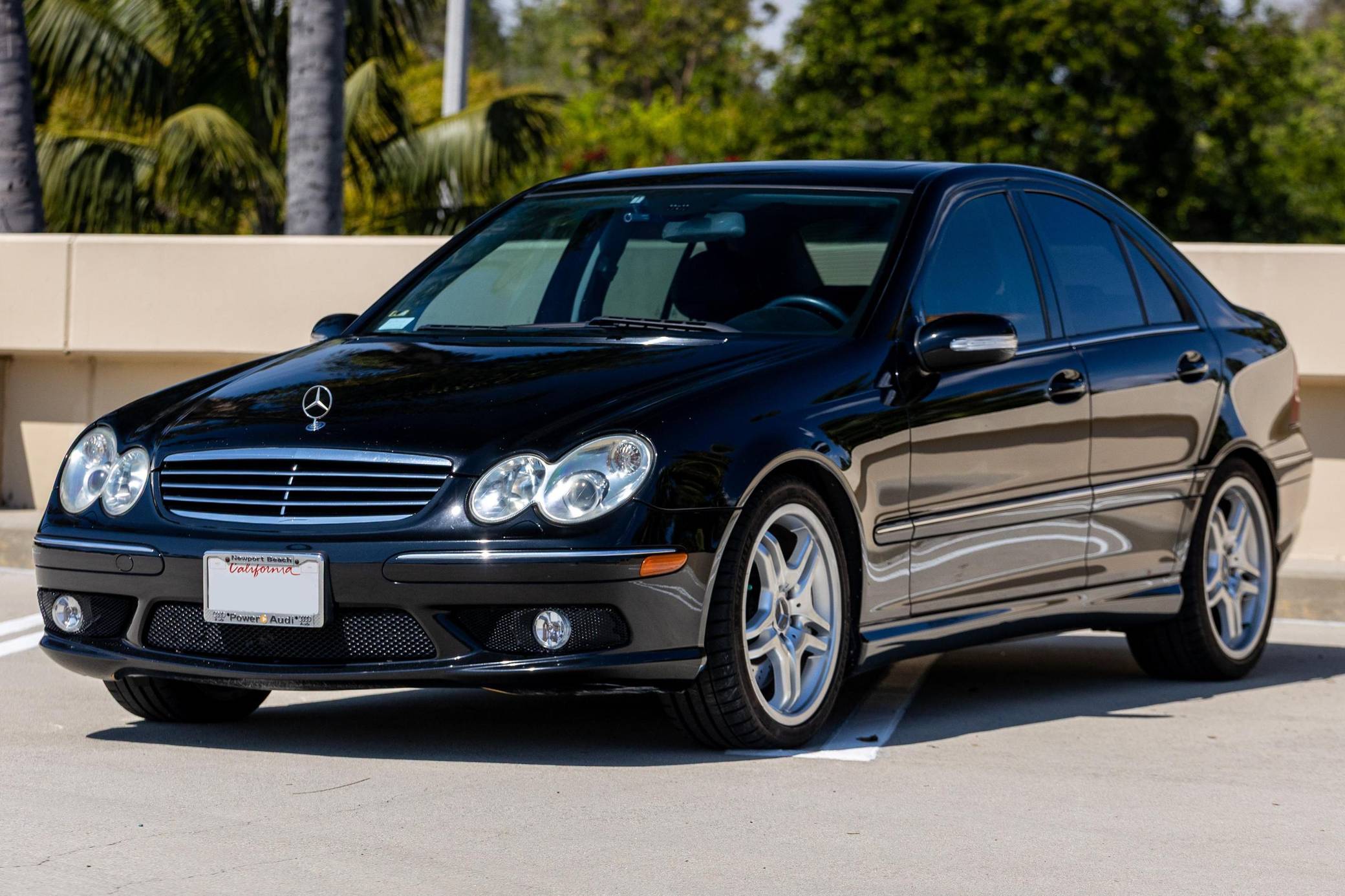
To accommodate the 5.4L V8, AMG engineers had to extend the front end of the car by approximately 80mm (3 inches). They achieved this by using the front-end structure, including the hood, fenders, and headlamps, from the W209 CLK-Class. This "Frankenstein" engineering approach makes the C55 AMG visually distinct from a standard C-Class, giving it a more aggressive, elongated snout that was necessary to clear the V8’s accessory drive and cooling system.
The cooling system itself was significantly upgraded over the preceding C32 AMG. Because the C55 is naturally aspirated, it avoids the heat soak issues associated with intercoolers and superchargers, but the sheer thermal mass of a 5.4L V8 requires a large radiator and efficient airflow. The C55 utilizes a high-capacity fan and an oil-to-air cooler to maintain optimal operating temperatures during spirited driving.
Performance Metrics and Power Delivery
In 2026, the performance of the C55 AMG still holds up as a benchmark for "usable" speed. The naturally aspirated nature of the engine provides an immediate, linear throttle response that modern turbocharged engines often struggle to replicate.
- 0–60 MPH: 4.9 to 5.2 seconds (depending on conditions and tires).
- Top Speed: Electronically limited to 155 mph (250 km/h).
- Quarter Mile: Approximately 13.3 to 13.5 seconds.
The M113 engine is famous for its torque curve. While the peak torque of 376 lb-ft arrives at 4,000 RPM, more than 90% of that torque is available from as low as 2,000 RPM. This makes the C55 exceptionally potent in "highway pulling" scenarios. The five-speed 722.6 transmission, while older in design, was reinforced by AMG to handle the V8's torque and features "Speedshift" logic, allowing for 35% faster shifts than the standard unit and manual control via buttons on the steering wheel.
Maintenance and Long-term Reliability
The M113 is widely regarded as one of the most reliable engines Mercedes-Benz has ever produced. However, like any high-performance machine, it has specific maintenance requirements that owners must adhere to in order to preserve its longevity.
Common Maintenance Points
- Spark Plugs: Because the engine uses a Twin Spark system, there are 16 spark plugs in total. Replacing them is a labor-intensive process, and using the correct Bosch or NGK iridium plugs is essential for maintaining the specific ignition timing needed for the 3-valve combustion chamber.
- Valve Cover Gaskets: These are the most common failure point. Over time, the rubber gaskets harden and leak oil onto the exhaust manifolds, causing a burning smell.
- Crankshaft Position Sensor (CPS): A common failure across the M112/M113 engine family. When the CPS fails, the car may stall when hot or fail to start until the engine cools down.
- Rear Main Seal: While less common than valve cover leaks, high-mileage M113 engines can develop leaks at the rear main seal, which requires removing the transmission to repair.
- Oil Filter Housing Gaskets: Another frequent source of oil leaks that can be misdiagnosed as more serious issues.
The Timing Chain Advantage
Unlike many modern European V8s that use complex, failure-prone timing chain guides (such as the early Audi 4.2L units), the M113 uses a double-row timing chain that is designed to last the life of the engine. Chain stretch is extremely rare, making this engine a preferred choice for high-mileage enthusiasts.
Comparison: C32 vs. C55 vs. C63
The C55 AMG occupied a unique transitional space in the AMG hierarchy. Understanding its engine specifications requires looking at what came before and what followed.
- C32 AMG (Predecessor): Used a 3.2L V6 with a twin-screw supercharger. While the C32 had similar peak power (349 hp), it suffered from "intercooler pump" failures and a more peaky power delivery. The C55 was a return to "displacement over pressure," offering a more reliable and smoother power band.
- C63 AMG (Successor): Introduced the M156 6.2L V8. The C63 was a massive leap forward in power (451+ hp), but the M156 engine was significantly more complex, featuring DOHC and four valves per cylinder. Early M156 engines also faced head bolt issues that the M113 C55 never suffered from.
The C55 is often cited as the more "sensible" AMG because it provides 80% of the C63's soul with 50% of the maintenance headaches.
Potential for Upgrades
While the M113 in the C55 is naturally aspirated and already highly tuned, there is room for improvement. Performance enthusiasts often look to the following modifications to unlock more of the engine's potential:
- Long-tube Headers: The factory exhaust manifolds are somewhat restrictive. High-quality headers can add 20–30 horsepower by improving exhaust scavenging.
- ECU Remapping: A tune can sharpen throttle response and optimize fuel maps for 93 octane (or higher) fuel, though the gains on a naturally aspirated engine are modest compared to forced induction.
- Rowan Airboxes: Improving the air intake path allows the V8 to breathe better at higher RPMs.
- M113K Swap: For those seeking extreme power, the M113 engine in the C55 is physically similar to the M113K (supercharged) engine found in the E55 AMG. Some owners have successfully swapped the supercharged internals or the entire engine into the C55 chassis.
Frequently Asked Questions
Does the C55 AMG engine have a timing belt or a chain?
The C55 AMG uses a heavy-duty double-row timing chain. Unlike a timing belt, it does not have a set replacement interval and is designed to last for the entire service life of the engine, provided oil changes are performed regularly.
Is the M113 engine in the C55 hand-built?
Yes, the C55 AMG engine followed the "One Man, One Engine" philosophy. A single technician at the AMG factory in Affalterbach assembled the entire engine by hand, and their signature can be found on a plaque located on the top of the engine cover.
What is the recommended oil type for the C55 AMG?
Mercedes-Benz recommends a high-quality synthetic oil meeting the MB 229.5 specification. Typically, 0W-40 or 5W-40 weights are used. Because the engine holds 8.5 liters of oil, it has excellent thermal stability, but frequent changes are still recommended every 5,000 to 7,500 miles.
How many spark plugs does the C55 AMG have?
The C55 AMG engine has 16 spark plugs. Each of the 8 cylinders features two spark plugs as part of the Twin Spark ignition system. This system improves combustion efficiency and reduces emissions but increases the cost and time required for a standard tune-up.
Is the C55 AMG engine interference or non-interference?
The M113 is an interference engine. This means that if the timing chain were to fail or jump time (which is rare), the valves would contact the pistons, causing significant internal damage. However, due to the robustness of the double-row chain, this is not a common failure point.
Final Recommendations for Owners
If you are maintaining or looking to purchase a C55 AMG in 2026, prioritize the health of the cooling system and the ignition components. While the M113 engine is structurally "bulletproof," its performance relies heavily on the Twin Spark system and the health of the various sensors (CPS, MAF). Ensure that the 16 spark plugs are changed every 60,000 miles and address any oil leaks from the valve covers immediately to prevent damage to the wiring harness or exhaust components. For those seeking a reliable, V8-powered daily driver with a classic AMG soul, the C55 remains one of the best-engineered choices in the history of the brand.
Image Gallery