The Foley Wrestler in Professional Wrestling: Mick Foley’s Career, Personas, and Legacy
In professional wrestling, "the Foley wrestler" refers to Mick Foley—a Hall of Fame competitor celebrated for his unparalleled physical sacrifice, masterful character work, and hardcore storytelling innovations. Operating under three d...
In professional wrestling, "the Foley wrestler" refers to Mick Foley—a Hall of Fame competitor celebrated for his unparalleled physical sacrifice, masterful character work, and hardcore storytelling innovations. Operating under three distinct personas—Cactus Jack, Mankind, and Dude Love—Foley redefined anti-hero psychology and established new benchmarks for ring drama and performer toughness.
Contents
Introduction: Defining Mick Foley's Unique Place in Wrestling History
During the late 1980s and 1990s, mainstream professional wrestling was dominated by athletes built like bodybuilders. Promoters in major federations prioritized towering height, heavy muscularity, and traditional heroic looks. Mick Foley (born Michael Francis Foley on June 7, 1965) defied almost every visual convention of the era. Possessing an unconventional physique, wearing ragged ring gear, and missing two-thirds of his right ear along with several front teeth, Foley achieved global superstardom not by fitting the established mold, but by completely subverting it.
Foley gained universal respect among fans, promoters, and peers through an unmatched commitment to storytelling. He absorbed high-risk physical punishment—commonly called "taking bumps"—to build believable emotional stakes for his matches. However, reducing Foley strictly to a "daredevil" or "stuntman" ignores his greatest strength: his brilliant wrestling psychology and unmatched promo work. Foley possessed a rare ability to articulate pain, desperation, and dark humor, turning bizarre and menacing gimmicks into deeply relatable fan favorites.
Understanding the "Foley wrestler" archetype requires examining how one man navigated regional territories, Japanese deathmatch circuits, World Championship Wrestling (WCW), Extreme Championship Wrestling (ECW), and ultimately World Wrestling Entertainment (WWE) to become a three-time World Champion and WWE Hall of Famer.
The "Three Faces of Foley": Character Psychology and Versatility
One of Foley's most celebrated achievements is his successful portrayal of three entirely distinct alter egos within a single career—collectively popularized as the "Three Faces of Foley." Rather than abandoning previous characters as his career evolved, Foley integrated all three into a psychological tapestry that WWE capitalized on during the height of the late-1990s "Attitude Era."
- MICK FOLEY
- CACTUS JACK: Unhinged Wild Brawler (1988)
- MANKIND: Tortured Outcast Deranged (1996)
- DUDE LOVE: Fun-Loving Hero Hippie (1997)
1. Cactus Jack
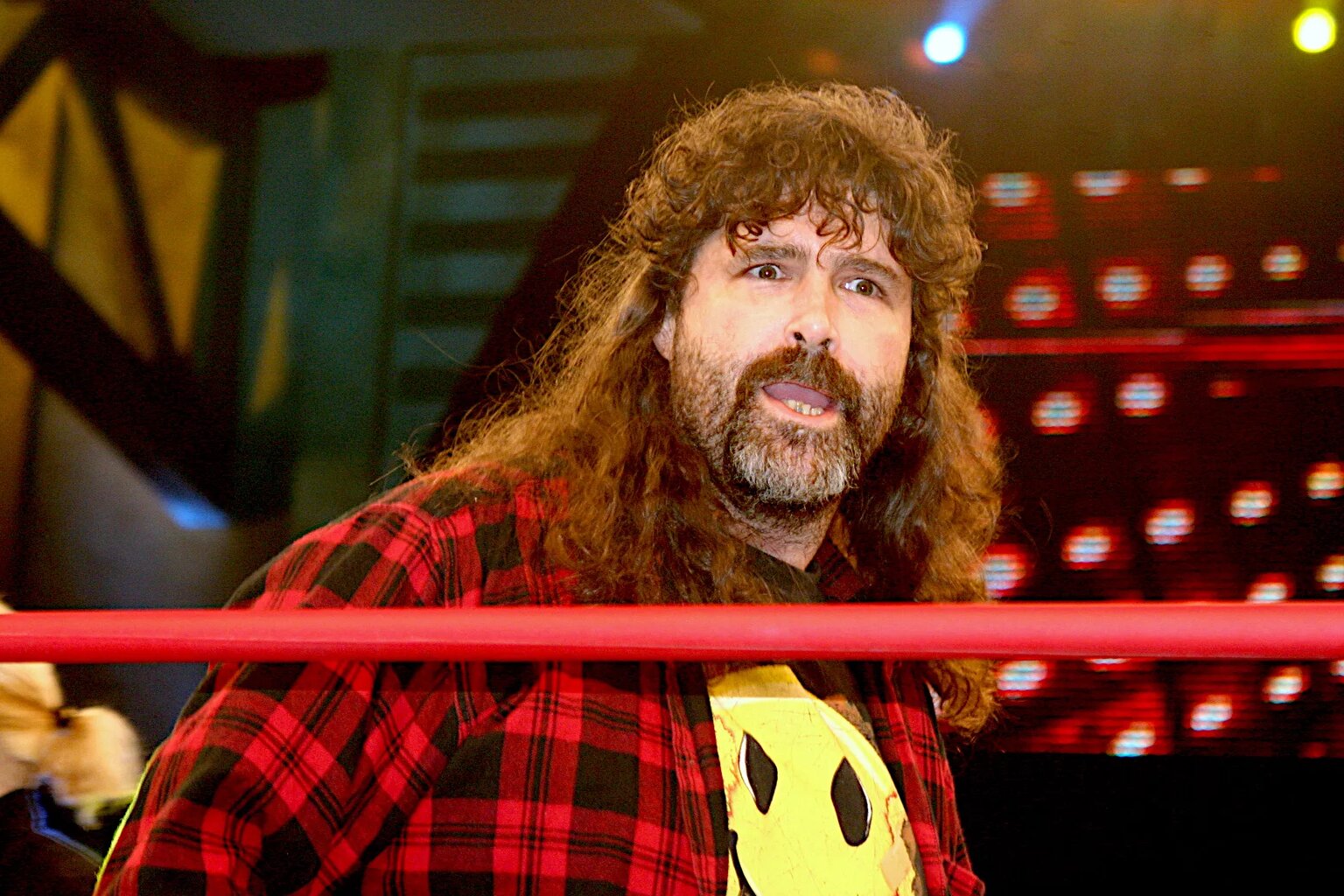
Originating early in Foley's career in 1988, Cactus Jack (originally Cactus Jack Manson) was an unhinged, sadistic brawler hailing from "Truth or Consequences, New Mexico." Dressed in leopard-skin boots and shredded flannel, Cactus Jack was defined by unpredictable violence and disregard for his own physical well-being. He gained international prominence in WCW, ECW, and Japan's International Wrestling Association (IWA). Cactus Jack represented Foley at his rawest and most brutal, relying on barbed wire, thumbtacks, and concrete floors to wear down opponents.
2. Mankind
Debuting in the World Wrestling Federation (WWF) in April 1996, Mankind was originally conceived by Vince McMahon as a deranged, subterranean outcast who lived in boiler rooms, squealed like a tortured soul, ripped out his own hair, and wore a leather mask. While initial plans called for Mankind to be a pure heel monster to feud with The Undertaker, Foley injected profound tragedy and humanity into the role. Over time, Mankind transitioned from a terrifying psychopath into an endearing, naive underdog accompanied by a sock puppet named "Mr. Socko."
3. Dude Love
Dude Love was the original character created by a teenage Mick Foley while making backyard wrestling movies in high school. Designed as a ultra-smooth, tie-dye wearing, hippie "chick magnet," Dude Love was a playful satire of traditional 1980s babyface wrestlers. Foley officially introduced Dude Love to WWE television in July 1997 as a tag team partner for Stone Cold Steve Austin. The persona provided a comedic contrast to the dark intensity of Cactus Jack and the tortured nature of Mankind.
A testament to this character versatility occurred at the 1998 Royal Rumble, where Foley accomplished a feat that remains unique in wrestling history: entering the 30-man Royal Rumble match three separate times in a single night as Cactus Jack (Entry #1), Mankind (Entry #16), and Dude Love (Entry #28).
Iconic Matches and Defining Career Moments
Foley's legacy is anchored by several of the most physically extreme and emotionally resonant matches in professional wrestling history.
| Year | Milestone |
|---|---|
| 1994 | Ear Amputation vs. Vader (Munich, Germany) |
| 1995 | IWA King of the Deathmatch Tournament Winner (Kawasaki, Japan) |
| 1996 | Mind Games vs. Shawn Michaels (WWF Championship Match) |
| 1998 | Hell in a Cell vs. The Undertaker (King of the Ring, Pittsburgh) |
| 1999 | First WWF Championship Victory over The Rock (Aired Jan 4, 1999) |
| 2000 | Street Fight vs. Triple H (Royal Rumble, Madison Square Garden) |
| 2004 | Hardcore Match vs. Randy Orton (Backlash, Edmonton) |
The Ear Amputation vs. Vader (March 1994)
During a WCW tour in Munich, Germany, Foley (as Cactus Jack) faced Big Van Vader. While executing a hangman spot—a stunt where a wrestler’s head is caught between the top two ring ropes—the ropes, which were drawn extra tight, restricted his breathing and sheared off two-thirds of Foley's right ear. Rather than undergoing reconstructive surgery that would require months off television, Foley chose to have the ear stump sewn up so he could compete at WCW's Spring Stampede pay-per-view.
King of the Deathmatch Tournament (August 1995)
In Kawasaki, Japan, Foley competed in the IWA King of the Deathmatch tournament, an event that became legendary in hardcore wrestling circles. Foley advanced through rounds featuring thumbtacks, boards wrapped in barbed wire, and nails, culminating in a final match against Terry Funk involving C4 explosives and barbed wire boards. Foley emerged victorious, solidifying his reputation as an international hardcore icon.
Hell in a Cell vs. The Undertaker (June 1998)
At King of the Ring 1998 in Pittsburgh, Pennsylvania, Foley (as Mankind) faced The Undertaker inside a 16-foot-high steel cage structure. Minutes into the match, Foley climbed to the top of the cell, where The Undertaker threw him off the roof, sending Foley crashing through the Spanish announce table 16 feet below.
After being placed on a stretcher, Foley stood up, climbed back to the top of the cage, and was chokeslammed onto the cell ceiling. A panel gave way, sending Foley plummeting to the ring canvas below, followed by a heavy steel chair that hit him in the face, knocking out a tooth through his upper lip into his nose. Despite a dislocated shoulder, a concussion, and internal bleeding, Foley completed the match, including taking a bump onto thousands of thumbtacks. It remains the most recognized high-risk match in sports-entertainment history.
Street Fight vs. Triple H (Royal Rumble 2000)
Held at Madison Square Garden, this Street Fight for the WWF Championship demonstrated Foley’s ability to elevate another performer. Foley (as Cactus Jack) absorbed punishing chair shots, barbed wire bat strikes, and thumbtack drops to establish Triple H as a top-tier, ruthless main-event heel.
Hardcore Match vs. Randy Orton (Backlash 2004)
Coming out of semi-retirement, Foley put his body on the line to legitimize a young Randy Orton. The match featured Foley taking bumps onto thumbtacks and being thrown off the entrance stage. Orton's victory proved instrumental in establishing him as a credible, tough world champion.
Technical Ring Style vs. Hardcore Storytelling Psychology
While casual observers often dismiss Foley as a pure "brawler," professional wrestling historians and insiders emphasize his deep understanding of ring psychology. Extreme bumps alone do not create enduring star power; without a narrative context, physical stunts lose their emotional resonance.
- FOLEY'S MATCH PSYCHOLOGY
- EMOTIONAL VULN.: Vulnerable look builds sympathy
- SELLING & PAIN: Realistic pain draws audience
- PROMO WORK: Master of narrative intensity & depth
Foley's in-ring methodology rested on three structural pillars:
- Building Sympathy through Vulnerability: Because Foley lacked the muscular armor of traditional main-eventers, his suffering felt realistic to the audience. When he took punishment, fans felt genuine empathy, turning him into one of the most effective babyfaces in wrestling history.
- Realistic Selling and Micro-Pacing: Foley treated moves with heavy weight. A single chair shot or drop onto concrete was sold with prolonged agony, ensuring the audience registered the severity of every strike.
- Microphone Mastery and Narrative Depth: Foley’s promo ability bridged the gap between absurd gimmick concepts and grounded reality. His famous "Cane Dewey" promo in ECW (1995) and his sit-down interviews with Jim Ross in WWF (1997) are studied as masterclasses in character development and emotional authenticity.
The Three Faces of Foley: Persona Comparison
The following table breaks down the distinct attributes, eras, and defining elements of Foley's three core wrestling personas:
| Attribute | Cactus Jack | Mankind | Dude Love |
|---|---|---|---|
| Debut Year | 1988 (Territories/WCW) | 1996 (WWF) | 1997 (WWF) |
| Character Alignment | Heel / Anti-Hero / Unhinged Brawler | Heel Psychopath $\rightarrow$ Beloved Underdog | Fun-Loving Babyface / Crowd Pleaser |
| Visual Aesthetics | Shredded flannel, boots, wild hair | Leather mask, suit vest, white shirt, mandate ties | Tie-dye shirts, sunglasses, headband |
| Signature Finisher | Double-Arm DDT | Mandible Claw (with Mr. Socko) | Sweet Shin Music / Butterfly Suplex |
| Primary Eras | WCW, ECW, IWA Japan, WWF Attitude | WWF Attitude Era | WWF Attitude Era |
| Key Feuds | Vader, Eddie Gilbert, Terry Funk, Randy Orton | The Undertaker, The Rock, Steve Austin, Kane | Steve Austin, Owen Hart & British Bulldog |
Physical Toll, Safety Evolution, and Industry Impact
The high-impact style pioneered by Mick Foley took a severe, lasting physical toll on his body. Decades of heavy bumps, concrete drops, and unshielded chair shots resulted in extensive injuries, including:
- Numerous documented concussions
- Loss of two-thirds of his right ear
- Multiple broken bones (jaw, shoulder, ribs, nose, cheekbone)
- Replacement of both knees and hips
- Permanent spinal alignment issues and loss of body height
| # | FOLEY'S SAFETY IMPACT ON PRO WRESTLING |
|---|---|
| 1 | Reduction of Unshielded Chair Shots to the Head |
| 2 | Enhanced Concussion Testing & Impact Protocols (WWE Wellness Policy) |
| 3 | Reinforcement and Redesign of Steel Cage/Cell Structures |
| 4 | Increased Emphasis on Managed Stunt Risk in Modern Promotions |
Foley’s career served as a major turning point for safety protocols within major professional wrestling organizations. The extreme nature of his 1998 Hell in a Cell match forced promoters and talent to re-evaluate the boundaries of stunt-based wrestling. Modern promotions, including WWE and All Elite Wrestling (AEW), implemented stricter safety measures inspired in part by the long-term health consequences suffered by Foley's generation:
- Ban on Direct Chair Shots to the Head: WWE officially banned unprotected chair shots to the head in 2010 to prevent long-term traumatic brain injury (CTE).
- Structural Engineering of Steel Cages: Modern cage and cell structures are engineered with reinforced materials, padded catch zones, and strict safety testing to prevent unplanned structural failures.
- Concussion Management Programs: Major federations utilize ImPACT testing, baseline cognitive evaluations, and mandatory medical clearance periods before injured talent can return to the ring.
Post-In-Ring Career: Authorship, On-Screen Roles, and Philanthropy
Foley’s influence extended well beyond the wrestling ring following his semi-retirement in the 2000s. He established himself as an accomplished author, on-screen executive, and humanitarian.
- POST-RING CONTRIBUTIONS
- BESTSELLING AUTHOR: NYT #1 Bestseller
- ON-SCREEN ROLES: WWF Commissioner, RAW General Mgr.
- PHILANTHROPY: RAINN Advocate, ChildFund Amb.
1. New York Times Bestselling Author
In 1999, Foley released his first autobiography, Have a Nice Day! A Tale of Blood and Sweatsocks. Written entirely by hand in longhand without a ghostwriter, the book spent weeks at #1 on the New York Times Bestseller list. Foley broke the stereotype that professional wrestlers could not write compelling literary works, paving the way for numerous memoirs across the sports industry. He followed this success with several other memoirs (Foley Is Good, The Hardcore Truth) and multiple children’s fiction books.
2. On-Screen Authority Figures
Foley transitioned into non-wrestling television roles seamlessly, utilizing his charisma and promo timing. He served as the on-screen WWF Commissioner in 2000, bringing levity and authority to the role during a boom period for the company. He later served as the General Manager of Monday Night Raw from 2016 to 2017.
3. Philanthropy and Public Speaking
Foley has dedicated significant time to charitable organizations. He has been a prominent volunteer and donor for RAINN (Rape, Abuse & Incest National Network), serving as a member of their Leadership Council and personally pledging funds to assist victims of sexual assault. He has also worked extensively with ChildFund International to sponsor children in developing nations. Additionally, Foley toured internationally with a series of spoken-word comedy shows ("Tales from Wrestling Past"), sharing stories from his career with live audiences worldwide.
Frequently Asked Questions
Why did Mick Foley wrestle under three different personas?
Foley used three distinct personas—Cactus Jack, Mankind, and Dude Love—to showcase different aspects of his performance skills. Cactus Jack highlighted his hardcore brawling origins; Mankind represented a dark, intense psychological character tailored for WWE; and Dude Love provided lighthearted comedy. Combining all three allowed WWE to keep his character fresh and build unique storyline arcs during the Attitude Era.
How did Mick Foley lose part of his right ear?
Mick Foley lost two-thirds of his right ear on March 16, 1994, during a WCW match against Big Van Vader in Munich, Germany. While executing a "hangman" maneuver, the ring ropes were pulled exceptionally tight, trapping his head and tearing the cartilage off his head as he maneuvered himself free.
What was Mick Foley's signature finishing move?
Foley’s primary finisher as Mankind was the Mandible Claw, a submission move where he inserted his middle and ring fingers underneath an opponent's tongue into the soft tissue of the mouth, applying downward pressure. When performing as Cactus Jack or Dude Love, he frequently used the Double-Arm DDT.
Did Mick Foley write his own autobiographies?
Yes. Unlike many celebrity memoirs, Mick Foley personally wrote his first two autobiographies—Have a Nice Day! (1999) and Foley Is Good (2001)—by hand on notebook paper without utilizing a ghostwriter. Both books reached the top of the New York Times Bestseller list.
What is the historic significance of the 1998 Hell in a Cell match?
The 1998 Hell in a Cell match between Mick Foley (as Mankind) and The Undertaker at King of the Ring set the standard for extreme high-risk spots in mainstream professional wrestling. Foley’s fall off the 16-foot cell onto an announce table, followed by falling through the cage roof into the ring, created unforgettable imagery that influenced modern stunt safety guidelines, cage construction, and concussion management in sports entertainment.
Recommended Next Steps for Fans and Researchers
To further understand Mick Foley's career and lasting impact on professional wrestling, consider exploring the following historical resources:
- Read His Primary Works: Examine Have a Nice Day! A Tale of Blood and Sweatsocks for a firsthand perspective on territory wrestling, career negotiations, and the physical reality of the wrestling industry.
- Study Key Matches chronologically: Watch his 1995 ECW promos ("Cane Dewey"), his 1996 Mind Games match against Shawn Michaels, his 1998 Hell in a Cell against The Undertaker, and his 2000 Royal Rumble Street Fight against Triple H to analyze the evolution of his match psychology.
- Review Modern Concussion & Safety Guidelines: Compare 1990s match footage with modern WWE concussion protocols and Wellness Policy standards documented by official athletic commissions to observe how performer safety standards evolved as a direct response to his era.
Image Gallery