Who Is Banksy and Why He Matters: The Evolution of an Urban Icon
Banksy is the pseudonym of an anonymous England-based street artist, political activist, and filmmaker who has transformed graffiti from a localized subculture into a global phenomenon. He matters because he democratized art, using pub...
Banksy is the pseudonym of an anonymous England-based street artist, political activist, and filmmaker who has transformed graffiti from a localized subculture into a global phenomenon. He matters because he democratized art, using public walls as a canvas for sharp social commentary that challenges authority, capitalism, and the traditional art market.
Contents
The Enigma of Identity: Who is Banksy?
As of 2026, the identity of Banksy remains one of the most enduring mysteries in contemporary culture. While several investigative reports and forensic theories have emerged over the decades, the artist’s true name has never been officially confirmed by his authentication body, Pest Control. This anonymity is not merely a gimmick; it is a fundamental component of his work, allowing the art to exist independently of the creator’s persona while protecting him from the legal repercussions of unauthorized street art.
The Leading Candidates
The most widely accepted theory points to Robin Gunningham, a man born in Bristol in 1973. This theory gained significant traction following a 2008 investigation by The Daily Mail and was further supported by a 2016 study from Queen Mary University of London, which utilized "geographic profiling"—a technique typically used to catch serial criminals—to map the locations of Banksy’s works against Gunningham’s known residences.
Another prominent theory suggests Robert Del Naja (also known as 3D), a founding member of the trip-hop band Massive Attack. Del Naja was a graffiti artist in the 1980s before his music career took off, and fans have often noted a correlation between Massive Attack’s tour dates and the sudden appearance of Banksy murals in the same cities. Despite these links, Del Naja has consistently denied being Banksy, describing the artist as a close friend.
Why Anonymity Functions as a Tool
Banksy’s refusal to reveal himself serves multiple strategic purposes:
- Legal Protection: Much of his work is created without permits on private or public property, technically constituting vandalism.
- Narrative Control: By remaining anonymous, Banksy ensures the focus stays on the political or social message of the mural rather than his personal life.
- Market Intrigue: The mystery adds "cultural capital," making his authenticated works and even his "guerrilla" stunts more valuable to collectors and the public.
The Aesthetic and Technique: More Than Just Stencils
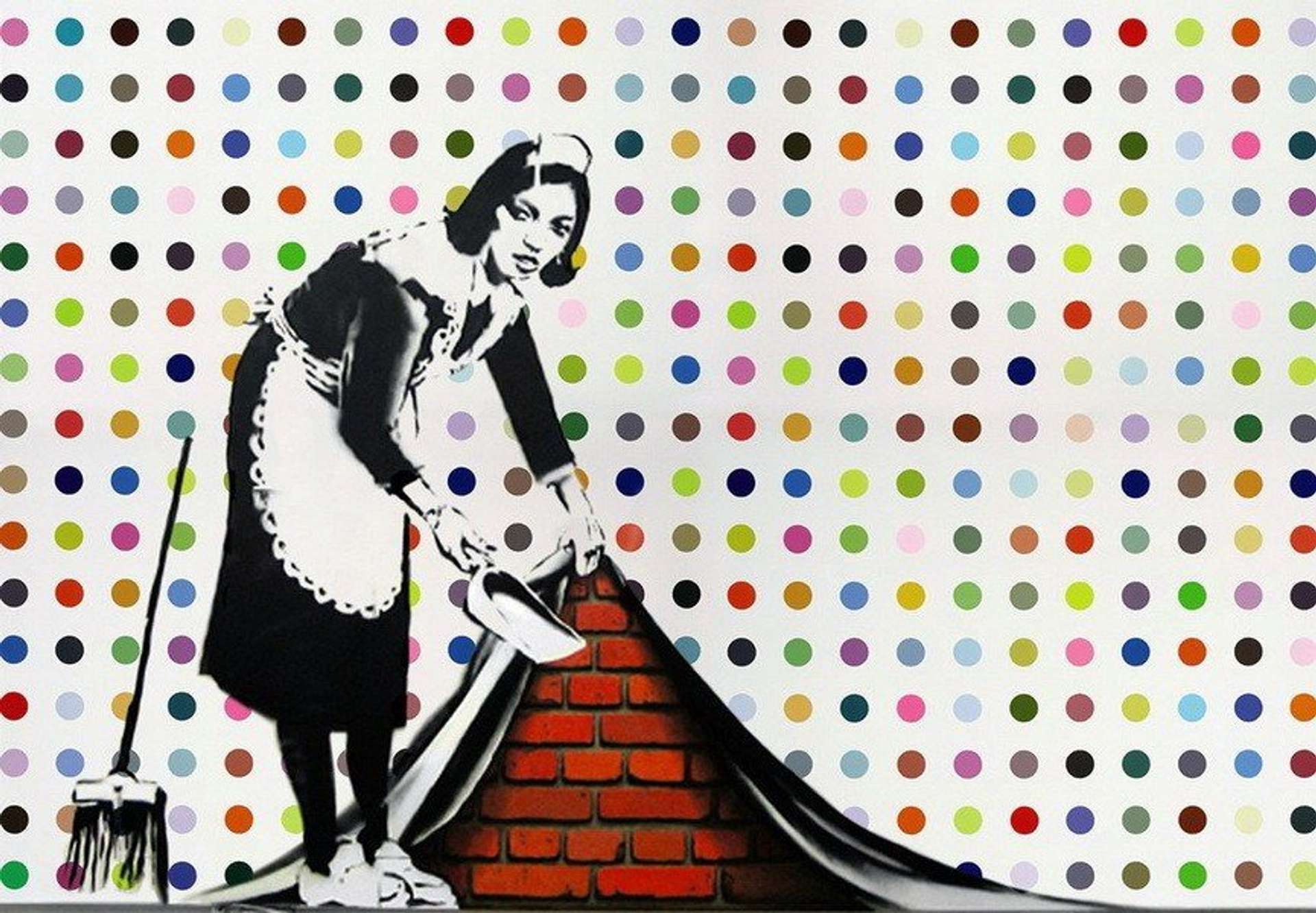
Banksy is synonymous with the stencil graffiti technique. While he did not invent it, he refined it into a high-speed delivery system for complex ideas. In his early years in the Bristol underground scene, he worked freehand but found it too slow to avoid police detection. Stenciling allowed him to prepare intricate designs in a studio and execute them in public within minutes.
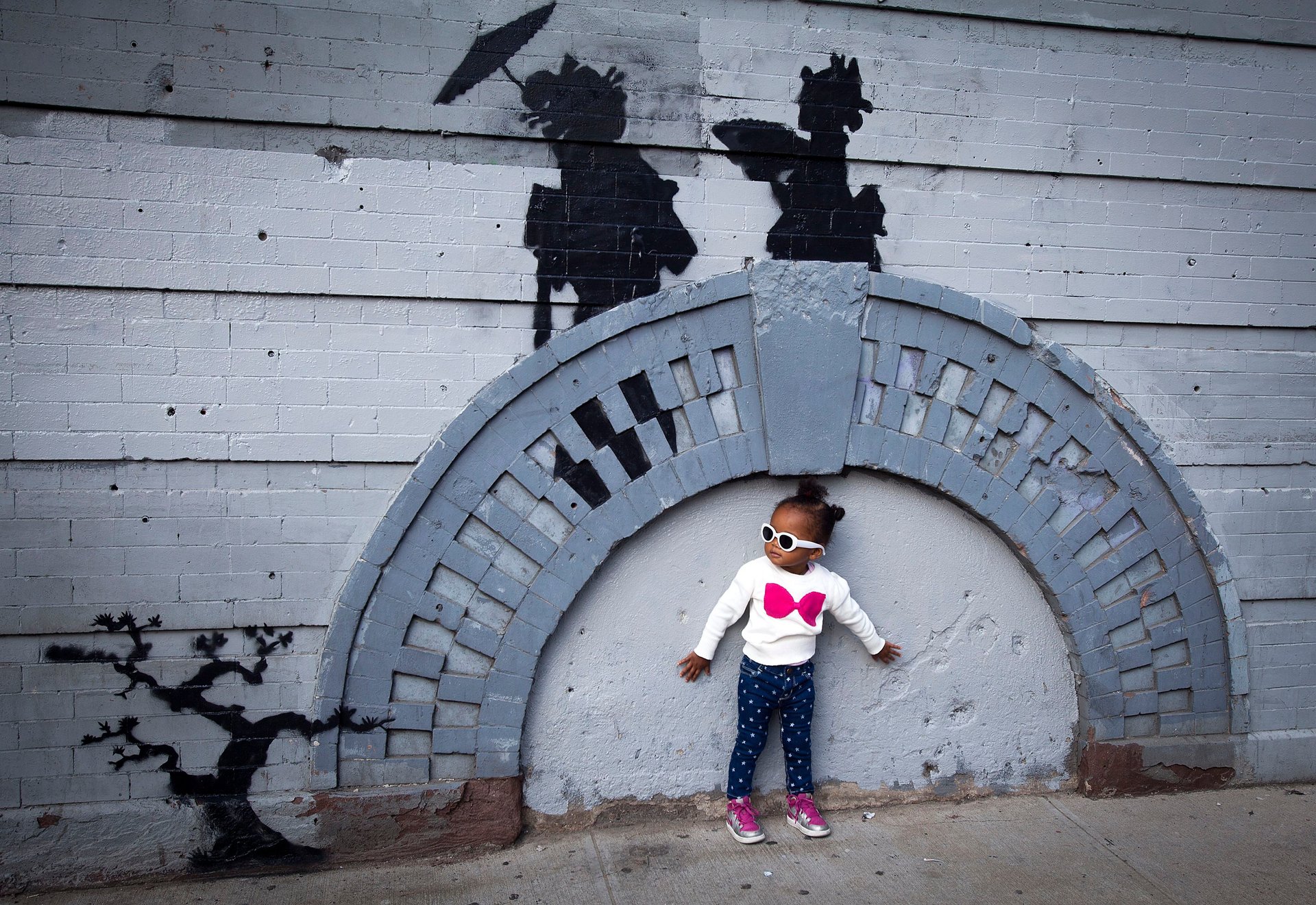
His style is characterized by a "dark humor" aesthetic—combining striking imagery with subversive slogans. He often repurposes existing urban infrastructure, such as CCTV cameras, fire hydrants, or cracked walls, to give his work a site-specific context. This creates a dialogue between the art and the environment, forcing passersby to reconsider the mundane spaces they inhabit.
Why Banksy Matters: A Cultural and Social Analysis
Banksy’s significance transcends the art world. He has become a global symbol for anti-establishment sentiment, using his platform to address issues ranging from the climate crisis to the refugee experience.
1. The Democratization of Art
Before Banksy, the "high art" world was often viewed as an exclusive club reserved for the wealthy and the academic elite. Banksy bypassed the gallery system entirely, placing his most important works in the streets where anyone could see them for free. This shifted the power of art criticism from the hands of a few curators to the general public. When a Banksy appears, it is photographed, shared, and debated by millions online before a single art critic can weigh in.
2. Disruption of the Art Market
Banksy has a famously adversarial relationship with the commercial art market. One of his most significant acts of disruption occurred in October 2018 at Sotheby’s in London. Seconds after his painting Girl with Balloon sold for £1.04 million, a shredder hidden inside the frame activated, partially destroying the work. Rather than losing value, the piece—retitled Love is in the Bin—became a performance art milestone, eventually selling for £18.5 million in 2021. This stunt exposed the irony of a market that assigns immense value to "anti-capitalist" art.
3. Political and Humanitarian Impact
Banksy does not just paint; he intervenes. His work in the West Bank, specifically the opening of the Walled Off Hotel in Bethlehem in 2017, brought global attention to the Israeli-Palestinian conflict through "the worst view in the world." In 2020, he funded the Louise Michel, a rescue vessel designed to assist refugees crossing the Mediterranean. By 2026, these actions have solidified his legacy not just as an artist, but as a humanitarian who uses his wealth to bypass bureaucratic gridlock.
Key Works and Their Historical Context
The following table outlines several of Banksy's most impactful projects and their intended messages.
| Work / Project | Year | Location | Primary Theme |
|---|---|---|---|
| Flower Thrower | 2003 | Jerusalem | Peaceful resistance and the power of hope. |
| Dismaland | 2015 | Weston-super-Mare | A "bemusement park" critiquing consumerism. |
| Game Changer | 2020 | Southampton | Honoring healthcare workers during the pandemic. |
| Ukraine Murals | 2022 | Borodyanka/Kyiv | Resilience in the face of invasion and war. |
| Animal Series | 2024 | London | Nature’s reclamation of the urban environment. |
The Legal Landscape: Trademarks and Authenticity
By 2026, the legal battles surrounding Banksy’s work have become a case study in intellectual property law. Because Banksy remains anonymous, he cannot easily claim copyright, as copyright law typically requires the creator to identify themselves.
To combat this, his team at Pest Control attempted to secure trademarks for his most famous images. However, in a series of rulings between 2020 and 2022, the European Union Intellectual Property Office (EUIPO) initially invalidated several of these trademarks, arguing they were filed in "bad faith" because Banksy did not intend to use them to sell goods, but rather to prevent others from doing so. While some of these rulings were later overturned or settled, they highlight the tension between street art’s "free for all" ethos and the legal protections required to sustain an artist's legacy.
The Role of Pest Control
Pest Control Office is the only legal body authorized to authenticate Banksy's work. It was established in 2008 to prevent fraud and the sale of "street pieces" that were removed from walls without the artist’s consent. For collectors, a Pest Control certificate is the difference between a multi-million dollar asset and a worthless piece of concrete.
Common Criticisms and Controversies
While celebrated by many, Banksy is not without detractors. Some critics argue that his work is "reductive" or "overly simplistic," relying on obvious visual puns that lack the depth of traditional fine art. Others point to the "Banksy Effect," where his presence in a neighborhood can trigger rapid gentrification, ironically displacing the very marginalized communities his work often claims to support.
Furthermore, his commercial success creates a paradox. Critics ask: Can an artist truly be anti-capitalist when their work sells for tens of millions of dollars? Banksy has addressed this through self-aware pieces like I Can't Believe You Morons Actually Buy This S**, yet the contradiction remains a central part of his public identity.
Frequently Asked Questions
How does Banksy make money if his art is on the street?
Banksy earns revenue through the sale of authenticated limited-edition prints and original canvases sold via Pest Control or private auctions. He does not profit from the sale of murals removed from walls by third parties, and he has historically discouraged the public from buying "stolen" street art.
Has Banksy ever been arrested?
There are no public records of an artist named "Banksy" being arrested for graffiti. His anonymity and highly organized team allow him to execute works quickly and disappear before law enforcement arrives. His "guerrilla" installations in major museums like the Louvre or the Tate were also completed without him being caught in the act.
Why does he use rats in his artwork?
The rat is one of Banksy's most frequent motifs, inspired by the French stencil artist Blek le Rat. For Banksy, rats represent the "underclass" of society—they are hated, hunted, and persecuted, yet they are capable of bringing down entire civilizations. As he famously noted, "If you are dirty, insignificant, and unloved, then rats are the ultimate role model."
Can I buy a Banksy mural if it's on my house?
Legally, the owner of a building owns the physical mural. However, without a certificate of authenticity from Pest Control, the mural cannot be sold at major auction houses. Many property owners choose to protect the work with Plexiglass to increase the value of the property rather than attempting to remove and sell the piece.
Final Practical Guidance for Art Enthusiasts
If you are interested in Banksy, the best way to engage with his work is to view it in its original urban context. Because street art is ephemeral, many of his most famous pieces have been buffed (painted over), vandalized, or removed. Before traveling to see a specific mural, check recent street art databases or local forums to ensure it still exists. For those looking to collect, never purchase a "Banksy" without a verified Pest Control certificate, as the market is saturated with high-quality forgeries. Ultimately, Banksy matters because he reminds us that art belongs to the public, and that a single stencil can still provoke a global conversation.
Image Gallery