What a Professional Cloud Security Engineer Braindump Includes
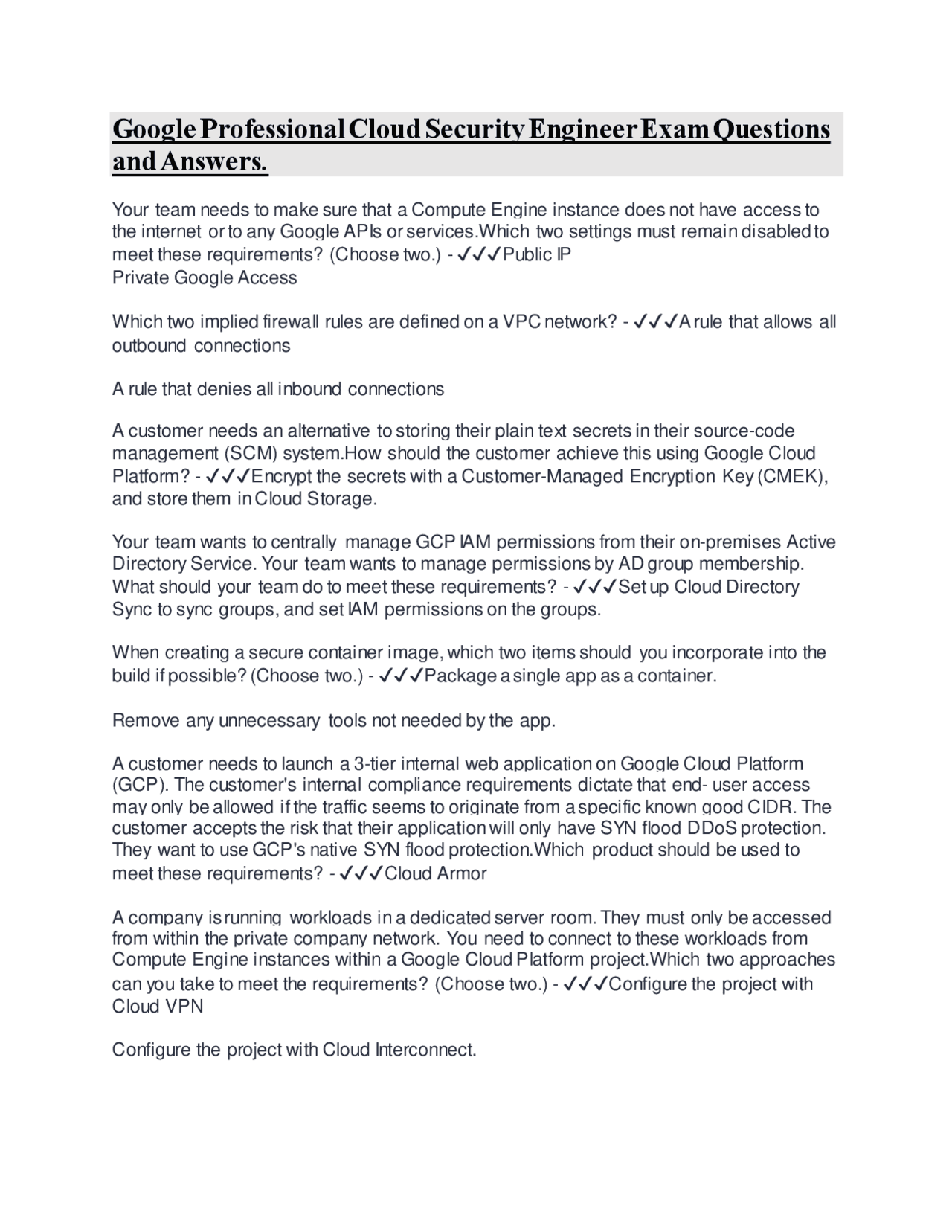
A professional cloud security engineer braindump typically includes a compilation of real or simulated exam questions, scenario-based architecture problems, multiple-choice answers, and domain-specific technical notes reflecting major...
A professional cloud security engineer braindump typically includes a compilation of real or simulated exam questions, scenario-based architecture problems, multiple-choice answers, and domain-specific technical notes reflecting major certification exams. These materials generally cover Identity and Access Management (IAM), network security controls, data encryption, key management, logging, incident response, and regulatory compliance frameworks across platforms like AWS, Google Cloud, Azure, and ISC2 CCSP.
Contents
Defining the Braindump in Cloud Security Certification
In the IT and cloud engineering sectors, the term braindump carries a dual meaning that candidates must navigate carefully. Strictly speaking, an exam braindump is an unverified repository of actual test questions and answers memorized or illegally retrieved by previous test-takers. However, in broader study circles, engineers often use the term informally to describe comprehensive personal study notes, condensed domain summaries, or high-yield cheat sheets written immediately after reviewing exam blueprints.
Whether reviewing informal study notes or analyzing the structure of exam braindumps, candidates find that materials targeting professional-level cloud security certifications focus on advanced architectural concepts rather than simple definition matching. Vendors such as Amazon Web Services (AWS), Google Cloud Platform (GCP), Microsoft Azure, and ISC2 design their security engineering credentials to evaluate real-world problem-solving skills under strict regulatory and technical constraints.
Relying on unauthorized question dumps exposes candidates to serious risks, including certification revocation under vendor non-disclosure agreements (NDAs) and critical gaps in real-world troubleshooting capabilities. Understanding what these study resources contain—and how the technical concepts map to production environments—helps security professionals focus their preparation on authentic domain mastery.
Core Technical Domains Covered in Cloud Security Engineering Summaries
A comprehensive professional cloud security engineer summary or braindump organizes technical topics into specific functional domains. Regardless of whether the target certification is the Google Cloud Professional Cloud Security Engineer, AWS Certified Security - Specialty, Microsoft Certified: Azure Security Engineer Associate (AZ-500), or ISC2 CCSP, the content concentrates heavily on five core technical pillars.
Cloud Security Core Technical Domains
- Identity & Access Management (IAM)
- Infrastructure & Network Security Architecture
- Data Protection, Cryptography & Key Management
- Security Operations, Logging & Incident Response
- Governance, Risk Management & Compliance (GRC)
1. Identity and Access Management (IAM) and Directory Services
Identity serves as the primary security perimeter in public cloud environments. Braindump files and advanced study guides devote a significant percentage of their content to complex IAM scenarios:
- Policy Granularity and Evaluation Logic: Detailed breakdowns of how cloud providers evaluate explicit denies, explicit allows, resource-based policies, and service control policies (SCPs) or organization policy constraints.
- Federation and Single Sign-On (SSO): Configuration patterns integrating enterprise Identity Providers (IdPs) via SAML 2.0, OpenID Connect (OIDC), and Active Directory / Entra ID with cloud environments.
- Privileged Access Management (PAM): Time-bound role assumption, Just-In-Time (JIT) access policies, least-privilege enforcement, and multi-factor authentication (MFA) enforcement rules.
- Service Accounts and Workload Identity: Securing non-human identities, rotating service account keys, and implementing workload identity federation to eliminate long-lived credential storage.
2. Infrastructure and Virtual Network Security Architecture
Infrastructure protection topics focus on controlling traffic flow, isolating workloads, and defending against network-based vectors:
- VPC Design and Segmentation: Custom Virtual Private Cloud (VPC) design, subnet isolation, private Google access/VPC endpoints, and transit gateway configurations.
- Perimeter Defense: Setup and troubleshooting of Web Application Firewalls (WAF), Distributed Denial of Service (DDoS) protection services (such as AWS Shield or Google Cloud Armor), and edge security solutions.
- Microsegmentation and Zero Trust: Implementing network security groups, firewalls, mutual TLS (mTLS), and zero-trust network architecture across hybrid and multi-cloud environments.
- Secure Ingress and Egress: Architecture covering NAT gateways, proxy servers, inspection appliances, and private connectivity (e.g., AWS Direct Connect or Google Cloud Interconnect).
3. Data Protection, Cryptography, and Key Management
Data protection sections require precise knowledge of cryptographic keys, storage security, and encryption state transitions:
- Encryption at Rest and in Transit: Mechanics of envelope encryption, symmetric vs. asymmetric algorithms, and configuring TLS endpoints with strong cipher suites.
- Key Management Systems (KMS): Differences between customer-managed encryption keys (CMEK), provider-managed keys, and dedicated Hardware Security Modules (HSM) complying with FIPS 140-2/140-3 standards.
- Data Loss Prevention (DLP): Automated inspection strategies for identifying Personally Identifiable Information (PII), credit card data, or proprietary source code across cloud storage buckets and database instances.
- Database and Storage Hardening: Object lock strategies, immutability flags, database column-level encryption, and automated public access block configurations.
4. Security Operations, Logging, Monitoring, and Incident Response
Security operations content tests an engineer's ability to detect, analyze, and automate remediation of threats:
- Centralized Logging Architectures: Ingestion pipelines combining cloud audit logs, VPC flow logs, application logs, and system logs into centralized Security Information and Event Management (SIEM) systems.
- Threat Detection and Behavioral Analytics: Utilizing continuous threat detection services (such as Amazon GuardDuty, Google Security Command Center, or Microsoft Defender for Cloud) to identify compromised instances or suspicious API calls.
- Automated Incident Remediation: Constructing event-driven workflows using serverless functions (e.g., AWS Lambda, Cloud Functions) to automatically isolate compromised VMs, revoke compromised IAM tokens, or adjust security group rules.
- Forensics and Artifact Collection: Steps for capturing volatile memory, creating cryptographically secure disk snapshots, and isolating resources during an active incident response investigation.
5. Regulatory Compliance, Governance, and Risk Management
The compliance domain links technical controls to regulatory frameworks and organizational policy:
- Shared Responsibility Model: Defining exact demarcations of responsibility between the cloud service provider (CSP) and the customer across IaaS, PaaS, and SaaS deployment models.
- Compliance Framework Mapping: Aligning cloud configurations with standards such as NIST SP 800-53, ISO/IEC 27001, SOC 2 Type II, PCI DSS, and HIPAA.
- Continuous Governance and Auditability: Implementing automated compliance engines (such as AWS Config, Google Cloud Asset Inventory, or Azure Policy) to audit baseline drift continuously.
Question Formats and Technical Scenarios in Dumps
Braindumps and exam dumps attempt to mirror the precise question structures utilized by major certification bodies. Professional-level cloud security exams rarely ask simple recall questions. Instead, questions are built around complex enterprise scenarios.
Common Scenario-Based Patterns
- Multi-tier application isolation under strict compliance
- Resolving cross-account IAM permission boundary deadlocks
- Decrypting data across multi-region, multi-key KMS setups
- Mitigating active exfiltration via misconfigured VPC endpoints
Complex Multiple-Choice and Multi-Select Questions
Security exam questions typically present an enterprise scenario spanning 3 to 6 sentences, followed by a specific technical goal—such as "Select the most secure and cost-effective method," or "Which combination of steps resolves the issue with the least operational overhead?"
An enterprise security scenario typically outlines:
- A Business Requirement: A requirement to meet PCI DSS compliance for an application handling payment card records.
- An Existing Architecture: A hybrid cloud setup running containerized services behind an internal load balancer connected to an on-premises database via a dedicated fiber connection.
- A Constraint or Failure: Audit logging is active, but key security alerts are failing to trigger when access policies change in secondary regions.
Answer choices frequently contain four options that all sound technically plausible. However, three options contain subtle errors—such as using an inefficient architectural design, breaking the principle of least privilege, or selecting a service that does not meet the specified compliance standard.
Interactive and Troubleshooting Diagrams
Certain vendor exams include performance-based questions or detailed configuration scenarios where the candidate must evaluate network topologies, IAM policy JSON documents, or security group rules to spot subtle vulnerabilities, such as:
- Overly permissive wildcard actions (
"Action": "*") inside custom IAM roles. - Missing conditional checks (
"Condition") enforcing encrypted transport ("aws:SecureTransport": "true"). - Misconfigured route tables directing internal database subnet traffic out through an internet gateway instead of a NAT gateway or VPC endpoint.
Comparison of Technical Focus Across Major Cloud Security Certifications
While all professional security certifications share baseline concepts, each vendor exam concentrates on distinct architectural tools and native platforms. The following table summarizes the technical distribution found in study materials and domain summaries for major cloud security certifications:
| Certification | Primary Technical Focus | Key Native Tools Covered | Key Distinction |
|---|---|---|---|
| Google Cloud Professional Cloud Security Engineer | IAM policy hierarchy, organizational constraints, network security, container security | Google Cloud Armor, Security Command Center, Cloud KMS, IAM, VPC Service Controls | Focuses heavily on Google Kubernetes Engine (GKE) security, enterprise organization hierarchies, and identity-aware proxies. |
| AWS Certified Security - Specialty | Key management, automated incident response, deeply nested IAM policies, log analysis | AWS KMS, AWS CloudTrail, GuardDuty, AWS Config, Security Hub, IAM | Emphasizes granular IAM policy evaluation logic, complex KMS envelope encryption, and cross-account access patterns. |
| Microsoft Certified: Azure Security Engineer Associate (AZ-500) | Identity governance, hybrid directory structures, threat protection, platform isolation | Microsoft Entra ID, Azure Key Vault, Defender for Cloud, Microsoft Sentinel | Deep integration with hybrid enterprise networks, Active Directory management, and Sentinel SIEM integration. |
| ISC2 Certified Cloud Security Professional (CCSP) | Vendor-agnostic cloud security architecture, legal/regulatory compliance, audit, privacy | Frameworks: NIST, ISO 27001, CSA CCM; Concept-level KMS, Hypervisor Security | Focuses on high-level governance, cloud risk management, cloud contract structures, and international privacy laws rather than CLI commands. |
Risks and Downfalls of Relying on Exam Braindumps
While candidates may be tempted to use braindumps for quick preparation, relying on unauthorized exam question dumps carries significant technical, financial, and professional risks.
1. Inaccurate and Outdated Technical Answers
Question dumps are often generated through unauthorized memory extraction, leading to incomplete or incorrectly transcribed questions. More critically, cloud providers update their platforms, API defaults, and service names continuously. A question dump captured six months prior may contain answers that are technically wrong today due to deprecated features, updated security defaults, or shifted best practices.
2. Violation of Non-Disclosure Agreements (NDAs) and Certification Cancellation
Major certification vendors—including AWS, Google Cloud, Microsoft, and ISC2—maintain strict security policies against the use of braindumps. Testing organizations utilize advanced data forensic algorithms to analyze test-taking patterns. If a candidate answers complex questions with anomalous speed or exhibits response patterns identical to known dump sites, vendors reserve the right to:
- Immediately invalidate the candidate's exam results.
- Revoke all previously earned certifications held by the individual.
- Permanently ban the candidate from taking future vendor examinations.
3. Real-World Competency Gap (The "Paper Certification" Risk)
Passing a professional-level security exam by memorizing questions fails to build practical engineering capabilities. In real-world security roles, cloud security engineers are expected to debug complex IAM permission deadlocks, respond to active exfiltration incidents, and design secure infrastructure from scratch. Candidates who rely on dumps struggle during hands-on technical interviews and risk failing in production operational environments.
Building an Ethical and High-Yield Personal Cheat Sheet
Instead of using unauthorized dumps, high-performing engineers create their own high-yield study summaries or ethical "braindumps"—condensed, legally created personal study guides built during systematic exam preparation.
High-Yield Personal Study Workflow
- Review Official Vendor Exam Blueprint
- Study Documentation & Technical Whitepapers
- Build Hands-on Architecture Labs & CLI Workflows
- Summarize Policy Syntax & Edge Cases in Personal Notes
Recommended Strategy for Creating an Ethical Study Guide
- Analyze the Official Exam Guide: Start directly with the official certification blueprint published by the credential body (e.g., the AWS Certification Exam Guides or Google Cloud Certification Directory). Document every domain weight and listed skill.
- Consolidate Vendor Whitepapers and Benchmarks: Study official vendor security architecture frameworks and industry standards, such as the Center for Internet Security (CIS) Benchmarks. Write bulleted notes explaining why specific controls are recommended over alternatives.
- Map Out Policy Syntax and Edge Cases: Dedicate sections of your personal cheat sheet to policy mechanics that are easily confused during tests:
- Implicit Deny vs. Explicit Allow vs. Explicit Deny precedence.
- Difference between Principal-based policies and Resource-based policies.
- Behavior of default key management configurations across regional storage services.
- Perform Hands-on Lab Work: Practice real configurations in a sandbox environment. Document the exact CLI commands, API calls, and error messages encountered when permission errors occur. Hands-on experience creates natural memory retention superior to rote memorization.
Frequently Asked Questions
What is the main difference between an exam dump and an official practice test?
Official practice tests are created or authorized by the certification body to simulate the exam format using original, sample questions without revealing actual live test items. Exam dumps contain unverified, illegally gathered questions from live exams, which violates vendor NDAs and frequently contains incorrect answers.
Are braindumps illegal to use for cloud security exams?
While using a braindump may not violate criminal laws in every jurisdiction, it explicitly violates the candidate agreement and Non-Disclosure Agreement (NDA) required by testing providers such as Pearson VUE and certification vendors. Engaging with dump websites can lead to permanent bans from certification programs.
What technical domains are weighted most heavily in cloud security engineer exams?
Across AWS, Google Cloud, and Azure, Identity and Access Management (IAM) and Data Protection/Encryption typically carry the highest percentage of exam weights, often accounting for 40% to 50% of the total test content combined.
How long does it take to prepare for a Professional Cloud Security Engineer exam without dumps?
Most experienced cloud practitioners require between 2 to 4 months of dedicated study (10–15 hours per week) to master the technical domains, complete hands-on labs, review documentation, and comfortably pass professional-level security certification exams.
Can using exam dumps harm my IT career?
Yes. Relying on exam dumps can result in certification revocation, public banning from vendor programs, and an inability to pass technical interviews or perform required tasks in production enterprise environments.
Next Steps for Candidates
To prepare effectively and ethically for a professional cloud security engineer certification:
- Download the Official Blueprint: Review the specific certification domains provided by AWS, Google Cloud, Microsoft, or ISC2.
- Build Hands-on Experience: Set up a free-tier or sandbox cloud account to build multi-tier networks, configure IAM policies, enforce customer-managed KMS encryption, and analyze audit logs firsthand.
- Utilize Authorized Materials: Rely on official documentation, whitepapers, authorized practice exams, and reputable video courses from established cloud education platforms.
- Develop Your Own Study Guide: Summarize key concepts, policy logic, and CLI commands into a personalized notebook to reinforce retention and build true professional capability.
Image Gallery