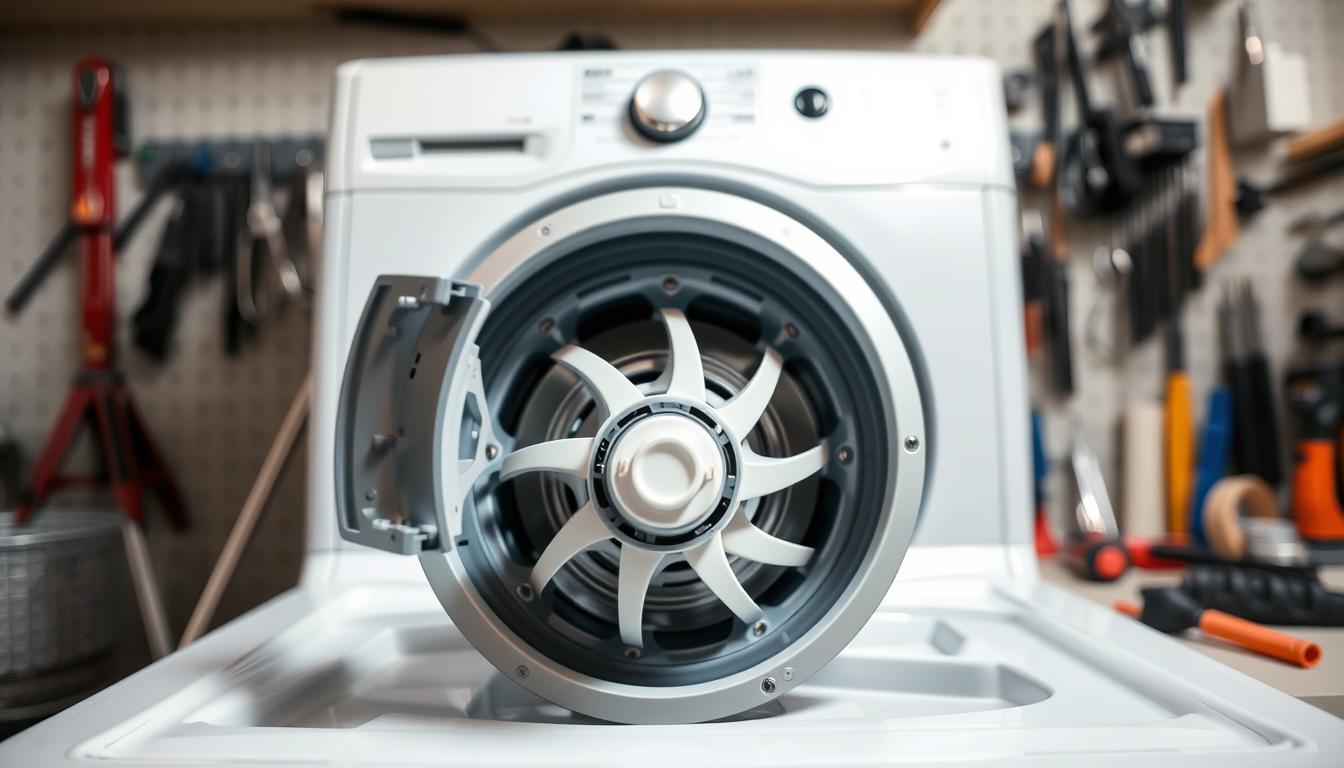
What the Maytag Washer SUD Code Really Means and How to Fix It
The SUD code (or Sd / 5d) on a Maytag washer indicates that the control board has detected excessive soap suds in the wash tub. This foaming prevents the machine from draining water or spinning properly. The washer will automatically p...
The SUD code (or Sd / 5d) on a Maytag washer indicates that the control board has detected excessive soap suds in the wash tub. This foaming prevents the machine from draining water or spinning properly. The washer will automatically pause, extend cycle times, or add extra rinses to break down the foam before resuming normal operation.
Contents
Decoding the SUD Code: What Is Your Maytag Washer Telling You?
When your Maytag washing machine displays SUD, Sd, or 5d, it is alerting you to an aerated foam buildup inside the drum. On modern digital segment displays, the letter "S" often looks identical to the number "5," leading many machine owners to search for a non-existent "5d" error. Regardless of how it appears on your screen, all three variations point to the exact same condition: excessive lather interrupting the washer's mechanical cycle.
Modern High-Efficiency (HE) top-load and front-load Maytag washers rely on precise water-to-soap ratios and specific hydrodynamics to lift dirt from fabrics. Standard wash cycles use mechanical friction—clothing tumbling against clothing or an impeller—to pull soil out of woven fibers. When excessive soap bubbles enter the tub, they create a cushion between garments. This air cushion eliminates the friction required for cleaning, traps water in foam bubbles, and prevents the machine's sensors from determining water levels accurately.
The washer's main control unit does not contain an optical bubble sensor. Instead, it detects suds through two primary physical feedback loops:
- Pump Cavitation and Pressure Transducer Readings: During the drain phase, the washer attempts to pump liquid water out through the drain hose. Soap suds consist primarily of trapped air bubbles. When suds enter the drain pump, the pump impeller spins through air rather than liquid—a condition known as pump cavitation. The pressure switch (or electronic pressure transducer) continuously measures the air pressure inside a small tube connected to the bottom of the tub. If the water level drops slowly or pressure fluctuations match aerated foam rather than liquid water, the control board triggers the suds routine.
- Motor Drag and Resistance Sensing: During spin cycles, high volumes of foam act as a physical brake on the outside of the spinning inner basket. As the basket attempts to reach high rotations per minute (RPM), the suds trapped between the inner basket and outer tub create heavy viscous drag. The washer's motor controller monitors electrical current draw. If current draw spikes while basket acceleration stalls, the board interprets this drag as excessive foam and halts acceleration to prevent motor overheating.
Primary Causes of the Maytag SUD Error Code
Understanding why suds accumulate is essential to preventing recurring errors. While using the wrong soap is the most common trigger, mechanical restrictions within the drainage assembly can produce identical symptoms.
MAYTAG SUD CODE DIAGNOSTIC PATH
- SUD / Sd / 5d Code Triggered
- Chemical / Soap Factor?
- Non-HE Soap Used
- Overdosing HE Soap
- Soft Water Reactivity
- Physical / Mechanical Restriction?
- Clogged Drain Pump Filter (Coin Trap)
- Kinked or Pinched Drain Hose
- Standpipe Height / Partial Drain Clog
- Sensor / Maintenance Issue?
- Soap Scum Buildup in Pressure Tube
- Residual Detergent in Outer Tub
- Chemical / Soap Factor?
1. Using Non-High-Efficiency (Non-HE) Detergent
Traditional, non-HE laundry detergents are engineered for older, high-water-volume top-load washing machines. These legacy detergents depend on high-foaming surfactants to suspend soil in large volumes of standing water.
Modern Maytag washers use a fraction of the water required by vintage models. When non-HE detergent is introduced to low water levels, the concentration of foaming agents becomes extraordinarily high. The aggressive tumbling action whips air into the concentrated solution, creating dense foam that the machine cannot easily pump out. Always verify that your detergent container features the official HE logo (a stylized "h" and "e" inside an oval).
2. Detergent Overdosing
Even when using high-quality HE detergent, using too much soap causes the SUD error. Concentrated detergent formulas (such as 2x, 4x, or 10x ultra-concentrates) require surprisingly small volumes per load.
Many users fill the detergent dispenser cup to the "Max" line for every load regardless of weight or soil level. Dispenser lines are designed as absolute maximum thresholds for maximum-sized, heavily soiled loads in hard water conditions. For a standard, medium-sized load of moderately dirty clothes, a high-efficiency front-load or top-load Maytag washer typically requires only one to two tablespoons of liquid HE detergent.
3. Soft Water Dynamics
Water hardness plays a decisive role in soap chemistry. Hard water contains high concentrations of dissolved minerals like calcium and magnesium. These minerals react with detergent surfactants, partially neutralizing their ability to form foam.
If your home utilizes a whole-house water softener or naturally features very soft water, detergent remains fully active and lathers much more aggressively. Homes with soft water frequently require 50% less detergent than recommended by laundry soap manufacturers to avoid triggering the SUD code.
4. Drain System Restrictions and Clogged Coin Traps
If your detergent dosage is correct but the SUD code persists, the underlying cause is often mechanical drainage failure rather than excessive soap. When a washer cannot evacuate water quickly, residual soap suds remain floating at the bottom of the tub during the rinse phase.
- Front-Load Drain Pump Filters: Maytag front-loading washers include a drain pump filter (often called a coin trap) located behind a lower panel or integrated into the pump housing. Hair, lint, coins, buttons, and small items like socks can catch in this filter. A partial restriction slows down liquid evacuation, causing the pressure switch to mistake trapped water and foam for excess suds.
- Kinked or Restricted Drain Hoses: If the flexible drain hose behind the machine is crushed against a wall or pinched under a foot, flow velocity decreases.
- Standpipe Restrictions: If the home's plumbing drain standpipe is partially clogged or positioned at an incorrect height (typically higher than 8 feet or lower than 39 inches, depending on model specifications), water backs up, re-aerating soap residual.
5. Soap Scum Buildup and Pressure Transducer Blockage
Over months or years of washing clothes at low water temperatures (such as Eco-Cold cycles), unused detergent, fabric softeners, and body oils can form a gelatinous lining between the inner spin basket and outer tub.
This buildup can block the air dome or air hose connected to the washer's pressure transducer. When the pressure hose fills with dried soap scum, air cannot travel freely to the sensor. The sensor sends erratic voltage readings to the main control board, registering a suds condition even when clear water fills the drum.
Step-by-Step Guide: How to Clear and Resolve the SUD Code
If your Maytag washer currently displays SUD or Sd, follow these practical troubleshooting steps to clear the code and finish your laundry.
MAYTAG SUD CODE RESOLUTION STEPS
- Allow Automatic Suds-Reduction Routine to Complete
- Manually Clear Drum (Cancel, Run Drain & Spin without Soap)
- Perform Hot Water Flush / Vinegar Water Dissolving Phase
- Clean Front-Load Pump Filter / Coin Trap
- Inspect Drain Hose Layout & House Standpipe Clearance
Step 1: Allow the Automatic Suds-Reduction Routine to Finish
When Maytag machines detect a suds overload, they trigger an automated recovery routine. The washer halts the spin cycle, adds cold water to dilute the foam, pauses to let bubbles dissipate naturally, and attempts to drain.
- Do not immediately unplug the machine if it is actively running this routine.
- Wait 20 to 30 minutes. In many cases, the machine will clear the suds independently, complete the cycle, and display the final end-of-cycle message.
Step 2: Manually Clear the Drum
If the machine stalls completely and displays a persistent SUD error code:
- Press the Cancel/Pause button twice to abort the current wash program.
- Open the lid or door once unlocked. If the drum is filled with visible foam, remove saturated clothing manually and place them in a laundry basket or sink.
- Close the washer door. Select the Drain & Spin cycle (or Rinse & Spin with extra rinses turned off).
- Do not add any detergent or fabric softener.
- Allow the washer to complete the drain phase to evacuate remaining aerated water.
Step 3: Run a Hot Water Clean/Flush Cycle
Once garments are removed and the bulk of the standing foam is evacuated, any lingering soap residue sticking to the outer tub wall must be dissolved.
- Leave the washer empty of clothes.
- Add 1 cup of distilled white vinegar directly into the drum (or use an approved washer cleaning tablet like Affresh). White vinegar acts as a mild acid that breaks down alkaline detergent surfactants without damaging rubber gaskets.
- Select the Clean Washer with Affresh cycle (or set the machine to the hottest available water setting on a heavy-duty wash cycle).
- Run the full cycle to flush out the outer tub, pressure hose chamber, and internal recirculation plumbing.
Step 4: Clean the Drain Pump Filter (Front-Load Models)
If the SUD code returns during subsequent loads despite using minimal soap, inspect the drain pump filter.
- Disconnect the washer from its electrical outlet.
- Locate the lower pump access panel on the front lower right or lower left of the appliance (on models without an exterior panel, access may require removing the lower rear panel).
- Place a low-profile drain tray and towels beneath the pump filter cap, as trapped water will discharge when opened.
- Unscrew the pump filter cap counterclockwise.
- Remove collected lint, coins, debris, and detergent sludge trapped inside the basket assembly.
- Rinse the filter thoroughly under warm running water.
- Reinstall the filter, tightening it securely to prevent water leaks, and reattach the access panel.
FRONT-LOAD DRAIN PUMP FILTER CLEANING
- Washer Front Panel
- Lower Drain Access Door
- Filter Cap [Drain]
- Place Shallow Tray / Towel Here
- Turn Counterclockwise to Unscrew & Remove Debris
- Filter Cap [Drain]
- Lower Drain Access Door
Step 5: Check Drain Hose and Household Plumbing
Ensure the drain path allows unrestricted water discharge:
- Pull the appliance slightly away from the wall to confirm the flexible corrugated drain hose is not flattened or crimped.
- Verify that the drain hose is inserted into the standpipe no more than 4.5 to 7 inches (11 to 18 cm). Inserting the hose too deep into the standpipe can create a siphoning effect, pulling wastewater—and suds—back into the tub.
- Ensure the standpipe opening is not sealed tight with tape or expanding foam; an air gap around the drain pipe is necessary to prevent vacuum locking during discharge.
Summary Table: Diagnosing and Fixing Maytag SUD Code Causes
| Underlying Cause | Primary Indicator / Symptom | Repair / Correction Action | Technical Difficulty |
|---|---|---|---|
| Non-HE Detergent Usage | Large, dense foam visible through glass door or overtopping tub; long cycle delays. | Switch immediately to HE-certified detergent; run hot water wash with vinegar to clear drum. | Easy (User Action) |
| Detergent Overdosing | "SUD" or "Sd" code displays near end of wash or early spin cycle; clothes feel slimy. | Reduce detergent volume to 1–2 tablespoons max per load; recalibrate for load size. | Easy (User Action) |
| Water Softener Over-Foaming | Regular low-dose soap creates excessive lathering; clear water quickly turns to suds. | Cut detergent quantity by 50% relative to manufacturer recommendations for softened water. | Easy (User Action) |
| Clogged Drain Filter / Coin Trap | Water drains slowly; low hum from pump area; SUD code occurs alongside "F7E1" or slow drain codes. | Unplug machine, drain manually, open lower filter door, clear debris/coins, wash filter screen. | Moderate (Basic Tools) |
| Kinked / Deep Drain Hose | Persistent SUD code on clean/empty test cycles; water flowing back into basket. | Unkink hose behind unit; adjust insert depth in standpipe to between 4.5 and 7 inches max. | Easy (Visual Check) |
| Coated Pressure Transducer Tube | SUD code appears instantly upon cycle start when drum is completely empty and dry. | Disconnect power, remove top/back panel, clear soap buildup inside plastic air transducer hose. | Advanced (Technical Repair) |
Long-Term Prevention Strategies for Suds-Free Washing
Preventing the SUD code requires optimizing your laundry habits and keeping up with routine machine maintenance.
1. Master HE Detergent Dosing
The most common mistake laundry operators make is assuming more soap equals cleaner clothes. High-efficiency front-load and top-load washers use low water volumes. Excess soap does not wash away—it redeposits onto garments, causing fabric stiffening, skin irritation, and machine errors.
- Standard Light/Medium Loads: Use 1 tablespoon of liquid HE detergent.
- Large / Heavily Soiled Loads: Use 2 tablespoons of liquid HE detergent.
- Single-Dose Pods / Packs: Use only one pod per standard load. Place the pod directly into the empty bottom of the wash drum before loading clothes—never place detergent pods inside the sliding liquid dispenser drawer.
2. Limit Fabric Softeners and Liquid Additives
Liquid fabric softeners work by depositing a hydrophobic oil layer over textile fibers. When mixed with excess detergent, softeners combine into a sticky substance known as scrud. Scrud clings to the hidden outer wash tub, harboring mold and trapping air bubbles during agitation.
Consider replacing liquid fabric softener with distilled white vinegar in the softener dispenser cup. Vinegar naturally relaxes fabric fibers, neutralizes detergent residues, leaves zero odor after rinsing, and keeps internal pressure sensors clear.
3. Maintain a Regular Washer Cleaning Routine
Run a dedicated tub cleaning cycle every 30 wash cycles or once a month. Use an EPA Safer Choice-certified washing machine cleaner tablet or Affresh Washer Cleaner.
Tablets contain oxygenated bleaching agents and surfactants formulated to break down heavy, compacted soap scum deposits in areas water agitation cannot easily reach.
Frequently Asked Questions
Can I bypass or reset the SUD code on a Maytag washer?
You cannot bypass the SUD code using a key combination. The code automatically clears once the pressure transducer registers that water and air levels within the drum have returned to normal operating parameters. Pressing Cancel/Pause twice aborts the cycle, allowing you to select Drain & Spin to evacuate remaining water.
Why does the SUD code appear when there are no visible suds in the washer?
If your clothes look normal and no foam is visible, the issue is typically a restricted drain path or a contaminated pressure switch hose. A partially blocked drain pump filter slows water evacuation, causing the control board to misinterpret slow draining as soap cavitation. Alternatively, dried soap scum trapped inside the air transducer tube tricks the control board into sensing high tub pressure.
Does the SUD code damage my Maytag washing machine?
The SUD code itself is a protective safety program designed to prevent damage. However, running a washer continuously with high suds forces the main drive motor to work against heavy viscous drag, increasing internal motor temperature. Over time, recurring suds can force water past internal shaft seals, leading to premature bearing failure or motor control board burnout.
Why does my Maytag washer show "5d" instead of "SUD"?
Maytag digital segment displays render numbers and letters using seven discrete LED bars. On these screens, an uppercase letter "S" is rendered identically to the number "5", while a lowercase "d" appears as a right-facing vertical bar with a lower loop. The code displayed as "5d" is simply "Sd," which stands for "Suds Detected."
How much detergent should I use if I have a water softener installed?
If your home uses a softened water system (0 to 1 grains per gallon of hardness), reduce your detergent usage significantly. Start with 1 to 1.5 teaspoons of liquid HE detergent for standard loads. You need only enough surfactant to clean the clothes; without hard water minerals to neutralize the soap, full doses produce massive amounts of unnecessary foam.
Recommended Next Actions
To resolve a current SUD error and prevent it from recurring:
- Run an Empty Hot Rinse: Cancel the current cycle, remove garments, and run a Clean Washer or hot water cycle using one cleaning tablet or one cup of white vinegar to dissolve hidden residual soap.
- Inspect Mechanical Drainage: Check the drain hose at the rear of the unit for kinks and ensure front-load coin traps are free of foreign debris, lint, or small garments.
- Adjust Soap Volume: Measure liquid detergent using a dedicated measuring spoon rather than relying on dispenser lines. Limit standard wash loads to a single tablespoon of HE-certified detergent.
For persistent issues where the code displays on a completely dry, empty tub after thorough flushing, consult an authorized Maytag service technician to test the electronic pressure transducer and control board continuity.
Image Gallery