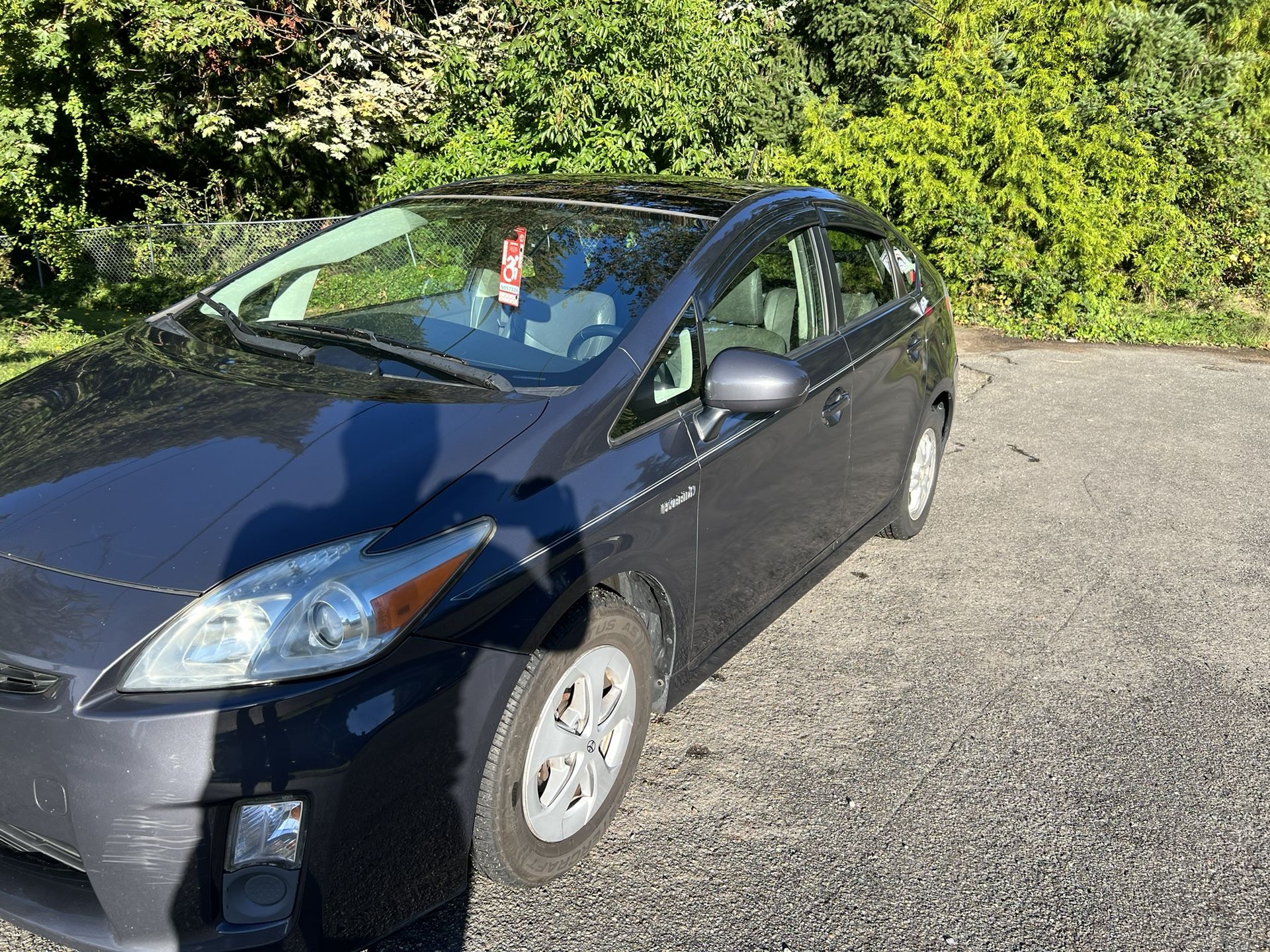
What to Expect for 2011 Toyota Prius Auto Insurance in 2026
Insuring a 2011 Toyota Prius in 2026 typically costs between $950 and $1,400 annually for full coverage, while liability-only policies average $450 to $600. Because this vehicle is now 15 years old, premiums are primarily influenced by...
Insuring a 2011 Toyota Prius in 2026 typically costs between $950 and $1,400 annually for full coverage, while liability-only policies average $450 to $600. Because this vehicle is now 15 years old, premiums are primarily influenced by its depreciated market value, high risk of catalytic converter theft, and the potentially high cost of hybrid battery replacement relative to the car's total worth.
Contents
The 2011 Toyota Prius remains a popular choice for commuters and budget-conscious drivers in 2026 due to its legendary fuel efficiency and mechanical longevity. However, as a vehicle enters its mid-teens, the insurance landscape shifts. You are no longer insuring a "new" high-tech marvel; you are insuring a legacy hybrid where the cost of a single major repair can easily exceed the vehicle's actual cash value (ACV). Understanding how insurers view this specific model year is essential for balancing protection with cost-effectiveness.
The Valuation Paradox: How Age and Technology Affect Premiums
In 2026, the 2011 Prius sits in a unique insurance niche. From a traditional standpoint, a 15-year-old vehicle usually sees lower premiums because its replacement cost is low. However, the Prius is not a traditional internal combustion engine (ICE) vehicle. Insurers must account for the specialized components that remain expensive even as the chassis ages.
Actual Cash Value (ACV) and the Total Loss Threshold
For a 2011 Prius, the ACV in 2026 likely ranges from $3,500 to $6,500, depending on mileage and battery health. Insurance companies typically "total" a vehicle if repair costs exceed 60% to 75% of this value. Because body panels, headlight assemblies, and hybrid components for the third-generation Prius have not significantly dropped in price, even a moderate low-speed collision can result in a total loss. This high "totaling" probability often prevents premiums from dropping as low as one might expect for a 15-year-old sedan.
The Impact of Hybrid Technology on Repair Estimates
While many mechanics are now comfortable with hybrid systems, specialized labor rates for high-voltage battery systems or the complex planetary gear transmission of the Prius can still be higher than those for a contemporary 2011 Toyota Corolla. Insurers factor these potential labor costs into their premium calculations. If you choose a policy with "Original Equipment Manufacturer" (OEM) parts coverage, expect a significant jump in premiums, as 2011-era OEM hybrid parts are becoming rarer and more expensive to source in 2026.
The Persistent Risk of Catalytic Converter Theft
One of the most significant factors in the "Comprehensive" portion of a 2011 Prius insurance quote is the high rate of catalytic converter theft. The third-generation Prius (2010–2015) is notoriously targeted because its converter contains higher concentrations of precious metals—palladium, rhodium, and platinum—than those in standard gasoline cars.
Because the engine in a hybrid runs less frequently, the precious metals in the converter are often less "burned off" or degraded, making them more valuable to recyclers. In 2026, despite various regional legislative efforts to curb illegal scrap sales, the 2011 Prius remains a high-risk vehicle. If you live in an urban area with high property crime rates, your comprehensive coverage may be disproportionately high. Some insurers may even offer a discount if you can prove the installation of a "cat shield" or a stainless steel security plate, which significantly increases the time required for a thief to remove the component.
Safety Ratings and Liability Considerations
The 2011 Prius was an IIHS Top Safety Pick during its launch era, earning "Good" ratings in most crash tests. In 2026, while it lacks the advanced Driver Assistance Systems (ADAS) like automatic emergency braking or lane-keep assist found in newer models, its fundamental structural integrity remains respected by insurers.
Liability insurance—which covers damage you cause to others—is generally affordable for this vehicle. Because the 2011 Prius is a lightweight hatchback rather than a heavy SUV or a high-horsepower sports car, it is statistically less likely to cause catastrophic damage to other vehicles or property. This "low-damage potential" helps keep the mandatory portion of your insurance policy lower than it would be for a larger or faster vehicle from the same era.
Coverage Level Comparison for a 2011 Prius
Deciding between "Full Coverage" (Liability + Collision + Comprehensive) and "Liability Only" is the most critical decision for a 2011 Prius owner in 2026. The table below outlines what you can expect from different policy tiers.
| Coverage Tier | Estimated Annual Cost (2026) | Best For | Key Considerations |
|---|---|---|---|
| Liability Only | $450 – $600 | High-mileage cars worth under $3,500. | Does not cover your car if you are at fault or if the converter is stolen. |
| Liability + Comprehensive | $650 – $850 | Owners worried about theft or weather but not collisions. | Protects against catalytic converter theft; vital for the 2011 Prius. |
| Full Coverage (500 Ded.) | $950 – $1,400 | Owners with low-mileage vehicles in excellent condition. | May not be cost-effective if the annual premium exceeds 25% of the car's value. |
| Telematics/Pay-Per-Mile | $300 – $700+ | Low-mileage drivers (under 5,000 miles/year). | Costs vary wildly based on driving behavior and actual distance. |
The "Battery Factor" in Insurance Settlements
By 2026, most 2011 Priuses will either be on their second hybrid battery or will be overdue for a replacement. The health of your traction battery significantly impacts the vehicle's value, and by extension, how an insurance company handles a claim.
If your car is involved in an accident, the adjuster will look at the local market value. If you have recently spent $2,000 on a new lithium-ion or nickel-metal hydride (NiMH) battery replacement, you should keep the receipts. While a standard policy won't necessarily increase your premium for a new battery, having documentation can help you negotiate a higher ACV settlement if the car is totaled. Conversely, if the battery is failing, the insurer may lower the valuation of the car, potentially leading to a "total loss" designation for even minor cosmetic damage.
Factors That Can Lower Your 2011 Prius Insurance Costs
Despite the vehicle's age, several modern insurance mechanisms can help reduce the cost of insuring a 2011 Prius in 2026:
- Telematics and Usage-Based Insurance (UBI): Since the 2011 Prius is often used as a secondary "errand car" or a short-distance commuter, opting for a pay-per-mile program can be highly beneficial. If you drive fewer than 7,000 miles a year, you could save up to 40% compared to a traditional fixed premium.
- Defensive Driving Credits: Many states mandate insurance discounts for drivers who complete a certified defensive driving course. For a driver of an older vehicle, this 5% to 10% discount can offset the "age premium" of the car.
- Multi-Policy Bundling: As always, bundling your auto insurance with homeowners or renters insurance remains the most effective way to drop the price of a 2011 Prius policy.
- Increasing Deductibles: If you choose to keep collision and comprehensive coverage, raising your deductible from $500 to $1,000 can significantly lower your monthly payment. However, ensure you have the $1,000 set aside, as a 2011 Prius is more likely to be totaled than repaired in a major claim.
Frequently Asked Questions
Is it worth having full coverage on a 2011 Prius in 2026?
It depends on your financial "pain tolerance" and the car's condition. If the car is worth $5,000 and your full coverage premium is $1,200 a year with a $1,000 deductible, you are essentially paying $1,200 to protect $4,000 of equity. Many owners of a 2011 Prius in 2026 opt for "Liability plus Comprehensive" to protect against theft while dropping the expensive "Collision" portion.
How does catalytic converter theft affect my premium?
Insurers look at the claims history for specific models in your zip code. Because the 2011 Prius is a top-tier target for theft, your "Comprehensive" premium will likely be higher than that of a 2011 Honda Civic or Mazda3. Installing a theft deterrent device and informing your agent can sometimes mitigate this.
Does the 2011 Prius qualify for "Green Vehicle" discounts in 2026?
In 2026, many insurers have phased out "Green Vehicle" discounts for older hybrids, focusing those incentives on newer Plug-in Hybrids (PHEVs) and Battery Electric Vehicles (BEVs). However, some specialty insurers still offer small discounts for any hybrid due to the statistically safer driving habits associated with hybrid owners.
Will my insurance go up if I replace the hybrid battery myself?
Generally, no. Replacing a battery is considered maintenance. However, if you use a third-party or refurbished battery, ensure it is installed correctly. A fire or electrical issue resulting from a faulty DIY battery installation could lead to a denied claim under certain policy exclusions.
What happens if my 2011 Prius is totaled?
The insurance company will pay you the Actual Cash Value (ACV) of the car minus your deductible. In 2026, the ACV for a 15-year-old Prius is relatively low. You should check sites like NADA or Kelley Blue Book to stay informed about your car's current market value so you aren't surprised by a settlement offer.
Final Recommendation
For most 2011 Toyota Prius owners in 2026, the most balanced insurance strategy is a high-deductible Comprehensive policy paired with standard Liability. This protects you from the most common financial risk—catalytic converter theft—without overpaying for Collision coverage on a vehicle that is likely to be totaled by the insurance company in any significant accident. Always shop around every six months, as the "risk algorithms" for 15-year-old hybrids vary significantly between carriers like Progressive, Geico, and State Farm.
Image Gallery