What Are Equities in Investing? A Comprehensive Guide to Equity Assets
In investing, equities represent fractional ownership stakes in a company. When you acquire equity, you purchase a share of a firm’s net assets and future earnings. Equity investors typically aim to build wealth through long-term capit...
In investing, equities represent fractional ownership stakes in a company. When you acquire equity, you purchase a share of a firm’s net assets and future earnings. Equity investors typically aim to build wealth through long-term capital appreciation, as the value of the company rises, and through cash distributions called dividends.
Contents
Understanding the Core Mechanics of Equity Investments
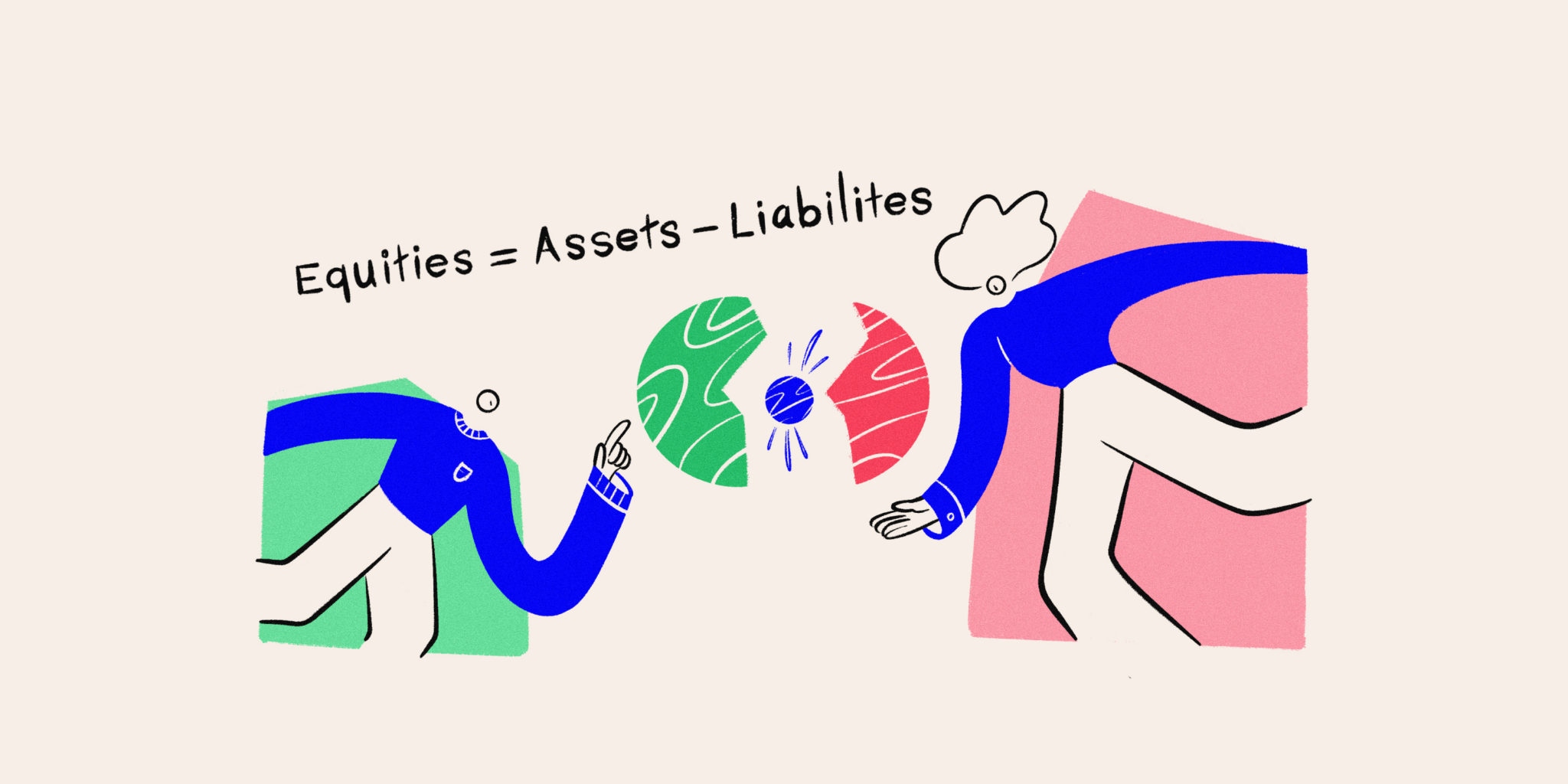
Equities—commonly referred to as stocks or shares—are one of the primary building blocks of global capital markets. At a financial accounting level, equity reflects the residual value of a business. It represents the assets remaining after all enterprise liabilities, such as corporate debt and account payables, are fully settled.
When a company decides to raise growth capital, it can issue debt (such as corporate bonds) or issue equity. By purchasing equity, individual and institutional investors become fractional business owners. Unlike bondholders, who act as lenders entitled to fixed interest payments regardless of company performance, equity holders participate directly in the corporate enterprise's profit and loss.
Common Stock vs. Preferred Stock
Equity investments generally fall into two broad structural classes, each offering different risk profiles, payout priorities, and governance rights:
- Common Stock: The vast majority of equity held by retail and institutional investors is common stock. Common shareholders possess voting rights (typically one vote per share) on major corporate decisions, such as board of director elections and merger approvals. Common stock offers maximum upside potential through unlimited capital appreciation. However, common shareholders occupy the lowest priority in the corporate capital structure; in the event of bankruptcy and liquidation, they receive payouts only after secured creditors, bondholders, and preferred shareholders are fully satisfied.
- Preferred Stock: Preferred shares function as a hybrid security, combining characteristics of equity and fixed income. Preferred shareholders generally do not hold voting rights, but they hold structural priority over common stockholders for dividend distributions and liquidation proceeds. Preferred dividends are usually set at a fixed rate, providing dependable cash flow, though offering less participate in corporate earnings growth compared to common equity.
Types of Equities in Financial Markets
The equity universe spans tens of thousands of publicly traded and privately held enterprises worldwide. To construct diversified portfolios and match individual risk tolerances, market participants categorize equities across market capitalization, style, geography, and sector.
- EQUITY CLASSIFICATIONS
- Market Capitalization (Large-Cap, Mid-Cap, Small-Cap)
- Investment Style (Growth vs. Value)
- Geographic Market (Domestic, International Developed, Emerging)
- Economic Sector (Technology, Healthcare, Energy, etc.)
Market Capitalization Categories
Market capitalization ("market cap") measures the total dollar value of a enterprise's outstanding common shares. It is calculated by multiplying total outstanding shares by the current market price per share.
- Large-Cap Equities: Companies with a market capitalization of $10 billion or more. These are typically mature, well-established market leaders—such as major multinational technology, consumer staples, or pharmaceutical firms—offering financial stability and moderate growth potential.
- Mid-Cap Equities: Companies valued between $2 billion and $10 billion. Mid-cap firms often experience rapid operational expansion and offer a balance between the stability of large-cap entities and the growth potential of smaller enterprises.
- Small-Cap Equities: Companies with a market cap ranging between $300 million and $2 billion. Small-cap firms tend to focus on niche markets or aggressive domestic growth. They present elevated volatility and business failure risks, balanced by the potential for high historical growth rates.
Investment Styles: Growth vs. Value Equities
Equity portfolio managers often divide the stock universe into two distinct performance styles based on corporate fundamentals:
- Growth Equities: Growth companies reinvest their earnings directly into research, development, and market expansion rather than distributing dividends. These firms trade at higher price-to-earnings ratios because investors expect revenue and net income to expand at a rate significantly above the broader economy.
- Value Equities: Value investments are shares in established companies trading below their perceived intrinsic valuation. These companies may be temporarily out of favor due to macroeconomic shifts, cyclical industry downturns, or short-term operational missteps. Value stocks frequently trade at lower valuation multiples and typically pay consistent dividend yields.
Public Equities vs. Private Equity
Investors access equity investments through two main structural channels: public stock exchanges and private equity transactions.
Public Equities
Public equities trade open markets, such as the New York Stock Exchange (NYSE) or NASDAQ. Companies list public shares through an Initial Public Offering (IPO) or direct listing, adhering to rigorous disclosure standards established by regulatory bodies like the U.S. Securities and Exchange Commission (SEC). Public equities feature continuous pricing, high liquidity, transparent financial reporting, and low execution costs for market participants.
Private Equity
Private equity involves equity investments in enterprises not listed on public securities exchanges. This asset class includes venture capital (early-stage startup equity), growth equity, and leveraged buyouts of mature firms. Private equity transactions operate outside daily stock exchange trading, requiring substantial minimum investments, extended capital lock-up periods (often 7 to 10 years), and lower liquidity. However, private equity allows specialized institutions to directly influence operational turnarounds and strategic restructurings.
Risk and Return Profile of Equity Investments
Equities represent a core engine of long-term capital accumulation, but they carry greater downside volatility than cash assets or government sovereign debt.
Benefits of Equity Ownership
- Capital Growth: Equities have historically delivered real, inflation-adjusted capital expansion over long holding periods. By owning equity, investors participate directly in corporate innovation, economic productivity gains, and market expansion.
- Inflation Protection: Because businesses can adjust prices for goods and services upwards to offset rising input costs, corporate earnings and share prices often adjust alongside underlying inflationary pressures over long horizons.
- Dividend Income: Many mature public companies pay quarterly cash dividends. Reinvesting these dividend distributions compounding total portfolio returns over multidecade horizons.
- Liquidity: Public equities listed on major global exchanges can be bought or sold instantly during regular trading hours, offering high asset portability relative to real estate or infrastructure investments.
Key Investment Risks
- Market Volatility: Share prices fluctuate constantly in response to economic indicators, central bank policies, geopolitical shifts, and market sentiment.
- Business Risk: Corporate profitability can decline due to shifting consumer preferences, technological disruption, poor managerial execution, or competitive pressure, leading to share depreciation or enterprise insolvency.
- Liquidation Junior Status: In corporate restructurings or liquidations, common equity holders are paid last after bondholders, bank debt, and preferred shareholders.
Comparing Equities to Major Asset Classes
Understanding how equities perform relative to fixed income, real estate, and cash equivalents helps investors design diversified strategic asset allocations tailored to their personal risk tolerance.
| Asset Class | Primary Return Driver | Income Type | Liquidity Profile | Historical Volatility | Ownership Structure |
|---|---|---|---|---|---|
| Equities | Capital appreciation & profit expansion | Variable dividends | Very High (Public markets) | Moderate to High | Direct residual ownership of corporate assets |
| Fixed Income (Bonds) | Interest payments & principal repayment | Fixed yield/coupon | High | Low to Moderate | Creditor relationship (Corporate or sovereign debt) |
| Real Estate | Property appreciation & rent growth | Rental cash flow | Low | Low to Moderate | Physical property or fractional REIT equity |
| Cash Equivalents | Short-term interest rates | Fixed money-market yield | Immediate | Minimal | Liquid short-term debt instruments |
Core Valuation Metrics for Equity Analysis
Evaluating whether an equity security is priced fairly relative to its operational fundamental performance requires quantitative security analysis. Investors use several standardized ratios to measure value:
1. Price-to-Earnings Ratio (P/E)
The P/E ratio measures a stock's market price per share relative to its annual net earnings per share (EPS). $$\text{P/E Ratio} = \frac{\text{Market Price Per Share}}{\text{Earnings Per Share (EPS)}}$$ A high P/E ratio indicates that investors expect high profit growth in the future or that the stock is priced at a premium relative to its current profitability.
2. Price-to-Book Ratio (P/B)
The P/B ratio compares a company's total market value to its balance sheet book value (total assets minus total liabilities). $$\text{P/B Ratio} = \frac{\text{Market Price Per Share}}{\text{Book Value Per Share}}$$ Value investors frequently utilize P/B ratios to identify asset-heavy companies—such as manufacturing or financial firms—trading near or below their net tangible asset values.
3. Dividend Yield
The dividend yield measures the annual cash return an equity security distributes relative to its current share price. $$\text{Dividend Yield} = \frac{\text{Annual Dividends Per Share}}{\text{Current Market Price Per Share}}$$ Dividend yield helps income-focused investors evaluate cash distribution efficiency relative to alternative fixed-income investments. Additional market regulatory guidelines and investor resources can be examined through the Financial Industry Regulatory Authority (FINRA).
Portfolio Strategies for Equities
Investors access equity returns through several direct and indirect implementation strategies:
- EQUITY IMPLEMENTATION
- Direct Individual Stock Ownership
- Low-Cost Index Funds & Passive ETFs
- Actively Managed Mutual Funds
Direct Share Ownership vs. Pooled Vehicles
- Individual Equities: Buying single stocks allows targeted control over asset selection, tax-loss harvesting, and company governance choices. However, holding individual stocks requires comprehensive security research and management to avoid concentrated company risk.
- Index Funds and ETFs: Index funds and Exchange-Traded Funds (ETFs) pool investor funds to track broader equity indices, such as the S&P 500 or MSCI World Index. These funds offer broad diversification across hundreds of companies within a single fund purchase, significantly lowering administrative expense ratios and idiosyncratic single-stock risk.
- Actively Managed Mutual Funds: Professional portfolio managers select specific equities aiming to generate returns superior to a benchmark market index. Active management incurs higher management fees and expense ratios, which can weigh on long-term net returns relative to passive benchmark trackers.
Risk Mitigation Principles
- Broad Asset Allocation: Balancing equity portfolios across international boundaries, sector classifications, and market capitalization segments mitigates concentrated economic shocks.
- Dollar-Cost Averaging (DCA): Investing fixed dollar amounts at consistent, regular intervals reduces the risk of committing capital at market highs and moderates purchase costs over long market cycles.
- Long Horizon Alignment: Equities are best suited for capital allocators with investment horizons of five years or longer, providing time to recover from cyclical market downturns.
Frequently Asked Questions
What is the difference between stocks, shares, and equities?
The terms are frequently used interchangeably. "Equities" refers to the entire asset class representing ownership stakes in businesses. "Stock" refers to ownership certificates of a business entity overall, while "shares" refers to the specific, quantifiable units of equity ownership in a single corporation.
Are equity investments guaranteed to make money?
No. Equities carry capital risk and offer no guaranteed return of principal. A company’s market price fluctuates continuously based on market conditions, macroeconomics, and firm-level profitability. Shareholders can lose their invested principal if a company underperforms or becomes insolvent.
How do investors earn returns on equity investments?
Investors realize income from equities through two mechanisms: capital gains (selling equity shares at a price higher than the original purchase price) and cash dividend payouts (distributions of excess enterprise net profits paid out to equity owners).
How do rising inflation rates affect equities?
Inflation can exert mixed impacts on equities. While rising inflation raises input costs for raw materials and labor—potentially compressing profit margins—companies with pricing power can pass higher costs onto customers. Additionally, central bank interest rate hikes designed to curb inflation can lower valuation multiples across growth equities.
How much equity should an investor hold in their portfolio?
Portfolio allocation depends on individual investment timelines, financial goals, income requirements, and risk tolerance. Traditional asset allocation models suggest holding higher percentages of equities during younger earning years to prioritize growth, gradually reallocating toward capital preservation assets like bonds as retirement approaches.
Strategic Recommendations for Investors
Navigating equity markets requires aligning asset choices with clear financial goals and risk capacity. To build a resilient equity strategy:
- Define Investment Horizon: Allocate short-term funds (needed within 1 to 3 years) to liquid money market instruments, reserving equity allocations for medium-to-long-term goals where capital expansion can compound over time.
- Prioritize Broad Diversification: Reduce single-stock default risks by utilizing low-cost, broad-market index funds or ETFs covering domestic, international, and emerging market equities.
- Evaluate Fees and Expenses: Review management expense ratios, transaction costs, and tax drag across investment accounts, as fee management plays a critical role in net wealth preservation.
- Maintain Operational Discipline: Rebalance portfolios periodically back to targeted asset allocation weights to lock in capital gains systematically and prevent portfolio drift during extended market expansions.
Disclaimer: This article is for informational and educational purposes only and does not constitute financial, legal, or investment advice. Consult a qualified fiduciary financial adviser or tax professional to assess your personal financial circumstances before implementing investment decisions.
Image Gallery