The Brown M&M Story: Why Van Halen’s Infamous Contract Rider Was a Technical Necessity
The brown M&M story is a legendary piece of rock-and-roll lore that describes a specific clause in Van Halen’s 1982 tour rider demanding a bowl of M&Ms with all brown candies removed. While often cited as the height of rock-star decade...
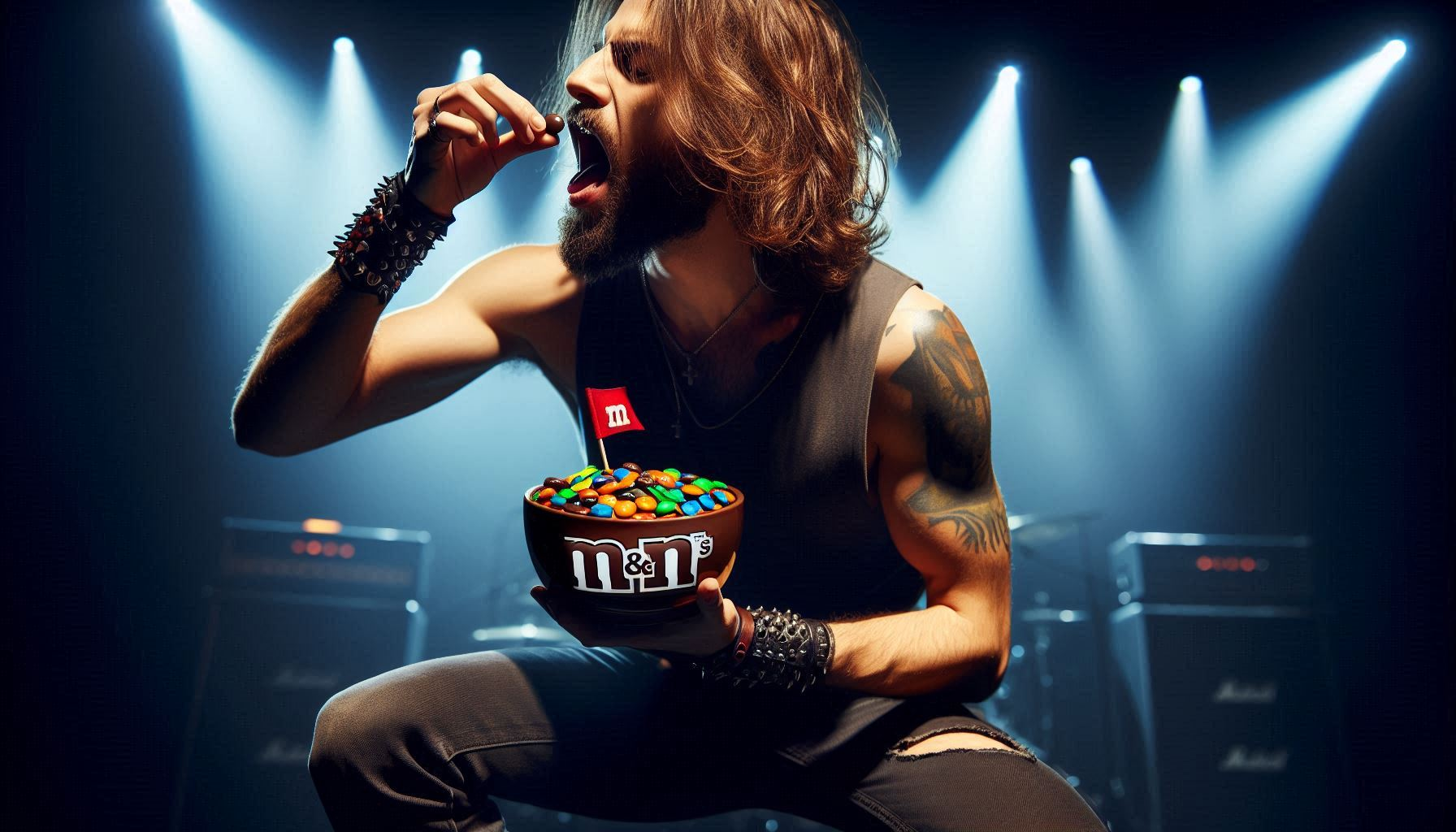
The brown M&M story is a legendary piece of rock-and-roll lore that describes a specific clause in Van Halen’s 1982 tour rider demanding a bowl of M&Ms with all brown candies removed. While often cited as the height of rock-star decadence, it was actually a sophisticated "canary in a coal mine" quality assurance test designed to ensure venue safety and technical compliance for their massive, complex stage productions.
Contents
For decades, the "no brown M&Ms" clause served as the ultimate symbol of the pampered, eccentric rock star. In the public imagination, David Lee Roth, Eddie Van Halen, and the rest of the band were viewed as divas who would throw a tantrum over the color of their snacks. However, as we look back from the vantage point of 2026, this story has shifted from a tabloid anecdote to a foundational case study in business management, technical safety, and meticulous attention to detail.
The Origins of the Infamous Paragraph 126
During the early 1980s, Van Halen was one of the biggest touring acts in the world. Their 1982 "Hide Your Sheep" tour was a massive undertaking that pushed the boundaries of what was possible in live entertainment. Unlike the relatively simple setups of the 1970s, Van Halen traveled with nine semi-trucks full of equipment. To ensure that every venue could handle the sheer weight and electrical requirements of their show, they utilized a contract rider—a long list of requirements that the local promoter had to fulfill.
Buried deep within the technical specifications of the 1982 rider, specifically under the "Munchies" section in Paragraph 126, was the following instruction: "M&Ms (WARNING: ABSOLUTELY NO BROWN ONES)."
If the band arrived backstage and found even a single brown M&M in the bowl, they knew the promoter had not read the contract thoroughly. This realization would immediately trigger a full, line-by-line "technical audit" of the entire stage setup to ensure the safety of the band, the crew, and the audience.
The Technical Reality: Why the Rider Mattered
In the 1980s, the "industrial rock" aesthetic was in its infancy. Van Halen was among the first bands to bring a full Broadway-style production into standard rock arenas. This involved hundreds of heavy "Par Can" lights, massive speaker arrays, and complex pyrotechnics.
The technical stakes were exceptionally high for several reasons:
- Structural Integrity: The stage and the ceiling beams of the host arenas had to support tens of thousands of pounds of equipment. Many older arenas were designed for basketball, not for hanging several tons of lighting rigs.
- Electrical Load: The lighting rig alone required massive amounts of power. If the local electricians didn't provide the correct amperage or grounding, it could lead to equipment failure or, worse, electrocution.
- Pyrotechnic Safety: Van Halen’s show used significant amounts of explosives. Without proper ventilation and clearance as specified in the rider, the risks of fire were substantial.
David Lee Roth later explained in his autobiography, Crazy From the Heat, that the M&M clause was a simple way to gauge the promoter's attention to detail. If they missed a trivial detail about snacks, it was highly likely they had missed a critical detail about the weight-bearing capacity of the floor or the power requirements for the amplifiers.
The Pueblo, Colorado Incident: A Case for the Clause
The most famous verification of this strategy occurred in Pueblo, Colorado. Upon arriving at the venue, Roth noticed brown M&Ms in the bowl provided by the promoter. Taking this as a sign of negligence, he famously "trashed the dressing room," causing several thousand dollars in damage—a move that further fueled the "diva" narrative in the press.
However, the subsequent technical inspection revealed why Roth’s suspicion was justified. The local promoter had failed to read the weight requirements for the stage. Because the floor of the arena was not properly reinforced as requested in the rider, the weight of the band’s equipment caused the floor to sink and buckle, resulting in over $80,000 in damage to the venue itself.
The "brown M&M" check had successfully signaled a massive structural failure before the band even stepped onto the stage. Had they performed without noticing the promoter's oversight, the stage could have collapsed during the show, potentially causing multiple fatalities.
Comparison: The Myth vs. The Technical Reality
To understand why this story persists in 2026, it is helpful to compare the public perception of the rider with the actual operational purpose it served.
| Aspect | The Popular Myth | The Technical Reality |
|---|---|---|
| Primary Goal | To exert power and show off rock-star status. | To verify contract compliance and venue safety. |
| Reasoning | The band hated the taste or look of brown M&Ms. | A visual indicator that the promoter read the fine print. |
| Consequence | A temper tantrum and a trashed dressing room. | A mandatory safety audit of the entire stage rig. |
| Financial Impact | Wasteful spending on unnecessary labor. | Preventing hundreds of thousands in structural damage. |
| Legacy | Seen as a sign of the "excessive 80s." | Taught as a "Zero Defects" management strategy. |
The "Brown M&M" Strategy in Modern Industry
Since the details of the rider became public, the "Brown M&M" concept has been adopted by various industries as a standard for Quality Assurance (QA). It is a method of testing a system’s integrity by checking a small, easily verifiable component that represents the overall health of the project.
Software Engineering and Security
In the world of software development, engineers often use "smoke tests." These are basic tests to see if the program "catches fire" when it first runs. Similar to the M&M clause, if a software build fails a simple, small-scale test, developers know there is no point in moving forward with complex feature testing until the foundational issues are resolved.
Legal and Contractual Compliance
Attorneys frequently use "mismatch" clauses in long-form contracts. By including a small, seemingly odd requirement in the middle of a 200-page document, a lawyer can quickly tell if the opposing counsel has actually reviewed the text or is simply skimming it. This ensures that the negotiations are being handled with the necessary level of diligence.
Aviation and Medicine
The use of checklists in high-stakes environments, such as surgical theaters and cockpits, mirrors the Van Halen philosophy. As documented by Atul Gawande in The Checklist Manifesto, the goal is to remove the "human error" factor by forcing a focus on small, repetitive tasks that, if ignored, lead to catastrophic failure.
Managing the Human Element in Technical Work
One of the most profound lessons from the brown M&M story is how it manages the "human element." In any large-scale project, there is a natural tendency for people to become complacent. Promoters in the 1980s were used to local bands with three amps and a drum kit. When a production as large as Van Halen’s arrived, these promoters often assumed their "standard" procedures were sufficient.
The M&M clause forced the promoter to engage with the document. It transformed a passive reading of a contract into an active task. By requiring someone to physically stand over a bowl and sort through candies, the band ensured that at least one person on the local staff had been forced to pay attention to the specific, non-standard needs of their production.
Frequently Asked Questions
Did the band actually eat the M&Ms?
Yes, the band and crew ate the M&Ms. The color of the candy had nothing to do with taste or preference. The instruction was purely a diagnostic tool. Once the "test" was passed and the bowl was found to be free of brown candies, the M&Ms were simply a snack for the backstage area.
Was Van Halen the only band with strange riders?
No, many bands have "strange" requirements, but most are purely for comfort or preference (e.g., specific brands of water or types of towels). Van Halen was unique in that they used a specific, seemingly petty item as a functional safety indicator.
How much weight was Van Halen actually carrying?
On the 1982 tour, the lighting rig alone weighed roughly 30,000 to 40,000 pounds. When combined with the sound system, flooring, and instruments, the total weight could exceed 60,000 pounds. This necessitated precise engineering calculations for every arena they visited.
Did they ever find brown M&Ms and still play?
If brown M&Ms were found, it did not mean the show was automatically canceled. It meant that a "full technical rehearsal" and inspection were required before the band would agree to perform. If the inspection showed that the stage was safe, the show would proceed, though often with a very tense relationship between the band and the promoter.
Is the original contract rider available to the public?
Yes, segments of the 1982 Van Halen rider have been archived by sites like The Smoking Gun and are frequently used in business school curricula to demonstrate the importance of attention to detail and contract management.
Summary of Best Practices for Quality Control
If you are looking to apply the "Van Halen Principle" to your own work or business in 2026, consider these actionable steps:
- Identify the "Canary": Find a small, low-cost indicator in your process that, if neglected, strongly suggests that larger, high-risk elements are also being ignored.
- Insert Into Documentation: Place this indicator in a location that requires a thorough review of the instructions to find.
- Establish a Protocol: Determine exactly what happens if the indicator is missed. Do not just get angry; use it as a trigger for a systematic review of the entire project.
- Educate Your Team: Ensure your team understands that these "small" details are not about micromanagement, but about preventing systemic failure.
The brown M&M story remains a powerful reminder that in complex systems, the smallest details are often the most telling. By focusing on a bowl of candy, Van Halen pioneered a method of safety management that continues to protect professionals across dozens of industries today.
Image Gallery