The Most Popular Sonnets in Literature: A Definitive Guide to Poetic Mastery
The most popular sonnets in literature include William Shakespeare’s "Sonnet 18" ("Shall I compare thee to a summer’s day?"), Elizabeth Barrett Browning’s "Sonnet 43" ("How do I love thee?"), and John Keats’s "Bright Star." These works...
The most popular sonnets in literature include William Shakespeare’s "Sonnet 18" ("Shall I compare thee to a summer’s day?"), Elizabeth Barrett Browning’s "Sonnet 43" ("How do I love thee?"), and John Keats’s "Bright Star." These works endure due to their rigorous 14-line structure, exploration of universal themes like love and mortality, and profound linguistic precision.
Contents
The Enduring Legacy of the Sonnet
The sonnet has remained one of the most resilient and recognizable forms of poetry for over seven centuries. Originally derived from the Italian word sonetto, meaning "little song," the sonnet’s popularity stems from its unique ability to balance emotional intensity with mathematical precision. By 2026, even as literary tastes shift toward experimental and digital-native forms, the sonnet remains the fundamental exercise for students of literature and professional poets alike.
To understand why specific sonnets have reached "popular" status, one must recognize the tension inherent in the form. A sonnet provides a confined space—exactly 14 lines—in which a poet must present a problem, explore its nuances, and reach a resolution or a "turn" of thought. This structure mirrors the human experience of grappling with complex emotions within the constraints of time and language.
The Anatomy of the Sonnet: Structural Variations
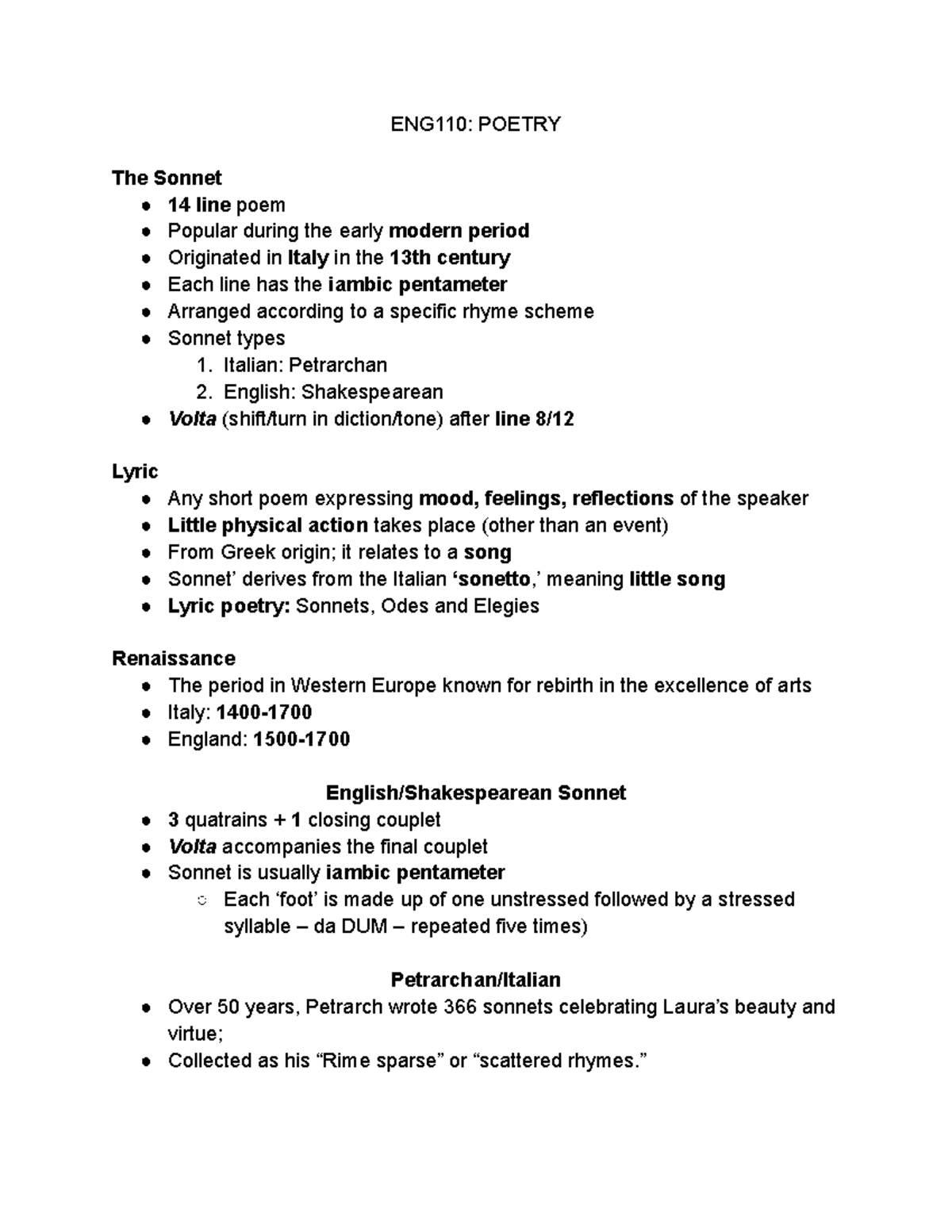
Before identifying the most famous examples, it is essential to distinguish between the two primary technical frameworks that dominate the genre. These structures dictate the rhyme scheme and the placement of the volta, or the "turn," where the poem’s argument shifts.
The Petrarchan (Italian) Sonnet
Named after the 14th-century Italian poet Francesco Petrarca (Petrarch), this form is divided into two sections:
- The Octave: The first eight lines, usually following an ABBAABBA rhyme scheme. The octave establishes a question, a problem, or a narrative premise.
- The Sestet: The final six lines, which can follow various rhyme schemes such as CDECDE or CDCDCD. The sestet provides the resolution or a fresh perspective.
The Shakespearean (English) Sonnet
Developed by the Earl of Surrey and perfected by William Shakespeare, this version adapted the Italian form to the rhyme-poor English language.
- Three Quatrains: Four lines each (totaling 12 lines), following an ABAB CDCD EFEF pattern.
- The Final Couplet: Two lines with a GG rhyme. This couplet often serves as a pithy summary or a dramatic reversal of the preceding twelve lines.
William Shakespeare: The Gold Standard
When discussing the most popular sonnets in history, William Shakespeare’s collection of 154 sonnets is the inevitable starting point. His work redefined the English sonnet, focusing on the complexities of the "Fair Youth" and the "Dark Lady."
Sonnet 18: "Shall I compare thee to a summer’s day?"
Perhaps the most famous poem in the English language, Sonnet 18 addresses the fleeting nature of beauty. Shakespeare argues that while a literal summer’s day is imperfect and temporary, his subject’s beauty will live forever through the "eternal lines" of his poetry. This poem is a masterclass in iambic pentameter, where the rhythm mimics a heartbeat, reinforcing the theme of life and endurance.
Sonnet 130: "My mistress' eyes are nothing like the sun"
This sonnet is popular for its wit and subversion of traditional romantic tropes. During the Renaissance, poets often used "Petrarchan conceits"—hyperbolic comparisons of women to goddesses or nature. Shakespeare utilizes Sonnet 130 to mock these clichés, describing his mistress with brutal honesty (e.g., "reeds" for hair, "bad breath"). However, the final couplet reveals a deep, sincere love that does not require false comparisons, making it a favorite for those who appreciate realism over idealism.
Sonnet 29: "When, in disgrace with fortune and men's eyes"
This poem resonates because of its raw vulnerability. It begins with the speaker feeling isolated, jealous, and unsuccessful. The volta occurs at line nine ("Haply I think on thee"), where the thought of a loved one brings a psychological shift so profound that the speaker would not "change my state with kings." Its popularity persists in 2026 as a timeless meditation on how personal connection can provide a remedy for existential despair.
The Romantic and Victorian Revivals
While the sonnet lost some favor during the 18th century, it saw a massive resurgence during the Romantic era and the Victorian period. Poets during these times used the form to explore nature, social justice, and intimate devotion.
Elizabeth Barrett Browning: Sonnet 43
Found in her 1850 collection Sonnets from the Portuguese, Sonnet 43 is the quintessence of Victorian romanticism. The opening line, "How do I love thee? Let me count the ways," has become a cultural staple. Unlike Shakespeare’s more cynical or layered approaches, Browning’s sonnet is a sincere, spiritual exploration of love that transcends life and death. Its popularity is bolstered by its rhythmic flow and accessible, yet profound, imagery.
John Keats: "Bright Star"
John Keats, a master of the Romantic sonnet, wrote "Bright Star" as a meditation on "steadfastness." He admires the star’s unchanging nature but rejects its isolation. He wishes to be "awake for ever in a sweet unrest" with his beloved. Keats's use of the sonnet form often fused the Shakespearean and Petrarchan structures, creating a lush, sensory experience that remains a high-water mark for English lyricism.
Emma Lazarus: "The New Colossus"
A unique entry in the list of "popular" sonnets, Emma Lazarus’s 1883 poem is famous not just for its literary merit but for its physical placement on the Statue of Liberty. As a Petrarchan sonnet, it provides a powerful "turn" between the description of the ancient "brazen giant" of Greece and the "Mother of Exiles" welcoming immigrants to America. It remains one of the most politically significant sonnets ever written.
Modern and Post-Modern Interpretations
The sonnet did not die with the 19th century. Modernist and contemporary poets have used the form to tackle modern anxieties, warfare, and the changing landscape of identity.
Edna St. Vincent Millay: "What lips my lips have kissed"
In the 20th century, Edna St. Vincent Millay was a prolific sonneteer who brought a modern, often feminist, perspective to the form. This specific sonnet reflects on lost lovers and the quiet sadness of aging. Millay manages to maintain the classical Petrarchan structure while using a voice that feels entirely modern and relatable to 2026 audiences.
Pablo Neruda: "Sonnet XVII"
From his collection 100 Love Sonnets, Neruda’s work—originally in Spanish—reimagined the sonnet for a surrealist age. "I love you without knowing how, or when, or from where" captures a primal, unexplainable passion. Neruda often stripped away the rigid rhyme requirements while maintaining the 14-line "skeleton," proving that the essence of the sonnet lies in its pacing and thematic development.
Comparison of Most Popular Sonnets
The following table compares key technical and thematic elements of the most widely recognized sonnets to help readers identify the differences in style and purpose.
| Poem Title | Author | Form | Primary Theme | Key Technical Feature |
|---|---|---|---|---|
| Sonnet 18 | W. Shakespeare | Shakespearean | Eternal Beauty | Iambic Pentameter |
| Sonnet 43 | E.B. Browning | Petrarchan | Devotional Love | Spiritual Metaphors |
| The New Colossus | Emma Lazarus | Petrarchan | Liberty/Identity | Political Personification |
| Sonnet 130 | W. Shakespeare | Shakespearean | Realistic Love | Subverted Conceits |
| Bright Star | John Keats | Mixed/Romantic | Steadfastness | Sensory Imagery |
| Ozymandias | P.B. Shelley | Variations | Transience of Power | Irregular Rhyme Scheme |
Why These Sonnets Persist in 2026
The popularity of these sonnets in 2026 is driven by several factors that extend beyond academic curricula.
- Memorability: The 14-line length is ideal for human memory and digital sharing. It is long enough to develop a complex thought but short enough to be consumed in a single sitting.
- Structural Tension: The shift at the volta mimics the way the human mind works—observing a situation and then reacting to it or changing its mind. This makes sonnets feel "alive" compared to more linear poetic forms.
- Linguistic Economy: In an era of information overload, the sonnet’s requirement for every word to "earn its keep" appeals to a modern desire for concise, high-impact communication.
- Universal Accessibility: While the language of Shakespeare or Milton may require a glossary, the emotions—heartbreak, the fear of death, the awe of nature—remain unchanged.
Frequently Asked Questions
What is the most famous sonnet ever written?
William Shakespeare’s Sonnet 18 ("Shall I compare thee to a summer’s day?") is widely considered the most famous sonnet. Its opening line is recognizable globally, and it is the standard example used to teach the English sonnet form in schools and universities.
Do sonnets have to be about love?
While the sonnet originated as a love poem in Italy, it has evolved to cover diverse subjects. John Milton used the sonnet to discuss his blindness and political turmoil, Wilfred Owen used it to depict the horrors of World War I, and Percy Bysshe Shelley used it in "Ozymandias" to critique the hubris of powerful leaders.
Why do sonnets have exactly 14 lines?
The 14-line constraint was established early in the Italian Renaissance. It is thought to provide the perfect "golden ratio" for a lyric poem: long enough to provide a complex argument (octave) and short enough to provide a swift, impactful conclusion (sestet or couplet).
Can a sonnet be written in free verse?
Traditionally, a sonnet requires a strict rhyme scheme and meter (usually iambic pentameter). However, "modern sonnets" or "unrhymed sonnets" have become popular in contemporary literature. These poems maintain the 14-line structure and the presence of a volta but eschew traditional rhyme and meter to achieve a more conversational tone.
What is the difference between a Shakespearean and Petrarchan sonnet?
The primary difference lies in the rhyme scheme and the placement of the turn. A Petrarchan sonnet turns after the eighth line (the octave), while a Shakespearean sonnet often saves its most dramatic turn or summary for the final two lines (the couplet).
Recommendation for Readers
To truly appreciate the power of the sonnet, do not merely read them silently. The sonnet was born from the oral tradition of the "little song." Reading "Sonnet 18" or "Sonnet 43" aloud allows you to feel the iambic pentameter—the "da-DUM, da-DUM" rhythm—that mirrors the human pulse. For those interested in writing, try composing a Shakespearean sonnet by focusing first on the final couplet; knowing where your argument ends often makes the journey through the first three quatrains much clearer.
Image Gallery