Understanding the Next Day Business Loans Market: Operations, Costs, and Provider Selection
The next day business loans market provides rapid commercial financing to small and mid-sized enterprises (SMEs) that require immediate working capital. Driven by automated underwriting algorithms, open banking APIs, and modernized pay...
The next day business loans market provides rapid commercial financing to small and mid-sized enterprises (SMEs) that require immediate working capital. Driven by automated underwriting algorithms, open banking APIs, and modernized payment rails, these short-term financial products deliver approved funds into a company’s bank account within 24 hours of application approval.
Contents
What Are Next Day Business Loans and How Do They Work?
The market for next day business loans emerged as a direct response to the rigid processing timelines of traditional commercial banks, which often require four to eight weeks to approve and disburse funds. Next day financing relies on non-bank fintech lenders, specialized commercial finance companies, and online funding platforms to evaluate borrower risk in near real-time.
- Data Ingestion: Bank APIs (Plaid), Accounting Systems (QuickBooks)
- Automated Risk: Credit Score (FICO/SBSS), Cash Flow & Revenue Analytics
- Instant Approval: Automated Underwriting Decision Engine
- Disbursement: ACH Same-Day / FedNow / Fedwire Settlement to Borrower
The underlying mechanism relies on data-driven risk assessment rather than manual document review. When a business owner submits an application, the lender's system connects directly to the applicant's business bank accounts through secure financial data networks such as Plaid or MX. The automated underwriting system analyzes historical cash flow, average daily balances, monthly revenue trends, recurring expenses, and deposit frequencies.
If the applicant meets the lender’s automated risk thresholds, the system generates a loan offer detailing the principal, interest rate or factor rate, term, and repayment schedule. Once the borrower executes the digital agreement before the lender's daily cutoff time (typically between 1:00 PM and 4:00 PM EST), the lender initiates a wire transfer or a Same-Day Automated Clearing House (ACH) deposit, placing funds into the borrower's account by the following business morning.
Key Financial Products in the Next Day Funding Market
"Next day business loan" is an umbrella term encompassing several distinct financial structures. Each product exhibits unique pricing models, repayment mechanics, and suitability profiles.
1. Short-Term Working Capital Loans
These are lump-sum term loans disbursed in full upon approval, with repayment horizons ranging from 3 to 24 months. Lenders recoup the principal plus interest through fixed daily or weekly ACH debits drawn directly from the borrower's operating account.
2. Business Lines of Credit
A revolving line of credit grants access to a pre-approved pool of capital. Borrowers can draw funds on demand up to their credit limit. When funds are requested before the cutoff time, the lender transfers the drawn amount to the business bank account by the next business day. Interest accrues only on the drawn balance.
3. Merchant Cash Advances (MCAs)
Technically commercial purchase transactions rather than formal debt instruments, MCAs involve selling a portion of future credit card sales or bank deposits to a funder at a discount. In exchange for an immediate cash advance, the funder extracts a fixed percentage (the "holdback rate") of daily card transactions or an agreed-upon daily ACH debit until the purchase balance is settled.
4. Invoice Factoring and Accounts Receivable Financing
Companies with outstanding B2B invoices can convert unpaid receivables into immediate liquid capital. In invoice factoring, the business sells its invoices to a factor at a discount (typically 80% to 90% advance rate). The factor collects payment directly from the business's client, releasing the remaining balance minus a fee upon invoice settlement. Accelerated factoring platforms can clear and fund eligible invoices within 24 hours.
Qualification Criteria and Application Requirements
While fast business financing features lower eligibility barriers than traditional SBA 7(a) or commercial real estate loans, lenders offset their speed and higher risk profiles by assessing specific financial metrics.
- Minimum Time in Business: Most fast-funding lenders require a minimum of 6 to 12 months of active operations. Startups operating for less than six months typically face restricted access or higher pricing.
- Annual and Monthly Revenue: Lenders look for consistent revenue streams. Typical minimums start at $100,000 to $250,000 in gross annual revenue, or at least $10,000 per month in verified bank deposits over the trailing three to six months.
- Credit Metrics: While personal FICO scores remain a factor, fast online lenders tolerate lower thresholds than traditional banks. Minimum acceptable personal credit scores generally range from 550 to 650. Some lenders also evaluate business credit profiles via Experian Commercial, Dun & Bradstreet (PAYDEX score), or the FICO Small Business Scoring Service (SBSS).
- Cash Flow Stability: Automated systems check for healthy average daily bank balances (often $1,000 to $5,000 minimum balance maintained) and a low frequency of Non-Sufficient Funds (NSF) events or overdraft fees.
Essential Application Documentation
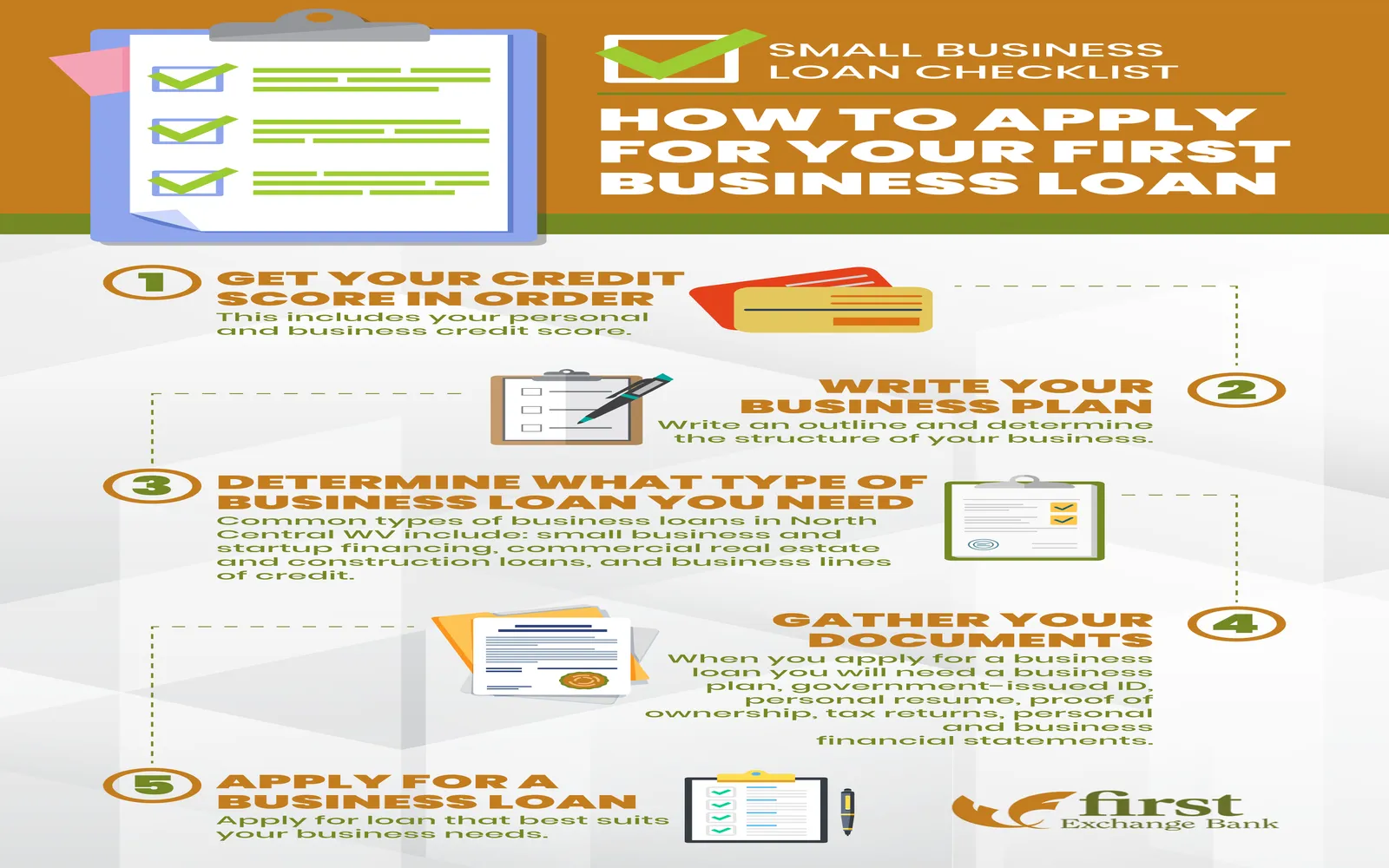
To enable 24-hour turnaround, applicants must prepare their documentation digitally before starting an application:
- Bank Statements: Three to six months of complete, unedited business bank statements (PDF format or direct online bank connection).
- Tax Returns: One to two years of business and personal tax returns (primarily required for larger loan amounts exceeding $100,000).
- Identification: Government-issued photo identification (driver's license or passport) of all business owners holding 20% or more equity.
- Financial Statements: Year-to-date Profit & Loss (P&L) statements and balance sheets for larger capital requests.
- Ownership Proof: Articles of Organization/Incorporation and business licenses verifying legal standing.
Comparing Next Day Financing Options
The following matrix compares primary next day business loan structures across key decision factors.
| Financing Product | Typical Funding Speed | Pricing Metric / Cost Range | Minimum Credit Score | Ideal Use Case |
|---|---|---|---|---|
| Business Line of Credit | Same day to 24 hours | 8% – 35% APR | 600 + | Managing seasonal inventory fluctuations and unexpected operational gaps |
| Short-Term Term Loan | 12 to 24 hours | 15% – 60% APR equivalent | 600 + | Opportunistic expansion, equipment purchases, or predefined capital needs |
| Merchant Cash Advance | 6 to 24 hours | 1.15 to 1.45 Factor Rate | 500 + | Emergency cash flow fixes for businesses with high daily card volume |
| Invoice Factoring | 24 to 48 hours | 1% – 5% Discount Fee per month | 550 + (Focuses on client credit) | B2B companies carrying 30- to 90-day receivables from creditworthy clients |
The Real Cost of Fast Capital: Pricing Structures and Fee Mechanics
Fast financing carries a higher capital cost due to the compressed underwriting timeframe and uncollateralized risk taken by non-bank institutions. Understanding how costs are quoted is essential to preventing debt distress.
Factor Rates vs. Annual Percentage Rates (APR)
Short-term funding products often quote costs using a factor rate (or decimal multiplier) rather than an annualized percentage rate. Factor rates typically range from 1.10 to 1.45.
To calculate total repayment using a factor rate, multiply the principal by the factor rate:
$$\text{Total Repayment} = \text{Principal} \times \text{Factor Rate}$$
Example: A $50,000 advance with a 1.25 factor rate requires a total repayment of $62,500 ($$50,000 \times 1.25$). The total finance charge is $12,500.
Unlike standard compounding interest, factor-based costs are fixed at funding; paying off the loan early usually does not reduce the finance cost unless the agreement explicitly includes a early payoff discount structure. Converting a 6-month factor rate to an APR equivalent frequently yields figures between 30% and 90%+, because the full fee is repaid over a brief period.
Common Associated Fees
- Origination Fees: Deducted from the loan proceeds upfront, ranging from 1% to 6% of the total loan amount.
- Draw Fees: Applicable to lines of credit, charging 1% to 3% each time funds are transferred.
- Wire/ACH Processing Fees: Flat charges ($15 to $50) for immediate outbound wire execution.
- Maintenance or Inactivity Fees: Monthly charges assessed on unused lines of credit or active account management.
Step-by-Step Guide to Securing Next Day Business Funding
Executing a fast capital application efficiently ensures funds arrive within the desired 24-hour window without unexpected delays.
- Step 1: Calculate Exact Requirement & Repayment Capacity
- Step 2: Consolidate Digital Financial Records (Bank Data, Tax Documents)
- Step 3: Select Qualified Online Lenders or Institutional Marketplaces
- Step 4: Connect Bank APIs for Real-Time Underwriting
- Step 5: Review APR Disclosures & Authorize Electronic ACH/Wire Mandate
Step 1: Calculate Exact Need and Repayment Capacity
Determine the minimum capital required to fulfill the business objective. Calculate daily and weekly cash inflows to confirm that automatic daily ACH debits will not trigger bank overdrafts or deplete operational reserves.
Step 2: Consolidate Digital Records
Organize PDF statements, business identification, tax returns, and balance sheets in a secure directory. Verify that bank statements reflect current balances and contain no unmasked account numbers or missing pages.
Step 3: Match Needs to the Right Lender Category
Match capital requirements against lender specialization:
- Use established online business lenders or digital banks for flexible lines of credit.
- Consider commercial factoring houses if capital is tied up in outstanding corporate receivables.
- Evaluate short-term term loans for defined, single-event capital outlays.
Step 4: Submit the Application Before Cutoff Times
Complete the online application early in the business day (preferably before 11:00 AM EST). Use secure API integrations (such as Plaid) to connect financial accounts directly, which accelerates automated verification compared to manual PDF uploads.
Step 5: Review Disclosures and Execute Agreements
Review the finalized agreement carefully. Pay close attention to APR disclosures, fee breakdowns, daily debit amounts, and default triggers. Sign the agreement electronically and select wire or express ACH transfer to lock in next-day settlement.
Regulatory Protections and Risk Mitigation Strategies
Commercial lending operates under a different regulatory framework than consumer financing. While consumer loans benefit from rigid federal Truth in Lending Act (TILA) caps and mandatory disclosures, commercial financing regulations vary significantly by jurisdiction.
Regulatory Disclosures and State Legislation
State regulatory frameworks have expanded commercial financing disclosure rules. States including California (Senate Bill 1235), New York (Commercial Finance Disclosure Law), Utah, and Virginia mandate that commercial lenders provide clear APR disclosures, itemized fee breakdowns, and explicit repayment schedules prior to agreement execution.
At the federal level, the Federal Trade Commission (FTC) enforces regulations against deceptive business practices, while the Consumer Financial Protection Bureau (CFPB) monitors small business lending practices under Section 1071 of the Dodd-Frank Act to promote transparency in credit distribution.
Mitigating Debt Stacking and Default Risks
A primary risk in the fast capital market is debt stacking—the practice of taking out multiple short-term loans or merchant cash advances simultaneously from different providers. Stacking leads to compounding daily debits that can rapidly drain operational cash flow, leading to default or insolvency.
- Cash Flow Squeeze Risk:
- Daily Revenue: $3,000 / day
- Daily ACH Debit 1: -$800 / day
- Daily ACH Debit 2: -$1,500 / day
- Net Operating Cash Remaining: $700 / day (Risk of Payroll Deficit)
Best Practices for Risk Reduction:
- Maintain a Cash Buffer: Ensure liquid reserves equal at least two months of total debt service payments before adding short-term obligations.
- Avoid Subprime Refinancing Loops: Refrain from taking a new fast-funding loan solely to pay off an existing short-term debt unless the new loan offers a substantially lower APR and longer term.
- Request Payoff Schedules: Always ask the lender for a formal payoff letter detailing any fee discounts available for early settlement.
Frequently Asked Questions
Can I get a next day business loan with poor personal credit?
Yes. Many alternative fintech lenders and MCA providers evaluate real-time bank deposits and daily business cash flow rather than relying exclusively on personal credit scores. Applicants with personal FICO scores between 550 and 600 can secure funding, though interest rates, factor rates, and origination fees will be higher to compensate the lender for risk.
What is the daily cutoff time for securing next-day loan disbursement?
Most alternative business lenders maintain daily underwriting cutoffs between 1:00 PM and 4:00 PM Eastern Standard Time (EST). If an application is fully approved and the agreement is signed prior to this cutoff, funds are dispatched via same-day ACH or Fedwire for next-morning availability. Applications completed after the cutoff are generally processed on the following business day.
How do daily ACH debits impact business accounting?
Daily ACH debits automatically withdraw a fixed amount or variable percentage from the business operating account every business day. This schedule requires precise cash flow forecasting to ensure sufficient balance availability. Accounting entries must separate principal reduction from finance charges to maintain accurate books.
Are next day business loans tax-deductible?
Interest payments and origination fees paid on legitimate commercial debt are typically tax-deductible as business expenses under federal tax law. However, for Merchant Cash Advances structured as sales of future receivables rather than standard loans, costs are treated as factor discounts rather than traditional interest. Consult a certified public accountant (CPA) to confirm tax treatment for your specific business structure.
What happens if my cash flow declines during the repayment period?
For fixed-debit term loans, failing to maintain adequate account balances can trigger NSF fees, contractual defaults, and acceleration of the remaining balance. For variable-percentage MCAs, daily withholdings adjust relative to daily credit card sales; however, if overall revenue drops significantly, contact the provider immediately to request a temporary re-adjustment of the daily remittance baseline.
Strategic Recommendations for Business Owners
Navigating the next day business loans market requires balancing urgency against long-term financial health. Fast financing offers an effective bridge during short-term cash flow bottlenecks or time-sensitive growth opportunities, but its elevated cost structure demands careful execution.
Prioritize options with transparent term disclosures and clear APR conversions. Verify that your daily operating revenue comfortably supports automated ACH debits without threatening payroll or vendor obligations. Where feasible, use fast-funding mechanisms for short-term revenue-generating projects, while working concurrently to build strong business credit profiles that qualify your enterprise for lower-cost, long-term bank financing or SBA-backed lines of credit.
Disclaimer: This article is for educational and informational purposes only and does not constitute formal legal, financial, or tax advice. Small business owners should consult qualified financial advisors or legal experts to evaluate specific funding decisions.
Image Gallery