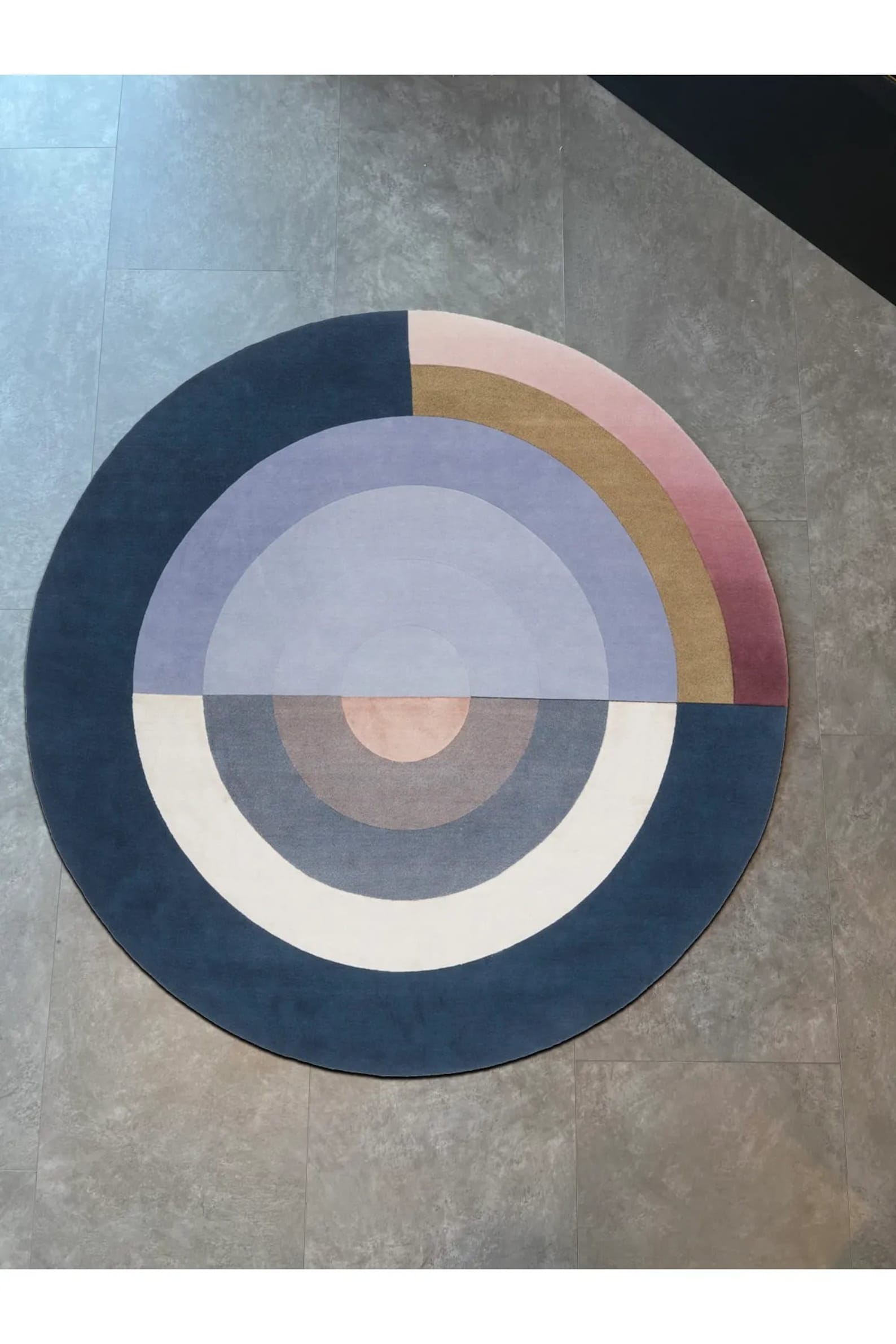
Round Rug Geometric Design Explained: Principles, Placement, and Aesthetics
A round rug with a geometric design is a circular floor covering featuring patterns rooted in mathematical shapes such as triangles, hexagons, and intersecting lines. It bridges the gap between organic architecture and structured décor...
A round rug with a geometric design is a circular floor covering featuring patterns rooted in mathematical shapes such as triangles, hexagons, and intersecting lines. It bridges the gap between organic architecture and structured décor, providing a focal point that softens sharp room angles while maintaining a sense of modern order, visual rhythm, and spatial balance.
Contents
The Mathematical Foundation of Geometric Round Rugs
To understand round rug geometric design, one must first look at the relationship between the boundary (the circle) and the interior motifs (the geometry). Unlike rectangular rugs, where patterns typically follow a linear grid that parallels the edges, a round rug forces a unique interaction between the shapes and the perimeter.
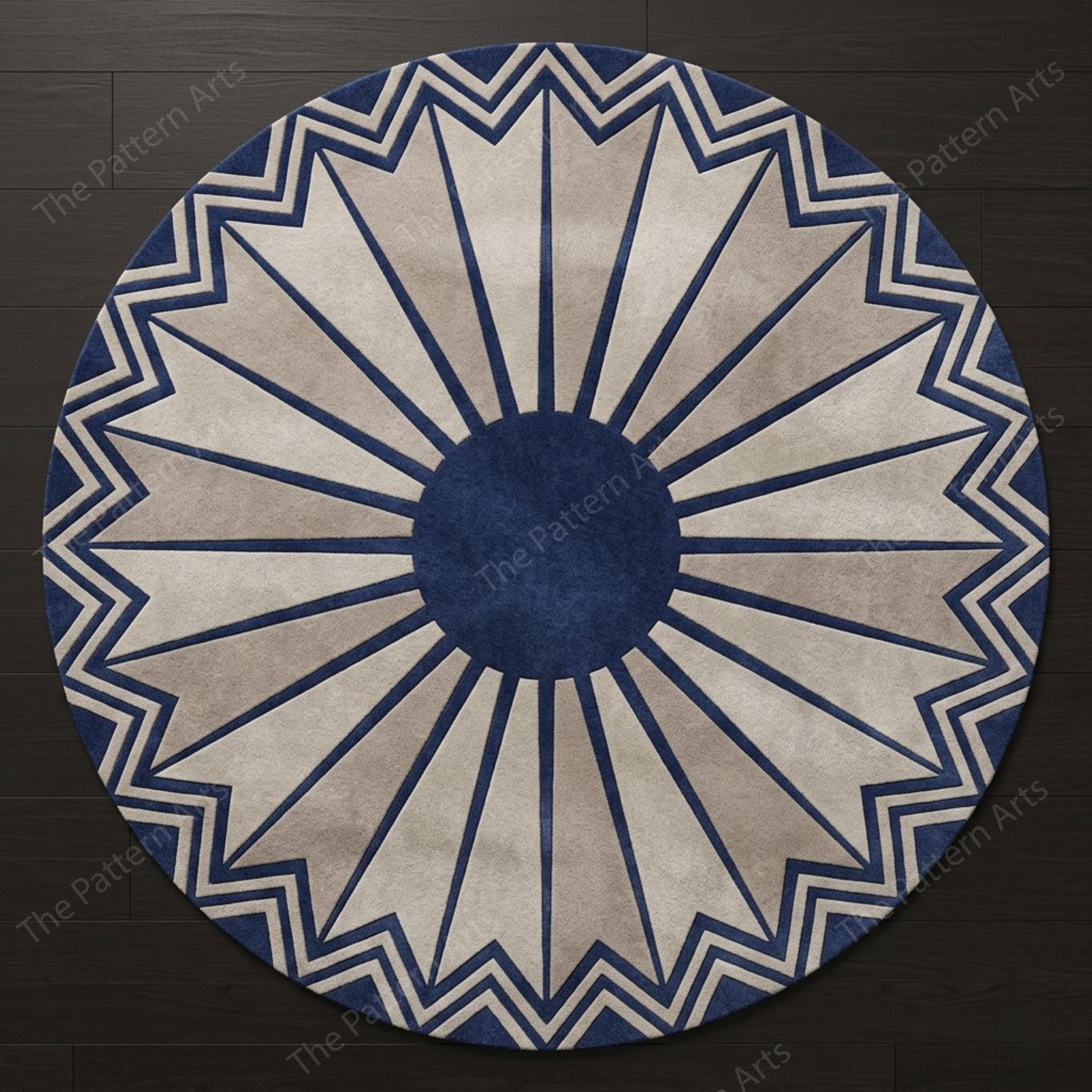
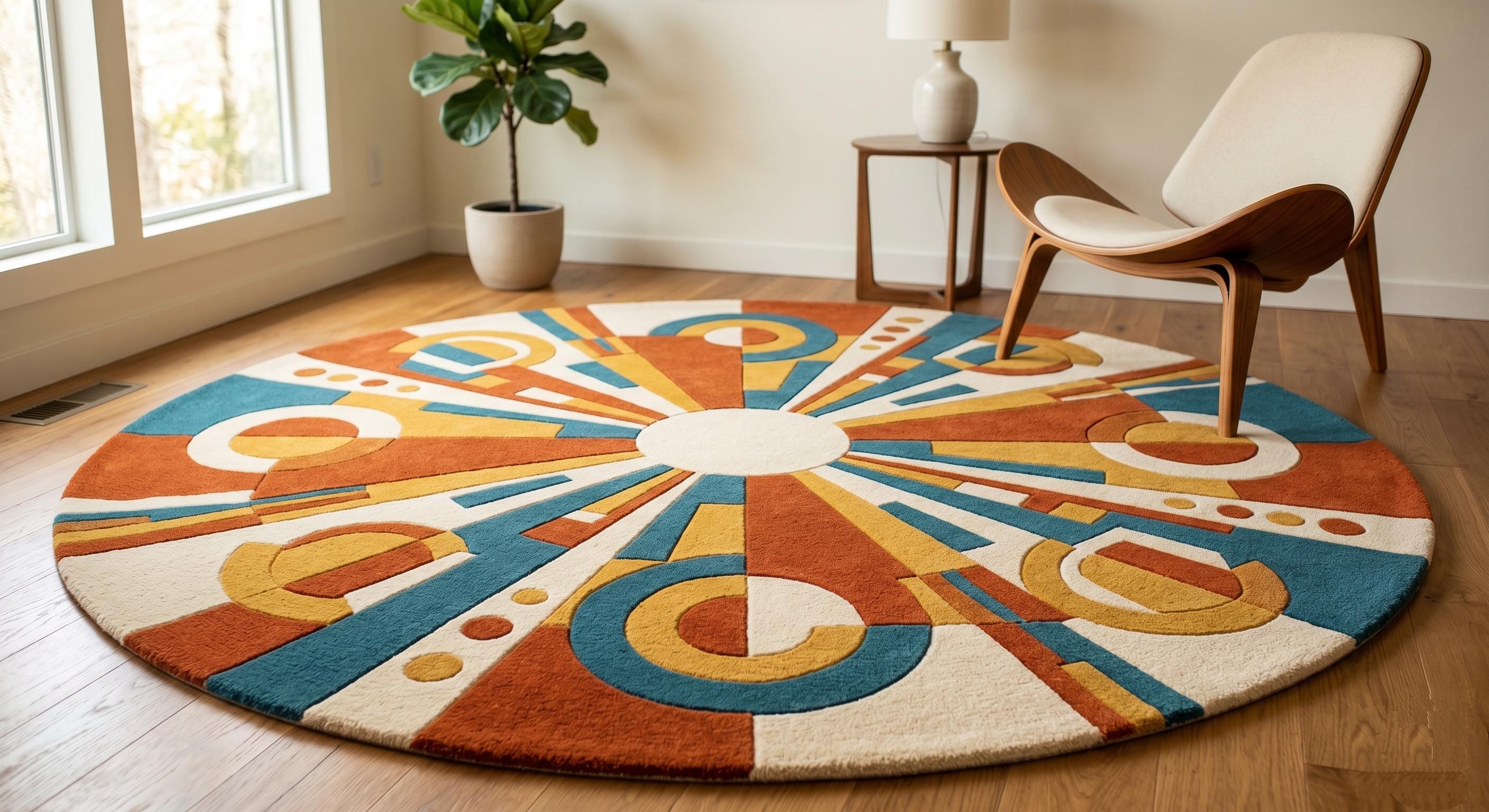
In 2026, the "Radial Geometry" trend has become a dominant force in high-end interior design. This involves patterns that emanate from a central point, expanding outward toward the edge. This design philosophy utilizes the circle’s natural symmetry. When a geometric pattern—such as a series of concentric triangles or a sunburst of trapezoids—is designed radially, it draws the eye toward the center of the rug. This makes it an ideal choice for placement under round dining tables or in the center of an entryway.
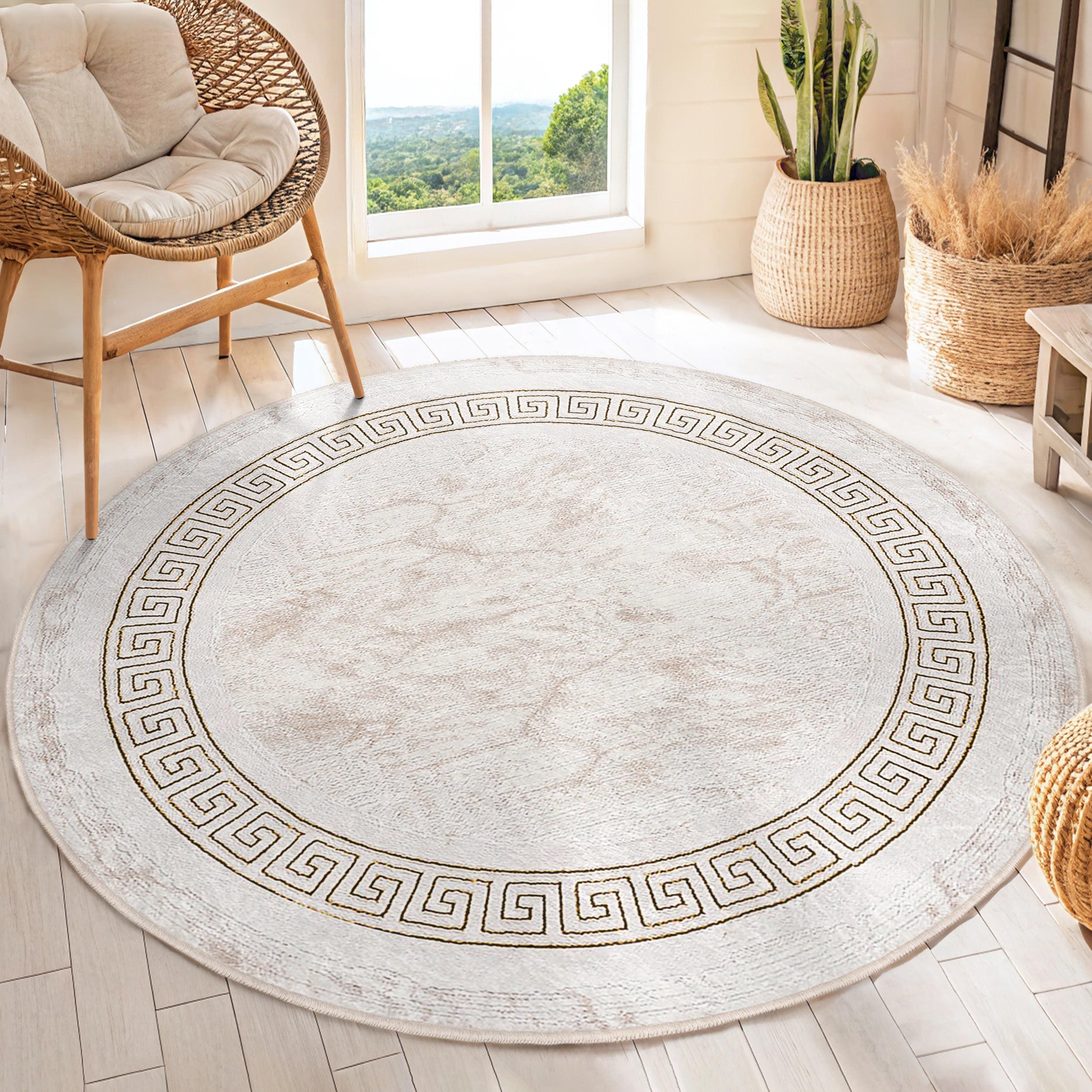
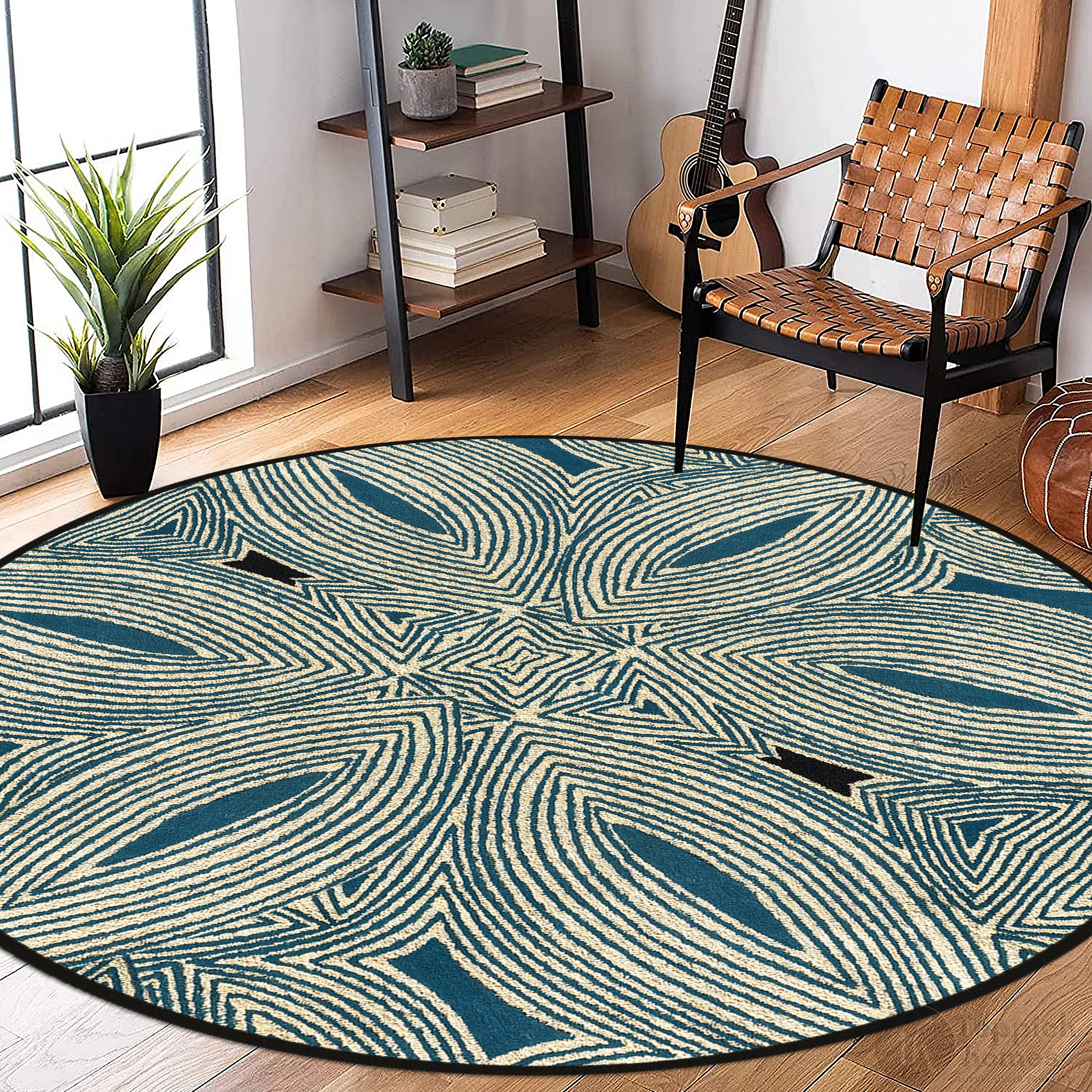
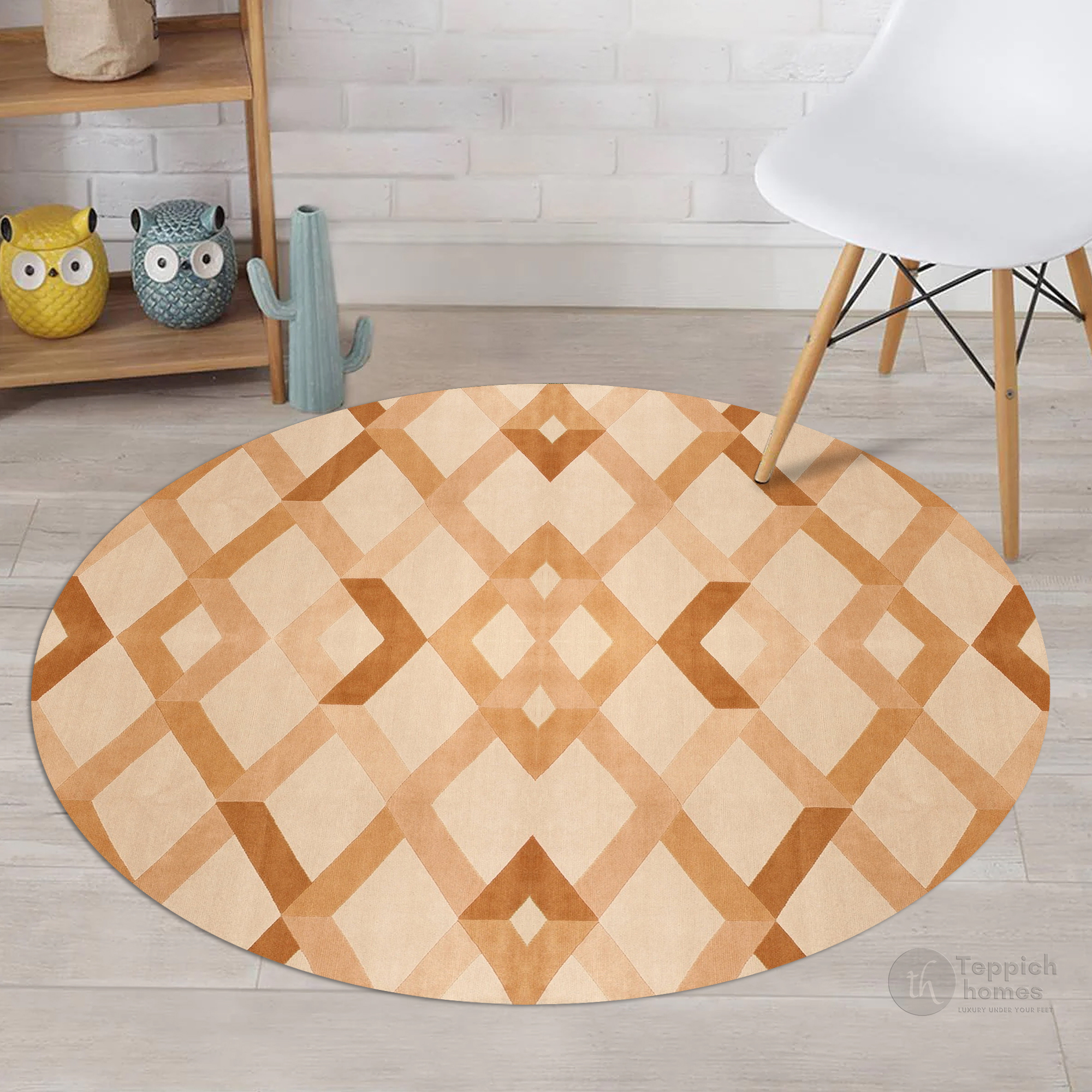
Conversely, some designs employ "Cropped Geometry." This is where a large-scale geometric grid (like a trellis or a Moroccan fretwork) is laid over a circular shape, and the edges of the pattern are simply "cut off" by the rug’s boundary. This creates a sense of expansion, suggesting that the pattern continues beyond the rug itself. This specific style is often used to make smaller rooms feel larger, as the eye perceives the rug as a window into a larger geometric field.
Visual Psychology and Spatial Impact
The primary reason designers choose a round rug with a geometric design is to manipulate the perception of a room’s dimensions. Modern architecture often relies on "boxy" layouts—four walls, square windows, and rectangular furniture. Introducing a circular element breaks this visual monotony.
Softening Architectural Hardness
A round rug acts as a "disruptor" to the harsh lines of a room. However, without a geometric pattern, a plain round rug can sometimes appear too "soft" or float aimlessly in a space. The addition of geometric lines provides the "visual weight" necessary to anchor the furniture. For example, a round rug featuring sharp, black-and-white linear patterns provides a sophisticated contrast against a plush, velvet sofa.
Creating Zones in Open-Plan Layouts
In 2026, as multi-functional living spaces remain the standard in urban development, the round geometric rug serves as a vital tool for "zoning." By placing a circular rug in a corner or a specific sub-section of a large room, you create a dedicated "island" of activity. The geometry within the rug provides the boundaries that the walls do not. A hexagonal pattern, for instance, implies a sense of modularity and structure that can define a home office nook within a larger living area.
Key Design Variations in 2026
Geometric designs on circular canvases are not limited to simple shapes. The evolution of textile technology has allowed for more complex interpretations.
- Symmetrical Mandalas: These are highly structured, repetitive patterns that offer a sense of calm and equilibrium. In 2026, these often incorporate "Fractal Geometry," where the pattern repeats at different scales.
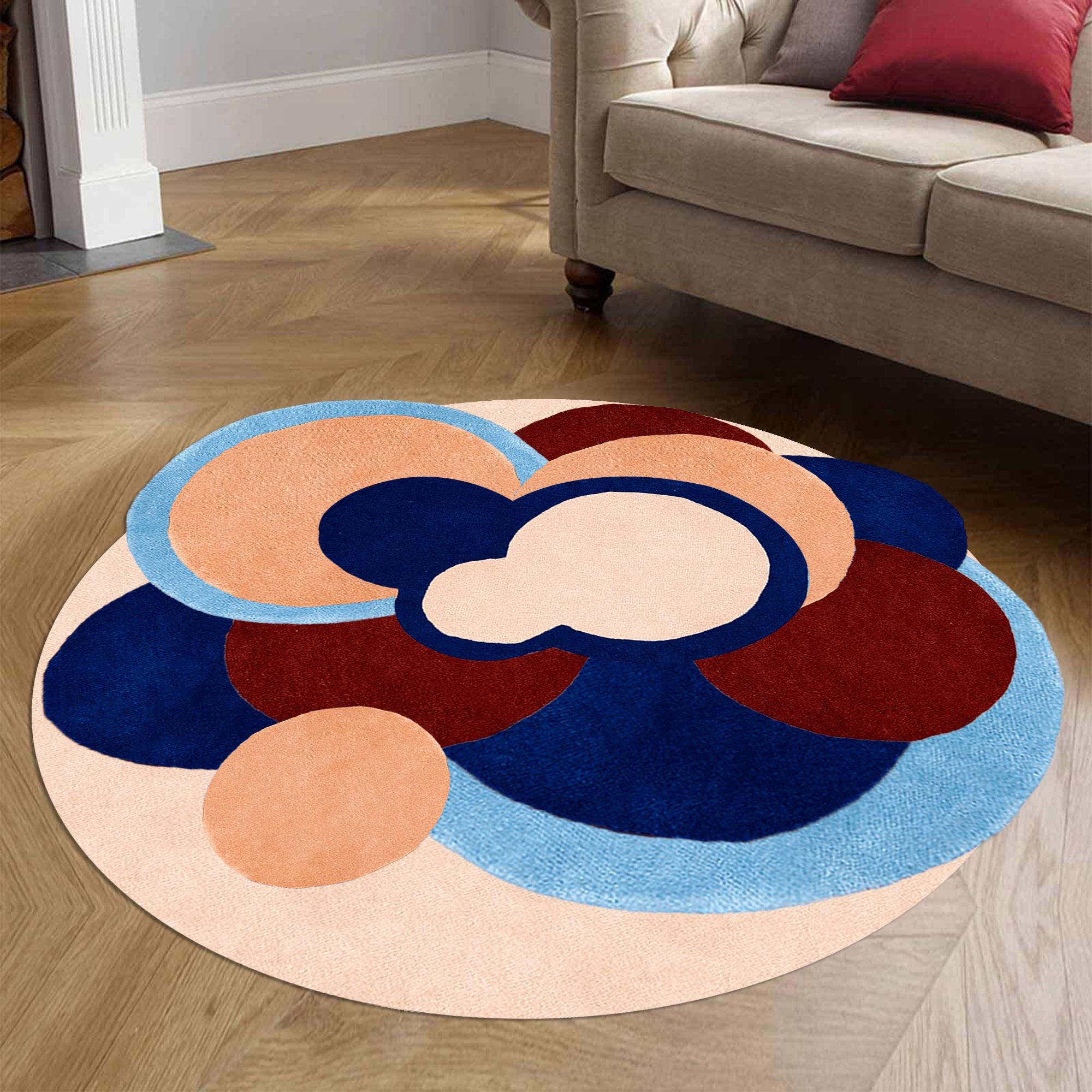
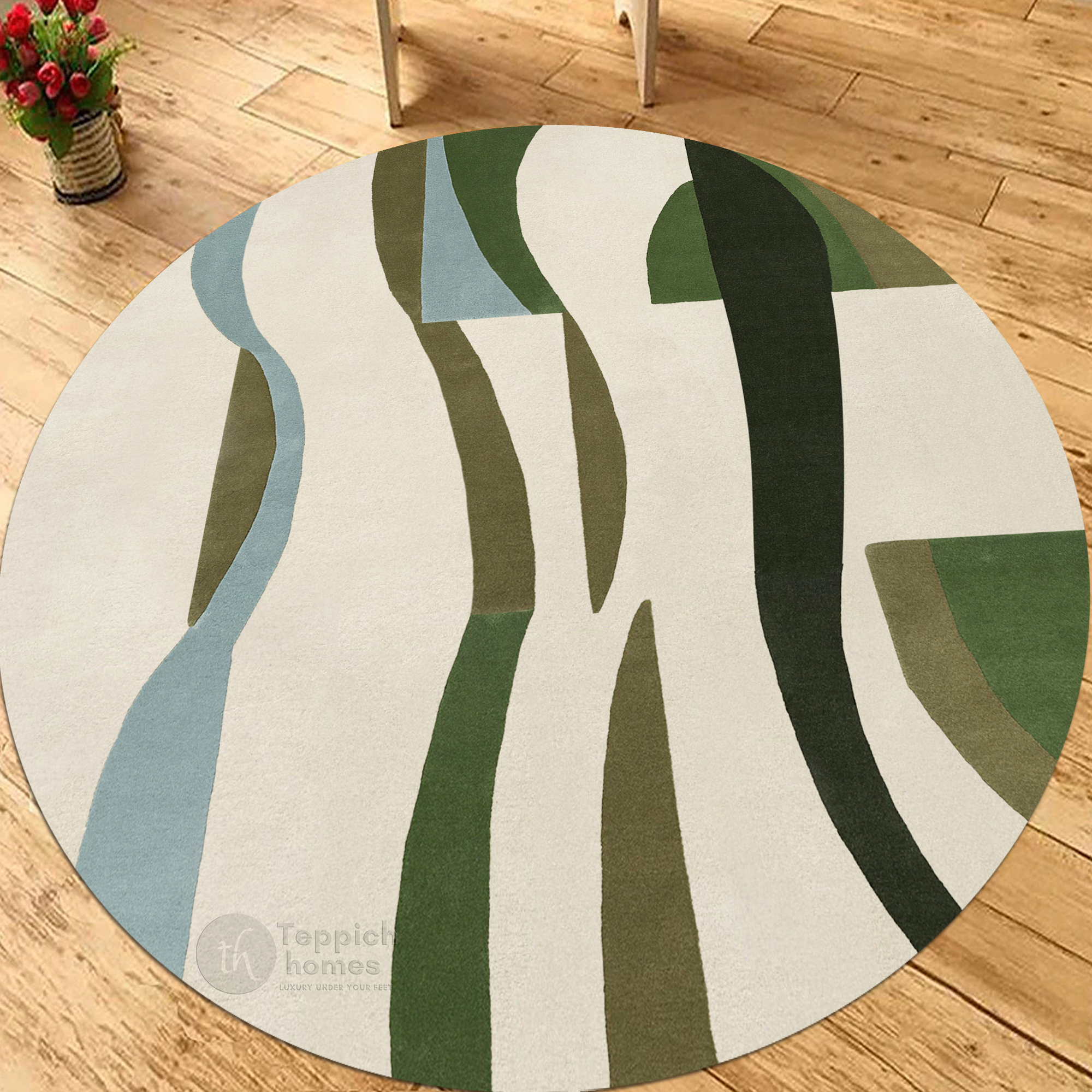
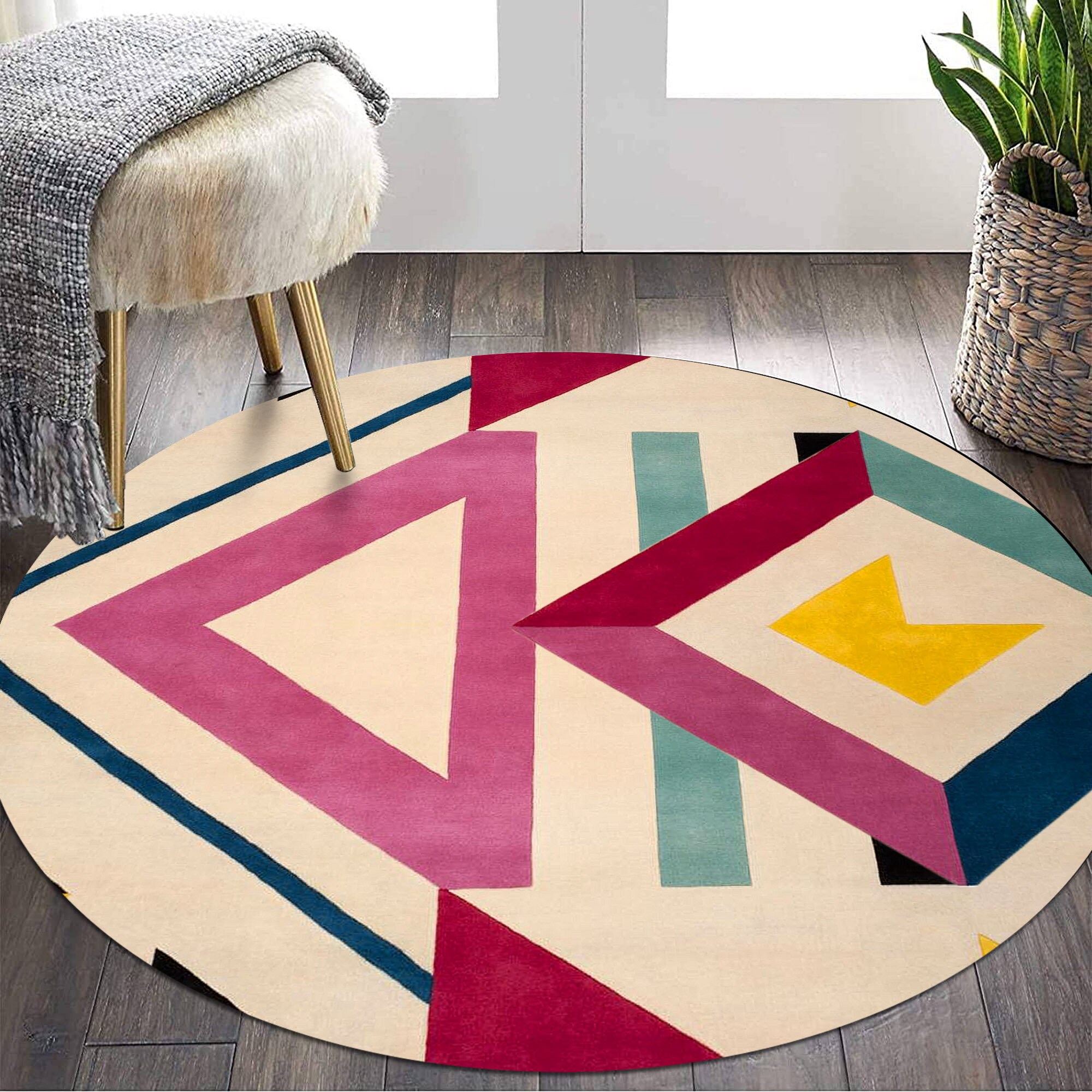
- Asymmetrical Geometry: Breaking from tradition, some modern rugs feature geometric shapes scattered unevenly across the circle. This creates a more "art-gallery" feel, suitable for minimalist homes that prefer a deconstructed look.
- High-Low Pile Textures: Geometry is no longer just about color; it is about depth. Many round rugs now use varying pile heights to create shapes. A circle might have a recessed triangle pattern carved into the wool, adding a tactile dimension to the visual design.
Materiality and Technical Specifications
The effectiveness of a geometric design is heavily dependent on the material and the construction method. If the lines of a geometric pattern are blurry or inconsistent, the rug loses its impact.
Fiber Selection
For sharp, crisp geometric lines, synthetic fibers like heat-set polypropylene or high-grade nylon are often preferred because they hold dye with extreme precision and do not "bloom" (spread out) as much as natural fibers. However, for those seeking luxury, merino wool or silk blends provide a natural sheen that makes geometric shapes appear to change color as the light hits them from different angles.
Construction Methods
- Hand-Tufted: This allows for intricate geometric designs and varying pile heights. It is the most common method for mid-range designer rugs in 2026.
- Power-Loomed: Ideal for very complex, thin-lined geometric patterns that require machine-level precision.
- Hand-Knotted: These rugs offer the highest durability. While geometric patterns in hand-knotted rugs (like those found in traditional Kilim or tribal designs) are less "perfect" than machine-made ones, they offer a "human" element that many collectors prize.
Placement and Sizing Guide
Choosing the wrong size for a round geometric rug is a common mistake that can make a room look disjointed. The geometry of the rug must harmonize with the geometry of the furniture.
| Room Context | Ideal Rug Diameter | Pattern Scale Recommendation | Strategic Goal |
|---|---|---|---|
| Entryway/Foyer | 4 to 6 feet | Large-scale, bold shapes | Create an immediate, high-impact first impression. |
| Dining Room | 8 to 10 feet | Border-focused or central radial | Framing a round dining table; ensures chairs stay on the rug. |
| Living Room | 6 to 9 feet | Small-scale or "All-over" grid | Anchoring a seating cluster; breaking up rectangular floorboards. |
| Bedroom | 5 to 7 feet | Soft, curved geometry | Placed partially under a corner of the bed to add warmth and shape. |
| Home Office | 5 to 6 feet | Linear/Structured | Providing a "foundation" for a swivel chair and desk. |
Styling Tips for Round Geometric Rugs
- Echo the Shapes: If your rug features a prominent hexagonal pattern, consider subtle nods to that shape in your room accessories—perhaps a hexagonal tray on a coffee table or a mirror with similar angles. This creates a cohesive "design language."
- Mind the Furniture Legs: When placing a geometric rug under a table, ensure the table legs do not obscure the most interesting parts of the pattern. For rugs with a central "medallion" geometry, a glass-topped table is often the best choice to keep the design visible.
- Color Theory: Geometric patterns often utilize high contrast (e.g., navy and gold, or black and cream). In 2026, the trend has shifted toward "Monochromatic Geometry," where the pattern is created through different shades of the same color. This is more subtle and allows the round shape of the rug to be the primary statement.
- Layering: For a bold look, place a smaller round geometric rug on top of a larger, neutral-colored rectangular jute rug. This adds depth and frames the geometric design as a piece of floor art.
Maintenance and Preservation
Geometric rugs require specific care to maintain the "crispness" of their lines. Over time, heavy furniture can crush the fibers, causing the lines of a square or triangle to look distorted.
- Rotation: You should rotate your round rug 180 degrees every six months. Because circular rugs often encourage a specific "traffic pattern" (people walking around the curve), rotating ensures that the wear and tear on the geometric pattern is even.
- Vacuuming: Use a vacuum without a beater bar for high-end wool rugs. A beater bar can "frizz" the fibers, which blurs the sharp edges of the geometric shapes.
- Professional Cleaning: For rugs with high-contrast colors (like white and dark blue), professional cleaning is essential to prevent "bleeding," where the dark dye seeps into the lighter shapes, ruining the geometric precision.
Frequently Asked Questions
Do round rugs make a room look smaller or larger?
Generally, round rugs make a room feel larger and more open. Because they do not have corners that point toward the walls, they don't "close in" the floor space. A geometric design with a large-scale, open pattern further enhances this "airy" feeling by drawing the eye across the floor in multiple directions.
Can I put a round geometric rug on top of carpet?
Yes, this is a common practice in 2026 to add personality to standard rental carpeting. To prevent the rug from "creeping" or wrinkling—which can distort the geometric pattern—you must use a high-quality rug-to-carpet pad. This keeps the rug's geometry perfectly flat and aligned.
Should the rug be larger than the table sitting on it?
Absolutely. For a dining room, the rug should be at least 24 to 30 inches larger than the table on all sides. This ensures that when guests pull their chairs out, the chairs remain on the rug. If the rug is too small, the geometric pattern will be completely covered by the table, and the chair legs may catch on the rug's edge.
Are geometric patterns "dated" or "timeless"?
Geometric patterns are considered timeless because they are based on fundamental mathematical principles. While specific color palettes (like the "Millennial Pink" of the late 2010s) may go out of style, the shapes themselves—circles, squares, and triangles—remain staples of human design. In 2026, the trend favors "Organic Geometry," which uses slightly irregular or hand-drawn lines rather than computer-perfect ones.
How do I choose between a small and large geometric motif?
If your room has a lot of small decorative items, choose a rug with a large, simple geometric motif to avoid visual clutter. If your room is very minimalist with large blocks of solid color, a rug with a small, intricate geometric pattern (like a repeated tessellation) can add the necessary detail to make the space feel "finished."
Final Recommendation
When selecting a round rug with a geometric design, prioritize the scale of the pattern over the color. A pattern that is too small for a large room will look busy and chaotic, while a pattern that is too large for a small nook may lose its geometric identity. Measure your space carefully and aim for a rug that allows the geometric "story" to be told without being interrupted by too many pieces of furniture.
Image Gallery