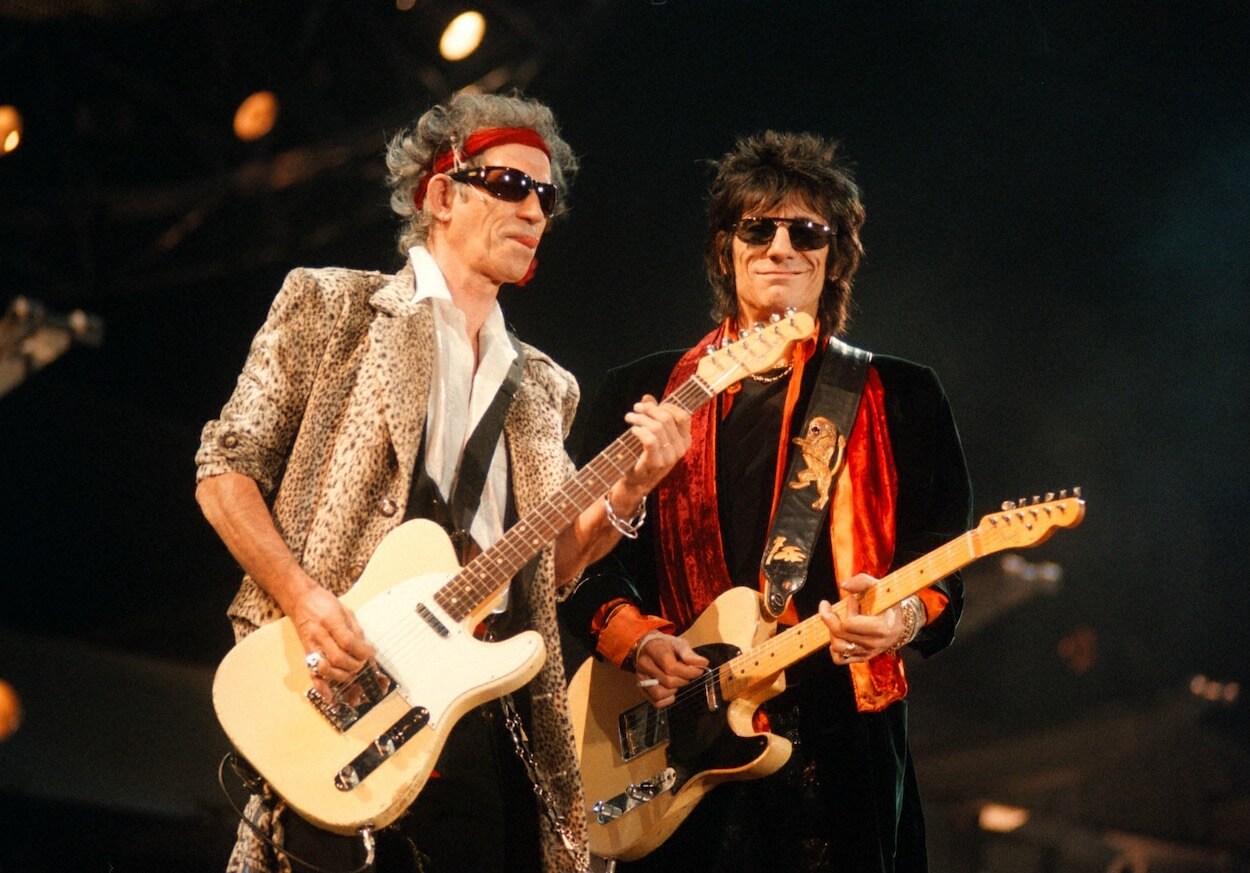
Ronnie Wood: The Definitive Biography of The Rolling Stones’ Multi-Instrumentalist and Artist
Ronnie Wood is an English rock musician and artist, best known as a long-standing guitarist for The Rolling Stones since 1975. A legendary figure in the British Invasion and rock-and-roll scenes, his career spans influential stints wit...
Ronnie Wood is an English rock musician and artist, best known as a long-standing guitarist for The Rolling Stones since 1975. A legendary figure in the British Invasion and rock-and-roll scenes, his career spans influential stints with the Jeff Beck Group and Faces, alongside a prolific solo career and acclaimed work as a visual artist.
Contents
The Early Years and Musical Roots (1947–1963)
Ronald David Wood was born on June 1, 1947, in Hillingdon, West London. He grew up in a family of "water gypsies"—a term referring to people who lived and worked on the Thames barges. This heritage instilled a sense of bohemianism and creative freedom that would define his later life. The Wood household was a musical one; his older brothers, Art and Ted, were both active in the burgeoning jazz and blues scenes of the late 1950s.
Watching his brothers perform gave Wood an early exposure to the rhythm and blues records imported from the United States. While his peers were often focused on pop, Wood was absorbing the sounds of Muddy Waters, Howlin' Wolf, and Big Bill Broonzy. He initially attended Ealing Art College, a fertile ground for the 1960s British music explosion that also produced figures like Freddie Mercury and Pete Townshend. However, the lure of the electric guitar proved stronger than formal art studies, though he would eventually merge both passions.
The Birds and the 1960s Beat Scene
Wood’s professional career began in 1964 with The Birds (not to be confused with the American band The Byrds). As the primary guitarist, Wood showcased a raw, distorted style that was ahead of its time. The Birds were a quintessential R&B outfit, known for high-energy performances and tracks like "You’re on My Mind" and "Leaving Here."
While The Birds never achieved the mainstream success of the Beatles or the Kinks, they were a critical part of the London club circuit. The experience taught Wood the "ancient art of weaving"—a term later popularized by Keith Richards to describe the interplay between two guitars. During this period, Wood also briefly joined The Creation, a cult mod band known for their experimental use of violin bows on guitars, further expanding his technical repertoire.
Heavy Blues and The Jeff Beck Group (1967–1969)
In 1967, Wood made a significant career pivot by joining the Jeff Beck Group. Interestingly, he did not join as a guitarist, but as a bassist. This lineup featured a young Rod Stewart on vocals and provided the blueprint for the "heavy blues" sound that Led Zeppelin would soon perfect.
Wood’s work on the albums Truth (1968) and Beck-Ola (1969) is considered foundational for hard rock. Despite his primary identity as a guitarist, his bass playing was melodic and aggressive, providing a perfect counterpoint to Beck’s erratic, brilliant lead lines. The volatility of the group, however, meant that the lineup was short-lived. By 1969, Wood and Stewart left to chart a new path, leading to the formation of one of the most beloved bands of the 1970s.
The Faces: Rock’s Greatest Party Band
The Faces were formed from the remains of the Small Faces after Steve Marriott’s departure. With Wood on lead guitar and Rod Stewart on vocals, the band transitioned from mod-pop to a loose, soulful, and notoriously raucous rock-and-roll style.
From 1969 to 1975, the Faces were arguably the biggest live draw in the world next to the Rolling Stones. Wood’s guitar work on albums like A Nod Is as Good as a Wink... to a Blind Horse (1971) and Ooh La La (1973) showcased his mastery of slide guitar and his ability to blend folk-rock textures with electric energy. His chemistry with Stewart was the band’s engine, but as Stewart’s solo career began to eclipse the group’s collective output, tensions rose. It was during this period that Wood began working on his own solo material, releasing I've Got My Own Album to Do in 1974, which featured guest appearances from George Harrison and Keith Richards.
Joining The Rolling Stones: 1975 to the Present
The departure of Mick Taylor from the Rolling Stones in December 1974 created a vacancy in the world's most famous rock band. While several guitarists were considered, including Jeff Beck and Rory Gallagher, Ronnie Wood was the natural fit. He had already established a deep friendship with Keith Richards, and his "weaving" style of guitar play mirrored Richards' own philosophy.
Wood joined the Stones for their 1975 Tour of the Americas, initially as a temporary member. By 1976, he was officially announced as a full-time member. His first full studio album with the band was Black and Blue (1976), where his influence was immediately felt on tracks like "Hey Negrita."
Over the following decades, Wood became the "glue" of the Rolling Stones. His personality often served as the bridge between the sometimes-clashing egos of Mick Jagger and Keith Richards. Musically, he contributed seminal parts to hits like "Beast of Burden" and "Miss You." As of 2026, Wood has been a member of the Rolling Stones for over 50 years, longer than any other guitarist in the band's history.
| Period | Band/Project | Primary Instrument | Notable Release |
|---|---|---|---|
| 1964–1967 | The Birds | Guitar | "Leaving Here" |
| 1967–1969 | Jeff Beck Group | Bass | Truth |
| 1969–1975 | Faces | Guitar / Vocals | Ooh La La |
| 1975–Present | The Rolling Stones | Guitar / Lap Steel | Some Girls, Hackney Diamonds |
| 1974–Present | Solo Career | Multi-instrumentalist | I've Got My Own Album to Do |
The Visual Artist: Beyond the Fretboard
While most know him for his music, Ronnie Wood is a classically trained artist whose work has been exhibited in galleries worldwide. His paintings and sketches often focus on his life in the music industry, featuring portraits of his bandmates, musical icons, and scenes from life on the road.
Wood’s style is expressive and vibrant, often utilizing a mix of charcoal, oils, and watercolors. For Wood, painting is not a hobby but a fundamental part of his creative output. He has stated that he views his art and his music as two sides of the same coin—both require a sense of rhythm, balance, and improvisation. His "Set Lists" series, which features stylized versions of the Stones' performance lists, has become particularly popular among collectors.
Musical Equipment and Technical Style
Ronnie Wood’s sound is characterized by a "loose but tight" feel. He is a master of the slide guitar, often using a lap steel guitar to add atmospheric textures to Stones tracks. His technical approach relies heavily on the "open G" tuning favored by Keith Richards, allowing the two guitarists to intertwine their parts so seamlessly that it is often difficult to tell who is playing what.
Signature Gear
- Zemaitis Guitars: Wood is famously associated with Tony Zemaitis’ metal-front and pearl-front guitars. These hand-crafted instruments are known for their sustain and ornate engravings.
- Fender Stratocaster: His primary "workhorse" for live performances, usually a 1950s era model.
- Gibson L-5S: A model he used extensively during the late 70s and early 80s.
- Amps: Wood typically uses a combination of Fender Twin Reverbs and Ampeg SVT rigs to achieve a clean, punchy sound with just enough "hair" or distortion when pushed.
Personal Life, Health, and Sobriety
Ronnie Wood’s personal life has been as storied as his career. He has been married three times: first to Krissy Findlay, then to Jo Wood (with whom he spent over 20 years), and currently to Sally Humphreys. He has six children, including twin daughters born in 2016.
For much of his career, Wood was known for his hard-partying lifestyle, a hallmark of the 1970s rock scene. However, after several decades of struggle with addiction, he achieved sobriety in 2010. This transition marked a new chapter in his life, characterized by a renewed focus on his art and health.
In recent years, Wood has faced significant health challenges. He was diagnosed with lung cancer in 2017 and a rare small-cell cancer in 2020. In both instances, he underwent successful treatments and credited his recovery to a positive outlook and the support of his family. By 2026, he remains cancer-free and continues to maintain a rigorous touring and recording schedule.
Frequently Asked Questions
What was Ronnie Wood's first band?
Ronnie Wood's first professional band was The Birds, a London-based R&B and beat group formed in 1964. They were known for their aggressive "mod" sound and were contemporaries of bands like The Who.
Does Ronnie Wood play instruments other than the guitar?
Yes, Ronnie Wood is a versatile multi-instrumentalist. In the Jeff Beck Group, he played bass guitar. He also plays the pedal steel guitar, lap steel, harmonica, and occasionally the drums and keyboards on his solo recordings.
When did Ronnie Wood officially become a "full" member of the Rolling Stones?
Although he joined for the 1975 tour, Ronnie Wood was not officially a financial partner and "full" member of the Rolling Stones organization until the early 1990s, following the departure of bassist Bill Wyman. However, he has been a creative and performing member since 1975.
Is Ronnie Wood still painting?
Yes, Ronnie Wood remains a very active visual artist. He continues to produce new collections of paintings, prints, and sketches. His work is frequently showcased in major cities like London, New York, and Tokyo.
How has Ronnie Wood’s health been in recent years?
As of 2026, Ronnie Wood is in good health and remains in remission after his previous battles with cancer. He is a strong advocate for regular health screenings and credits his sobriety with helping him maintain the stamina required for international touring.
Practical Guidance for Fans
For fans looking to explore Wood's legacy more deeply, his 2007 autobiography, Ronnie, offers an unfiltered look at his life. Additionally, his radio program, The Ronnie Wood Show, provides excellent insight into his musical influences and his rapport with other legendary musicians. To appreciate his visual art, visiting the official Ronnie Wood website or authorized galleries is the best way to view his latest portfolios and "set list" art.
Image Gallery