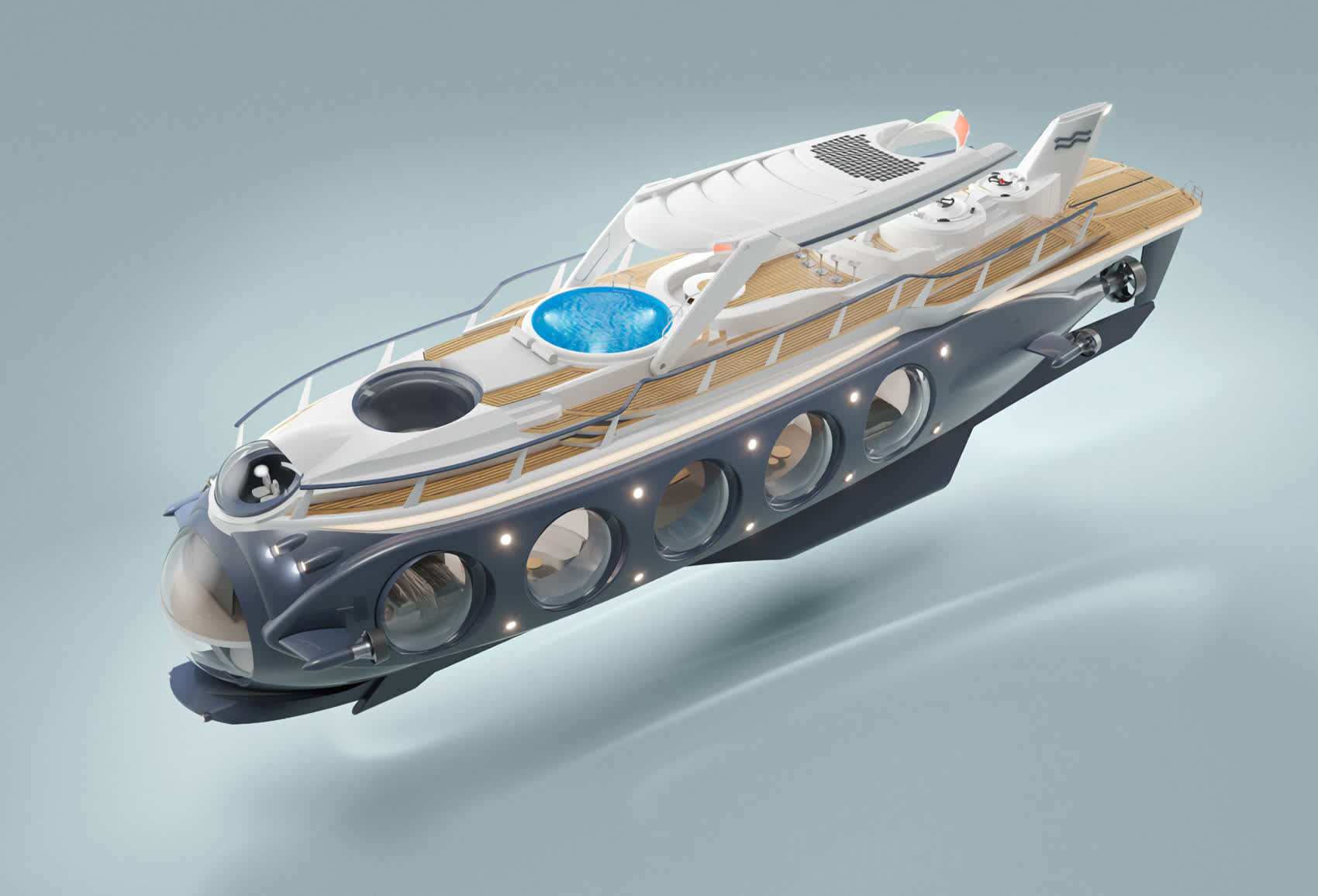
Luxury Submersible Yacht: Engineering, Operation, and Ownership Considerations
A luxury submersible yacht represents the pinnacle of private maritime exploration, integrating high-end superyacht amenities with advanced atmospheric diving systems. These vessels allow owners to transition seamlessly from surface cr...
A luxury submersible yacht represents the pinnacle of private maritime exploration, integrating high-end superyacht amenities with advanced atmospheric diving systems. These vessels allow owners to transition seamlessly from surface cruising to deep-sea exploration, providing pressurized, climate-controlled environments for observing underwater ecosystems, shipwrecks, or geologic formations at significant depths without requiring specialized scuba certification.
Contents
Defining the Luxury Submersible Yacht Segment
The term "luxury submersible yacht" encompasses two distinct types of maritime assets: purpose-built luxury yachts that carry an integrated submersible as part of their standard inventory, and specialized private submersibles designed with high-end interior finishing for individual ownership. As of 2026, the market has shifted toward the latter—compact, high-performance submersibles—as manufacturers integrate deeper operational capabilities with the aesthetic standards expected by the ultra-high-net-worth demographic.
Distinguishing these craft from military or industrial submarines is critical. Industrial submersibles prioritize payload and endurance, often sacrificing comfort. Luxury models focus on panoramic visibility, high-grade leather or metallic interiors, quiet-running propulsion systems, and advanced life-support monitoring that prioritizes passenger ease.
Technical Architecture and Safety Protocols
The engineering of a luxury submersible centers on the pressure hull, typically constructed from high-tensile steel, titanium, or advanced acrylics. The structural integrity of these materials is governed by stringent international maritime standards, such as those maintained by the American Bureau of Shipping (ABS) or Det Norske Veritas (DNV).
Safety is not an optional feature but the foundational prerequisite of operation. Key systems include:
- Pressure Hull Integrity: Designed to withstand pressures equivalent to depths ranging from 100 to over 2,000 meters. The hull must be certified for cyclic loading to ensure material fatigue is managed over years of repeated dives.
- Life Support Systems (LSS): These systems provide a minimum of 96 hours of emergency oxygen, scrub carbon dioxide from the internal atmosphere, and regulate humidity and temperature. Digital backups must operate independently of the primary power supply.
- Emergency Ascent Procedures: Every submersible is equipped with a "drop weight" system—an electromagnetically held ballast that, if power fails, releases automatically to return the craft to the surface via positive buoyancy.
- Communication Suites: Acoustic modems transmit voice and telemetry data through the water column to the support yacht or shore-based tracking vessel.
Operational Requirements and Ownership Costs
Ownership of a luxury submersible extends beyond the purchase price. Prospective owners must account for specialized logistical requirements that differentiate these crafts from standard yacht tenders.
- Certification and Training: Pilots must undergo comprehensive training provided by the manufacturer. While many luxury models feature "fly-by-wire" controls that simplify operation, the pilot must be adept at navigation, emergency maneuvering, and system maintenance.
- Support Vessel Infrastructure: Launch and recovery (L&R) represents the most complex part of operations. A submersible must be handled by a crane or a dedicated stern-loading platform on a "mothership" yacht. The support vessel must possess the structural capacity to house the sub and the crane specifications to lift its dry weight safely.
- Regulatory Compliance: Any vessel operating in international or territorial waters must adhere to the International Maritime Organization (IMO) guidelines. Flag state registration is required, and insurance premiums for deep-sea equipment are significantly higher than for surface-level recreational watercraft.
Comparative Overview of Submersible Classes
| Feature | Personal/Light Sport Sub | Luxury Expedition Sub | Industrial/Scientific Sub |
|---|---|---|---|
| Capacity | 1-2 Persons | 3-7 Persons | 2-4 Persons |
| Max Depth | 100 - 300m | 300 - 1,500m | 1,000 - 6,000m+ |
| Interior | Functional | Bespoke/High-End | Utility/Ergonomic |
| L&R Requirement | Standard Yacht Crane | Custom A-Frame/Platform | Heavy-Duty Winch System |
Maintenance and Lifecycle Management
Maintaining a submersible requires a different skill set than traditional yacht maintenance. The hull requires regular non-destructive testing (NDT) to identify micro-fractures, and all acrylic viewing ports must be polished and inspected for crazing—a clouding of the material caused by stress or environmental exposure.
Most owners enter into annual service agreements with the manufacturer. These contracts ensure that firmware updates for the navigation systems and life-support sensor calibrations are performed by certified technicians. Given the extreme environment in which these vessels operate, preventative maintenance schedules are strictly mandated by classification societies; missing a service interval can result in the loss of the vessel’s operational certification.
Environmental Considerations and Ethical Exploration
Operating a luxury submersible in delicate marine environments carries an inherent responsibility. Owners are expected to follow local environmental laws, which often restrict proximity to coral reefs or protected marine sanctuaries. Most modern submersibles are equipped with low-noise propulsion systems to prevent acoustic disturbance to marine life, and external lighting is calibrated to prevent "light pollution" in the bathypelagic zones, where deep-sea creatures are highly sensitive to artificial illumination.
Common Questions Regarding Submersible Ownership
Do I need a license to pilot a luxury submersible? While a formal government "license" in the traditional sense may not be required for private recreational use in all jurisdictions, the manufacturer will mandate a certified pilot training program to ensure the operator is competent in emergency procedures and vessel handling.
How is the submersible powered during a dive? Submersibles utilize high-density lithium-polymer or lithium-ion battery banks. These are housed in pressure-compensated enclosures. They are designed for limited duration, typically 8 to 12 hours of mission time, after which the unit must be recharged via the mothership.
Can a luxury submersible be docked at a standard marina? Generally, no. Submersibles are meant to be stowed on a support yacht or in a climate-controlled land facility. They are not designed for long-term water-side docking, as their external systems are subject to biofouling and corrosion if left in the water for extended periods.
What happens if the mothership loses communication? Modern submersibles are equipped with independent tracking beacons and underwater acoustic location systems. If the mothership is lost, the submersible carries sufficient life support and independent emergency ascent capability to return to the surface, where it can signal its location via radio and satellite transponders.
Are there depth limitations for luxury models? Yes, every submersible is rated for a specific Maximum Operating Depth (MOD). Attempting to exceed this depth is catastrophic. The electronics will typically include hard-coded software limiters that prevent the craft from descending beyond its safety margin.
Professional Guidance for Prospective Owners
Selecting a luxury submersible requires aligning the craft’s technical capabilities with the mission profile of the yacht. Before committing to a purchase, it is recommended to engage with a naval architect who specializes in sub-sea integrations. They can verify whether your current yacht—or a planned build—can accommodate the weight, dimensions, and power requirements of the submersible.
Always review the manufacturer’s history regarding classification and their support network. Given the specialized nature of these crafts, having an established relationship with a manufacturer that offers global service support is as critical as the performance specifications of the vessel itself. Ensure all local jurisdictional laws regarding the operation of submersibles are reviewed with legal counsel, as underwater activities are heavily regulated in many coastal nations.
Image Gallery