Why Dr Pepper Is Not a PepsiCo Product: Ownership and Distribution Explained
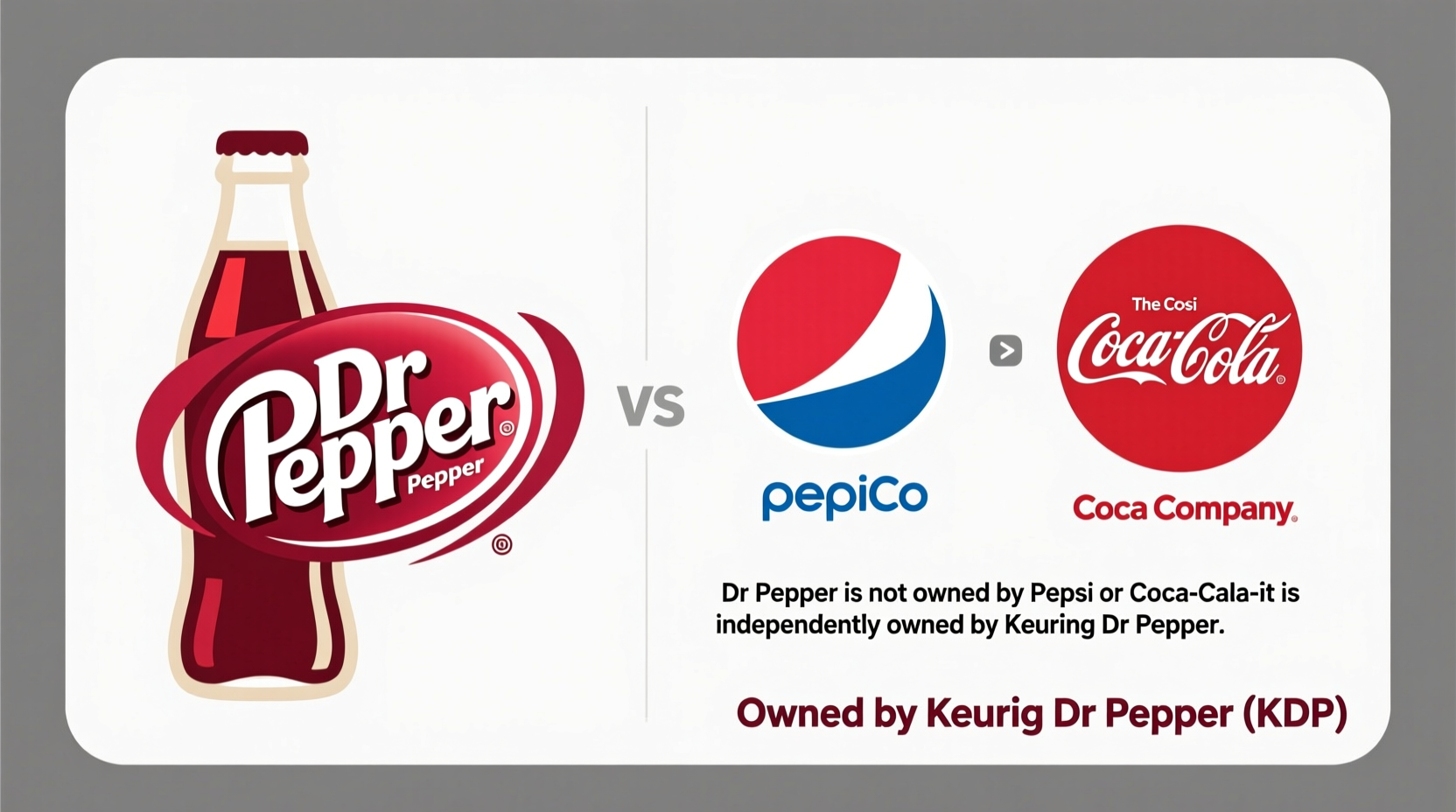
Dr Pepper is not a PepsiCo product; it is owned by Keurig Dr Pepper (KDP). While PepsiCo distributes Dr Pepper in many regions and owns the brand's international rights in several countries, the domestic trademark and corporate entity...
Dr Pepper is not a PepsiCo product; it is owned by Keurig Dr Pepper (KDP). While PepsiCo distributes Dr Pepper in many regions and owns the brand's international rights in several countries, the domestic trademark and corporate entity belong to KDP, an independent, publicly traded beverage giant headquartered in Burlington, Massachusetts, and Frisco, Texas.
Contents
The beverage industry is often viewed as a "duopoly" between The Coca-Cola Company and PepsiCo. However, Dr Pepper has long occupied a unique space that defies this simple binary. To understand why Dr Pepper is frequently associated with PepsiCo—and why that association is technically incorrect in North America—one must look at the intricate history of corporate mergers, the mechanics of bottling contracts, and the global licensing agreements that define the modern soda market.
The Distinct Identity of Keurig Dr Pepper
In 2026, Keurig Dr Pepper stands as one of the "Big Three" soft drink companies in the United States. Unlike its primary rivals, KDP was formed through the 2018 merger of the Dr Pepper Snapple Group and Keurig Green Mountain. This multi-billion-dollar deal created a powerhouse that manages a diverse portfolio ranging from carbonated soft drinks to premium coffee systems.
Dr Pepper itself is the oldest major soft drink brand in the United States, dating back to 1885—predating Coca-Cola by one year. Because it was an independent brand for over a century, it never became the permanent property of the two largest beverage conglomerates. Instead, it followed a path of independent growth, strategic acquisitions, and complex distribution partnerships.
The Evolution of Ownership
The journey of Dr Pepper ownership is a study in corporate evolution. For much of the 20th century, Dr Pepper was managed by the Dr Pepper Company. In the 1980s and 1990s, the brand underwent various consolidations, eventually merging with Seven-Up to form Dr Pepper/Seven-Up, Inc.
The most significant shift occurred when the British conglomerate Cadbury Schweppes acquired the company. Under Cadbury, Dr Pepper was part of a massive global confectionery and beverage portfolio. However, in 2008, Cadbury Schweppes spun off its North American beverage unit into a new, independent entity called the Dr Pepper Snapple Group (DPSG). This move was designed to unlock shareholder value and allow the beverage business to compete more effectively in the U.S. market.
The 2018 merger with Keurig Green Mountain transformed DPSG into the modern Keurig Dr Pepper. Today, KDP manages the production of Dr Pepper concentrate and oversees the brand's marketing and strategic direction, independent of any influence from PepsiCo’s executive suite.
The Distribution Paradox: Why You See Dr Pepper on Pepsi Trucks
The primary source of confusion regarding Dr Pepper's ownership is its distribution model. If you walk into a grocery store or a restaurant, you will often see Dr Pepper being delivered by PepsiCo trucks or served alongside Pepsi products in fountain dispensers. This is not because PepsiCo owns the brand, but because of third-party bottling agreements.
Coca-Cola and PepsiCo possess the world’s most sophisticated and expansive bottling and distribution networks. Rather than building its own redundant nationwide delivery infrastructure, Keurig Dr Pepper utilizes the existing networks of its competitors.
How Bottling Contracts Work
KDP sells the Dr Pepper concentrate (syrup) to independent and company-owned bottlers. In many territories across the United States, the local bottling rights for Dr Pepper are held by PepsiCo’s bottling divisions or independent Pepsi bottlers. In other regions, those rights are held by Coca-Cola bottlers.
- In Pepsi-aligned territories: Dr Pepper is bottled, distributed, and stocked by PepsiCo employees.
- In Coca-Cola-aligned territories: Dr Pepper is handled by Coca-Cola Consolidated or other Coke-affiliated bottlers.
- In KDP-owned territories: The company uses its own internal distribution network (formerly the Snapple and Mott's networks) to bring the product to market.
This "hybrid" model allows Dr Pepper to achieve near-total market saturation without the overhead costs of maintaining a dedicated fleet for every single zip code. However, it creates the illusion of ownership, leading consumers to believe that Dr Pepper is simply a "flavor" in the PepsiCo lineup.
The International Exception: Where PepsiCo Does Own Dr Pepper
While Dr Pepper is an independent brand in the United States, Canada, and Mexico, the narrative changes significantly once you leave North America. This is where the "PepsiCo product" claim gains some factual validity.
When Cadbury Schweppes owned the brand, it sold the international trademark rights to various parties to focus on specific markets. In many parts of the world, including Europe and South Korea, PepsiCo actually owns the rights to Dr Pepper.
In these international markets, PepsiCo does not just distribute the product; they own the trademark, control the recipe, manage the marketing, and reap the profits as the brand owner. This geographic split is rare in the beverage industry and serves as a major point of confusion for international travelers and global business analysts.
Comparison of Beverage Industry Giants (2026 Snapshot)
The following table outlines the differences between the major players to clarify Dr Pepper's position in the market landscape.
| Feature | Keurig Dr Pepper (KDP) | PepsiCo | The Coca-Cola Company |
|---|---|---|---|
| Primary Owner of Dr Pepper | Yes (North America) | No (International Rights Only) | No |
| Corporate Headquarters | Burlington, MA / Frisco, TX | Purchase, NY | Atlanta, GA |
| Core Soda Brands | Dr Pepper, 7UP (US), Sunkist | Pepsi, Mountain Dew, Sierra Mist | Coca-Cola, Sprite, Fanta |
| Non-Soda Portfolio | Keurig, Snapple, Mott's, Core | Lay's, Gatorade, Quaker, Tropicana | Minute Maid, Dasani, BodyArmor |
| Distribution Strategy | Hybrid (Uses Coke & Pepsi Bottlers) | Direct (Controlled Network) | Direct (Controlled Network) |
| Market Role | The "Third Alternative" | Diversified Food & Bev Giant | Pure-Play Beverage Leader |
The Competitive Landscape: Dr Pepper vs. Pepsi
Despite the distribution partnerships, Dr Pepper and Pepsi are fierce competitors. In the mid-2020s, Dr Pepper achieved a historic milestone by overtaking Pepsi as the number two carbonated soft drink brand in the United States by market share. This shift was monumental, as Pepsi had held the second-place spot (behind Coca-Cola) for decades.
The success of Dr Pepper is often attributed to its "unique" flavor profile—neither a cola nor a lemon-lime soda—which appeals to consumers looking for variety. Because KDP is not tied to the "Cola Wars" in the same way Pepsi is, it can market Dr Pepper as a standalone category.
The Impact of the Keurig Merger
The 2018 merger with Keurig significantly strengthened Dr Pepper’s position against PepsiCo. By joining forces with a leader in the coffee industry, KDP gained immense leverage in the "hot beverage" sector, where PepsiCo has a smaller footprint (primarily through Starbucks ready-to-drink partnerships).
This merger also provided KDP with the capital necessary to innovate. By 2026, the company has expanded the Dr Pepper line to include numerous successful variants, such as Dr Pepper Strawberries & Cream and various Zero Sugar options, which have outperformed Pepsi’s similar flavor innovations in several key demographics.
Common Misconceptions and Clarifications
To fully resolve the ambiguity surrounding Dr Pepper’s corporate identity, it is helpful to address the specific questions that lead to the PepsiCo confusion.
Is Dr Pepper a Coke or Pepsi product?
Technically, it is neither. It is a Keurig Dr Pepper product. However, because it is not a "cola," it is often granted "cross-licensing" privileges. This means a restaurant that serves Pepsi products can often serve Dr Pepper as well, even if they don't carry Coca-Cola. This flexibility is a result of Dr Pepper not being a direct competitor to the flagship colas of the two giants.
Who owns the recipe for Dr Pepper?
The proprietary blend of 23 flavors is owned by Keurig Dr Pepper. Even when PepsiCo bottles the drink in international markets, they must adhere to the strict formulaic standards set by the brand owners. In the U.S., KDP manufactures the syrup and sells it to the bottlers, ensuring that the taste remains consistent regardless of whether a Pepsi or Coke truck delivered the final bottle.
Does PepsiCo earn money from Dr Pepper?
In the United States, PepsiCo earns money from Dr Pepper through bottling and distribution fees. They act as a service provider. They do not own the brand's equity. In international markets where they own the trademark, they earn the full profit margin of a brand owner.
Practical Implications for Consumers and Investors
For the average consumer, the ownership of Dr Pepper matters most when it comes to availability and loyalty programs. You will rarely find Dr Pepper in a "Pepsi Stuff" or "Coke Rewards" promotion because it is a separate corporate entity. If you are using a rewards app for a specific soda brand, Dr Pepper purchases usually won't count toward your PepsiCo goals.
For investors, the distinction is even more critical. If you want to invest in the success of Dr Pepper, you must purchase shares of Nasdaq: KDP. Buying PepsiCo (Nasdaq: PEP) stock gives you exposure to snacks and Pepsi-branded beverages, but in the North American market, your investment would only benefit from the distribution fees PepsiCo collects from KDP, rather than the core growth of the Dr Pepper brand itself.
FAQs
Why is Dr Pepper served at McDonald's if they only serve Coke products?
McDonald's has a global partnership with The Coca-Cola Company. However, because Dr Pepper is not a direct cola competitor and is independently owned, many McDonald's franchises have separate agreements to carry Dr Pepper. In these cases, the Dr Pepper syrup is often distributed through the Coca-Cola supply chain to the restaurant.
Did PepsiCo ever try to buy Dr Pepper?
There have been various points in history where both Coca-Cola and PepsiCo expressed interest in acquiring Dr Pepper. However, antitrust regulators (such as the FTC) have historically blocked such moves to prevent a total monopoly on the carbonated soft drink market. Keeping Dr Pepper independent ensures a "third player" exists to maintain competition.
Is 7UP owned by the same company as Dr Pepper?
Yes, in the United States. 7UP is also a brand under the Keurig Dr Pepper umbrella. However, much like Dr Pepper, the international rights to 7UP are owned by PepsiCo. This further complicates the branding, as 7UP is marketed as a Pepsi brand everywhere except North America.
How many flavors are actually in Dr Pepper?
The official marketing has always maintained there are 23 flavors in the secret formula. While the exact list is a trade secret, it is confirmed that prune juice—a common urban legend—is not one of the ingredients.
Next Actions for Verification
If you are looking to verify the current corporate status or distribution rights of Dr Pepper in 2026, you can take the following steps:
- Check the Bottle Label: Look at the fine print on the back of a Dr Pepper bottle. It will state "Under authority of Keurig Dr Pepper" or "Dr Pepper/Seven Up, Inc." followed by the name of the local bottler (which may be a Pepsi or Coke affiliate).
- Review SEC Filings: For official ownership data, consult the Annual Report (Form 10-K) for Keurig Dr Pepper. This document outlines their brand ownership and their various distribution agreements with third-party bottlers.
- Visit the Corporate Website: The "Our Brands" section of the Keurig Dr Pepper official website provides a comprehensive list of all beverages they own and manage in North America.
Image Gallery