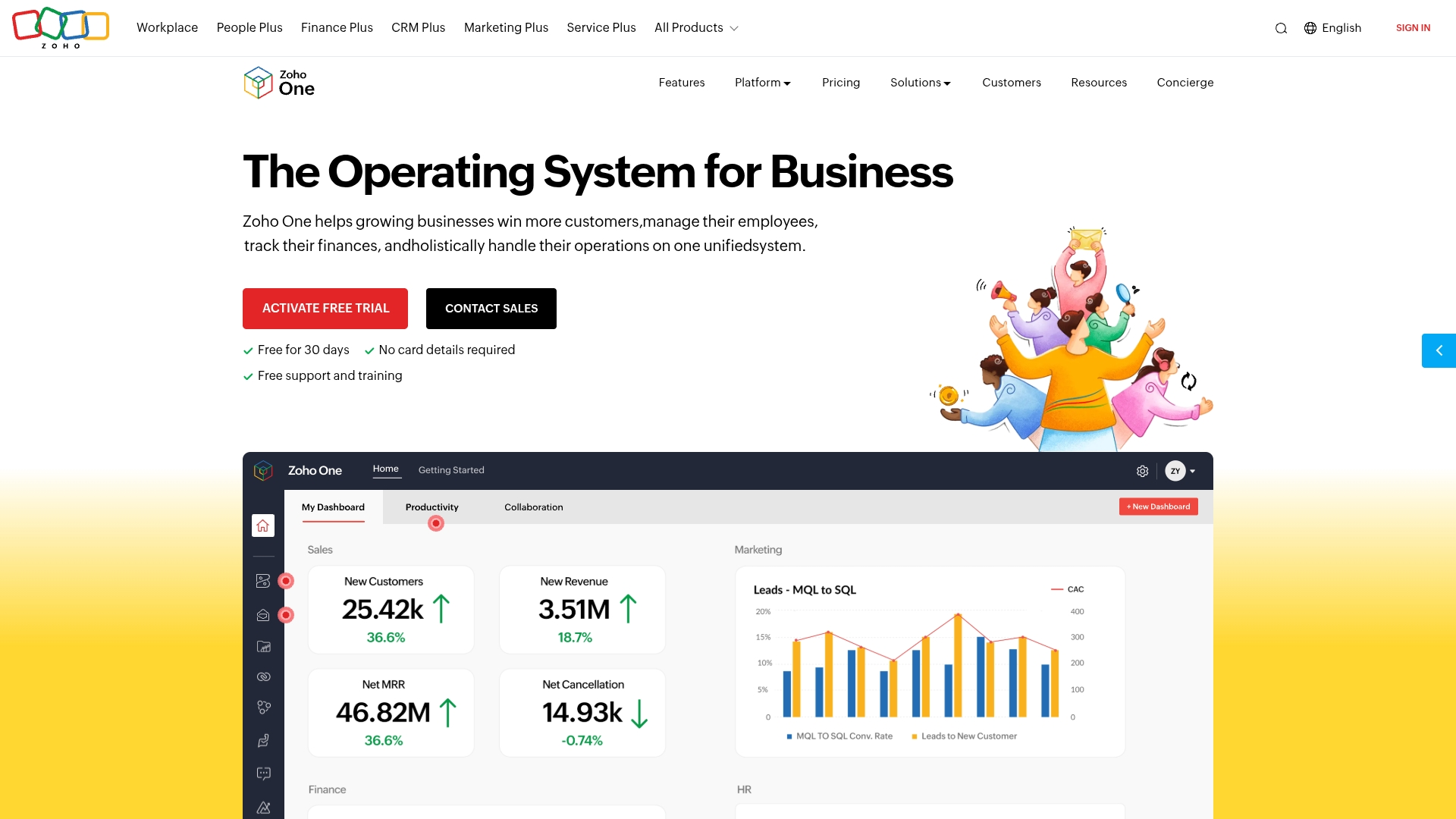
Enterprise Software Solutions for BPA, DPA, RPA, CRM, and Case Management
Enterprise organizations leverage a sophisticated stack of automation and relationship management tools—including Business Process Automation (BPA), Digital Process Automation (DPA), Robotic Process Automation (RPA), Customer Relations...
Enterprise organizations leverage a sophisticated stack of automation and relationship management tools—including Business Process Automation (BPA), Digital Process Automation (DPA), Robotic Process Automation (RPA), Customer Relationship Management (CRM), and Case Management—to streamline operations, enhance data integrity, and drive customer value. By integrating these distinct but complementary technologies, businesses can orchestrate end-to-end workflows that reduce manual labor and improve service delivery.
Contents
Understanding the Enterprise Automation Ecosystem
To modernize operational efficiency, organizations must distinguish between the functional roles of these five pillars. While these technologies often overlap in vendor suites, each addresses a unique layer of the enterprise architecture.
Business Process Automation (BPA)
BPA focuses on optimizing and automating entire business processes, often crossing departmental lines. It is designed to replace manual, repetitive tasks with structured workflows. A typical BPA implementation aims to achieve consistency, reduce human error, and create an audit trail for compliance-heavy industries.
Digital Process Automation (DPA)
DPA is an evolution of traditional Business Process Management (BPM). While BPA focuses on internal efficiency, DPA prioritizes the customer experience. It integrates front-end user interfaces with back-end processes, ensuring that digital touchpoints remain fluid and responsive.
Robotic Process Automation (RPA)
RPA employs software "bots" to mimic human interactions with digital systems. Unlike BPA, which might redesign a process, RPA operates on top of existing legacy applications. It excels at high-volume, rules-based tasks, such as data entry or invoice processing, where an API may not exist.
Customer Relationship Management (CRM)
A CRM system acts as the central nervous system for customer data. In an enterprise context, it does more than track sales; it serves as a repository for interaction history, support tickets, and marketing engagement, providing the context required for DPA and Case Management systems to function effectively.
Case Management
Case Management is a specific form of process automation tailored to dynamic, non-linear workflows. Unlike standard processes that follow a strict "if-this-then-that" path, case management handles scenarios where the sequence of events is unpredictable, such as insurance claims investigations, legal discovery, or complex technical support issues.
Evaluating Integration Requirements
The primary challenge in 2026 for IT architects is the "silo effect." Implementing a standalone RPA bot or a CRM tool without orchestration often leads to fragmented data. Successful deployment requires a unified integration strategy.
API-First Architecture
Modern software solutions must support RESTful APIs. When choosing a platform, ensure it offers robust connectors for your existing CRM and ERP (Enterprise Resource Planning) systems. An API-first approach allows for modular scaling, meaning you can swap out an RPA vendor without needing to reconfigure your entire Case Management framework.
Low-Code and No-Code Capabilities
Enterprise software has shifted toward low-code interfaces. This allows business analysts—rather than just software engineers—to build, test, and deploy automated workflows. By democratizing development, organizations can respond to market changes faster, provided there is a rigorous governance structure in place to prevent "shadow IT."
Data Governance and Compliance
When automating processes involving sensitive customer data, adherence to global data protection standards (such as GDPR or CCPA) is mandatory. The software must provide granular role-based access control (RBAC), end-to-end encryption for data in transit and at rest, and immutable logs for audit purposes.
Comparative Framework for Solution Selection
Choosing the right software stack requires balancing technical capability against total cost of ownership (TCO). The table below outlines the primary focus and typical deployment scenarios for these technologies.
| Technology | Primary Focus | Best For | Implementation Complexity |
|---|---|---|---|
| BPA | Internal workflow optimization | Finance, HR, Procurement | Medium |
| DPA | Customer-facing digitization | E-commerce, Banking portals | High |
| RPA | Task-level automation | Legacy system data entry | Low to Medium |
| CRM | Data management & engagement | Sales, Marketing, Support | Medium to High |
| Case Mgt | Non-linear, investigative tasks | Insurance, Legal, Healthcare | High |
Implementation Strategy: A Phased Approach
To successfully integrate these solutions, enterprises should follow a structured lifecycle to minimize disruption.
- Process Discovery and Mapping: Before selecting a tool, map the existing process. Identify bottlenecks and determine whether the process is "structured" (BPA/RPA) or "unstructured" (Case Management).
- Pilot Testing: Select a non-critical but high-volume process to test the integration between your CRM and your automation tool.
- Governance Implementation: Establish clear ownership of the "bots" and "workflows." Who is responsible if an automated decision fails? Define the escalation path to human oversight.
- Continuous Monitoring: Automation platforms generate vast amounts of performance data. Utilize analytics dashboards to track success metrics such as "time-to-resolution" and "error rates."
Overcoming Common Implementation Pitfalls
One of the most frequent mistakes is "automating bad processes." If a workflow is inefficient or poorly designed, automating it will only make the dysfunction happen faster. Conduct a process audit to streamline workflows before digital transformation.
Another risk is vendor lock-in. While "all-in-one" suites (where the vendor provides CRM, BPA, and Case Management) offer easier integration, they can also limit flexibility. Evaluate whether an open-ecosystem approach, which allows for best-of-breed components, better aligns with your long-term IT strategy.
Frequently Asked Questions
What is the difference between BPA and RPA? BPA is a strategic approach to optimizing entire processes across an organization, often involving system integration. RPA is a tactical tool that automates specific, repetitive tasks by interacting with existing user interfaces, acting like a digital worker.
Can CRM platforms handle Case Management? Many modern CRM platforms include built-in case management modules. However, for highly specialized industries like insurance or healthcare, a dedicated Case Management platform may be required to handle complex, regulatory, or document-heavy workflows.
How does DPA improve the customer experience? DPA bridges the gap between front-end customer interaction and back-end execution. It allows customers to track their requests in real-time, reduces the need for redundant information entry, and ensures that staff have the full context of a customer’s journey.
What is the role of governance in automation? Governance ensures that automations comply with organizational policies, security standards, and legal regulations. Without governance, organizations risk data breaches, incorrect automated decisions, and the proliferation of unmaintained or "zombie" software bots.
Is cloud migration necessary for these solutions? While many of these tools can be deployed on-premises, cloud-native solutions offer superior scalability, real-time updates, and easier integration with third-party web services, which are critical for the agility required in 2026.
Recommendation for Next Steps
Organizations should begin by auditing their current CRM capabilities to determine if they can serve as the data backbone for extended automation. Follow this with a "gap analysis" to identify which processes are currently most constrained by manual intervention. If your primary challenge is data entry, prioritize an RPA pilot. If your challenge is customer-centricity and service response times, focus on implementing DPA or a dedicated Case Management solution. Always prioritize security protocols at the design stage to ensure long-term stability and compliance.
Image Gallery