Commercial General Liability for QA Engineers: A Guide to Professional Risk Management
Commercial general liability (CGL) insurance for quality assurance (QA) engineers provides essential financial protection against third-party claims of bodily injury, property damage, and personal injury. While many QA professionals fo...
Commercial general liability (CGL) insurance for quality assurance (QA) engineers provides essential financial protection against third-party claims of bodily injury, property damage, and personal injury. While many QA professionals focus primarily on professional errors and omissions coverage, CGL addresses the physical and reputational risks inherent in conducting on-site testing, managing hardware labs, and interacting with clients.
Contents
Understanding the Role of CGL in Technical Services
Quality Assurance professionals often view their work as purely digital, centered on software validation, automation scripts, and bug tracking. However, the operational reality for many QA engineers involves significant interaction with physical environments. If your work requires visiting a client’s server room, setting up test hardware in a physical office, or hosting a lab environment where clients or vendors visit, you are exposed to physical liability.
Commercial General Liability functions as your first line of defense against claims that arise from your physical presence or your business activities. For an independent contractor or a small consulting firm, a single slip-and-fall accident involving a client’s employee or an accidental damage claim regarding expensive server hardware can result in legal costs that threaten the viability of the business. Unlike professional liability insurance—which covers mistakes in your code or faulty testing methodology—CGL is focused on the tangible world.
Distinguishing CGL from Professional Liability (E&O)
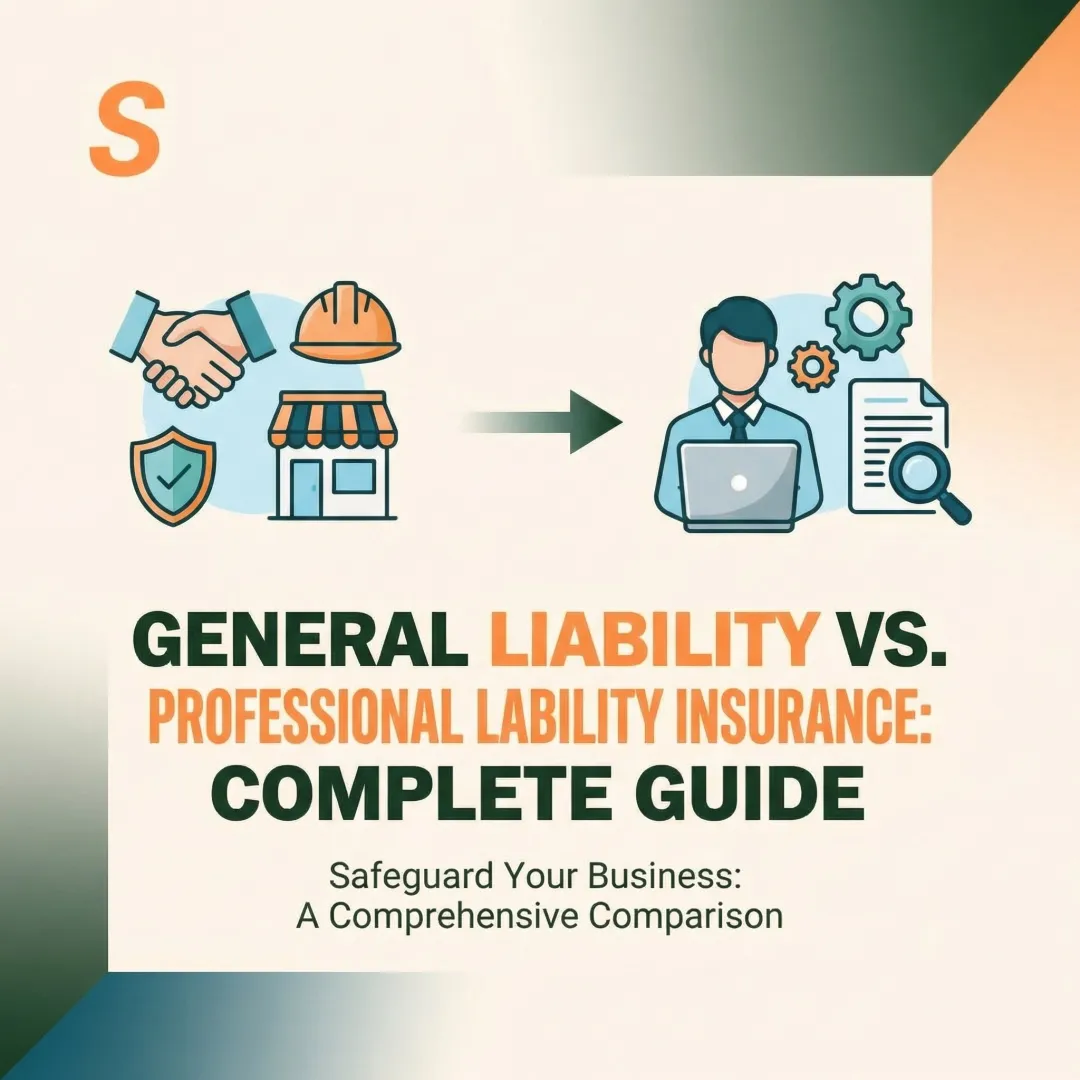
A common point of confusion for QA engineers is the difference between General Liability and Errors and Omissions (E&O) insurance, often called Professional Liability. It is critical to understand that these two policies cover entirely different sets of risks.
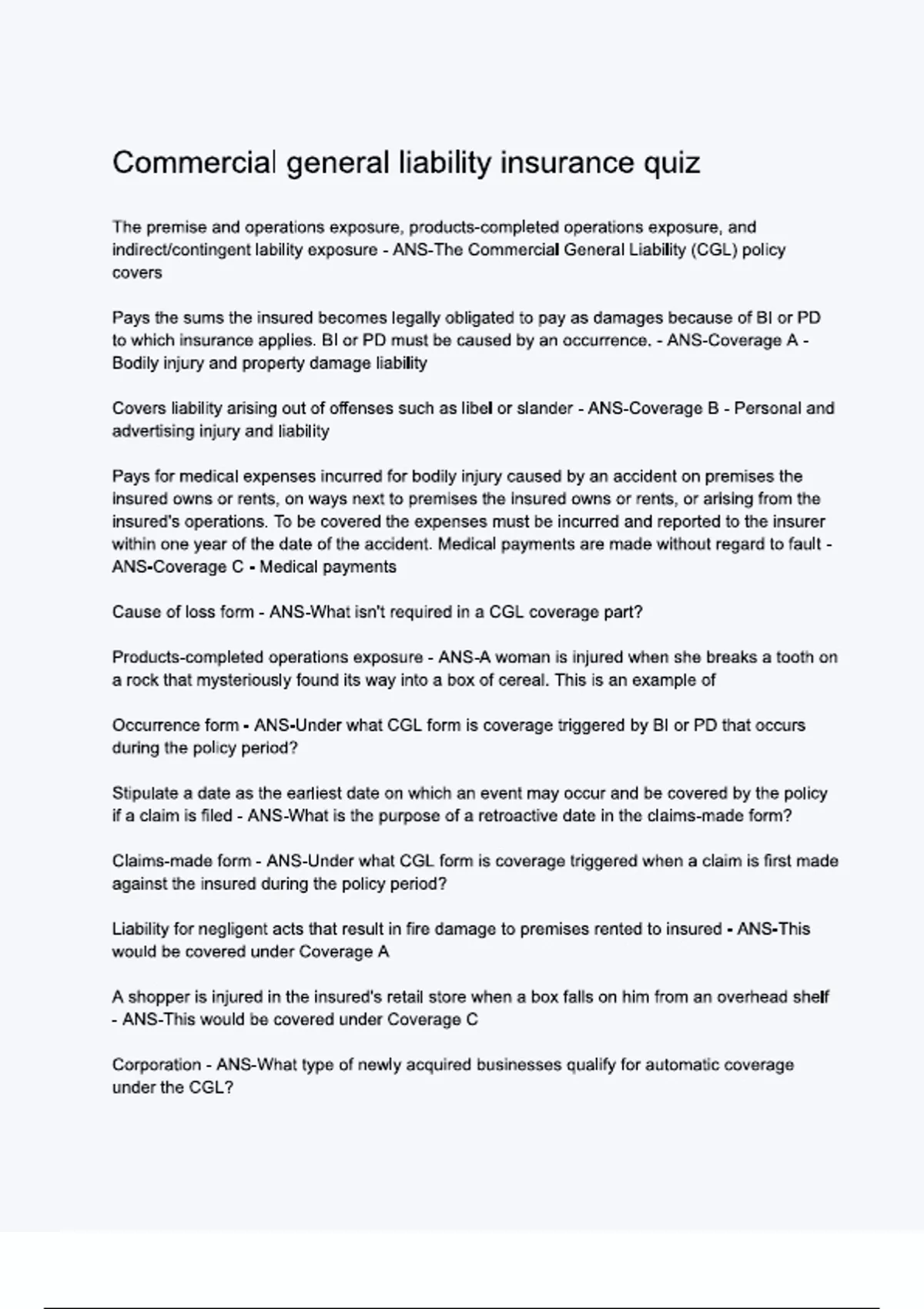
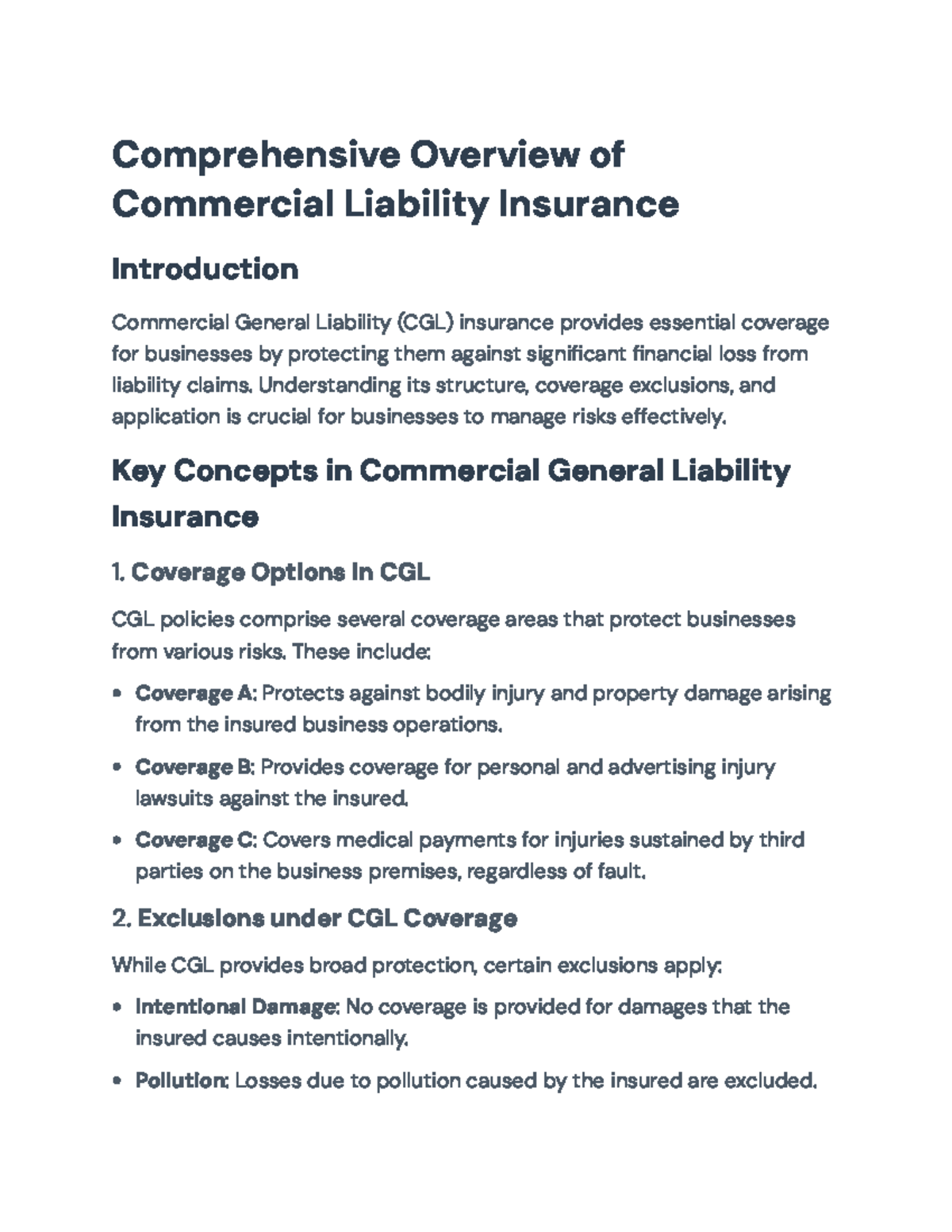
- Commercial General Liability (CGL): Covers "slip-and-fall" incidents, property damage to third-party equipment, and advertising injury (such as claims of defamation or copyright infringement in your marketing materials).
- Errors and Omissions (E&O): Covers financial losses incurred by your clients due to your professional negligence, failure to perform, or missed defects in your testing process.
Most enterprise-level contracts will mandate that a QA consultant carries both types of coverage. You cannot substitute one for the other; your CGL policy will explicitly exclude claims related to professional advice or service failures, while your E&O policy will not cover damage to a physical office space or bodily injury to a third party.
Key Risks and Scenarios for QA Engineers
To determine if your business requires CGL coverage, consider the specific environments where you provide services. The following scenarios are common triggers for CGL claims:
- Hardware Damage: You are performing load testing on a client’s server rack. During the installation of your testing probes, you accidentally cause a short circuit that fries a mission-critical motherboard. The client seeks reimbursement for the hardware and the associated downtime.
- Bodily Injury: You host a walkthrough of your mobile device testing lab for a potential client. A visitor trips over a stray power cable leading to a testing workstation and sustains an injury. The visitor sues for medical expenses and lost wages.
- Third-Party Property Damage: While moving testing equipment in a client’s facility, you accidentally strike and shatter a glass partition or damage expensive office furniture.
- Advertising Liability: You write a technical blog post or create a marketing brochure for your QA consultancy that inadvertently uses a competitor's trademarked process name or makes a libelous statement about a software vendor, leading to an intellectual property or defamation lawsuit.
Comparing Coverage Options and Costs
The cost of CGL insurance for QA engineers is generally lower than E&O insurance because the likelihood of a catastrophic physical injury is statistically lower for software-focused roles than for heavy industry. However, the price is influenced by your annual revenue, the location of your practice, and the nature of your hardware testing requirements.
| Coverage Feature | Standard CGL Policy | Typical Inclusion/Exclusion |
|---|---|---|
| Bodily Injury | Included | Covers medical costs for third-party injuries. |
| Property Damage | Included | Covers damage to items belonging to the client. |
| Personal Injury | Included | Protects against libel, slander, and copyright. |
| Professional Errors | Excluded | Requires a separate E&O or Professional Liability policy. |
| Cyber Liability | Often Excluded | Requires a separate Cyber Insurance endorsement. |
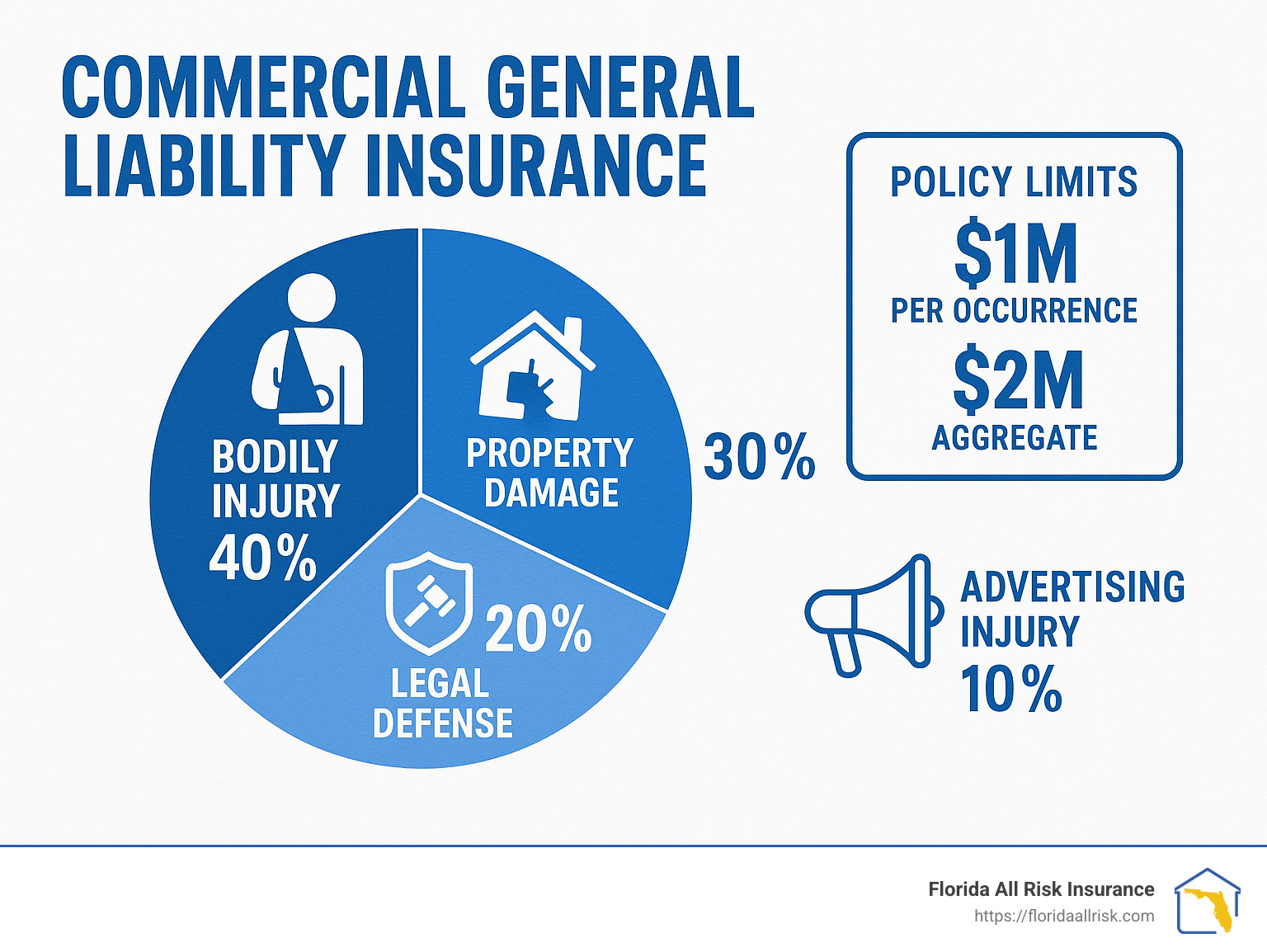
Premiums in 2026 for a solo QA consultant typically range from $400 to $900 annually, depending on the coverage limit (standard limits are usually $1 million per occurrence / $2 million aggregate). Businesses with physical hardware labs or employees will see higher premiums due to the increased frequency of traffic and equipment handling.
How to Secure and Maintain Coverage
The process of acquiring insurance should be approached with documentation that proves your risk profile. Most insurers will request a business description outlining your primary activities.
- Assess Your Requirements: Review your service contracts. Many enterprise clients will explicitly state the minimum insurance limits (e.g., $1 million general aggregate) they require before they will grant you access to their network or facilities.
- Gather Business Documentation: Have your business registration, current revenue projections, and a summary of your typical client activities ready.
- Work with a Specialized Broker: Seek out brokers who specialize in "Tech E&O and General Liability." These professionals understand the nuance of QA work and are less likely to over-insure you with irrelevant commercial policies.
- Verification and Certificates: Once insured, the insurer will provide a Certificate of Insurance (COI). You will frequently need to provide this document to clients as proof that you are adequately covered.
- Annual Reviews: As your business grows, your revenue increases, or you move into more intensive hardware testing, review your coverage limits annually to ensure you are not under-insured.
Common Pitfalls and Troubleshooting
A frequent mistake QA engineers make is relying on a "homeowners policy" or a "personal liability policy" to cover their business operations. Most personal insurance policies contain a "business pursuit" exclusion, meaning they will deny any claim that arises while you are performing work for a client. If you are conducting business out of your home, ensure you have a specific commercial policy or a business endorsement added to your existing coverage.
Another issue is the "claims-made" vs. "occurrence" distinction. Most CGL policies are written on an occurrence basis, meaning they cover incidents that happen during the policy period, regardless of when the claim is filed. Understanding your policy type is vital if you decide to switch insurance providers, as you must ensure there are no coverage gaps during the transition.
Frequently Asked Questions
Is Commercial General Liability mandatory for freelance QA engineers? While not always legally mandated by the government, it is almost always contractually mandated by clients. Enterprise organizations will rarely permit an external consultant to work on-site without verified liability coverage.
Does CGL cover software defects or data breaches? No. CGL is for physical, tangible risks. Software defects fall under Errors and Omissions insurance, and data breaches are covered under Cyber Liability insurance. These are distinct products.
What is an "Additional Insured" and why do clients ask for it? Many clients require that you add them as an "Additional Insured" on your policy. This extends your insurance protection to cover them if they are named in a lawsuit resulting from your actions on their premises. It is a standard request in B2B service contracts.
Can I get a bundled insurance package? Yes. Many insurers offer a "Business Owner’s Policy" (BOP) that bundles CGL with other coverages like property insurance and business interruption insurance, often at a discounted rate compared to buying policies separately.
Does my location affect my CGL premium? Yes. Insurance underwriters assess the risk of your operating environment. Working out of a secure, professional office space typically presents a different risk profile than working out of a high-traffic or high-risk physical area.
Final Recommendation
If you are currently contracting as a QA engineer, verify your insurance requirements against your existing client contracts immediately. If you lack commercial general liability coverage, prioritize obtaining a quote from a carrier that understands the technology services sector. At a minimum, secure a policy with a $1 million per-occurrence limit. Keep your Certificate of Insurance updated and easily accessible, as you will likely need to share it with your next prospective client during the onboarding or procurement phase.
Image Gallery