Life Insurance for Senior Citizens in Detroit: Options and Trade-Offs
Seniors in Detroit looking for life insurance must balance monthly premium costs against coverage duration, health qualification rules, and long-term estate goals. Key options include final expense whole life, term life insurance, guar...
Seniors in Detroit looking for life insurance must balance monthly premium costs against coverage duration, health qualification rules, and long-term estate goals. Key options include final expense whole life, term life insurance, guaranteed issue policies, and universal life insurance. Selecting the ideal plan requires weighing trade-offs between immediate affordability, guaranteed payouts, and medical underwriting strictness under Michigan insurance regulations.
Contents
Disclaimer
This article provides general consumer education regarding life insurance products and Michigan insurance standards. It does not constitute formal legal, tax, or financial advice. Readers should consult a licensed Michigan insurance producer or independent financial advisor before purchasing or replacing a life insurance policy.
The Landscape of Senior Life Insurance in Metro Detroit
For older adults residing in Detroit and surrounding Wayne County, securing a life insurance policy serves several primary financial goals: covering end-of-life expenses, liquidating remaining personal debt or mortgages, and leaving a tax-free financial legacy for children or grandchildren.
According to regional industry surveys and funeral home reporting in Metro Detroit, traditional burial and funeral services frequently cost between $7,500 and $12,000, depending on plot selection, casket choice, and memorial services. Cremation alternatives typically range from $2,500 to $5,000. When combined with outstanding medical bills or urban property taxes, unmanaged final expenses can place a heavy burden on surviving family members.
- Final Expenses: Burial, cremation, service fees
- Debt Liquidation: Mortgages, personal loans, taxes
- Wealth Transfer: Inheritance for children/charity
Insurance carriers operating in Michigan evaluate applicant risk based on age, tobacco usage, gender, and detailed medical history. Because risk profiles increase naturally with age, policy pricing and underwriting availability change dramatically after ages 60, 70, and 80. Detroit seniors must carefully evaluate how each major policy structure aligns with their current health status and monthly income.
Primary Life Insurance Options for Michigan Seniors
Seniors evaluating life insurance generally select from four core product categories. Each vehicle addresses specific financial goals and introduces distinct underwriting criteria.
1. Final Expense Whole Life Insurance
Final expense insurance—often referred to as burial insurance or modified whole life—is a permanent life insurance policy designed specifically to cover end-of-life costs.
- Coverage Amounts: Typically range from $2,000 to $45,000.
- Underwriting: Uses "simplified issue" underwriting. Applicants answer a series of medical questions regarding chronic conditions, hospitalizations, and prescriptions, but no physical medical exam or blood draw is required.
- Key Features: Premiums remain locked for life, coverage never expires as long as premiums are paid, and the policy builds a modest cash value over time.
2. Term Life Insurance
Term life insurance provides temporary coverage for a pre-determined period, such as 10, 15, or 20 years.
- Coverage Amounts: Generally starts at $50,000 and can reach $1,000,000 or more.
- Underwriting: Requires fully underwritten medical screening for the best rates (including paramedical exams and medical record reviews), though some carriers offer simplified term up to age 65 or 70.
- Key Features: Offers the maximum death benefit per dollar of premium. However, if the policyholder outlives the selected term, coverage terminates without any payout or accumulated cash value.
3. Guaranteed Issue Life Insurance
Guaranteed issue policies are designed for seniors with severe pre-existing health conditions who cannot qualify for underwritten policies.
- Coverage Amounts: Typically capped between $2,000 and $25,000.
- Underwriting: No medical questions, health exams, or physician reports. Acceptance is guaranteed for applicants within eligible age ranges (usually ages 50 to 85).
- Key Features: Incorporates a mandatory graded death benefit period—usually two years. If the insured dies from natural causes during the first two policy years, the beneficiary receives a return of paid premiums plus minor interest (typically 10%) rather than the full face value. Full death benefits apply immediately only for accidental deaths.
4. Guaranteed Universal Life (GUL)
Guaranteed Universal Life functions similarly to a hybrid between term and whole life insurance.
- Coverage Amounts: Typically starts at $25,000 to $100,000+.
- Underwriting: Requires standard to full medical underwriting.
- Key Features: Allows policyholders to lock in guaranteed death benefits to a specific age (such as age 90, 95, or 121) at a fixed premium cost. Unlike traditional universal life, GUL focuses strictly on death benefit guarantees rather than aggressive cash-value growth, making it far less vulnerable to interest rate fluctuations.
Evaluating Key Policy Trade-Offs
Choosing life insurance requires balancing competing trade-offs. Improving one aspect of a policy—such as eliminating medical questions—invariably affects another area, such as premium pricing or initial coverage availability.
- Fully Underwritten Term (High Health Scrutiny)
- Lowest Cost / Benefit
- Full Coverage Day 1
- Simplified Issue
- Moderate Cost
- Full Coverage Day 1
- Guaranteed Issue (Zero Health Scrutiny)
- Highest Cost / Benefit
- 2-Year Graded Period
Underwriting Strictness vs. Monthly Premium Cost
The less health information an insurer collects, the higher the risk the company assumes. To compensate, insurance carriers charge significantly higher premiums per thousand dollars of coverage on non-underwritten products.
Seniors in moderate to good health who agree to a simplified medical questionnaire or standard medical exam pay considerably less than those opting for guaranteed acceptance policies.
Permanent Protection vs. Term Expiration
Term insurance offers high benefit amounts at low initial costs, making it appealing for seniors managing a 10-year mortgage or remaining business liabilities. However, the trade-off is expiration risk.
If a 68-year-old purchases a 10-year term policy, the policy expires at age 78. Renewing coverage at age 78 is often cost-prohibitive or medically impossible. Whole life and GUL policies eliminate expiration risk but require higher premiums for the equivalent death benefit.
Immediate Full Coverage vs. Graded Benefit Periods
Fully underwritten and simplified issue policies pay 100% of the face value from the first day the policy takes effect. Guaranteed issue policies include a 24-month waiting period before full natural death benefits become active.
Seniors must balance their current immediate health outlook against the risk of reduced initial protection.
Direct Comparison of Senior Life Insurance Options
The following table summarizes the structural differences, underwriting requirements, costs, and primary trade-offs across life insurance options available to Detroit seniors.
| Policy Type | Target Age Range | Medical Exam Required? | Typical Benefit Limits | Primary Advantage | Main Trade-Off |
|---|---|---|---|---|---|
| Final Expense Whole Life | 50 – 85 | No (Health Questions Only) | $2,000 – $45,000 | Fixed premiums; lifetime coverage; day-one protection | Higher cost per $1,000 coverage than term |
| Term Life Insurance | 50 – 75 | Often (Paramedical or Rx review) | $50,000 – $1,000,000+ | High benefit amounts for lower monthly cost | Coverage expires at end of term; no cash value |
| Guaranteed Issue Life | 50 – 85 | No (Zero Health Questions) | $2,000 – $25,000 | 100% acceptance regardless of medical history | 2-year graded benefit period; highest overall relative cost |
| Guaranteed Universal Life (GUL) | 50 – 80 | Yes (Standard Underwriting) | $25,000 – $1,000,000+ | Permanent coverage to age 90–121 at lower cost than traditional whole life | Minimal cash value accumulation; strict premium payment deadlines |
Key Michigan Insurance Regulations and Consumer Protections
Life insurance policies issued in Metro Detroit fall under the regulatory authority of the Michigan Department of Insurance and Financial Services (DIFS). Michigan insurance statutes provide specific statutory rights to protect senior policyholders.
The 10-Day Free-Look Period (30 Days for Replacements)
Under Michigan law, consumers receiving a new life insurance policy have a statutory "free-look" window. Policyholders can review the contract terms for at least 10 days after receipt. If they choose to cancel for any reason within this window, the insurer must refund 100% of all premiums paid.
When a consumer replaces an existing life insurance policy with a new contract, Michigan regulation extends this free-look period to 30 days to ensure buyers have ample opportunity to confirm the replacement serves their interests.
Mandatory 31-Day Premium Grace Period
If a senior misses a monthly or annual premium payment, Michigan law mandates a 31-day grace period. During these 31 days, the insurance company cannot terminate the coverage, and the full death benefit remains payable (minus any overdue premium amount) if death occurs within the window.
Michigan Life and Health Insurance Guaranty Association
Insurance companies operating in Michigan must belong to the Michigan Life and Health Insurance Guaranty Association. If an admitted insurance carrier becomes insolvent, the Guaranty Association provides statutory protection for policyholders up to $300,000 in life insurance death benefits and $100,000 in net cash surrender value per individual contract.
Step-by-Step Guide: Selecting a Policy in Detroit
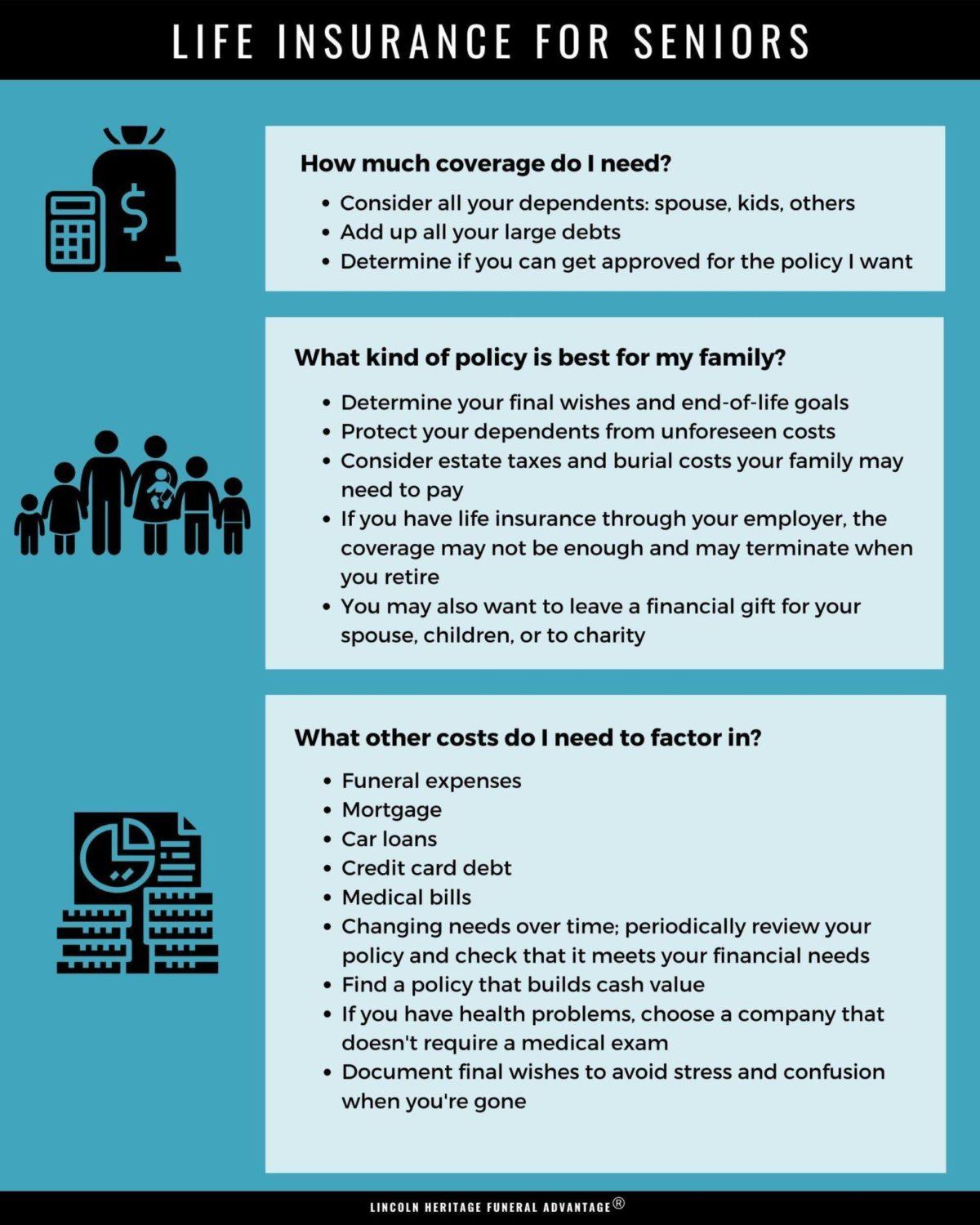
- Calculate Actual Financial Needs: List immediate obligations (funeral services, remaining credit balances, final medical bills) and ongoing goals (income replacement, legacy gifts). Avoid over-insuring beyond your monthly budget.
- Review Current Health and Medical Records: Obtain an accurate list of current prescription medications, major medical diagnoses, and recent hospital visits. Knowing your exact medical history helps target insurers offering favorable underwriting for your specific health conditions.
- Check Licensing and Ratings: Verify that both the insurance agent and the insurance company are licensed to conduct business in Michigan using the DIFS Insurance Licensing Database. Check financial strength ratings from independent agencies like A.M. Best (aiming for ratings of A- or higher).
- Compare Independent Carrier Quotes: Avoid relying on single direct-mail quotes. Work with an independent agent licensed in Michigan who represents multiple insurance carriers to compare rate tables and underwriting niches.
- Review Policy Contracts Thoroughly: Read all disclosures regarding initial waiting periods, premium acceleration clauses, and policy exclusions prior to making the first premium payment.
Frequently Asked Questions
What happens if I outlive a term life insurance policy in Michigan?
If you outlive a term life insurance policy, the policy simply expires, and coverage ends. The insurance carrier keeps the paid premiums, and no death benefit is paid to beneficiaries. Some policies offer a conversion rider allowing policyholders to convert the term policy into a permanent whole life policy without passing a medical exam, provided conversion options are exercised before the contractually specified age limit.
Can a senior citizen in Detroit get life insurance without a medical exam?
Yes. Seniors can purchase either simplified issue policies (which require answering health questions but skip physical exams) or guaranteed issue policies (which ask zero health questions). Simplified issue policies are preferable if you have manageable health conditions, as they offer day-one coverage at lower premiums than guaranteed issue products.
How does smoking or tobacco use impact senior life insurance rates?
Tobacco use significantly increases life insurance premiums across all age categories. In senior age brackets, tobacco users often pay two to three times more per month than non-tobacco applicants for identical coverage amounts. In Michigan, insurers generally consider cigarette smoking, cigars, pipe tobacco, e-cigarettes, and nicotine replacement therapies under tobacco rate structures unless the applicant has been tobacco-free for at least 12 to 24 consecutive months.
Are life insurance death benefits taxable in Michigan?
Under federal law and Michigan state tax regulations, life insurance death benefits paid directly to a named beneficiary are generally exempt from income tax. However, if the death benefit forms part of a gross estate that exceeds state or federal estate tax exemption thresholds, or if the benefit generates interest income prior to disbursement, tax obligations may apply.
What is the difference between simplified issue and guaranteed issue coverage?
Simplified issue policies require applicants to complete a detailed health questionnaire and undergo automated medical database checks (such as prescription history reports). If approved, coverage begins immediately on day one. Guaranteed issue policies require no health screening whatsoever, but they include a mandatory two-year waiting period during which natural death benefits are restricted to a return of paid premiums plus interest.
Recommended Next Steps
Seniors preparing to purchase life insurance should begin by compiling a complete profile of personal expenses, health records, and legacy intentions.
To ensure contract validity and competitive pricing, request quotes from multiple reputable carriers licensed through the Michigan Department of Insurance and Financial Services. Prioritize policies with fixed, non-increasing premiums that fit comfortably within a fixed retirement income, ensuring coverage remains active when your family needs it most.
Image Gallery