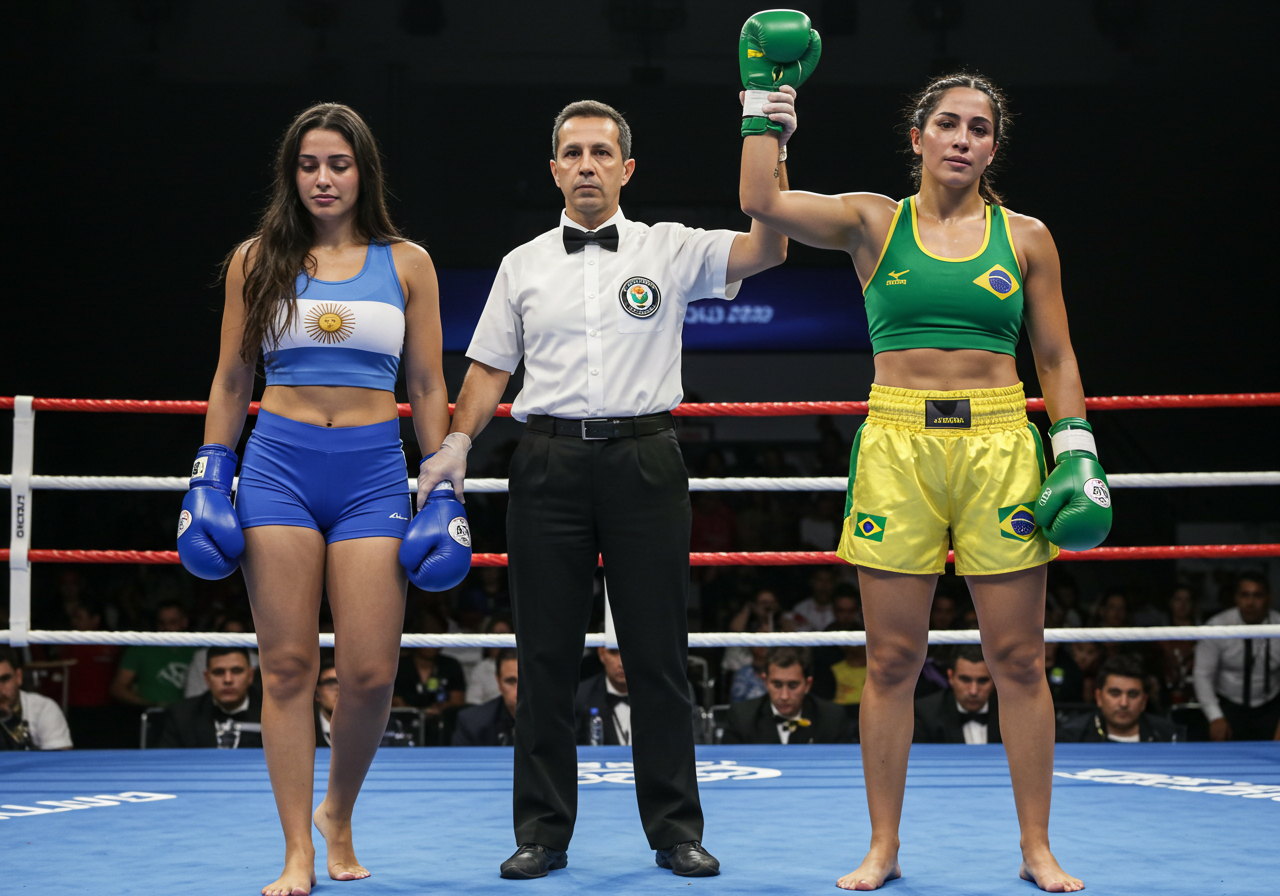
Argentina Boxing History and Achievements: A Legacy of World Champions
Argentina possesses one of the most storied traditions in international boxing, producing over 40 world champions and 24 Olympic medals. Since the early 20th century, the nation has established itself as a global powerhouse, characteri...
Argentina possesses one of the most storied traditions in international boxing, producing over 40 world champions and 24 Olympic medals. Since the early 20th century, the nation has established itself as a global powerhouse, characterized by a technical "Argentine school" of boxing that emphasizes defensive mastery, counter-punching, and psychological resilience.
Contents
For over a century, boxing has sat alongside football as a cornerstone of Argentine sporting identity. From the smoke-filled halls of Luna Park in Buenos Aires to the neon lights of Las Vegas, Argentine fighters have consistently defied the odds to claim gold. This comprehensive history explores the evolution of the sport in Argentina, the legends who defined eras, and the structural achievements that keep the nation relevant on the world stage in 2026.
The Genesis: Luis Ángel Firpo and the Birth of a Passion
The history of professional boxing in Argentina cannot be discussed without the "Wild Bull of the Pampas," Luis Ángel Firpo. Before 1923, boxing was largely a clandestine or fringe activity in Argentina, often restricted by municipal bans. Everything changed on September 14, 1923, when Firpo challenged Jack Dempsey for the World Heavyweight Title at the Polo Grounds in New York.
While Firpo technically lost the bout, the "Long Count" controversy—where he knocked Dempsey out of the ring for 17 seconds only for the champion to be helped back in—became a national rallying cry. Firpo returned to Argentina a hero. His performance was so impactful that it forced the legalization of professional boxing in Buenos Aires, turning a niche pursuit into a mainstream obsession. Firpo’s bravery established the archetype of the Argentine fighter: rugged, powerful, and unafraid of international giants.
The First Golden Era: Pascual Pérez and Olympic Glory
If Firpo provided the spark, Pascual Pérez provided the prestige. Standing only 4 feet 11 inches, "Pascualito" became the most decorated flyweight in the nation’s history. His career represented the first major "peak" of Argentine boxing achievement.
Pérez first secured the gold medal at the 1948 London Olympics, proving that Argentine amateurs could compete at the highest level. He then transitioned to the professional ranks, capturing the World Flyweight Title in 1954 by defeating Yoshio Shirai in Tokyo. Pérez defended his title nine times over six years. He remains the only Argentine boxer to have won both an Olympic gold medal and a professional world title, a feat that, as of 2026, still stands as the gold standard for aspiring local fighters.
The 1970s: The Era of Legends
The 1970s marked the absolute zenith of Argentine boxing. During this decade, two vastly different stylists became global icons, representing the two distinct philosophies of the Argentine school: the brutal efficiency of the hunter and the untouchable grace of the defensive specialist.
Carlos Monzón: The Middleweight King
Carlos Monzón is widely regarded as the greatest Argentine boxer of all time and one of the top middleweights in history. Between 1970 and 1977, Monzón ruled the 160-pound division with an iron fist. He won the title by knocking out Nino Benvenuti in Italy and went on to defend it 14 times against legendary opponents like Emile Griffith, Jean-Claude Bouttier, and Rodrigo Valdez.
Monzón’s style was clinical. He used a long, punishing jab and a devastating right hand, coupled with an impenetrable chin. He retired as champion with a record of 87 wins, only 3 losses (all of which he later avenged), and 9 draws. His induction into the International Boxing Hall of Fame cemented his status as a global immortal.
Nicolino Locche: The Untouchable
While Monzón was a destroyer, Nicolino Locche was an artist. Known as "El Intocable" (The Untouchable), Locche is perhaps the greatest defensive boxer to ever live. He would often stand in front of opponents with his hands down, slipping dozens of punches through head movement alone.
Locche won the WBA Junior Welterweight Title in 1968 in Tokyo against Paul Fujii. His fights at Luna Park became legendary; spectators didn't go to see him knock people out, but to see him make world-class athletes look like amateurs. Locche’s achievement was proving that boxing could be won through evasion and psychology rather than just brute force.
The Cathedral of Boxing: Luna Park
No history of Argentine boxing is complete without mentioning Luna Park in Buenos Aires. Known as the "Cathedral of Boxing," this venue served as the epicenter of the sport in South America for decades. Under the promotion of Tito Lectoure, Luna Park hosted the world’s elite.
It was more than a stadium; it was a rite of passage. To be considered a true great in Argentina, a fighter had to survive a "Saturday night at the Luna." The atmosphere inside the arena—dense with cigar smoke and the roar of a knowledgeable, demanding crowd—shaped the grit of champions like Víctor Galíndez and Horacio Accavallo.
Modern Greatness: From Maravilla to Maidana
Following a period of relative quiet in the 1990s, the 21st century saw a massive resurgence in Argentine talent. This "New Wave" was characterized by fighters who moved abroad, primarily to the United States and Spain, to find elite competition.
- Sergio "Maravilla" Martínez: A late bloomer who became a pound-for-pound star. His victory over Kelly Pavlik in 2010 and his dramatic win against Julio César Chávez Jr. in 2012 revitalized public interest in boxing. Martínez was a master of movement and charisma, bringing a sophisticated, athletic style back to the forefront.
- Marcos "Chino" Maidana: The polar opposite of Martínez, Maidana was a "blood and guts" brawler with terrifying power. His two-fight series against Floyd Mayweather Jr. in 2014 remains one of the most significant moments for an Argentine fighter in the modern era, as he pushed the undefeated Mayweather to his absolute limit.
- Brian Castaño: In the early 2020s, Castaño represented the modern technical evolution, holding the WBO Light Middleweight title and engaging in a historic unification battle with Jermell Charlo.
Women’s Boxing: A National Stronghold
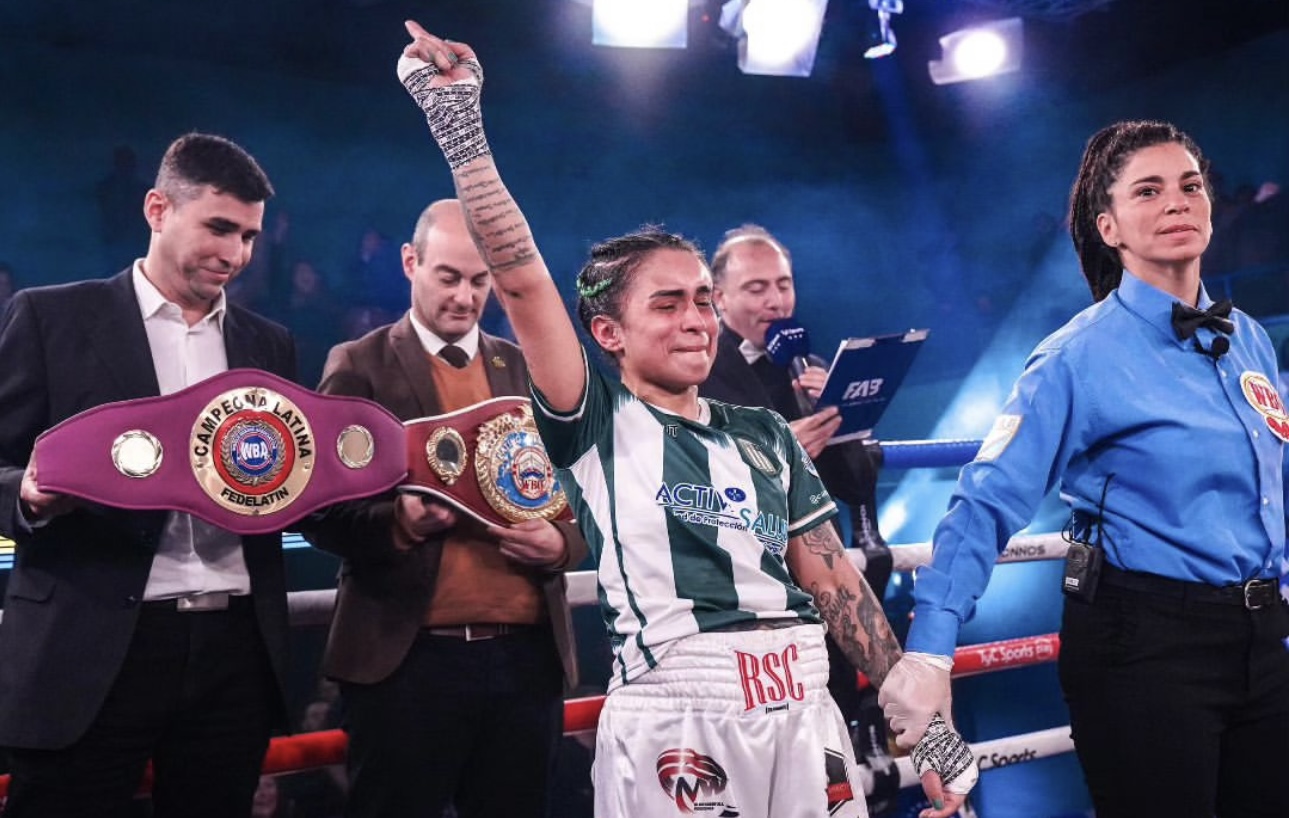
Argentina has been a pioneer in the development of women's professional boxing. Since the licensing of Marcela "La Tigresa" Acuña in 2001, the country has produced more female world champions than almost any other nation per capita.
Names like Yesica Bopp, Erica Farías, and Daniela Bermúdez have dominated their respective divisions for years. This achievement is significant because it reflects a structural success: Argentina established a robust domestic circuit for women long before many European or North American countries, allowing female fighters to gain the necessary experience to compete for international belts.
Key Historical Achievements Summary
The following table highlights the most significant milestones in the history of Argentine boxing.
| Boxer | Primary Achievement | Era | Notable Fact |
|---|---|---|---|
| Luis Ángel Firpo | Legalized boxing in Argentina | 1920s | Known as "The Wild Bull of the Pampas." |
| Pascual Pérez | Olympic Gold & World Title | 1940s-50s | Argentina's first professional world champion. |
| Carlos Monzón | 14 Middleweight Defenses | 1970s | Retired as undefeated champion. |
| Nicolino Locche | Junior Welterweight Champion | 1960s-70s | Inducted into Hall of Fame for defensive skill. |
| Víctor Galíndez | Two-time Light Heavyweight Champ | 1970s | Won the title in 1974 on the anniversary of Firpo/Dempsey. |
| Sergio Martínez | Middleweight Champion | 2010s | 2010 Fighter of the Year (Ring Magazine). |
| Marcela Acuña | First female licensed pro | 2000s | Trailblazer for women's boxing in South America. |
The Current Landscape and Training Culture
As of 2026, Argentina continues to produce "diamond in the rough" talent. The country’s success is largely attributed to its grassroots gym culture. In neighborhoods like Boedo in Buenos Aires or the boxing hubs of Santa Fe and Córdoba, trainers continue to teach the "long-range" style—heavy on the left hook and lateral movement—that has worked for a century.
However, the sport faces challenges. Economic fluctuations in Argentina often force young prospects to move to promotional hubs in Las Vegas or Mexico prematurely. Despite this, the FAB (Federación Argentina de Boxeo) remains a strict regulatory body that ensures a high standard of amateur seasoning before fighters turn professional, which is why Argentine "journeymen" are often much more dangerous than their records suggest.
Frequently Asked Questions
Who is considered the greatest Argentine boxer?
Most experts and historians agree that Carlos Monzón is the greatest. His dominance over the middleweight division for seven years and his record against Hall of Fame competition place him in the top tier of all-time greats globally. Nicolino Locche is often ranked second due to his unique defensive genius.
How many world champions has Argentina produced?
Argentina has produced over 40 male world champions and more than 30 female world champions. This count varies slightly depending on whether "interim" titles from the four major sanctioning bodies (WBA, WBC, IBF, WBO) are included, but the nation consistently ranks in the top 10 globally for total champions produced.
Why is boxing so popular in Argentina compared to other Latin American countries?
The popularity stems from a mix of early 20th-century success (Firpo) and a strong European-influenced sporting culture. Unlike some Caribbean nations that focus more on baseball, Argentina’s sporting identity was built on football and individual combat sports, which were viewed as expressions of national "guapo" (toughness) and "viveza" (cunning).
What is the "Argentine School" of boxing?
It is a stylistic approach characterized by economy of movement, a very high technical standard of footwork, and a preference for fighting at mid-to-long range. Argentine trainers traditionally emphasize "the art of hitting and not getting hit," a philosophy famously championed by Nicolino Locche and later refined by fighters like Sergio Martínez.
Where are the most important boxing gyms in Argentina?
While Buenos Aires is the administrative hub, the province of Santa Fe is arguably the most important talent factory, having produced Carlos Monzón and Marcos Maidana. The Almagro Boxing Club in Buenos Aires and various clubs in Mendoza also have deep historical significance.
Summary of Next Steps for Enthusiasts
To truly appreciate the depth of Argentine boxing history, enthusiasts should look beyond highlight reels. Studying the full fight tapes of Nicolino Locche provides a masterclass in defensive positioning that remains relevant for modern trainers. Furthermore, following the FAB (Federación Argentina de Boxeo) rankings is the best way to identify emerging talent before they move to the international stage. As the sport evolves toward 2027 and beyond, the foundation laid by legends like Firpo and Monzón ensures that Argentina will remain a central pillar of the "Noble Art."
Image Gallery