Vichyssoise: Serving Temperatures, Traditions, and Culinary Versatility
Vichyssoise is traditionally served chilled, particularly in the United States, where its identity as a cold potato and leek soup was popularized by French chefs in the early 20th century. However, the dish is fundamentally a variation...
Vichyssoise is traditionally served chilled, particularly in the United States, where its identity as a cold potato and leek soup was popularized by French chefs in the early 20th century. However, the dish is fundamentally a variation of potage Parmentier, which is traditionally served hot. Whether you choose to serve it cold or hot depends on personal preference, seasonal context, and the specific texture you wish to achieve.
Contents
The Culinary Origins of Vichyssoise
To understand why the question of temperature arises, one must look at the historical evolution of this classic dish. The soup is a refined descendant of traditional French leek and potato soup, known as potage Parmentier after Antoine-Augustin Parmentier, an 18th-century French pharmacist who promoted the potato as a food source.
The cold version, which became known as vichyssoise, is widely attributed to Louis Diat, a French chef working at the Ritz-Carlton in New York City in 1917. Diat recalled his mother and grandmother making a hot leek and potato soup in the summer, which he and his brother would cool down by stirring in cold milk or cream to make it more refreshing during the warmer months. By adding it to the Ritz-Carlton menu as a chilled specialty, Diat successfully transformed a humble hot dish into a sophisticated summer staple. Therefore, the "correct" way to serve it is historically dual-natured: it is a hot dish adapted for cold service.
Why Temperature Matters for Flavor and Texture
Temperature profoundly influences how we perceive flavor and mouthfeel. Serving a dish cold, warm, or hot is not merely a matter of tradition; it alters the chemical release of volatile aromatics and the viscosity of the fats present in the soup.
The Impact of Cold Serving
When vichyssoise is chilled—typically to a temperature between 40°F and 45°F—the flavors become more muted compared to their hot counterparts. Because cold suppresses the taste buds’ sensitivity to sweetness and salt, a chilled soup often requires a slightly higher level of seasoning to be perceived as balanced. Furthermore, the cream and butter emulsified in the soup thicken as they cool. This results in a velvety, dense texture that is highly prized for its refreshing qualities, making it ideal for summer lunches or elegant appetizers.
The Impact of Hot Serving
Serving the soup hot, as a potage Parmentier, allows the aromatic compounds in the leeks and the earthy starch of the potatoes to bloom. The texture is thinner and more flowing, providing a comforting, warming sensation. Heat also enhances the perception of salt and savory notes, meaning you may find a hot soup tastes "bolder" even if the seasoning levels are identical to the chilled version.
Comparing Serving Styles: Characteristics and Best Use Cases
Choosing the right temperature depends on the setting and the dining experience you intend to create. The following comparison clarifies how each style functions in a modern kitchen.
| Feature | Cold Vichyssoise | Hot Potage Parmentier |
|---|---|---|
| Primary Seasoning | Requires sharper salt/acidity balance | Requires balanced, aromatic profile |
| Texture | Dense, velvet-like, creamy | Light, smooth, pourable |
| Best Season | Spring and Summer | Autumn and Winter |
| Serving Vessel | Chilled bowls or coupes | Pre-warmed porcelain bowls |
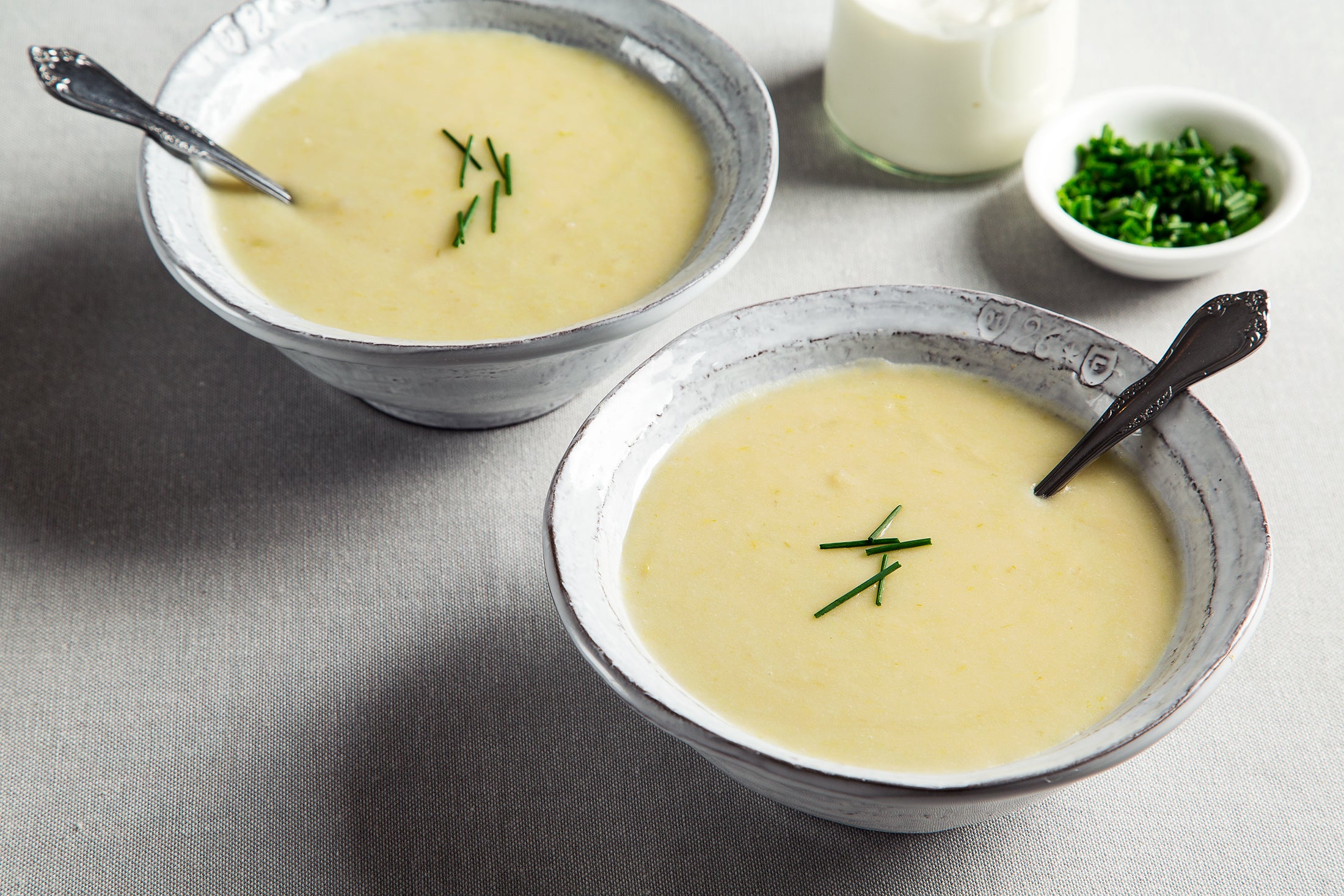
| Garnish Profile | Fresh chives or chive oil | Croutons, bacon lardons, or nutmeg |
Technical Considerations for Preparation
Whether you intend to serve your soup hot or cold, the foundational cooking process remains identical. The goal is to sweat the leeks in butter until soft (avoiding browning), adding diced potatoes and chicken or vegetable stock, then simmering until tender. The divergence occurs only after the mixture has been blended and passed through a chinois or fine-mesh sieve.
Achieving the Perfect Emulsion
If you are aiming for a chilled vichyssoise, the quality of the cream is paramount. Because the soup will be cold, you want a fat that does not turn waxy or overly solid. High-quality heavy cream or a mix of cream and crème fraîche is standard. For a hot soup, you might consider finishing the potage with a knob of cold butter (a technique known as monter au beurre) just before serving to add a glossy sheen and rich mouthfeel.
Troubleshooting Texture and Consistency
One common error is an over-reliance on the blender, which can turn potatoes "gummy" due to the release of excessive starch. To avoid this:
- Simmer, don't boil: Keep the temperature steady to ensure the potatoes soften without disintegrating into a paste.
- Strain thoroughly: A silky texture is the hallmark of a professional vichyssoise. Regardless of the serving temperature, pressing the soup through a fine-mesh sieve is the most effective way to achieve a uniform consistency.
- Temperature shock: If you are transitioning from hot to cold, place the blender jar or pot in an ice-water bath immediately after blending. This preserves the bright white color of the leeks and prevents the soup from graying as it sits.
Common Myths Regarding Serving Temperatures
There is a recurring myth that vichyssoise must be served cold to be authentic. This is a misunderstanding of the dish's lineage. Culinary professionals recognize that the dish is simply a cold version of a classic hot preparation. Insisting that it is incorrect to serve it hot ignores the primary source material (potage Parmentier). Conversely, serving a soup cold that was meant to be hot—without proper adjustment of fat content and seasoning—can result in an unpleasant, greasy mouthfeel. The success of the dish relies on adapting your recipe to the target serving temperature, not strictly adhering to a rigid rulebook.
Frequently Asked Questions
Can I serve the same batch of soup both hot and cold?
Yes, provided you season it appropriately. If you plan to serve half the batch hot and half cold, reserve the final seasoning with salt and pepper until after you have portioned the soup. The cold portion will almost certainly require an extra pinch of salt and perhaps a squeeze of lemon juice to ensure the flavors "pop" despite the low temperature.
How do I garnish vichyssoise effectively?
Garnishes should match the serving temperature. For cold vichyssoise, fresh chives are the gold standard because they provide a crisp, onion-like bite that cuts through the rich cream. For hot potato-leek soup, consider toasted croutons, finely diced crispy bacon, or a grating of fresh nutmeg to complement the warmth of the dish.
Does the type of potato used affect temperature stability?
Yes. Using high-starch potatoes like Russets will result in a thicker soup that holds its texture well when cold. Waxy potatoes, such as Yukon Golds, provide a creamier, more buttery base that is excellent for hot service but may produce a slightly different mouthfeel when chilled.
How long should I chill vichyssoise before serving?
For the best results, chill the soup for at least 4 to 6 hours, or ideally overnight. This resting period allows the flavors of the leeks and potatoes to marry. If you are in a rush, a rapid ice bath can cool the soup in 30 minutes, but the depth of flavor may be slightly diminished compared to a slow, refrigerated chill.
Is it safe to reheat cold vichyssoise?
Yes, it is perfectly safe to reheat chilled soup, provided it has been stored properly in the refrigerator (below 40°F) and consumed within 3 to 4 days. When reheating, do so slowly over low heat to prevent the cream from separating or scorching.
Final Recommendation
If you are preparing vichyssoise for a warm-weather event, serve it chilled in pre-chilled bowls, topped with fresh, finely snipped chives. If you are cooking for a cooler evening or desire a more traditional experience, serve it hot, garnished with a drizzle of high-quality olive oil or crispy croutons. The versatility of this dish is its greatest strength; focus on achieving a smooth, silky texture through proper straining, and you will find that the temperature serves only to complement the time of year and the preferences of your guests.
Image Gallery