Standard Penetration Test (SPT): The Definitive Guide to Field-Based Soil Investigation
The Standard Penetration Test (SPT) is a widely used in-situ geotechnical testing method designed to determine the relative density and consistency of soil layers. By driving a split-spoon sampler into the ground using a standard falli...
The Standard Penetration Test (SPT) is a widely used in-situ geotechnical testing method designed to determine the relative density and consistency of soil layers. By driving a split-spoon sampler into the ground using a standard falling weight, engineers calculate an "N-value" that provides critical data for foundation design, settlement analysis, and site characterization.
Contents
Geotechnical engineering relies heavily on the ability to understand what lies beneath the surface before a single brick is laid. Among the various methods available for subsurface exploration, the Standard Penetration Test (SPT) remains the most prevalent globally. Developed in the early 20th century and standardized over decades, the SPT provides a cost-effective way to obtain both a numerical indication of soil resistance and a physical sample for laboratory classification. As of 2026, despite the rise of more sophisticated electronic methods, the SPT continues to be the backbone of site investigations for bridges, high-rise buildings, and infrastructure projects.
The Engineering Fundamentals of SPT
The Standard Penetration Test is an empirical dynamic sounding test. Its primary objective is to provide an indication of the relative density of granular soils (such as sands and gravels) and the consistency of cohesive soils (such as silts and clays). The test is performed within a borehole at predetermined depth intervals—typically every 1.5 meters or at every change in soil stratum.
The core of the test revolves around the N-value, which is the number of blows required to drive a standard sampler a specific distance into the soil. This value is not just a random number; it is a proxy for the soil's shear strength and compressibility. Because the test is conducted in-situ, it captures the soil's behavior in its natural state, including the effects of overburden pressure and groundwater, which are often difficult to replicate perfectly in a laboratory setting.
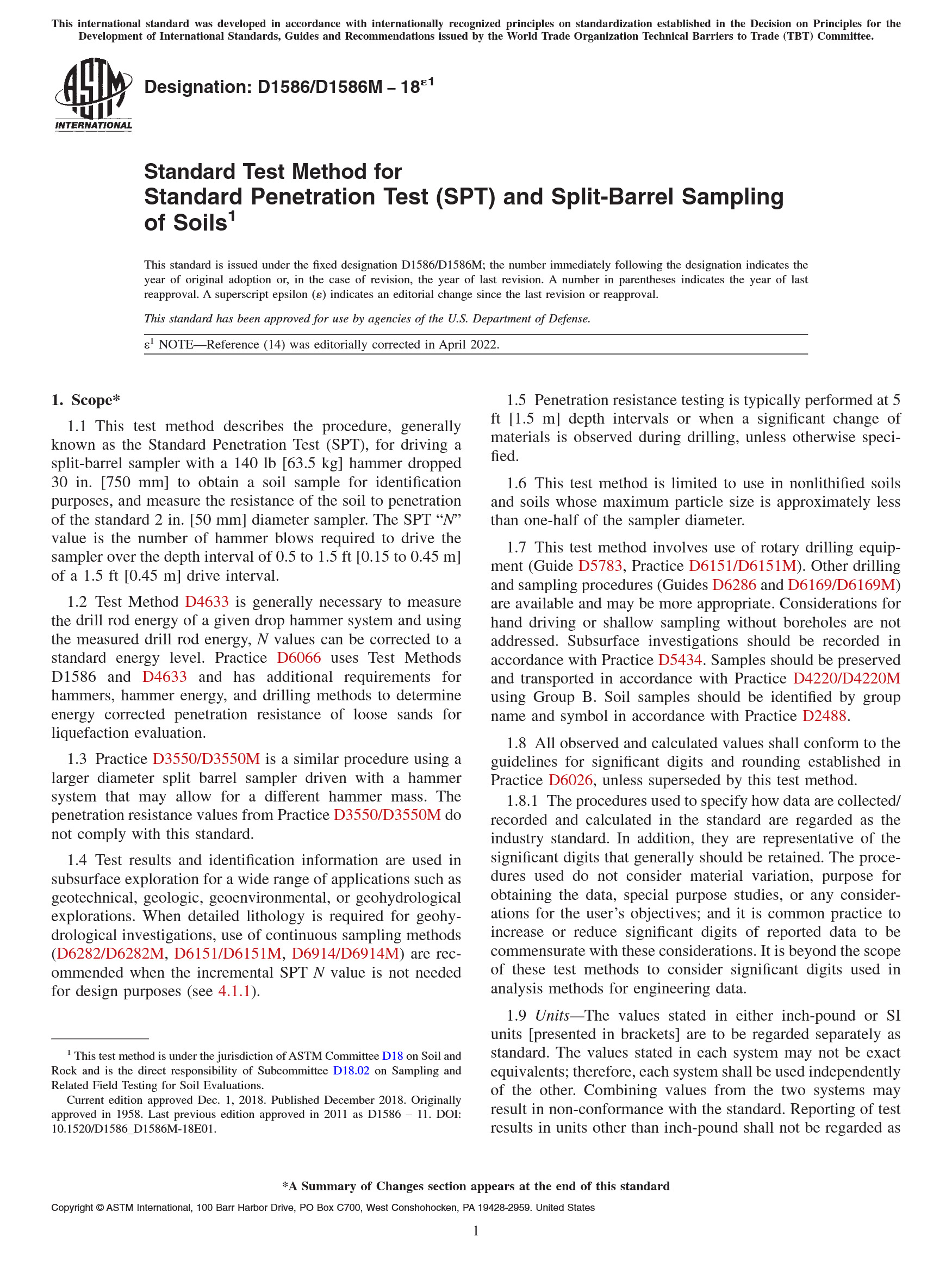
In the context of 2026 engineering practices, the SPT is governed by international standards such as ASTM D1586 in the United States and BS EN ISO 22476-3 in Europe. These standards ensure that the energy delivered to the drill rods is consistent, allowing engineers to compare results across different sites and regions.
Essential Equipment and Technical Specifications
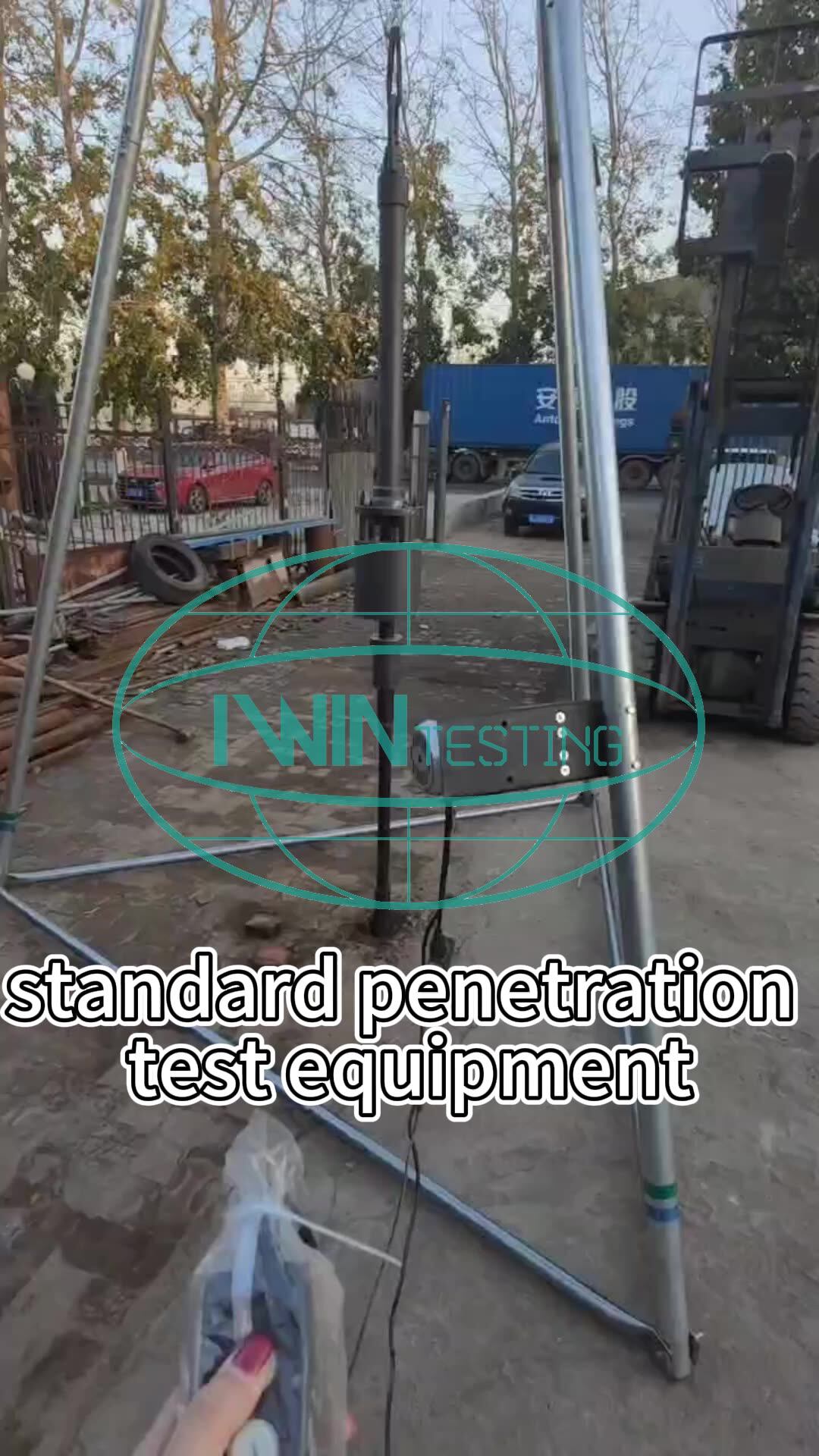
To achieve accuracy, the SPT requires a specific set of tools maintained to precise tolerances. The variability of results in the past was often due to equipment differences, which is why modern 2026 guidelines emphasize calibrated automatic trip hammers over older manual methods.
The Split-Spoon Sampler
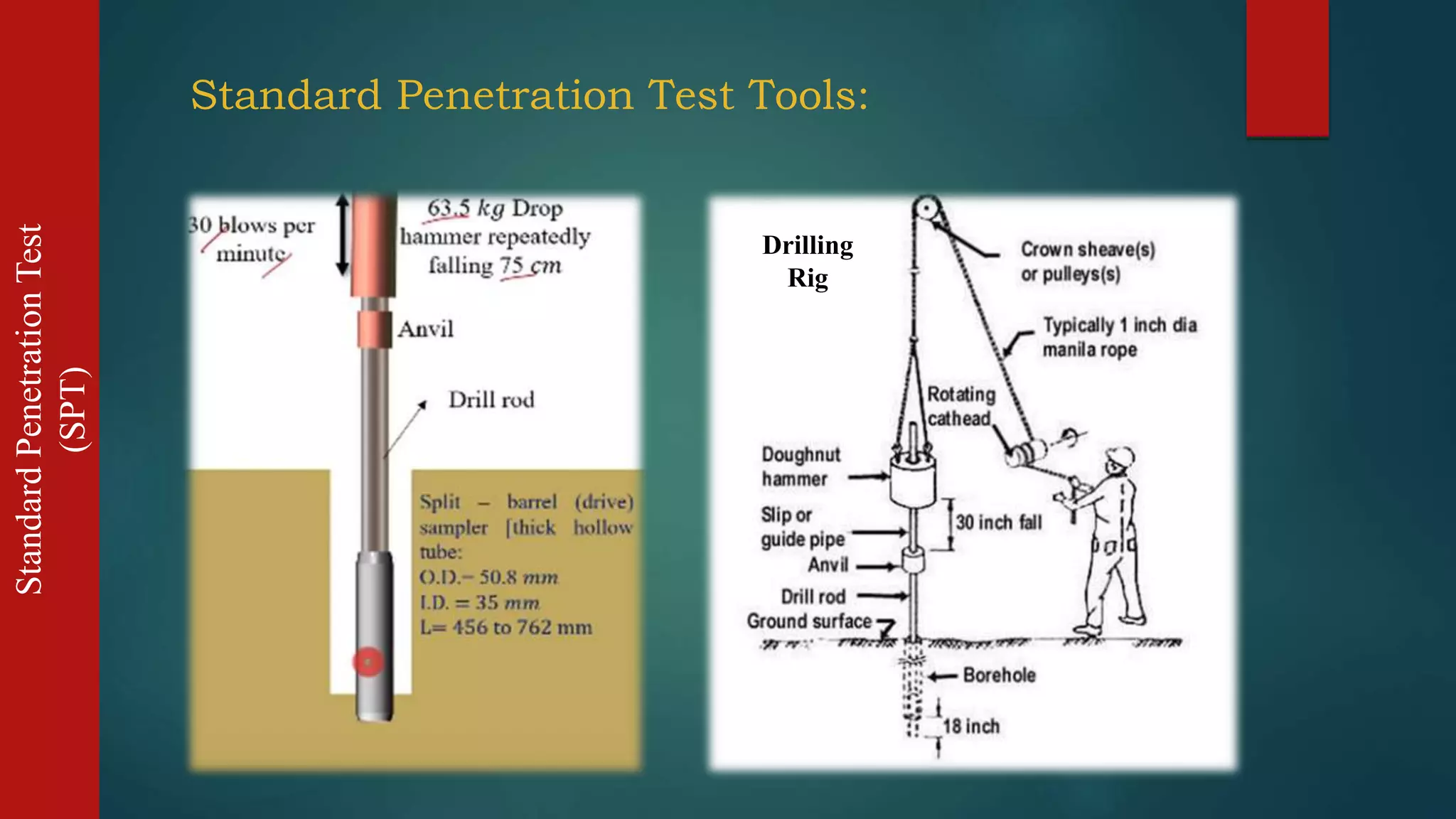
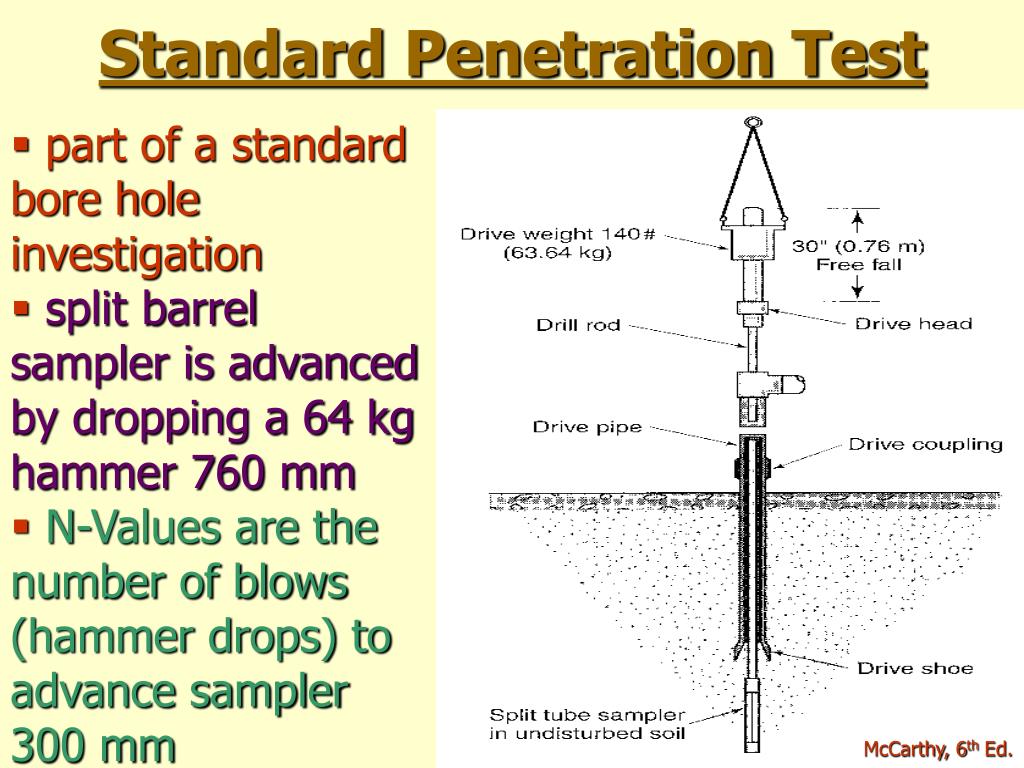
The split-spoon sampler is a thick-walled steel tube that can be split longitudinally. It consists of three main parts: a driving shoe at the bottom, the split barrel itself, and a coupling at the top that connects to the drill rods. The standard dimensions are critical: an outside diameter of 50.8 mm (2 inches) and an inside diameter of 34.9 mm (1.375 inches). This design allows the sampler to collect a disturbed soil sample while it is being driven into the ground.
The Drive Weight Assembly
The energy for the test is provided by a falling weight, commonly referred to as the hammer. The standard weight is 63.5 kg (140 lbs), and it must fall a free-fall distance of 760 mm (30 inches). In contemporary practice, automatic hammers are preferred because they eliminate human error in the drop height and reduce friction, leading to a more consistent energy transfer ratio (ETR).
Standard SPT Equipment Specifications
| Component | Standard Specification | Purpose |
|---|---|---|
| Hammer Weight | 63.5 kg (140 lb) | Provides consistent impact energy. |
| Drop Height | 760 mm (30 in) | Defines the potential energy per blow. |
| Sampler Outer Diameter | 50.8 mm (2.0 in) | Standardizes the displacement area. |
| Sampler Inner Diameter | 34.9 mm (1.375 in) | Allows for sample retention. |
| Drill Rods | Type A or N (Steel) | Transmits energy from surface to sampler. |
| Drive Shoe | Hardened Steel | Penetrates the soil and resists wear. |
The Step-by-Step SPT Field Procedure
Executing an SPT requires precision and adherence to a strict sequence to ensure the resulting N-value is valid for engineering calculations.
1. Boring and Cleaning
A borehole is advanced to the desired testing depth using rotary drilling or auger methods. It is vital that the bottom of the hole is cleaned of all loose debris (slough) before the test begins. If the hole is not clean, the first few blows will reflect the density of the fallen debris rather than the undisturbed soil, leading to an inaccurate reading.
2. Seating the Sampler
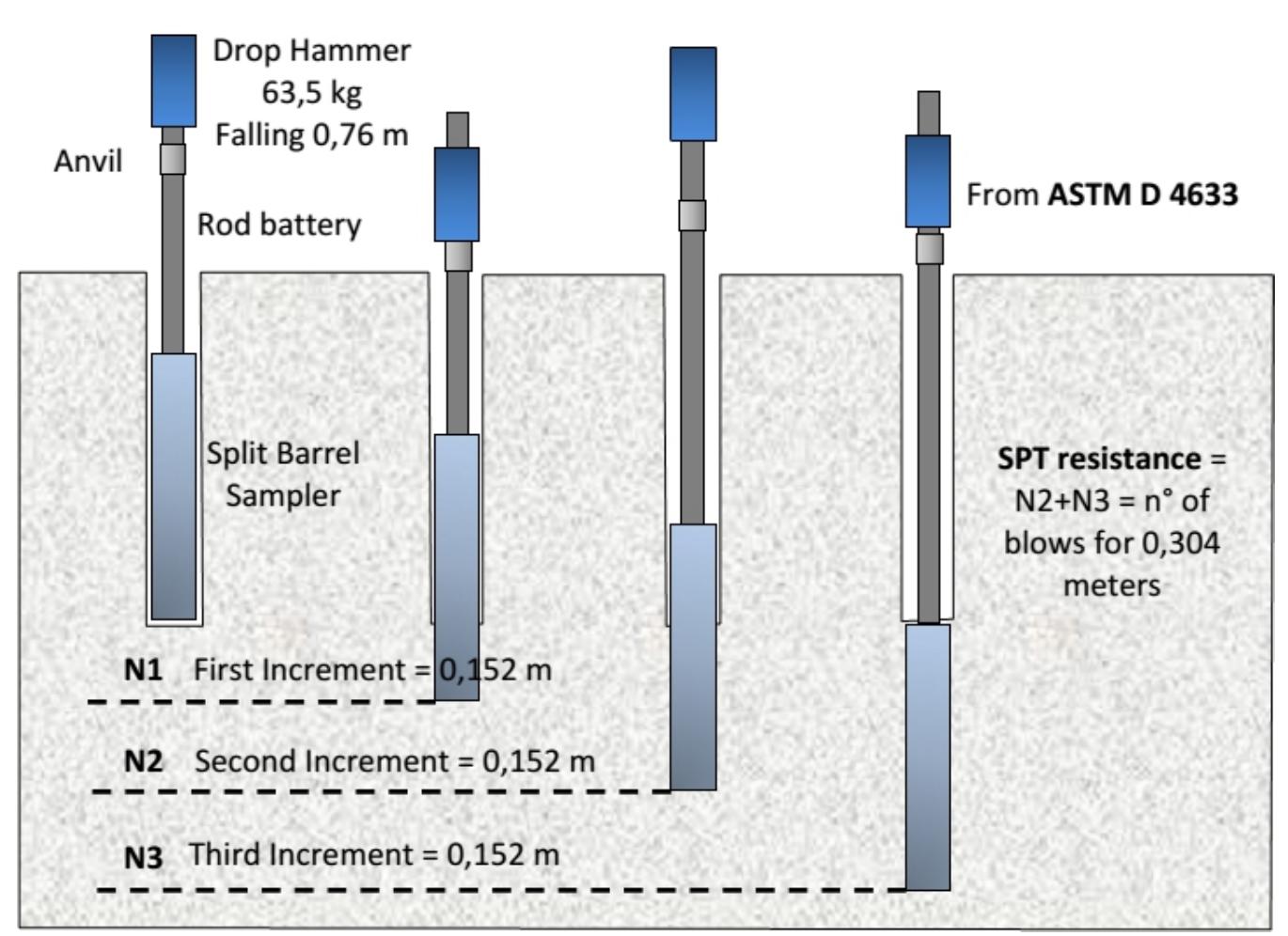
The sampler is lowered to the bottom of the borehole and connected to the drive weight assembly. The sampler is first driven 150 mm (6 inches) into the soil to "seat" it. This initial increment is intended to bypass any soil that might have been disturbed during the drilling process. The blow count for this first increment is recorded but is not included in the final N-value.
3. The Test Increments
The sampler is then driven an additional 300 mm (12 inches). This is divided into two 150 mm (6-inch) increments. The number of blows required for each of these two increments is recorded carefully by the field technician.
4. Calculating the N-Value
The Standard Penetration Resistance, or N-value, is the sum of the blows recorded for the second and third 150 mm increments. For example, if the blow counts were 4 (seating), 6 (second), and 8 (third), the N-value would be 14 ($6 + 8$). If a sampler cannot be driven the full distance due to very hard soil, it is recorded as "refusal" (typically defined as more than 50 blows for a single 150 mm increment).
5. Sample Recovery
Once the driving is complete, the sampler is withdrawn to the surface. The split barrel is opened, and the soil sample is examined. While the sample is "disturbed" (meaning its structure is altered), it is invaluable for identifying the soil type, moisture content, and plasticity in a laboratory.
Understanding N-Value Corrections and Standardizations
A "raw" N-value measured in the field is rarely used directly in design. Various factors, such as the depth of the test and the efficiency of the hammer, can skew the results. To make the data useful for global empirical correlations, engineers apply several correction factors.
Energy Correction ($N_{60}$)
Not all hammers deliver 100% of their theoretical potential energy. Friction in the pulleys or the mechanical release of the hammer reduces the actual energy reaching the rods. Most empirical design formulas are based on a hammer that is 60% efficient. Therefore, the field N-value ($N_{field}$) is corrected using the formula: $N_{60} = N_{field} \times (ER / 60)$ where $ER$ is the measured energy ratio of the specific hammer being used.
Overburden Pressure Correction ($C_N$)
In granular soils, the resistance to penetration increases with depth simply because of the weight of the soil above (confining pressure). To compare a sand layer at 3 meters depth with one at 15 meters, engineers normalize the N-value to a standard effective overburden pressure (usually 100 kPa or 1 ton/sq. ft). This corrected value is often denoted as $(N_1)_{60}$.
Other Adjustments
Other minor corrections include $C_B$ (borehole diameter), $C_S$ (sampler liner usage), and $C_R$ (rod length). In 2026, most geotechnical software automatically applies these corrections based on the field log data to provide a standardized profile of the subsurface.
Applications and Soil Property Correlations
The N-value is a gateway to estimating numerous soil properties that would otherwise require expensive laboratory testing.
Cohesionless Soils (Sands and Gravels)
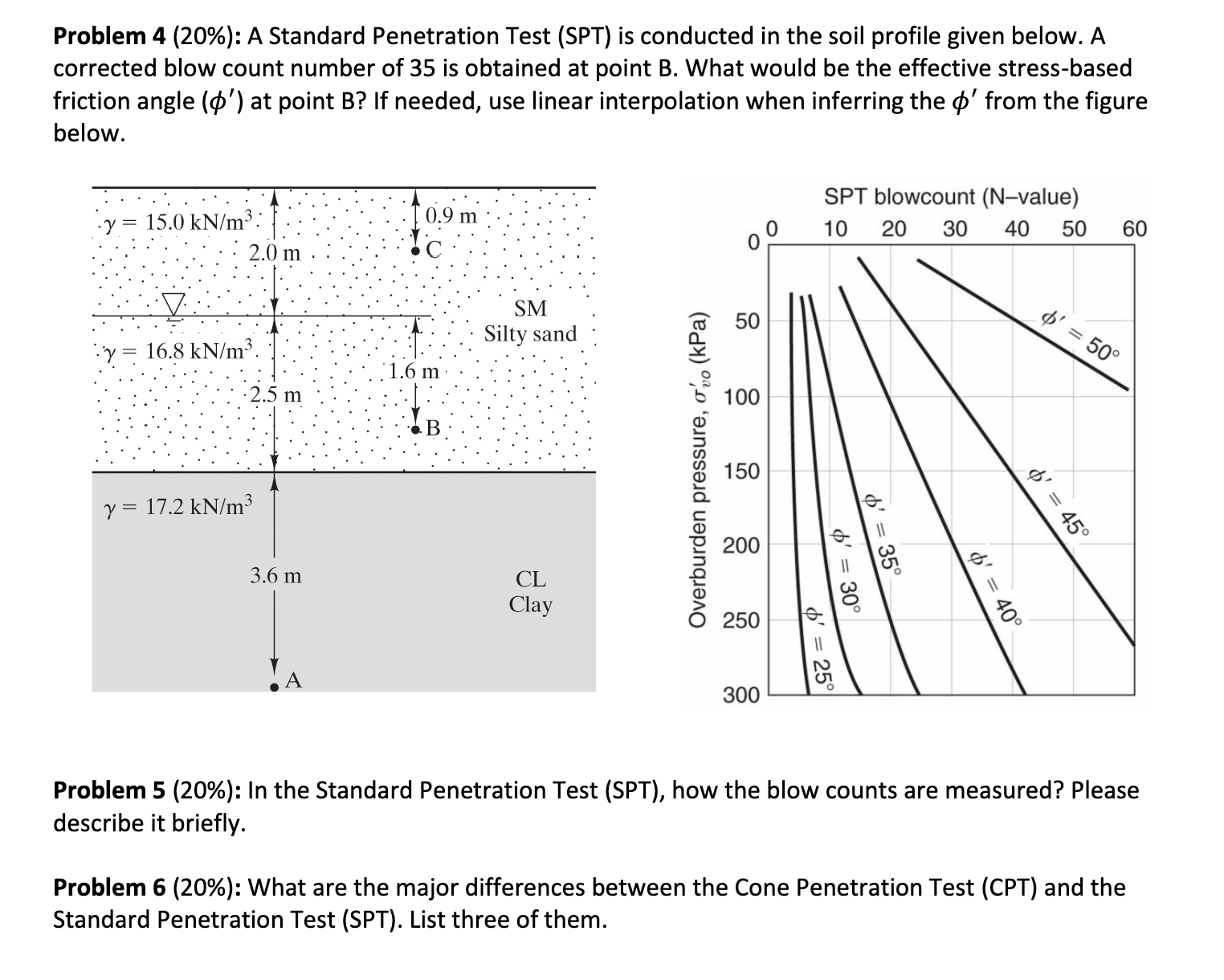
For sandy soils, the SPT is the primary tool for estimating Relative Density ($D_r$) and the Angle of Internal Friction ($\phi$).
- 0–4 blows: Very loose soil (high risk of settlement).
- 10–30 blows: Medium dense soil (generally good for shallow foundations).
- >50 blows: Very dense soil (excellent bearing capacity).
Cohesive Soils (Clays and Silts)
In clays, the SPT is used to estimate Consistency and Undrained Shear Strength ($s_u$). While the Vane Shear Test or UUC laboratory tests are more accurate for clays, the SPT provides a useful preliminary assessment. A very soft clay might have an N-value of 0–2, while a hard clay would exceed 30.
Liquefaction Assessment
One of the most critical uses of SPT data in 2026 is evaluating the risk of soil liquefaction during earthquakes. By comparing $(N_1)_{60}$ values against the Cyclic Stress Ratio (CSR) expected from a seismic event, engineers can determine if the soil will behave like a liquid, which is essential for projects in seismically active zones.
Advantages and Practical Limitations
The Standard Penetration Test has survived for over a century because it offers a unique balance of utility and simplicity. However, it is not a "magic bullet" for all site conditions.
Advantages
- Simplicity and Versatility: The equipment is rugged and can be mounted on various drill rigs, including those used in difficult terrain or over water.
- Physical Sampling: Unlike the Cone Penetration Test (CPT), the SPT provides an actual soil sample. This allows for visual verification and index testing (Atterberg limits, sieve analysis) in the lab.
- Cost-Effectiveness: It is relatively inexpensive compared to specialized pressuremeter or dilatometer tests.
- Massive Database: Decades of existing structures were built using SPT correlations, providing a high level of historical confidence.
Limitations
- High Variability: Results can vary between different operators and drill rigs if not properly calibrated.
- Discontinuous Data: The test only provides data at specific points (e.g., every 1.5m), potentially missing thin layers of weak soil between test depths.
- Coarse Material Interference: In soils with large gravel or cobbles, the sampler shoe may strike a stone, resulting in an artificially high N-value that does not represent the overall soil matrix.
- Disturbed Samples: The samples cannot be used for high-precision consolidation or triaxial strength tests because the driving process destroys the natural soil structure.
Site Safety and Quality Control in 2026
As of 2026, site safety and data integrity are paramount. Geotechnical firms now utilize digital logging systems where N-values are recorded in real-time on tablets and synced to the cloud. This reduces transcription errors and allows senior engineers to monitor the progress of a site investigation from the office.
Safety protocols for SPT involve ensuring all personnel stay clear of the "drop zone" of the hammer. Mechanical guards are now standard on modern rigs to prevent hands or clothing from getting caught in the hoisting lines. Additionally, environmental regulations in 2026 require strict management of drilling fluids to prevent groundwater contamination during the borehole advancement process.
Frequently Asked Questions
What is the difference between an N-value and a corrected N-value?
The N-value is the raw count of blows recorded in the field. A corrected N-value (such as $N_{60}$ or $(N_1)_{60}$) adjusts that raw number to account for hammer efficiency and soil overburden pressure. Engineers use corrected values to ensure design calculations are consistent and based on standardized empirical data.
Can SPT be performed in rock?
Technically, the SPT is intended for soils. When the sampler encounters rock or extremely dense cemented material, it will result in "refusal" (e.g., >50 blows for less than 25mm of penetration). At this point, the SPT is stopped, and the driller typically switches to rock coring methods using diamond-tipped bits to retrieve a core sample.
Why is the seating drive (the first 150mm) ignored?
The first 150mm of the drive is used to seat the sampler into the soil at the bottom of the borehole. This zone is often disturbed by the drilling action or may contain "slough" (debris that fell from the sides of the hole). Ignoring these first 150mm ensures the final N-value represents the undisturbed soil below the borehole floor.
Is CPT better than SPT?
Neither is strictly "better"; they serve different purposes. The Cone Penetration Test (CPT) provides a continuous profile of soil resistance and is faster, but it does not provide a soil sample. SPT is preferred when a physical sample is needed for classification or when the ground contains gravel that would damage a CPT probe. Many modern investigations use both methods to get a complete picture.
How do groundwater levels affect SPT results?
In fine sands or silts below the water table, the act of driving the sampler can create "pore water pressure," which might make the soil appear weaker or denser than it actually is. Engineers often apply a "submerged" correction (Terzaghi and Peck correction) if the N-value is high in saturated fine sands.
Summary and Next Actions
The Standard Penetration Test remains an indispensable tool in the geotechnical engineer’s arsenal. Its ability to provide both a numerical strength index and a physical sample makes it a foundational step for any construction project.
For project managers and developers, the next step after receiving an SPT report is to ensure that the N-values have been properly corrected for hammer energy and that the soil samples have been verified by a qualified laboratory. If your site investigation reveals highly variable N-values or values near refusal, consider augmenting the SPT data with specialized testing like Pressuremeter Tests (PMT) or Borehole Shear Tests to refine your foundation design and potentially reduce construction costs.
Image Gallery