Using Green Day’s "Wake Me Up When September Ends" in a Funeral Service
"Wake Me Up When September Ends" is a deeply appropriate choice for a funeral or memorial service, as it was written by Green Day frontman Billie Joe Armstrong to commemorate the death of his father. Its themes of enduring grief, the p...
"Wake Me Up When September Ends" is a deeply appropriate choice for a funeral or memorial service, as it was written by Green Day frontman Billie Joe Armstrong to commemorate the death of his father. Its themes of enduring grief, the passage of time, and the struggle to move forward after a significant loss resonate with many mourners, making it a staple of modern secular memorial music.
Contents
Selecting the right music is one of the most critical components of planning a funeral service. Music transcends the limitations of spoken eulogies, tapping into the collective emotional state of the attendees. For decades, traditional hymns dominated these spaces, but contemporary selections have become increasingly common. Green Day’s "Wake Me Up When September Ends," released in 2004 on the American Idiot album, has moved beyond its origins as a rock ballad to become a modern anthem for mourning and remembrance.
The Personal History Behind the Lyrics
To understand why "Wake Me Up When September Ends" is such a powerful funeral song, one must first understand its origins. Unlike many songs on the American Idiot album, which served as a political rock opera, this track is intensely personal. Billie Joe Armstrong wrote the song about his father, Andrew Armstrong, who passed away from esophageal cancer on September 1, 1982.
At the time of his father’s death, Billie Joe was only ten years old. The title of the song reportedly comes from a phrase he said to his mother immediately after the funeral; overwhelmed by grief, he retreated to his room and asked her to wake him up when the month—and the immediate, sharp pain of the loss—had passed.
When used in a funeral context in 2026, this backstory adds a layer of profound authenticity. It is not a song written to "sound" sad; it is a song written from the perspective of a child grappling with a life-altering void. For families who have lost a parent, or for those who are witnessing a child deal with loss, the history of the song provides a bridge of shared experience.
Lyrical Analysis for a Memorial Context
The lyrics of the song are repetitive in a way that mimics the cyclical nature of grief. As we look at the specific verses, we can see why they fit different stages of the grieving process:
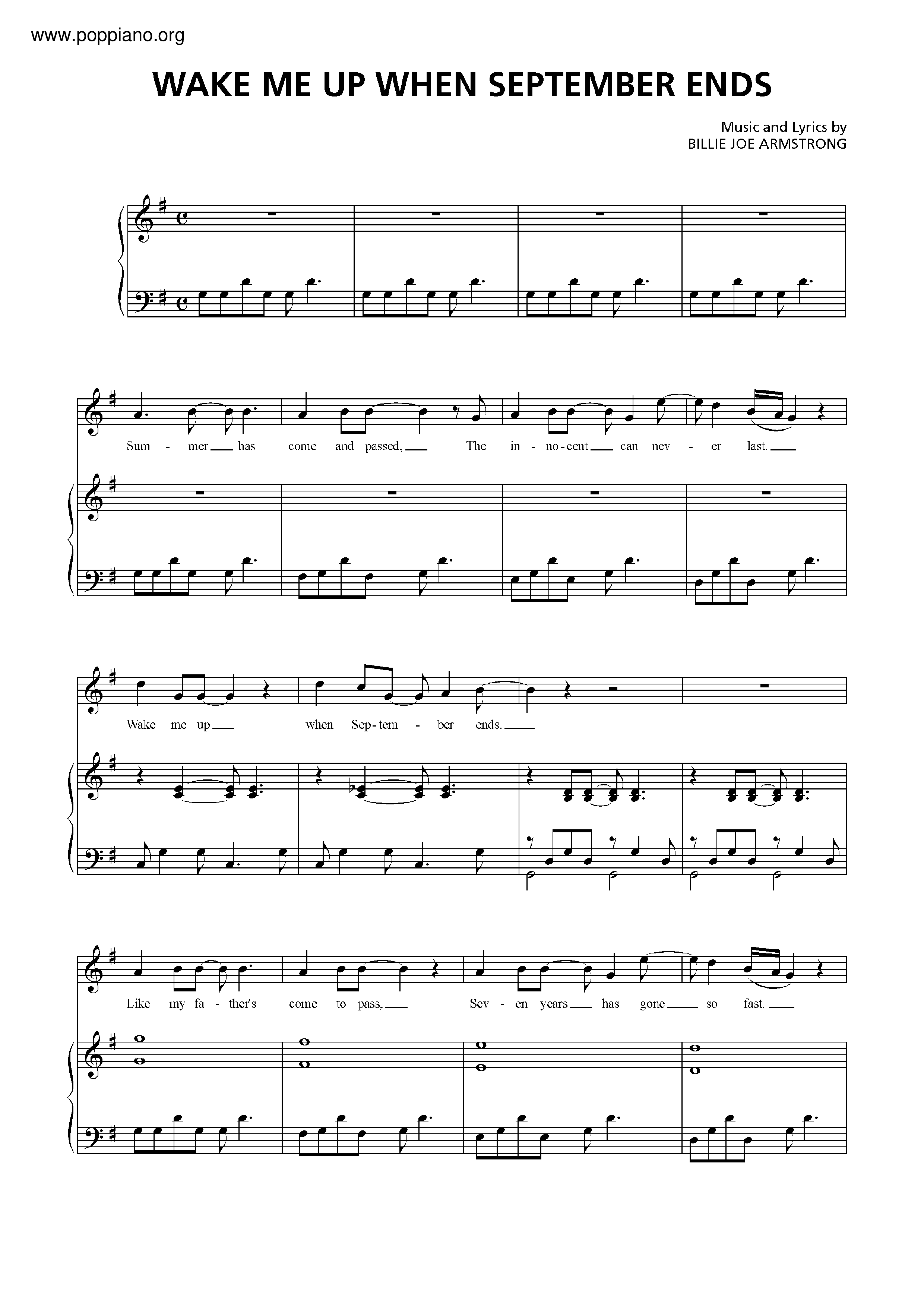
- "Summer has come and passed / The innocent can never last": These opening lines speak to the end of a season of life. In a funeral setting, "summer" often symbolizes the vibrant, active years of the deceased’s life, while "innocence" represents the time before the reality of death became a personal burden for the survivors.
- "Like my fathers come to pass / Seven years has gone so fast": Interestingly, Armstrong wrote the song nearly 20 years after his father's death, but the "seven years" lyric refers to the time between starting the band and the song's completion, or perhaps a specific milestone in his grieving process. In a memorial service, these lines acknowledge the inevitability of death ("come to pass") and the shocking speed with which time moves after someone is gone.
- "As my memory rests / But never forgets what I lost": This is perhaps the most significant line for a funeral. It highlights the duality of healing: the need for the mind to find peace ("rests") while the heart maintains the connection to the deceased ("never forgets").
The song does not offer a "happy ending" or a promise of seeing the person again in a religious sense. Instead, it offers the comfort of acknowledgement. It validates the feeling that sometimes, the world is too heavy to face, and the desire to "sleep through" the pain is a natural human response.
Musical Composition and Tone
The structure of the song makes it versatile for different parts of a memorial service. It begins with a lonely, clean acoustic guitar riff and Armstrong’s vulnerable, understated vocals. This quiet opening is ideal for a processional or a period of silent reflection. It sets a somber, respectful tone that allows the lyrics to be the focal point.
As the song progresses, the arrangement builds. The introduction of drums and distorted electric guitars creates a "swell" of emotion. In musical therapy and funeral planning, this is often referred to as a "cathartic release." The wall of sound provides a space for the congregation to feel the full weight of their sadness, making it an excellent choice for a photo montage or video tribute.
By the end, the song returns to its quieter roots, providing a sense of closure. This musical "arc"—from quiet mourning to a loud expression of pain and back to a reflective state—mirrors the psychological journey of a well-structured funeral service.
Practical Considerations for 2026 Services
In the 2026 funeral landscape, technology and personalized experiences are at the forefront of memorial planning. If you are considering "Wake Me Up When September Ends," there are several technical and logistical factors to keep in mind.
Audio Quality and Formatting
Most modern funeral homes are equipped with high-fidelity digital audio systems. Ensure that the version of the song you provide is a high-bitrate file (such as a 320kbps MP3 or a FLAC file) rather than a low-quality stream. If the service is being held in a traditional chapel with high ceilings, the "rock" portion of the song (the middle section) can sometimes become "muddy" or overly loud. It is essential to conduct a sound check to balance the volume between the acoustic verses and the high-energy chorus.
Licensing and Streaming
If the funeral is being live-streamed—a standard practice in 2026 to accommodate distant relatives—copyright becomes an issue. Platforms like YouTube and Facebook often flag or mute copyrighted music. To avoid this, funeral directors often use specialized streaming platforms (like Forget Me Not or Tribute Archive) that have built-in licensing agreements with performance rights organizations like ASCAP, BMI, and SESAC. Always verify that your chosen venue has the "Mechanical and Public Performance" licenses required to play the song during a broadcast.
Alternative Versions
Depending on the atmosphere of the service, the original Green Day recording might feel too "aggressive" for some families. There are several alternatives to consider:
| Version Type | Best Used For | Emotional Impact |
|---|---|---|
| Original Studio Version | Video tributes and celebrations of life. | Cathartic, powerful, and iconic. |
| Acoustic Solo Version | Casket processing or recessional. | Intimate, raw, and deeply personal. |
| Piano Instrumental | Background music during guest arrival. | Sophisticated, subtle, and calming. |
| String Quartet Cover | Formal or traditional chapel services. | Elegant, timeless, and mournful. |
| Live Version (Bullet in a Bible) | For a dedicated Green Day fan. | High energy; feels like a shared experience. |
Addressing the "September" Ambiguity
A common question arises: Can you play this song if the person didn't die in September?
While the song is tied to a specific month in Armstrong's life, its meaning has expanded significantly over the last two decades. It became an accidental anthem for the victims of Hurricane Katrina (which occurred in late August and early September 2005) and has often been associated with the 9/11 terror attacks due to the timing of its popularity.
In a funeral context, "September" acts as a metaphor for any period of darkness or the "winter of the soul." Most attendees will not be literal about the month; they will focus on the sentiment of wanting to wake up once the hardest part of the journey is over. If the deceased passed away in September, the song takes on an even more profound, literal significance, but it is by no means a requirement.
Integrating the Song into the Program
If you decide to use "Wake Me Up When September Ends," consider how to introduce it. A funeral celebrant or minister can provide context by saying:
"We will now take a moment to reflect while listening to a song that speaks to the enduring nature of memory. Written by Billie Joe Armstrong about the loss of his father, 'Wake Me Up When September Ends' reminds us that while time moves quickly, our love and our memories rest but never forget."
This brief introduction helps older attendees who may not be familiar with Green Day understand why a "rock song" is being played in a sacred or formal space. It bridges the generational gap and focuses the audience on the lyrical intent.
FAQs
Why is "Wake Me Up When September Ends" considered a funeral song?
It was written by Billie Joe Armstrong specifically about the death of his father. The lyrics deal with the themes of childhood loss, the anniversary of a death, and the heavy burden of grief, making it naturally suited for memorial services.
Is the song about the military or Hurricane Katrina?
While the music video features a story about a couple separated by the Iraq War, and the song became associated with Hurricane Katrina relief efforts, its original and primary meaning is about the death of the singer's father in 1982.
Can I play this in a Catholic or traditional church?
This depends entirely on the specific parish and the priest. Some conservative churches only allow liturgical music or hymns. However, many modern churches allow one "secular" song during the reflection period or the recessional. Always consult with the clergy before finalizing your music list.
What if the deceased wasn't a fan of rock music?
If the person preferred classical or softer music, a string quartet or solo piano arrangement of the song can maintain the emotional resonance of the melody without the "rock" elements of the original Green Day recording.
Are there any parts of the song I should edit out?
The song is generally "clean" and does not contain profanity. However, if the service is very short, a funeral director can create a "radio edit" that fades out before the final instrumental bridge to keep the service moving according to the schedule.
Final Recommendation
When planning a service in 2026, the goal is to create a "healing ritual" that feels authentic to the person who has passed and the people left behind. If "Wake Me Up When September Ends" holds meaning for your family, do not hesitate to include it. Its history of personal loss and its powerful musical build make it a formidable tool for navigating the difficult emotions of a final goodbye. Ensure you choose the right version (original vs. instrumental) based on the venue’s acoustics and the overall tone you wish to set.
Image Gallery