Understanding What Is Forensic Science and Technology: Disciplines, Tools, and Legal Applications
Forensic science and technology is the application of multi-disciplinary scientific methods, physical laboratory analysis, and digital technologies to investigate crimes, analyze physical or digital evidence, and establish facts in leg...
Forensic science and technology is the application of multi-disciplinary scientific methods, physical laboratory analysis, and digital technologies to investigate crimes, analyze physical or digital evidence, and establish facts in legal proceedings. It translates raw crime scene evidence into objective, legally admissible data used by law enforcement, judicial systems, and legal teams.
Contents
Defining Forensic Science vs. Forensic Technology
While frequently referenced together, forensic science and forensic technology represent distinct yet interconnected aspects of modern criminalistics and civil litigation. Understanding the operational boundaries between these two fields clarifies how physical evidence transitions from a crime scene to an admissible court exhibit.
- CRIME SCENE / EVIDENTIARY SOURCE
- FORENSIC SCIENCE: Scientific Principles & Laboratory Methodologies (e.g., DNA, GC-MS, Pathology)
- FORENSIC TECHNOLOGY: Hardware, Software & Automated Data Systems (e.g., CODIS, AFIS, EnCase)
- EXPERT INTERPRETATION & TESTIMONY (Evaluated under Frye / Daubert Admissibility)
Forensic Science: The Foundational Disciplines
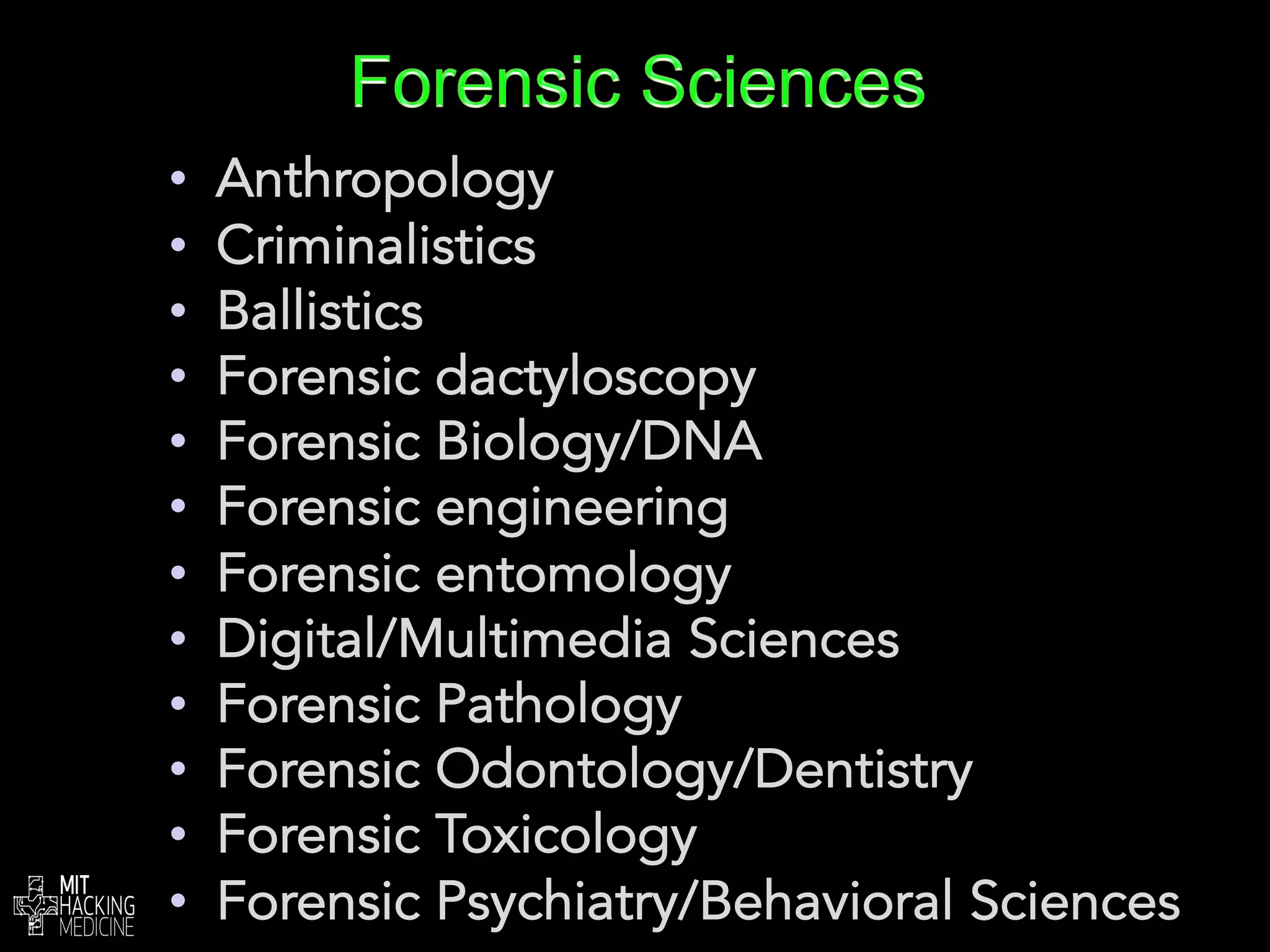
Forensic science relies on established scientific disciplines—biology, chemistry, physics, pathology, and anthropology—to analyze physical evidence. Its core objective is to identify substances, establish biological profiles, evaluate tissue samples, and determine causality. Scientists in this domain apply standardized chemical reactions, microscopic examinations, and genetic sequencing to extract empirical truths from biological fluids, trace fibers, soil samples, and human remains.
Forensic Technology: The Analytical and Computational Enablers
Forensic technology encompasses the specialized hardware, software, automated algorithms, and digital infrastructure designed to extract, process, store, and cross-reference evidentiary material. This includes physical detection hardware (such as 3D laser scanners and comparison microscopes), high-throughput analytical devices (such as mass spectrometers), automated database networks (such as DNA and fingerprint indices), and specialized digital forensics software capable of reconstructing deleted computational data.
Core Disciplines of Forensic Science and Technology
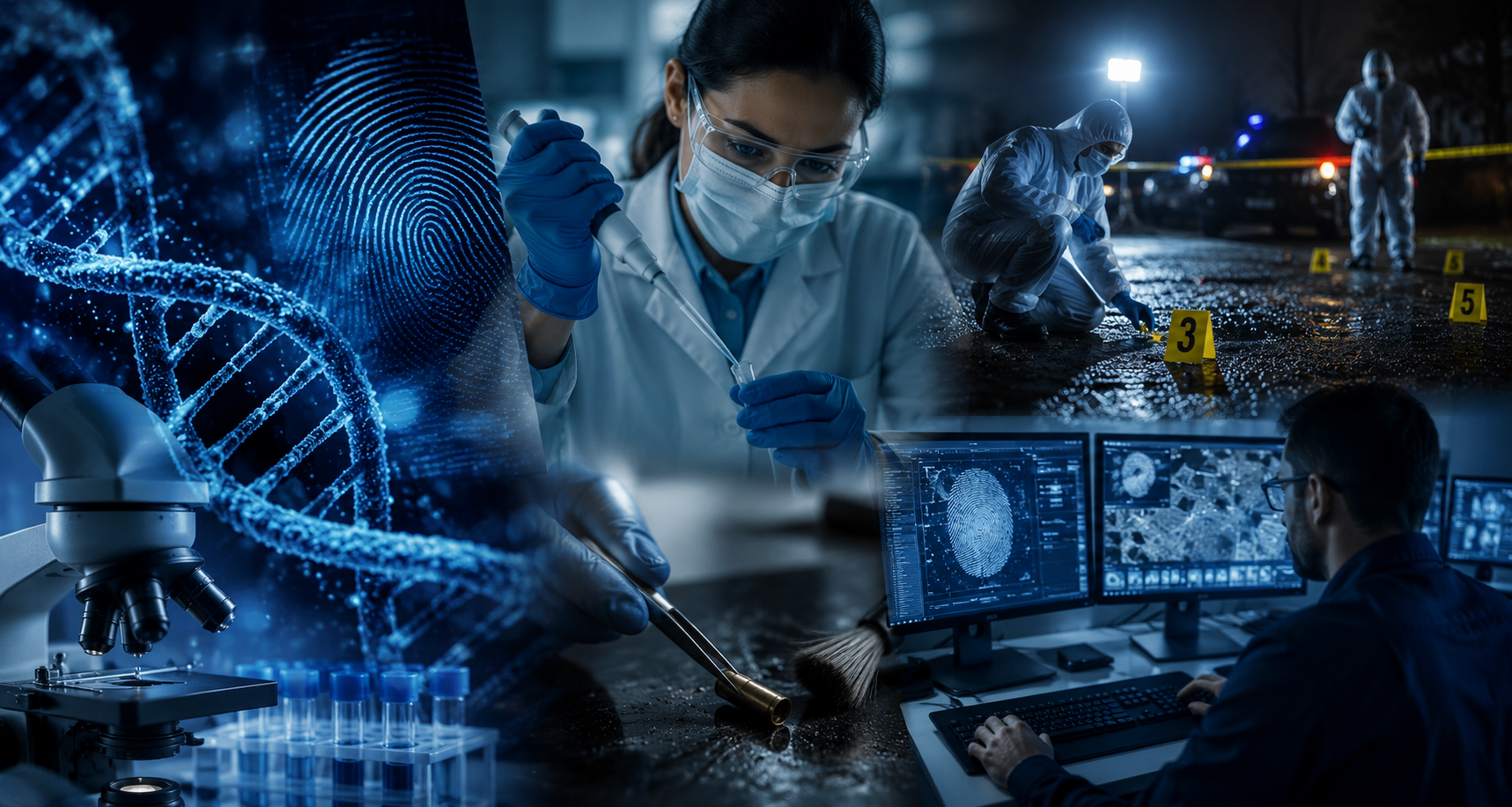
Modern forensic laboratories operate through specialized departments. Each discipline applies distinct laboratory techniques, equipment, and validation standards to process specific forms of evidence.
1. Biological and Chemical Sciences
- DNA Profiling and Genetics: Modern genetic analysis relies on Short Tandem Repeat (STR) profiling and Next-Generation Sequencing (NGS). These technologies analyze nuclear and mitochondrial DNA from biological matrixes—including blood, saliva, semen, and touch-DNA skin cells—to establish identity with statistical certainty.
- Forensic Toxicology: Toxicologists analyze bodily fluids (blood, urine, vitreous humor) and tissue samples to detect poisons, illicit narcotics, alcohol, and prescription pharmaceuticals. They use instrumental techniques such as Gas Chromatography-Mass Spectrometry (GC-MS) and Liquid Chromatography-Tandem Mass Spectrometry (LC-MS/MS) to establish precise chemical concentrations.
- Trace Evidence Analysis: Chemistry specialists analyze minute physical materials transferred during a crime, including paint chips, glass fragments, synthetic fibers, soil, and explosives residue. Equipment like Fourier-Transform Infrared Spectroscopy (FTIR) and Scanning Electron Microscopy with Energy-Dispersive X-ray Spectroscopy (SEM-EDS) helps characterize these micro-samples.
2. Physical and Pattern Evidence
- Dactyloscopy (Fingerprint Analysis): Friction ridge analysis evaluates latent, patent, and plastic prints left on surfaces. Automated systems compare minute ridge characteristics (minutiae) against database records, which latent print examiners then visually verify.
- Firearms and Toolmark Identification: Examiners evaluate striations and impressions left on fired bullets, cartridge cases, and structural surfaces. Forensic ballistics technology uses automated 3D surface profiling to match projectiles to specific firearm barrels or identify marks created by mechanical tools.
- Forensic Pathology and Odontology: Pathologists conduct autopsies to establish the cause, mechanism, and manner of death. Forensic odontologists utilize dental records, bite mark dynamics (subject to strict admissibility standards), and radiographic imaging to identify unidentified human remains.
3. Digital and Computational Forensics
- Computer and Mobile Device Forensics: Investigators extract volatile and non-volatile data from hard drives, solid-state storage, mobile smartphones, and embedded chips. They use hardware write-blockers to preserve drive integrity while extracting system logs, deleted artifacts, hidden directories, and encrypted messaging databases.
- Network and Cloud Forensics: Cyber forensic specialists analyze network traffic logs, cloud storage architecture, server transactions, and packet captures to reconstruct cyberattacks, data breaches, and unauthorized system access.
- Forensic Audio, Video, and Image Analysis: Multi-media analysts process surveillance footage, audio recordings, and digital photography. They apply mathematical algorithms to clarify degraded media, perform authenticated frame-by-frame analysis, and verify metadata integrity to rule out digital tampering.
Key Technological Systems Used in Forensic Investigations
Technological innovation has elevated forensic work from manual microscopic review to high-throughput, automated, and algorithmically validated processing.
- Physical / Digital Evidence Input
- Analytical Systems
- GC-MS / LC-MS/MS
- FTIR Spectrometry
- SEM-EDS Micro-Scope
- Automated Databases
- NDIS / CODIS (DNA)
- NGI / AFIS (Prints)
- NIBIN (Ballistics)
- Digital Tools
- Write Blockers
- Bit-Stream Images
- Hash Verification
- Analytical Systems
- Admissible Forensic Output / Court
Next-Generation Sequencing (NGS)
Traditional Short Tandem Repeat (STR) profiling targets short, specific regions of non-coding DNA. Next-Generation Sequencing (NGS)—also known as Massively Parallel Sequencing (MPS)—allows forensic laboratories to process degraded, low-quantity, or mixed DNA samples simultaneously. NGS provides both phenotypic markers (such as eye, hair, and skin pigmentation) and biogeographical ancestry markers, providing investigative leads when a direct database match is unavailable.
Automated Database Networks
Forensic technology relies on national and international cross-referencing databases maintained by law enforcement entities:
- CODIS (Combined DNA Index System): Managed by the Federal Bureau of Investigation (FBI CODIS Standards), this platform links local, state, and national DNA profiles to match DNA from unknown crime scene samples to convicted offenders, arrestees, and missing persons.
- NGI (Next Generation Identification): Replacing the legacy IAFIS system, NGI provides advanced biometric identification capabilities, integrating biometrics, latent palm prints, facial recognition, and scar/mark/tattoo imagery.
- NIBIN (National Integrated Ballistic Information Network): Operated by the Bureau of Alcohol, Tobacco, Firearms and Explosives (ATF), NIBIN captures 3D digital images of ballistic evidence (spent cartridge casings) to connect disparate shooting incidents across multiple jurisdictions.
Hardware-Level Digital Forensics Tools
Digital forensic software relies on hardware-level integrity tools. Physical forensic hardware write-blockers prevent write operations from modifying storage media connected to an investigative workstation. Forensic software platforms produce bit-stream, sector-by-sector disk images, creating exact forensic duplicates without altering system metadata or file allocation tables.
The Step-by-Step Forensic Evidence Workflow
To ensure scientific conclusions withstand court scrutiny, forensic investigations follow a strict, standardized operational pipeline.
- STEP 1: SCENE SECURING & PHYSICAL IDENTIFICATION
- Standardized perimeter boundaries established; visual mapping begun.
- STEP 2: EVIDENCE DOCUMENTATION & PRESERVATION
- Chain of custody logs generated; cryptographic hashing for digital data
- STEP 3: LABORATORY PROCESSING & INSTRUMENTAL ANALYSIS
- Execution of validated methods (GC-MS, STR Profiling, SEM-EDS).
- STEP 4: EXPERT EVALUATION, REPORTING & COURT TESTIMONY
- Peer-reviewed reports presented under Frye or Daubert guidelines.
Step 1: Crime Scene Securing and Evidence Identification
First responders and Crime Scene Investigators (CSIs) secure the physical perimeter to eliminate contamination. CSIs map the location using 3D laser scanners, photogrammetry, and structured photography before collecting physical items.
Step 2: Evidence Documentation and Chain of Custody
Every piece of physical or digital evidence receives a unique identifier, an index label, and a chain-of-custody tracking log. The chain of custody documents every individual who handles, transfers, analyzes, or stores the evidence. For digital evidence, examiners compute cryptographic hash values (such as SHA-256) immediately upon acquisition; any change in the hash value indicates potential evidence alteration or corruption.
Step 3: Laboratory Processing and Instrumental Analysis
Evidence is dispatched to accredited forensic laboratories. Analysts use validated testing methods, calibrated machinery, positive/negative controls, and blind proficiency standards. For biological material, analysts extract DNA, quantify it via PCR (Polymerase Chain Reaction), and profile it. For chemical evidence, technicians perform extractions and run chromatographic separations.
Step 4: Technical Review, Reporting, and Expert Testimony
Once testing is complete, an independent analyst performs a peer review of the data, methodology, and interpretation. The primary scientist then writes an official forensic report outlining the analytical methods used, results, and statistical evaluations. Finally, the expert witness provides testimony in judicial proceedings, defending their methodologies under cross-examination.
Comparison: Traditional Physical Forensics vs. Digital Forensics
The modern investigative environment balances biological/physical evidence with electronic/digital evidence. The following table contrasts these two primary domains:
| Parameter / Dimension | Physical and Biological Forensics | Digital and Cyber Forensics |
|---|---|---|
| Primary Evidence Types | Blood, saliva, latent prints, spent shell casings, paint chips, hair, drugs. | Solid-state drives, mobile RAM, network logs, encrypted cloud backups, video files. |
| Primary Instruments | Comparison microscopes, GC-MS, LC-MS/MS, Real-Time PCR thermal cyclers. | Write-blockers, memory capture cards, analytical suites (EnCase, FTK, Cellebrite). |
| Verification Method | Quality controls, reference standards, statistical population frequency (e.g., random match probability). | Cryptographic hash verification (MD5, SHA-256), bit-stream verification. |
| Destruction / Degradation Risk | Environmental decay, biological rot, chemical contamination, improper storage temperature. | Magnetic fields, remote wipe commands, file overwriting, solid-state garbage collection (TRIM). |
| Governing Legal Frameworks | Fourth Amendment search rules, physical search warrants, statutory chain of custody rules. | Stored Communications Act (SCA), Wiretap Act, Rule 41 warrants, digital search scope limits. |
| Key Processing Challenge | Low-quantity, highly degraded, or complex multi-source mixtures. | Unencrypted volatility, proprietary operating system artifacts, massive data volumes. |
Admissibility Standards and Ethical Challenges
Forensic science and technology face rigorous legal scrutiny. Scientific evidence must satisfy strict legal standards before a judge allows its presentation to a jury.
The Frye and Daubert Legal Standards
In US jurisdictions, the admissibility of expert scientific testimony relies primarily on two legal precedents:
- The Frye Standard (Frye v. United States): Requires that the scientific technique, procedure, or principle be "generally accepted" within the relevant scientific community.
- The Daubert Standard (Daubert v. Merrell Dow Pharmaceuticals): Grants the trial judge a gatekeeping role to evaluate whether the methodology is scientifically valid and applicable. Under Federal Rule of Evidence 702 and Daubert, courts evaluate:
- Whether the theory or technique can be (and has been) tested.
- Whether the technique has been subjected to peer review and publication.
- The known or potential error rate of the method.
- The existence and maintenance of operational standards.
- General acceptance within the relevant scientific community.
The National Institute of Standards and Technology (NIST Organization of Scientific Area Committees) publishes technical guidance to maintain standardized practices across forensic domains.
Ethical Considerations and Bias Mitigation
- Cognitive and Confirmation Bias: Contextual bias occurs when an analyst receives non-forensic details about a suspect or case that subtly influences their interpretation of ambiguous data. Forensic laboratories use blind testing protocols to minimize subjective interpretation.
- Database Privacy and Genetic Genealogy: Investigative Genetic Genealogy (IGG) cross-references unknown crime scene DNA profiles against public consumer genealogy platforms. This practice has resolved cold cases, but it raises important questions regarding consumer privacy, third-party consent, and familial search parameters.
Education, Professional Standards, and Career Paths
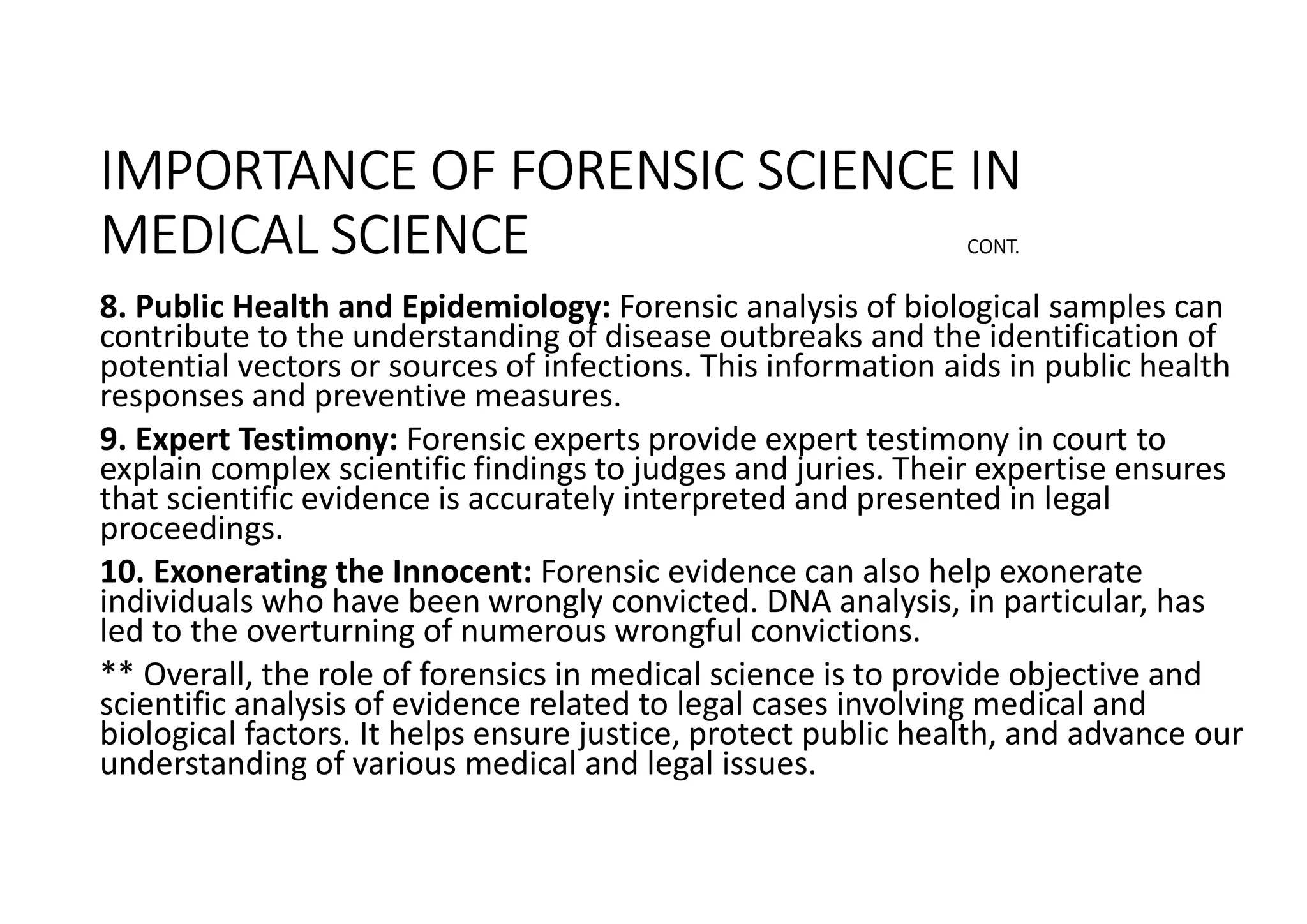
Careers in forensic science and technology require rigorous scientific education, specialized training, and commitment to objective, technical accuracy.
- B.S. in Chemistry / Biology / CS
- FEPAC-Accredited Graduate Program
- Board Certification (ABC / CCE)
- Practicing Forensic Scientist / Specialist
- Board Certification (ABC / CCE)
- FEPAC-Accredited Graduate Program
- Agency Apprentice / Internship
- Board Certification (ABC / CCE)
- Practicing Forensic Scientist / Specialist
- Board Certification (ABC / CCE)
Academic Prerequisites
- Physical Forensic Laboratory Analysts: Typically require a Bachelor of Science (B.S.) in chemistry, biochemistry, biology, or forensic science. Advanced roles often prefer a Master of Science (M.S.) in Forensic Science from an institution accredited by the Forensic Science Education Programs Accreditation Commission (FEPAC).
- Digital Forensic Analysts: Typically require a degree in Computer Science, Cybersecurity, Information Technology, or Digital Forensics. Coursework emphasizes networking protocols, computer architecture, assembly language, operating system internals, and cryptography.
Professional Certifications
Professional credentials validate an analyst's competencies, adherence to ethical codes, and technical mastery:
- American Board of Criminalistics (ABC): Offers certifications across comprehensive criminalistics, molecular biology, and drug analysis.
- International Association for Identification (IAI): Provides certifications in latent prints, crime scene investigation, bloodstain pattern analysis, and forensic photography.
- Certified Computer Examiner (CCE) / EnCase Certified Examiner (EnCE): Industry-standard credentials for digital forensics professionals demonstrating expertise in electronic evidence collection and media analysis.
Frequently Asked Questions
What is the primary difference between a crime scene investigator and a forensic scientist?
A Crime Scene Investigator (CSI) works primarily in the field to secure, document, measure, and collect physical evidence from a crime scene. A forensic scientist typically works within an accredited laboratory environment, performing chemical, biological, physical, or digital analyses on evidence collected by CSIs.
How does digital forensics preserve original data from modification?
Digital forensic specialists use physical hardware write-blockers that intercept write commands at the controller level, preventing any alteration to the source drive. They create an exact, sector-by-sector copy (a bit-stream duplicate image) and verify that the original and copy match using cryptographic hash algorithms like SHA-256.
Are all traditional forensic methods considered equally reliable in court?
No. Empirical studies, including landmark reports by the National Academy of Sciences (NAS) and the President's Council of Advisors on Science and Technology (PCAST), distinguish objective, instrument-based methods (like DNA profiling and GC-MS chemical analysis) from pattern-matching disciplines (like bite-mark identification or microscopic hair comparison), which carry higher subjective error rates and face stricter court challenges.
How are artificial intelligence and machine learning used in forensic science?
AI algorithms process complex datasets to highlight potential matches in high-volume environments. Applications include accelerating video frame comparisons, parsing deep directory logs, filtering noise out of degraded audio files, and improving candidate prioritization in automated fingerprint and firearm databases. Human forensic experts review and verify all AI-generated candidates before issuing conclusions.
What standard governs the quality management of forensic laboratories?
Forensic laboratories maintain operational compliance under the ISO/IEC 17025 international standard. This framework mandates strict calibration procedures, documented technical methods, robust quality assurance controls, continuous proficiency testing, and regular external auditing by recognized accrediting bodies.
Recommended Next Steps for Legal Professionals and Practitioners
To effectively integrate or evaluate forensic evidence within legal proceedings or corporate investigations, consider taking these practical steps:
- Verify Laboratory Accreditation: Ensure that the testing facility operates under active ISO/IEC 17025 accreditation with a scope of testing that specifically covers the applied disciplines.
- Audit the Chain of Custody: Request complete, uninterrupted chain-of-custody logs, including physical transfer signatures, digital access logs, and storage environment condition records.
- Review Raw Analytical Data: Examine original instrument outputs—such as DNA electropherograms, GC-MS spectrographic peaks, or complete digital acquisition logs—rather than relying solely on summary reports.
- Confirm Standard Method Validation: Verify that the laboratory uses validated testing procedures that comply with current NIST OSAC standards and have known error rates established through peer-reviewed research.
Image Gallery