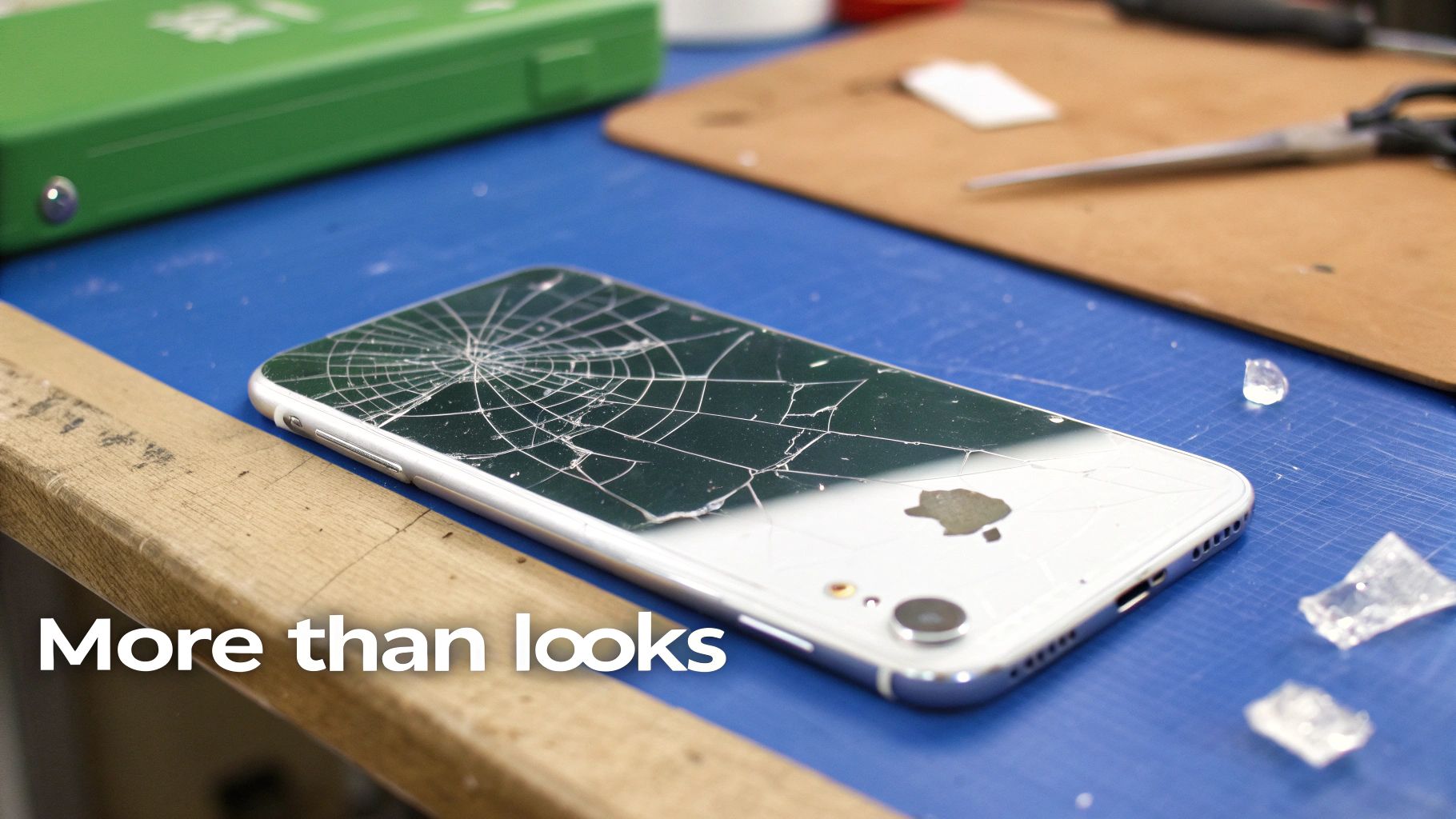
Why the iPhone 11 Back Glass Repair Costs More Than You Think
Replacing a shattered rear panel on an iPhone 11 often costs far more than expected because Apple engineered the device with the rear glass permanently fused to the internal structural frame. Official out-of-warranty repairs require re...
Replacing a shattered rear panel on an iPhone 11 often costs far more than expected because Apple engineered the device with the rear glass permanently fused to the internal structural frame. Official out-of-warranty repairs require replacing the entire rear enclosure rather than a single sheet of glass, pushing official repair costs close to the remaining market value of the phone.
Contents
The Engineering Design Behind High iPhone 11 Repair Costs
When users drop an iPhone 11 and shatter the back glass, the initial expectation is often that a repair technician can simply remove the broken panel and glue down a new piece of glass, similar to replacing a cracked front display. However, the internal architecture of the iPhone 11 generation—encompassing the standard iPhone 11, iPhone 11 Pro, and iPhone 11 Pro Max—makes a quick panel swap impossible through standard repair protocols.
Apple designed the chassis of the iPhone 11 series around a central structural housing made of aluminum (on the standard iPhone 11) or stainless steel (on the Pro models). During factory manufacturing, the rear glass panel is secured to this metal frame using high-strength industrial epoxy, cold-welded components, and alignment brackets.
- iPhone 11 Rear Panel
- Outer Ion-Strengthened Glass Sheet
- High-Strength Industrial Epoxy & Laser Weld Bond
- Structural Aluminum / Stainless Steel Mid-Frame
- Integrated Qi Wireless Charging Coil & Flex Cables
Because this bond is designed for structural rigidity and IP68 dust- and water-resistance rather than modular disassembly, the rear glass cannot be peeled away cleanly without specialized industrial processes.
The Shift to Modular Back Glass in Later Generations
To understand why iPhone 11 back glass replacement is disproportionately expensive, it helps to contrast it with newer iPhone architectures.
- iPhone 11 Series (2019 Architecture): Unibody enclosure design. The back glass is permanently fused to the perimeter frame and interior support structure.
- iPhone 14 / 15 / 16 Series: Removable back glass design. Apple redesigned the internal chassis so the rear glass acts as an independent panel attached with accessible fasteners and light adhesive.
Because the iPhone 11 lacks this modern modular design, official service centers cannot replace only the glass. Fixing the back panel officially requires disassembling the entire device and transferring the display, camera system, logic board, and battery into a brand-new rear enclosure chassis.
Official Apple Repair Costs vs. AppleCare+ Coverage
Because official service requires replacing the entire rear chassis assembly, Apple classifies back glass damage on the iPhone 11 under its flat-rate Other Damage repair category when out of warranty.
| Model | AppleCare+ Deductible | Out-of-Warranty Fee |
|---|---|---|
| iPhone 11 | $29 | ~$399 |
| iPhone 11 Pro | $29 | ~$549 |
| iPhone 11 Pro Max | $29 | ~$599 |
Out-of-Warranty Pricing Reality
For an out-of-warranty base iPhone 11, Apple's official enclosure replacement fee historically sits around $399, while the iPhone 11 Pro and iPhone 11 Pro Max reach $549 and $599 respectively.
When evaluating these repair fees against the secondary market value of an iPhone 11, the financial dilemma becomes clear. An out-of-warranty official repair often costs as much as—or more than—purchasing a fully functional refurbished device from a higher product generation.
The Impact of AppleCare+ Coverage
If a user maintained active AppleCare+ coverage on their device, the expense drops dramatically. Under AppleCare+, damage to the rear glass is covered under a standardized service fee of $29. However, because AppleCare+ plans typically run for two to three years from the original device purchase date, the vast majority of iPhone 11 units in active service operate without active AppleCare+ policy coverage, exposing owners to full out-of-warranty pricing.
Independent Repair Options: Methods, Costs, and Technical Risks
Faced with steep official repair fees, many device owners turn to independent repair shops. Third-party facilities offer back glass restoration at significantly lower prices—typically ranging from $100 to $180—by using methods that bypass full enclosure replacement. However, these techniques carry distinct technical trade-offs.
| Specialized Fiber Laser Machines | Manual Heat & Mechanical Pry |
|---|---|
| • Vaporizes epoxy layer behind glass automatically• Reduces manual scraping time• Preserves structural alignment | • Uses heat gun (200°C–300°C)• Requires manual glass scraping• Higher risk of thermal stress to battery and internal flex cables |
Method 1: High-Precision Fiber Laser Separation
The most reliable third-party repair method involves high-precision fiber laser machines designed specifically for smartphone repair.
- Alignment: The technician places the shattered iPhone inside a enclosed laser workstation programmed with the exact dimensional CAD layout of the iPhone 11 chassis.
- Adhesive Vaporization: The high-frequency laser passes over the rear glass, penetrating the transparent or colored surface to burn away and vaporize the underlying dark epoxy adhesive layer without damaging the metal frame.
- Glass Removal: Once the adhesive bond is destroyed by the laser, the technician can pry off the broken glass shards with minimal force.
- Re-Bonding: A new aftermarket or reclaimed OEM glass panel is applied using specialized cold-press structural adhesive.
While effective, laser machines require significant capital investment, which means not all local repair facilities possess them.
Method 2: Manual Heat and Mechanical Scraping
Shops without laser equipment rely on heat guns, freezing plates, and manual prying tools to break down the industrial glue. This manual process introduces several notable risks:
- Thermal Damage to Internal Components: Applying high heat (often exceeding 200°C) to loosen epoxy can degrade the lithium-ion battery, stress soldered connections on the logic board, or damage delicate display layers if heat is applied unevenly.
- Wireless Charging Coil Damage: The copper Qi wireless charging coil sits directly beneath the center of the rear glass. Hand scraping with metallic spudgers or razor tools can nick or sever the delicate copper wire traces, permanently disabling wireless charging functionality.
- Camera Sensor Contamination: Tiny glass dust particles generated during manual scraping can migrate into the optical image stabilization (OIS) mechanisms of the primary camera lenses, causing focus chatter or permanently blurry photos.
- Loss of Factory Ingress Protection: Opening the device or exposing internal seals to extreme heat destroys the original IP68 water- and dust-resistant gasket seals. Third-party glass replacement rarely restores factory-grade liquid protection.
Comprehensive Repair Options Comparison
The following table compares key metrics across official Apple service, third-party repair options, and do-it-yourself (DIY) kit approaches for fixing an iPhone 11 back glass.
| Metric / Consideration | Official Apple Service | Independent Laser Repair | Independent Manual Repair | DIY Repair Kit |
|---|---|---|---|---|
| Typical Cost Range | $399 – $599 (Out-of-Warranty) | $120 – $180 | $80 – $130 | $25 – $50 (Parts only) |
| AppleCare+ Cost | $29 | N/A | N/A | N/A |
| Repair Methodology | Full enclosure chassis swap | Fiber laser adhesive breakdown | Heat gun & manual scraping | Heat gun & manual prying |
| Turnaround Time | Same-day to 3–5 business days | 2 to 4 hours | 2 to 5 hours | 3 to 6 hours (Varies) |
| IP68 Rating Retained? | Yes (Restored to factory spec) | No (Liquid resistance compromised) | No (Liquid resistance compromised) | No (Liquid resistance lost) |
| Risk to Internal Hardware | None (Official components) | Low to Moderate | Moderate to High | Very High |
| Warranty Provided | 90-day Apple service warranty | 30 to 90 days (Shop specific) | Varies by facility | None |
Is Repairing the iPhone 11 Back Glass Worth It?
Before spending money to fix a cracked rear glass panel on an older device like the iPhone 11, evaluate the repair cost relative to the overall value of the phone.
- Decision Matrix: Repair vs. Adapt
- Scenario A: Device Functional & Protected
- Apply opaque protective case or skin ($10 - $30)
- Retains internal integrity; avoids repair expense
- Scenario B: Trade-In / Sale Preparation
- Calculate: (Repaired Value) minus (Repair Cost)
- If net gain < $50, sell device "as-is" with damaged glass condition
- Scenario C: Exposed Internal Components or Glass Splinters
- Seal with clear epoxy/tape or seek laser independent repair
- Prevents moisture ingress and injury
- Scenario A: Device Functional & Protected
1. Functional Integrity vs. Cosmetic Damage
Unlike a shattered front screen—which directly impairs touch input, visibility, and front-facing camera clarity—a cracked back glass panel is primarily a cosmetic issue, provided the underlying structural frame remains rigid and the wireless charging coil is unexposed.
If the rear glass is cracked but intact (meaning shards are not flaking off and no internal copper coils are visible), the most cost-effective solution is often to secure the glass using a thin layer of clear packing tape or a liquid adhesive sealer, and then enclose the device in a high-quality protective case.
2. Evaluating Secondary Market and Trade-In Values
Trade-in valuation programs (such as those run by carriers, Apple, or third-party buyback services) apply deductions for physical damage. However, the penalty for cracked back glass is frequently smaller than the cost of an official out-of-warranty repair.
- Example Calculation: If a functional iPhone 11 in good condition has a trade-in value of $150, but a unit with shattered back glass drops to a trade-in value of $50, the trade-in penalty is $100. Paying $399 for an official Apple repair to recoup $100 in trade-in value results in a net financial loss of $299.
Even choosing a third-party repair at $130 may yield little to no net financial benefit when preparing a device solely for resale or trade-in.
3. Alternative Temporary and Permanent Workarounds
- Opaque Protective Cases: Heavy-duty multi-layer protective cases conceal cracked glass entirely while preventing loose shards from detaching.
- Adhesive Vinyl Skins: Applying a precision-cut vinyl skin directly over clean back glass seals loose fragments in place, smooths out sharp edges, and prevents glass dust from shedding without adding bulk.
- UV-Cured Resin Application: For fine hairline cracks, applying a thin drop of optical-grade UV resin and curing it under ultraviolet light helps stabilize the crack network and prevents moisture from creeping into the housing.
Frequently Asked Questions
Can broken back glass damage the iPhone 11 battery?
Yes, under specific conditions. If sharp glass fragments break inward toward the interior chassis, they can press against or puncture the soft outer pouch of the lithium-ion battery. A punctured battery poses a thermal run-away hazard, leading to swelling, toxic gas release, or fire. If the back glass is severely crushed or loose fragments push inward, seek professional inspection immediately.
Why doesn't the iPhone 11 screen repair price apply to the back glass?
Front display assemblies are designed as modular, field-replaceable units connected via detachable flex cables and perimeter clips. The back glass on the iPhone 11, by contrast, is structural and permanently fused to the metal frame with industrial adhesive during manufacturing. Replacing the front screen requires removing a few screws and cables, whereas official back glass replacement requires replacing the entire structural chassis.
Will wireless charging still work if the back glass is cracked?
Wireless charging will continue to function as long as the internal copper Qi coil located beneath the center of the rear glass remains undamaged. However, if water or conductive debris enters through glass cracks and contacts the charging coil or its surrounding flex circuitry, short circuits or overheating can occur.
Does a third-party back glass repair ruin the water resistance?
Yes. The original factory IP68 liquid and dust resistance rating relies on specialized seals applied under high pressure during manufacturing. Once the back glass is shattered or heated and scraped off during an independent repair, the original factory seal is destroyed. While third-party technicians may apply aftermarket adhesive strips, these rarely restore full factory-level liquid protection.
Practical Recommendations and Action Steps
If you are dealing with a broken back glass on an iPhone 11, follow these recommended steps based on your device status:
- Check for Active AppleCare+ Coverage: Verify your coverage status through your iPhone settings (Settings > General > About) or via Apple's official support portal. If active, schedule an official repair to take advantage of the low deductible fee.
- Assess Glass Stability: If glass shards are flaking off, cover the entire back panel with clear packing tape immediately to protect your hands and prevent moisture or glass dust from reaching interior components.
- Compare Repair Costs Against Device Value: Avoid paying high out-of-warranty official chassis replacement fees if the cost exceeds the overall market value of the phone.
- Select a Specialized Independent Repair Provider: If choosing a third-party repair, select a repair shop equipped with a dedicated fiber laser separation machine. Confirm that the shop offers a warranty covering wireless charging functionality and camera performance following the repair.
- Use a Protective Case for Cosmetic-Only Damage: If the phone functions normally and cracks are minor, place the phone in an opaque, shock-absorbent case to avoid unnecessary repair expenses.
Image Gallery