Understanding the Biological Classification: What Phylum Are Jellyfish In?
Jellyfish are classified under the phylum Cnidaria. This diverse group of aquatic animals is characterized by the presence of specialized stinging cells called cnidocytes, which the organisms use for both prey capture and defense. As m...
Jellyfish are classified under the phylum Cnidaria. This diverse group of aquatic animals is characterized by the presence of specialized stinging cells called cnidocytes, which the organisms use for both prey capture and defense. As members of this phylum, jellyfish exhibit radial symmetry and a relatively simple body structure consisting of two main cell layers.
Contents
Defining the Phylum Cnidaria
The phylum Cnidaria comprises a fascinating group of over 10,000 known species living in both marine and freshwater environments. The name "Cnidaria" is derived from the Greek word cnidos, meaning stinging nettle, which highlights the defining biological feature of these animals. While many people colloquially group various gelatinous marine creatures together, the phylum Cnidaria specifically includes jellyfish, corals, sea anemones, and hydroids.
To understand why jellyfish are placed here, one must examine their developmental biology. Cnidarians are diploblastic, meaning their body plan is derived from two embryonic cell layers: the epidermis (outer layer) and the gastrodermis (inner layer). Between these layers lies a jelly-like substance called mesoglea, which provides the organism with its characteristic buoyancy and structural integrity. This simplified tissue organization allows for an efficient, lightweight design suited for life in the water column.
The Role of Cnidocytes and Nematocysts
The most defining characteristic of the phylum Cnidaria is the cnidocyte. These are highly specialized cells found throughout the tentacles and body wall of jellyfish. Within each cnidocyte resides a structure known as a nematocyst—a microscopic, spring-loaded capsule containing a coiled, hollow thread.
When a jellyfish brushes against prey or a potential threat, the nematocyst is triggered, firing the thread into the victim. In many species, this thread is coated with potent toxins that serve to immobilize the target. This mechanism is an evolutionary hallmark of the phylum. It allows these soft-bodied creatures to capture prey that is often significantly faster or more structurally complex than they are. For researchers studying marine biology in 2026, the biochemical complexity of these venoms continues to be a subject of intense scientific interest, particularly in the fields of pharmacology and biotechnology.
Body Forms: Polyp and Medusa
A central tenet of cnidarian biology is the concept of polymorphism, or the ability to take on different body forms throughout a life cycle. Most jellyfish transition between two distinct phases:
- The Polyp Phase: This is a sedentary, tubular form, typically attached to a substrate like a rock or the seafloor. Polyps often reproduce asexually, budding off new individuals to form colonies.
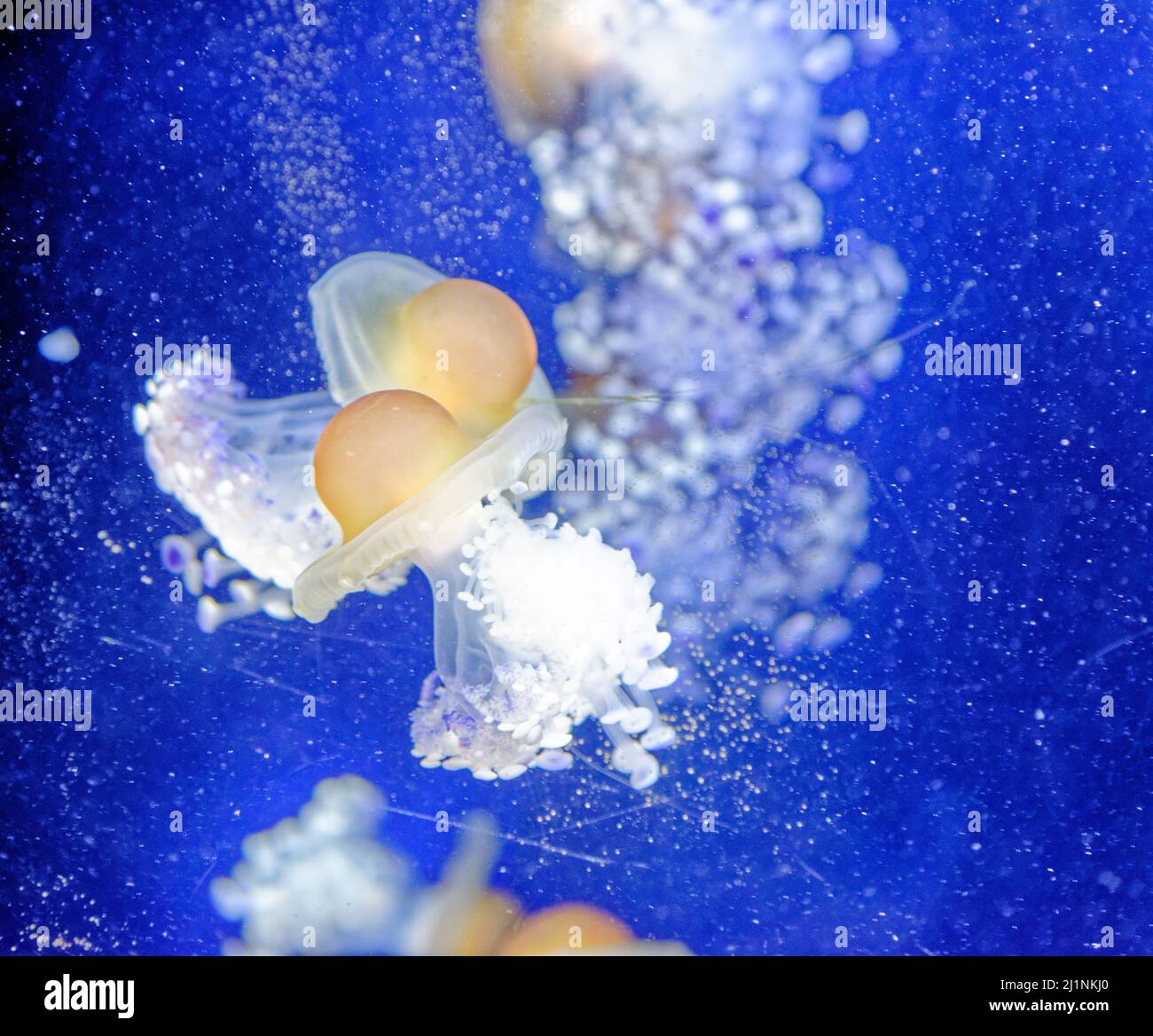
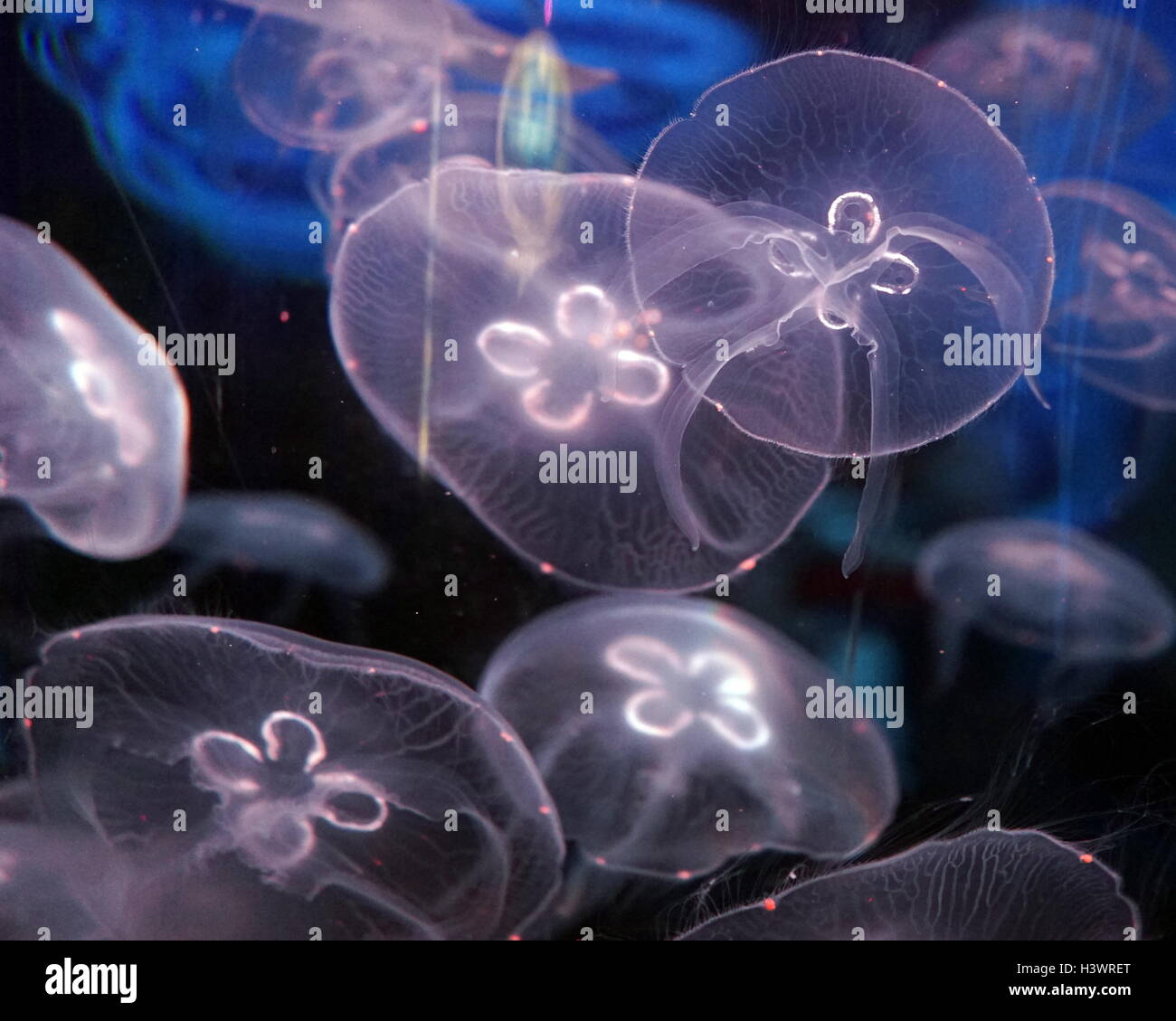
- The Medusa Phase: This is the free-swimming, bell-shaped form commonly recognized as a "jellyfish." The medusa stage is primarily responsible for sexual reproduction, releasing eggs and sperm into the water column to produce larvae, which eventually settle and become polyps.
While many cnidarians, such as corals, spend their entire lives as polyps, those commonly referred to as "jellyfish" (class Scyphozoa) spend the majority of their adult lives in the medusa stage. Understanding this distinction is essential for identifying these animals within their broader evolutionary family tree.
Distinguishing Cnidarians from Other Gelatinous Creatures
Confusion often arises because many unrelated marine organisms share a translucent, gelatinous appearance. When asking "what phylum are jellyfish in," it is equally important to know what they are not.
- Ctenophores (Comb Jellies): These creatures are often mistaken for jellyfish, but they belong to a separate phylum called Ctenophora. Unlike cnidarians, ctenophores lack stinging cells and instead use sticky cells called colloblasts to catch prey. They also exhibit rows of cilia, which they use for locomotion, creating a shimmering, prismatic effect under light.
- Salps: These are tunicates, which are actually part of the phylum Chordata. They are more closely related to humans than to jellyfish, as they possess a rudimentary notochord at some point in their life cycle.
- Mollusks: Some sea slugs and nudibranchs may appear soft and jellied, but their underlying anatomy is radically different, involving complex organ systems and shells (or vestigial shells).
| Feature | Phylum Cnidaria (Jellyfish) | Phylum Ctenophora (Comb Jellies) |
|---|---|---|
| Stinging Cells | Present (Cnidocytes) | Absent (Uses Colloblasts) |
| Symmetry | Radial | Biradial |
| Locomotion | Pulsing bell contractions | Ciliary plates (combs) |
| Body Layers | Two (Diploblastic) | Two (with complex mesenchyme) |
Ecological Importance and Challenges
Jellyfish play a pivotal role in the marine food web. They serve as both predators and prey, consuming vast quantities of plankton, small fish, and crustaceans. Conversely, they are a primary food source for larger marine animals, including sea turtles and certain species of sharks.
However, in recent years, their populations have been observed to fluctuate significantly in response to climate change, overfishing, and eutrophication (excess nutrients in the water). Because jellyfish are remarkably resilient and can thrive in degraded environments where other fish species struggle, their population booms can lead to ecological imbalances. Monitoring these populations is a priority for marine conservationists in 2026, as their prevalence often serves as an indicator of broader environmental health and shifting ocean temperatures.
Frequently Asked Questions
Are all jellyfish poisonous? Almost all jellyfish possess cnidocytes, meaning they have the capacity to sting. However, the toxicity levels vary significantly across species. While many are merely irritating to human skin, some species, such as the Australian box jellyfish (Chironex fleckeri), possess toxins potent enough to be dangerous or even lethal to humans.
Do jellyfish have brains or hearts? No. Jellyfish lack a centralized brain, heart, and lungs. Instead, they have a decentralized "nerve net" that processes environmental information and coordinates movement. They perform gas exchange (breathing) by diffusing oxygen directly through their thin outer membranes.
Are jellyfish considered fish? No. Despite the name, jellyfish are not fish. Fish are vertebrates (they possess a backbone and gills), whereas jellyfish are invertebrates with a simple, primitive anatomy.
How long do jellyfish live? Lifespans vary by species. Many common medusae live for only a few months, dying shortly after spawning. However, some species, such as the "immortal jellyfish" (Turritopsis dohrnii), are capable of reverting their cells back to a polyp state, theoretically allowing them to restart their life cycle indefinitely under specific conditions.
Can you keep a jellyfish as a pet? Yes, specialized saltwater aquariums designed for jellyfish are available. These tanks use gentle, circular water flow to prevent the jellyfish from becoming trapped in corners or damaged by filtration systems, as they are fragile and easily injured.
Recommendation for Further Observation
If you are interested in observing these fascinating creatures in their natural habitat, consider visiting a local marine sanctuary or public aquarium that specializes in cephalopods and cnidarians. Observing them in a controlled, circular-flow environment provides the best opportunity to see their unique pulsing locomotion and the complex structure of their tentacles safely. When encountered in the wild, maintain a respectful distance; even if a species is not life-threatening, many jellyfish are capable of delivering a painful sting that can ruin a day of diving or swimming.
Image Gallery