How Spring Cloud Uses OAuth Security for Distributed Microservices
Spring Cloud secures distributed architectures by integrating OAuth 2.0 and OpenID Connect standards, relying on an ecosystem of authorization servers, resource servers, and API gateways to enforce decentralized token-based validation....
Spring Cloud secures distributed architectures by integrating OAuth 2.0 and OpenID Connect standards, relying on an ecosystem of authorization servers, resource servers, and API gateways to enforce decentralized token-based validation. Modern microservice architectures require robust security layers that can seamlessly authenticate users, authorize service-to-service communication, and secure RESTful endpoints across distributed networks without relying on traditional sticky sessions.
Contents
Architectural Overview of Spring Cloud OAuth Security
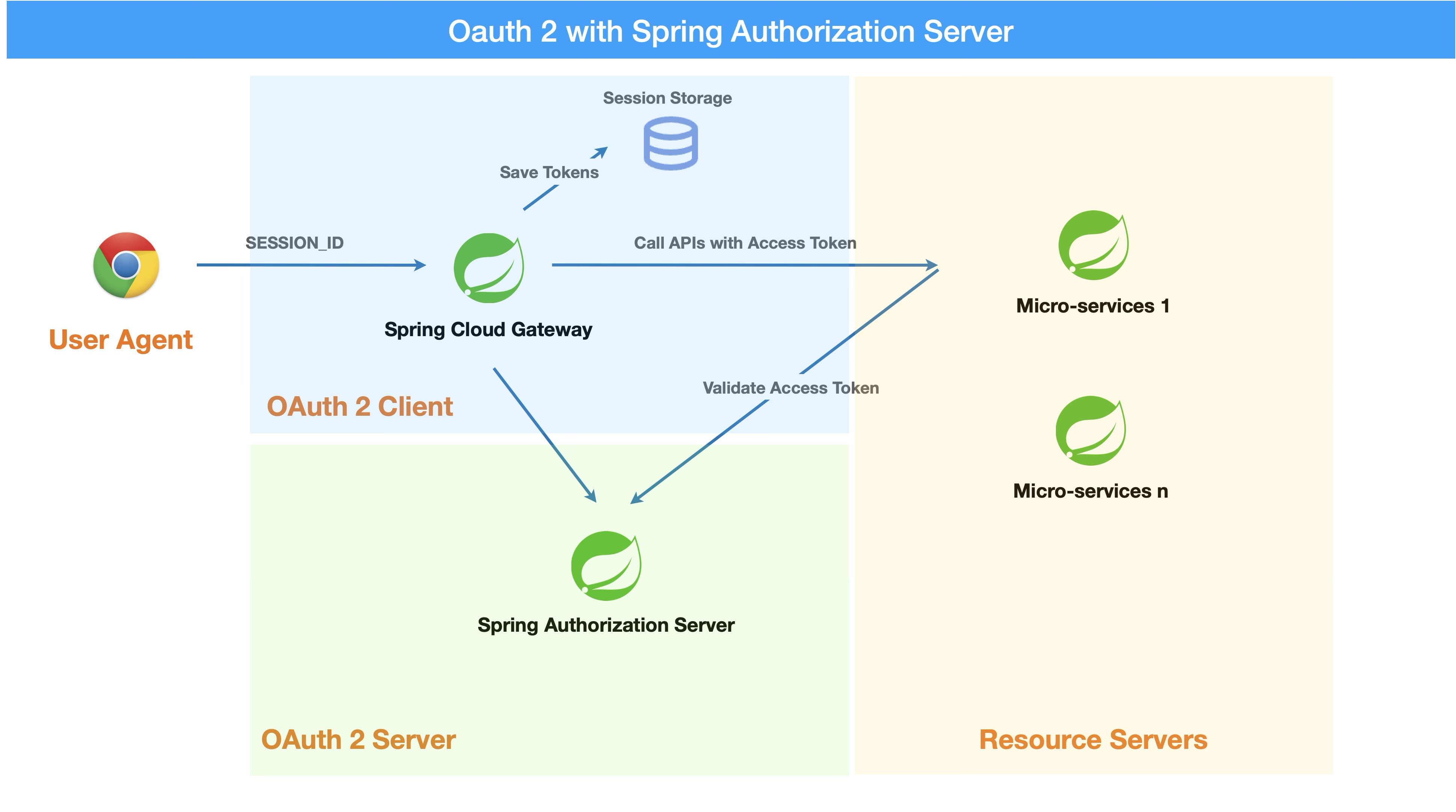
In a traditional monolithic application, user sessions are typically managed via server-side session stores or encrypted cookies. Microservices, however, demand a stateless, scalable approach. Spring Cloud achieves this by distributing trust boundaries across distinct architectural components: the Authorization Server, the API Gateway, and individual Resource Servers.
When a client requests a protected resource within a Spring Cloud ecosystem, it does not authenticate directly with every backend microservice. Instead, the architecture separates responsibilities:
- Authorization Server: Issues cryptographic tokens (typically JSON Web Tokens or JWTs) after successfully authenticating the user or client application.
- API Gateway (Spring Cloud Gateway): Acts as the single entry point for all external client requests, handling token translation, route filtering, and initial perimeter defense.
- Resource Servers (Spring Boot Microservices): Validate incoming tokens independently using shared symmetric keys or asymmetric public keys, granting or denying access based on OAuth scopes and granted authorities.
This separation of concerns allows developers to scale individual microservices horizontally while maintaining a centralized, consistent identity and access management (IAM) policy.
The Evolution of Spring Security and Spring Cloud Security
Understanding how Spring Cloud handles OAuth security requires recognizing the significant evolution of the underlying framework. Historically, Spring Cloud Security provided boilerplate configurations and helper libraries for Spring Security OAuth. However, with the deprecation of the older spring-security-oauth2 project, the Spring team integrated robust OAuth 2.0 and OpenID Connect (OIDC) support directly into core Spring Security 5.x and 6.x.
Today, Spring Cloud applications leverage standard Spring Boot starters for resource servers and clients rather than relying on legacy modules. This native integration simplifies configuration, improves performance, and aligns enterprise Java microservices with modern internet security standards.
Core Roles in OAuth 2.0 Infrastructure
| OAuth 2.0 Role | Spring Cloud Component Equivalent | Primary Responsibility |
|---|---|---|
| Resource Owner | End User / Client Application | The entity that grants access to protected resources. |
| Client | Single Page App, Mobile App, or Service | The application requesting access to the resource owner's data. |
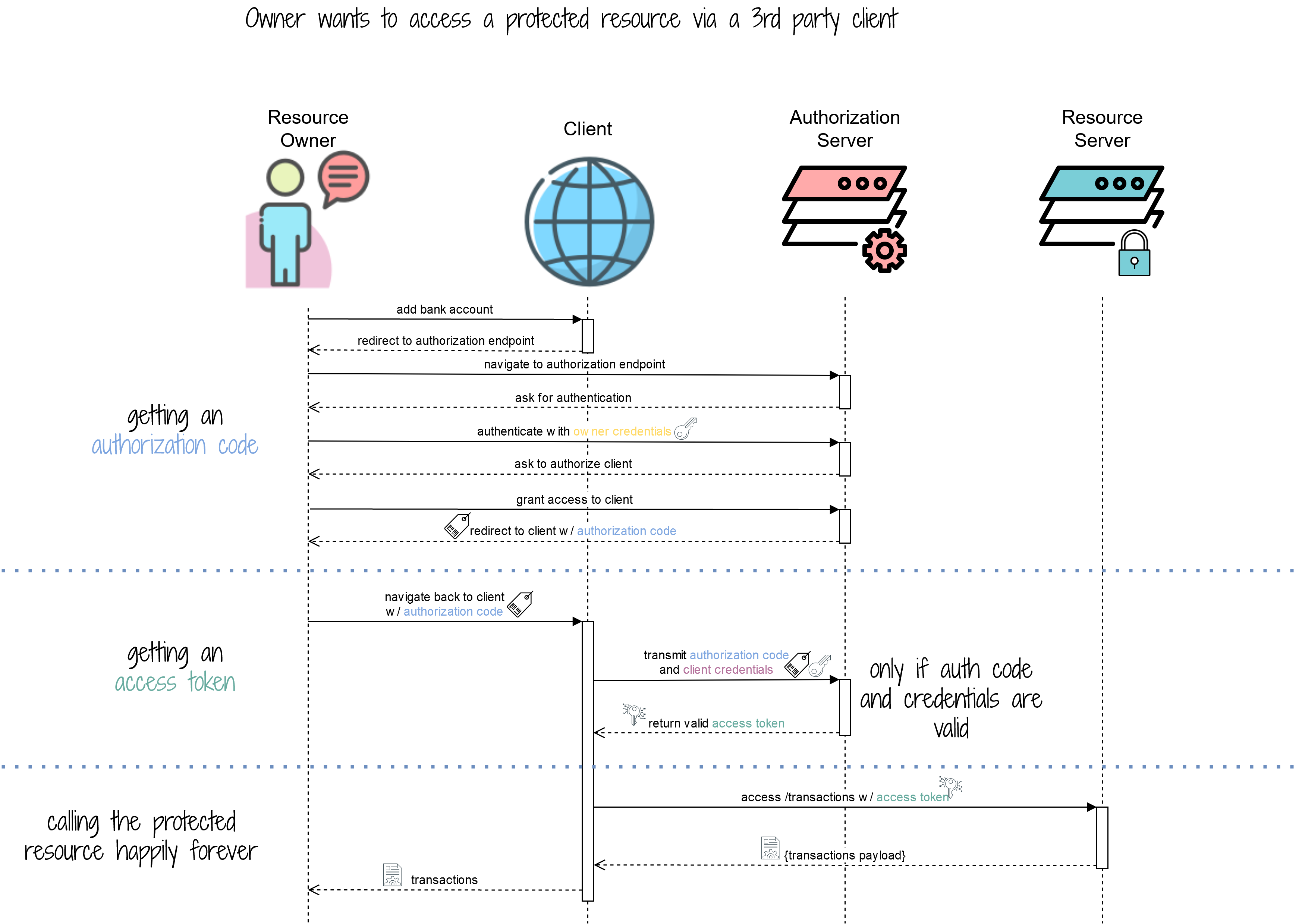
| Authorization Server | Keycloak, Okta, Auth0, or Spring Authorization Server | Authenticates credentials and issues OAuth 2.0 access tokens. |
| Resource Server | Spring Boot Microservices (e.g., Order Service, Billing Service) | Hosts protected endpoints and validates incoming access tokens. |
Securing API Gateways with Spring Cloud Gateway
The API Gateway is the frontline defense in a Spring Cloud microservices architecture. Using Spring Cloud Gateway, developers can configure security filters that intercept incoming traffic, inspect bearer tokens, and relay authorized requests downstream.
Token Relay and Downstream Propagation
One of the primary challenges in microservices security is propagating the user's security context from the gateway to internal microservices. If Service A calls Service B synchronously via OpenFeign or WebClient, Service B needs to know who initiated the request to enforce proper method-level security.
Spring Cloud Gateway solves this with the TokenRelay gateway filter. When configured, the gateway extracts the incoming OAuth 2.0 access token from the client request and injects it into the Authorization header of outgoing requests directed at internal microservices.
spring: cloud: gateway: routes: - id: resource-service-route uri: lb://resource-service predicates: - Path=/api/resources/** filters: - TokenRelay= - name: CircuitBreaker args: name: resourceCircuitBreaker
This ensures that downstream resource servers receive the exact same token, allowing them to evaluate scopes and roles without establishing an independent authentication handshake for every internal hop.
Configuring Spring Boot Microservices as Resource Servers
Once a request passes through the API Gateway—or if services communicate via trusted internal channels—individual Spring Boot applications act as OAuth 2.0 Resource Servers. Configuring a Spring Boot microservice to validate tokens requires minimal boilerplate, thanks to auto-configuration provided by spring-boot-starter-oauth2-resource-server.
JWT Validation and Public Key Infrastructure
Modern Spring Cloud architectures predominantly use self-contained JSON Web Tokens (JWTs). Because JWTs are cryptographically signed by the Authorization Server, resource servers do not need to make synchronous network calls back to the authorization server to validate every single request. Instead, they download the JSON Web Key Set (JWKS) URI once and use the public key to verify the token's signature locally.
A basic resource server configuration in application.yml looks like this:
spring: security: oauth2: resource-server: jwt: jwk-set-uri: https://auth-server.internal.net/oauth2/jwk
To enforce fine-grained access control on specific endpoints, developers combine this configuration with method-level security annotations like @PreAuthorize inside the microservice controllers:
@RestController @RequestMapping("/orders") public class OrderController { @GetMapping("/{id}") @PreAuthorize("hasAuthority('SCOPE_order:read')") public ResponseEntity getOrderById(@PathVariable String id) { // Business logic here return ResponseEntity.ok(orderService.findOrder(id)); } }
Managing Service-to-Service Communication (M2M)
Not all traffic in a Spring Cloud environment originates from an end user. Background workers, scheduled jobs, and asynchronous event processors often need to communicate with resource servers without an active user session. This is handled via the OAuth 2.0 Client Credentials Grant.
Spring Security provides the AuthorizedClientServiceReactiveOAuth2AuthorizedClientManager (for reactive stacks) and OAuth2AuthorizedClientManager (for servlet stacks) to manage machine-to-machine (M2M) credentials.
When Service A needs to call Service B autonomously:
- It presents its own client ID and client secret to the Authorization Server.
- The Authorization Server returns an M2M access token scoped specifically for inter-service communication.
- Spring Cloud automatically caches and refreshes this token, attaching it to outgoing
WebClientorRestTemplaterequests via interceptors.
Common Implementation Mistakes and Troubleshooting
Implementing OAuth security in a distributed environment introduces complex debugging scenarios. Developers frequently encounter specific pitfalls when aligning Spring Cloud components with external identity providers.
1. Clock Skew Issues
Distributed servers running across different virtual machines or cloud regions frequently experience minor system clock discrepancies. If the resource server's clock is slightly ahead of the authorization server's clock, incoming JWTs may be rejected with an JwtValidationException indicating the token is "not yet valid" (nbf or iat claims).
- Solution: Synchronize all container instances using Network Time Protocol (NTP) and configure an acceptable clock skew tolerance in Spring Security:
JwtDecoder jwtDecoder = JwtDecoders.fromIssuerLocation(issuerUri);
((NimbusJwtDecoder) jwtDecoder).setClaimSetVerifier(new JwtTimestampValidator(Duration.ofSeconds(60)));
2. Mismatched Issuer URIs
When running behind an API Gateway or a reverse proxy (such as Kubernetes Ingress or AWS ALB), the external issuer URL perceived by the client often differs from the internal issuer URL used by the resource server for validation.
- Solution: Explicitly configure the
issuer-uriandjwk-set-uriproperties on resource servers to match the exact endpoint exposed to the validation context, ensuring signature verification succeeds without network routing failures.
3. Missing Scope Prefixes
Spring Security automatically maps OAuth 2.0 scopes to Granted Authorities prefixed with SCOPE_. Developers often write @PreAuthorize("hasAuthority('order:read')") instead of @PreAuthorize("hasAuthority('SCOPE_order:read')"), resulting in unexpected AccessDeniedException errors.
Frequently Asked Questions
Can Spring Cloud act as its own OAuth 2.0 Authorization Server?
Historically, Spring provided Spring Security OAuth, which allowed developers to build custom authorization servers. That project is deprecated. For modern Spring Cloud architectures, Spring recommends using dedicated identity solutions like Keycloak, Okta, Auth0, or adopting the standalone Spring Authorization Server project for custom Java-based auth servers.
How do resource servers validate tokens without calling the database?
Spring Cloud resource servers use JSON Web Tokens (JWTs). Because JWTs contain cryptographically signed claims—including user identity, expiration times, and granted scopes—the resource server validates the digital signature locally using a public key retrieved from the authorization server's JWKS endpoint, eliminating runtime database lookups.
What is the difference between Token Relay and Token Exchange?
Token Relay forwards the exact same incoming bearer token from the API Gateway downstream to microservices. Token Exchange (defined in RFC 8693) allows an intermediate service to trade an incoming token for a different token with restricted privileges or a different audience before calling downstream services.
How does Spring Cloud handle expired tokens during active user sessions?
When an access token expires, resource servers reject the request with a 401 Unauthorized HTTP status code. In a browser-based or mobile client architecture, the frontend application must use a stored refresh token to request a new access token from the authorization server without forcing the user to re-authenticate.
Is Spring Cloud Security compatible with reactive (WebFlux) microservices?
Yes. Spring Security provides fully reactive equivalents for all servlet-based security configurations. By using spring-boot-starter-webflux alongside reactive resource server starters, Spring Cloud secures non-blocking, asynchronous netty-based microservices using identical OAuth 2.0 standards.
Conclusion and Next Actions
Securing Spring Cloud microservices with OAuth 2.0 requires a clear division of labor: authorization servers issue cryptographic tokens, API gateways manage perimeter routing and token relay, and individual resource servers independently validate claims. To implement this architecture successfully, audit your current identity provider, configure your Spring Cloud Gateway with the TokenRelay filter, and apply stateless JWT validation across all downstream Spring Boot microservices.
Image Gallery