Hosting a Family Feud Halloween Party: Rules, Setup, and Gameplay
Hosting a Family Feud Halloween party involves transforming the classic television game show format into a seasonal event by curating survey questions focused on spooky themes, horror tropes, and autumn traditions. To execute this succ...
Hosting a Family Feud Halloween party involves transforming the classic television game show format into a seasonal event by curating survey questions focused on spooky themes, horror tropes, and autumn traditions. To execute this successfully, organizers must secure a reliable buzzer system, prepare a list of pre-surveyed or consensus-based answers, and manage the game board interface to ensure smooth transitions between rounds.
Contents
Understanding the Structure of Family Feud
At its core, Family Feud is a game of consensus. Unlike trivia, where there is only one correct answer, Family Feud requires players to predict the most common responses given by a representative group of 100 people. When adapting this for Halloween, the primary challenge is ensuring that your survey answers feel authentic to the season.
Whether you are using a digital game show template or a DIY whiteboard setup, the game follows a strict flow:
- The Face-Off: One member from each of the two teams approaches the podium. The host reads a question, and the first person to buzz in with the most popular answer wins control for their team.
- The Decision: The team with control chooses to play or pass the question.
- The Play: Team members take turns guessing the remaining answers on the board. Three strikes (incorrect guesses) grant the opposing team a chance to "steal" by providing one of the remaining hidden answers.
- Fast Money: The winning team nominates two players to participate in a high-speed round, attempting to accumulate 200 points within a set timeframe.
Essential Prerequisites for a Halloween Edition
Before inviting guests, you must establish the technical and physical requirements of your setup. A successful game relies on clear visibility and responsive audio-visual cues.
Technical Requirements
- The Buzzer System: If you do not have dedicated electronic buzzers, use distinct sound-making devices (such as bike horns, bells, or mobile apps) to prevent disputes over who buzzed first.
- The Scoreboard: For a professional experience, use game show software such as Family Feud Game Show templates compatible with PowerPoint or web-based platforms that manage strike counters and reveals.
- The Host Station: The host requires a clear list of questions and the corresponding "answer key," along with a scoreboard to track round totals.
Preparation Checklist
| Component | Requirement | Purpose |
|---|---|---|
| Survey Data | 5–8 high-quality questions | Drives the core gameplay |
| Answer Boards | Digital or physical flip-cards | Visual confirmation for contestants |
| Strike Indicators | X symbols (three total) | Tracks team errors |
| Prizes | Low-cost themed items | Incentivizes competitive engagement |
Curating Halloween-Specific Survey Questions
The quality of your Family Feud event hinges on the questions. Because you cannot poll 100 people in real-time, you must source "consensus" data. You can utilize existing datasets from reputable horror fan forums, or simulate the survey by polling your own friends and family members via a Google Form two weeks before your event.
Examples of high-engagement Halloween topics include:
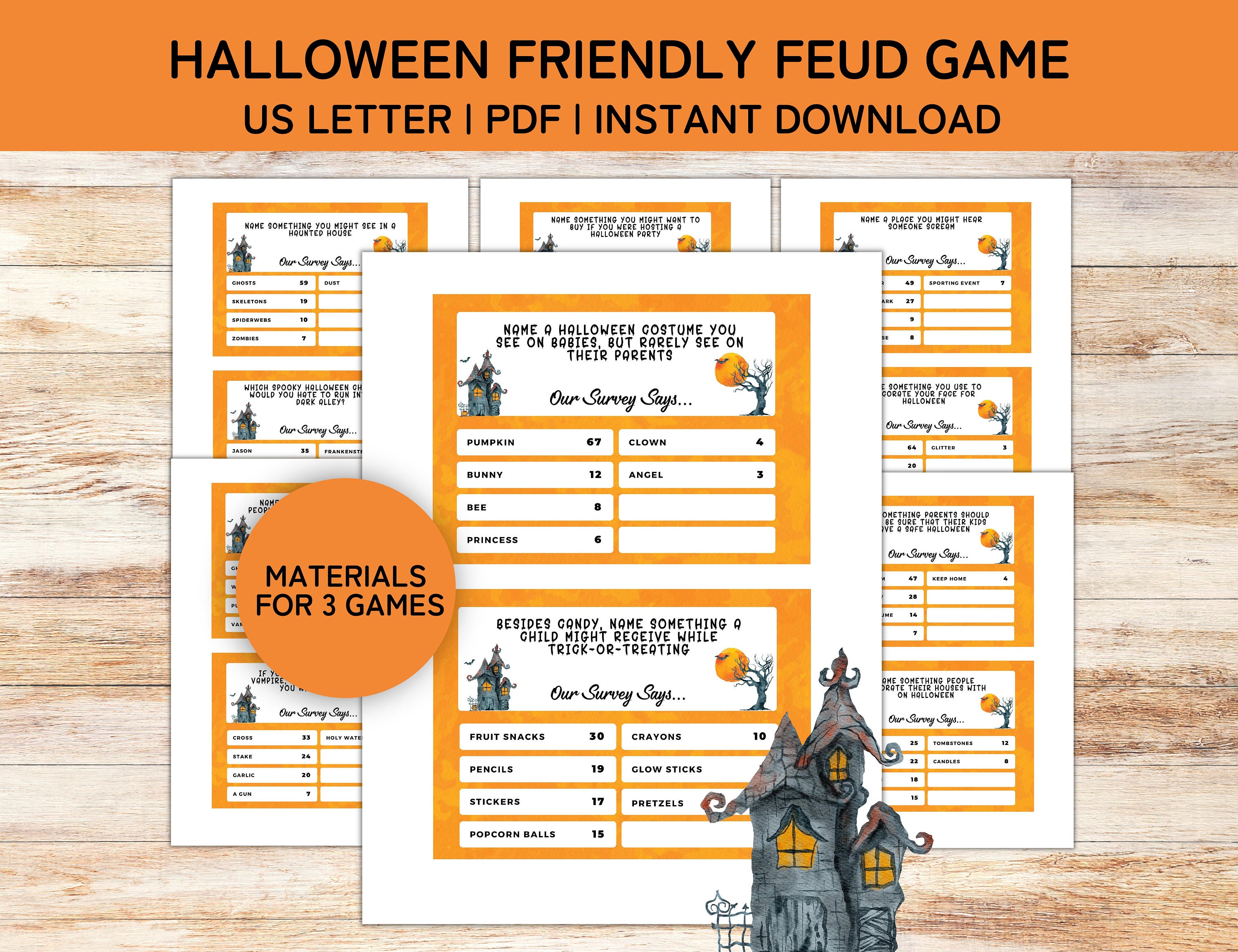
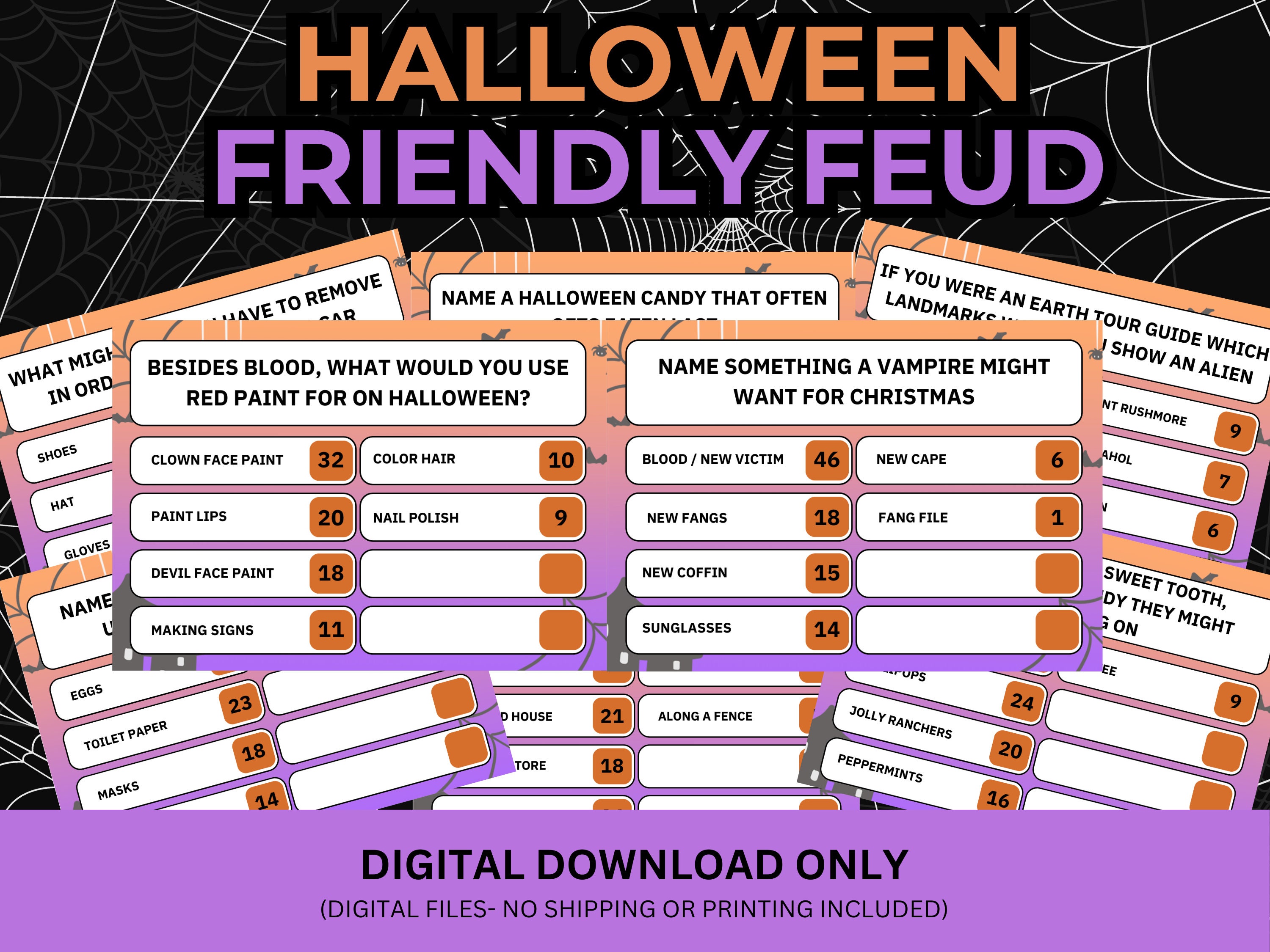
- Name something you might find in a haunted house.
- Name a classic Halloween movie character.
- Name a popular candy handed out on Halloween.
- Name something that makes a person scream.
- Name a vegetable associated with the fall season.
Ensure that the answers vary in difficulty. A board should typically include one or two "obvious" answers (e.g., "Ghost" for "Something you see on Halloween") and a few "obscure" answers to reward the most knowledgeable horror enthusiasts in the room.
Operational Execution and Gameplay Management
As the host, your role is to maintain the pace of the game and act as the final authority on disputed answers. Managing the energy of the room is just as important as managing the score.
Handling Disputes and "The Steal"
Inevitably, a contestant will provide an answer that is technically correct but not on your list. In Family Feud, the board is the ultimate truth. If an answer is not on the board, it is a strike. If you find yourself in a position where an answer is "nearly" correct, provide a clear, pre-determined rule: for example, "Answers must be within the same category of the listed item."
Managing the "Fast Money" Round
The Fast Money round should be the climax of your event. To keep the atmosphere light but competitive, use a stopwatch or a digital timer app visible to the audience. The first player answers five questions, then the second player answers the same five questions—trying to avoid repeating the first player’s answers while attempting to reach a combined score of 200 points.
Troubleshooting Common Issues
- Technical Glitches: If your digital board freezes, have a manual backup, such as a large piece of poster board where you can write revealed answers with a marker.
- Low Engagement: If one team is dominating, introduce a "bonus round" or a "steal back" mechanic where the trailing team can earn double points for the next question.
- Disruptive Buzzing: Always assign a dedicated "judge" or use a camera to record the podium if you are using physical buzzers to ensure you can verify ties during the face-off.
Frequently Asked Questions
How do I find enough people to survey for the answers?
If you cannot survey 100 people, use a smaller sample of 20–30 friends and family. Explain to your guests that the answers are based on this "mini-survey." The specific accuracy of the numbers matters less than the consistency of the playstyle.
Can we play with more than two teams?
While the standard format features two teams, you can accommodate larger groups by rotating them in a bracket-style tournament. Each "round" of the board acts as a match, with the winner advancing to face the next team.
Is it necessary to use expensive game show software?
No. While specialized software adds flair, simple presentation slides that reveal text boxes when clicked are sufficient. The focus should remain on the social interaction and the seasonal theme, not on high-end production values.
What happens if both teams get three strikes on a question?
In standard play, if both teams fail, the points for that round are usually voided or awarded to the host/audience. You may choose to allow a "lightning round" where the first person to guess any correct answer on the board takes the pot.
How long should the game last?
A well-paced Family Feud game with five to seven rounds typically lasts between 45 and 60 minutes, including the Fast Money round. If you have more time, incorporate "commercial breaks" or themed snacks as part of the event structure.
Final Recommendation for Organizers
To ensure your event is a success, finalize your list of survey questions at least 48 hours before the event. Run a dry run of your scoreboard technology to confirm that all links, sound effects, and strike trackers function as intended. Prioritize the spirit of the game—fun and laughter—over strict adherence to television accuracy. Start the evening with a quick round of practice questions to get guests comfortable with the buzzer speed before starting the main competition.
Image Gallery