Arnold Schwarzenegger’s First Mr. Olympia: The 1970 Triumph That Changed Bodybuilding
Arnold Schwarzenegger won his first Mr. Olympia title in 1970 at the age of 23, defeating the three-time defending champion, Sergio Oliva. Held at the Town Hall in New York City, this victory established Arnold as the youngest Mr. Olym...
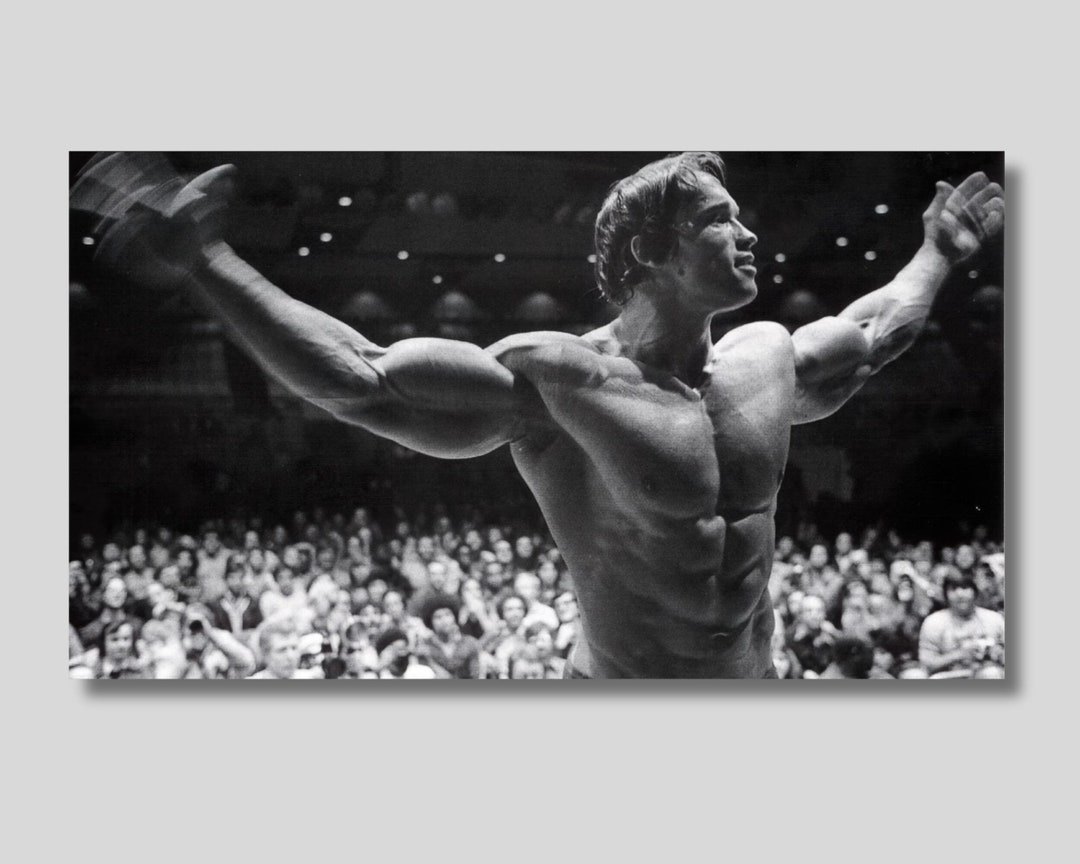
Arnold Schwarzenegger won his first Mr. Olympia title in 1970 at the age of 23, defeating the three-time defending champion, Sergio Oliva. Held at the Town Hall in New York City, this victory established Arnold as the youngest Mr. Olympia winner in history and launched a decade of dominance that redefined the sport of professional bodybuilding.
Contents
The 1970 Mr. Olympia was more than just a contest; it was a pivotal moment in sports history that signaled a shift in the aesthetic standards of physique competition. To understand the magnitude of Arnold's first win, one must examine the fierce rivalry with Sergio "The Myth" Oliva, the specific training adjustments Arnold made following his 1969 defeat, and the psychological tactics he employed to secure the Sandow trophy.
The Context: The 1969 Defeat and the Road to Redemption
In 1969, Arnold Schwarzenegger arrived in New York City with an undefeated record in Europe and a growing reputation as the "Austrian Oak." He was confident, perhaps even arrogant, until he stood backstage next to the reigning champion, Sergio Oliva. Oliva was a Cuban powerhouse known for his incredible V-taper, massive thighs, and a waist so small it seemed biologically impossible.
In his autobiography, Arnold admitted that he was mentally defeated before he even stepped onto the stage in 1969. He described being "in awe" of Oliva's sheer mass and density. Arnold took second place that year—his only loss on the Mr. Olympia stage. This defeat served as the primary catalyst for his 1970 preparation. He realized that while he had the height and the frame, he lacked the "hardness" and the specialized calf and forearm development required to topple a champion of Oliva's caliber.
From late 1969 through most of 1970, Arnold transformed his training philosophy. Under the guidance of Joe Weider and through intense sessions at Gold’s Gym in Venice, California, he shifted his focus from general mass to extreme muscular definition and symmetry. He famously cut his sweatpants at the knees to expose his lagging calves, forcing himself to acknowledge his weaknesses every time he looked in the mirror.
The 1970 Showdown: Arnold vs. Sergio Oliva
The 1970 Mr. Olympia took place on September 19 at the Town Hall in New York. The atmosphere was electric, as the bodybuilding world was divided between the established king, Oliva, and the rising challenger, Schwarzenegger.
The Comparison of Physiques
When the two giants stepped on stage, the contrast was stark. Sergio Oliva possessed what many considered the most "freakish" physique of the era. His muscle bellies were full, and his proportions were revolutionary. However, Arnold had spent the previous year perfecting his "vacuum" pose and increasing his back width.
Arnold’s 1970 physique was characterized by:
- Superior Peak: His biceps had reached a level of height and separation that outperformed Oliva’s more rounded arm structure.
- Improved Definition: Arnold brought a level of "dryness" to his muscles that he lacked the previous year, making his separation more visible under the harsh stage lights.
- Aesthetics and Height: At 6'2", Arnold used his height to command the stage, presenting a more "classical" statue-like appearance compared to Oliva’s 5'10" compact power.
The Psychological Maneuver
The 1970 win is legendary not just for the physical comparison, but for Arnold’s use of psychological warfare. During the pose-down, the two athletes were trading shots for an extended period, exhausting themselves. Arnold allegedly whispered to Sergio that he couldn't go on and suggested they both walk off the stage.
Sergio, believing they were finished, turned and began to walk toward the curtain. Arnold stayed on stage, struck another massive double-biceps pose, and smiled at the audience. This made Sergio look like he had "quit," while Arnold appeared as the tireless victor. While judges later claimed the decision was based on the physique, the "theatrics" of the moment solidified Arnold’s reputation as a master of stagecraft.
Technical Breakdown: 1969 vs. 1970 Performance
The following table outlines the key differences in Arnold's presentation and the contest environment between his first attempt and his first victory.
| Feature | 1969 Mr. Olympia (Runner-Up) | 1970 Mr. Olympia (Winner) |
|---|---|---|
| Location | New York City, NY | New York City, NY |
| Primary Rival | Sergio Oliva | Sergio Oliva |
| Arnold's Weight | ~235 lbs | ~240 lbs (leaner) |
| Key Weakness | Calves and lower abs | Minimal; greatly improved calf density |
| Mental State | Intimidated by Oliva's mass | Confident; used "mind games" |
| Posing Style | Standard European poses | Dynamic, "statue" aesthetic posing |
| Judging Focus | Mass and density | Symmetry, definition, and charisma |
Training and Diet: The 1970 Preparation Strategy
To secure the 1970 title, Arnold utilized the "Weider Principles," specifically the flushing principle and supersets. His training volume was exceptionally high, often involving twice-daily sessions (the "double split").
The Training Split
Arnold’s preparation for the 1970 Olympia involved training each muscle group three times per week.
- Chest and Back: He frequently paired these opposing muscle groups to achieve a massive "pump" that expanded his ribcage.
- Shoulders and Arms: He focused on the "peak" of the biceps and the "width" of the lateral deltoids to enhance his V-taper.
- Legs: He moved away from pure heavy squatting toward higher-volume leg presses and extensions to bring out the feathering in his quadriceps.
Nutrition and Supplementation
In 1970, the "science" of bodybuilding nutrition was in its infancy compared to the standards of 2026. However, Arnold focused on a high-protein, moderate-fat, and low-carbohydrate diet as the show approached.
- Protein Sources: Eggs, meat, and whole milk were staples.
- Supplements: He utilized early protein powders (often derived from soy or milk/egg) and desiccated liver tablets, which were believed to increase endurance and red blood cell count.
The Impact of the 1970 Win on Bodybuilding History
Arnold’s victory in 1970 ended the reign of the "mass monsters" of the late 60s and ushered in the "Golden Era" of bodybuilding. This win was significant for several reasons:
- Age Record: At 23 years old, Arnold set a record for the youngest Mr. Olympia winner. As of 2026, this record remains a testament to his genetic gifts and early maturity in the sport.
- Global Expansion: As an Austrian immigrant winning in America, Arnold became a symbol of the "American Dream." This helped Joe Weider market the IFBB (International Federation of Bodybuilding) to a global audience.
- Media Transition: This win put Arnold on the radar of filmmakers and mainstream media. Without the 1970 win, the documentary Pumping Iron (1977) might never have had its charismatic protagonist, and the sport might have remained a niche subculture.
- Judging Criteria: The 1970 result signaled to competitors that "freakishness" (Oliva) could be beaten by "proportionality and presentation" (Schwarzenegger). This influenced how athletes trained for the next two decades.
Frequently Asked Questions
Who did Arnold Schwarzenegger beat in his first Mr. Olympia?
Arnold defeated the reigning three-time champion Sergio Oliva. He also competed against other notable bodybuilders of the era, but the contest was primarily a "two-man show" between the Austrian Oak and The Myth.
How many times did Arnold win Mr. Olympia after 1970?
Following his first win in 1970, Arnold won five consecutive titles from 1971 to 1975. He then retired to pursue acting but returned for a controversial seventh win in 1980, bringing his total to seven Sandow trophies.
Was the 1970 Mr. Olympia win controversial?
While some fans of Sergio Oliva felt his sheer mass should have won, most historians agree that Arnold’s superior conditioning, height, and posing charisma made him the rightful winner. The "trick" Arnold played to get Sergio to leave the stage is often discussed, but the judges' scorecards reflected a preference for Arnold's improved symmetry.
What were Arnold's measurements during his first Olympia win?
While measurements in the 1970s were often exaggerated for promotional purposes, Arnold’s "competition shape" in 1970 was estimated to be:
- Arms: 22 inches
- Chest: 57 inches
- Waist: 31 inches
- Thighs: 28 inches
- Weight: Approximately 235-240 lbs.
Where can I see footage of the 1970 Mr. Olympia?
Original film footage of the 1970 event is rare and often exists as silent 8mm or 16mm clips. Much of the visual history of this specific win is preserved through the photography of Artie Zeller and the archives of Muscle & Fitness magazine.
Final Recommendation for Fans and Historians
To truly appreciate Arnold Schwarzenegger's first Mr. Olympia win, enthusiasts should look beyond the statistics and study his 1970 posing routine. It remains a masterclass in highlighting strengths while masking deficiencies. For those looking to understand the technical evolution of the sport, comparing the 1969 and 1970 contest photos provides the clearest evidence of how targeted training and psychological confidence can overcome a seemingly "unbeatable" opponent.
Understanding this specific win provides the foundation for recognizing why Arnold remains the most influential figure in bodybuilding history as we look back from 2026.
Image Gallery