The Most Effective Appetite Suppressant Options for Sustainable Weight Management
Selecting the most effective appetite suppressant requires a nuanced understanding of biological hunger signals, metabolic health, and the specific mechanisms of modern pharmacology. As of 2026, the landscape of weight management has s...
Selecting the most effective appetite suppressant requires a nuanced understanding of biological hunger signals, metabolic health, and the specific mechanisms of modern pharmacology. As of 2026, the landscape of weight management has shifted significantly, moving from simple stimulants toward sophisticated hormonal regulators that mimic the body’s natural satiety signals. While over-the-counter supplements and lifestyle modifications offer secondary support, clinical-grade prescription medications currently represent the highest tier of efficacy for suppressing appetite and achieving significant weight reduction.
Contents
The most effective appetite suppressants are GLP-1 and GIP receptor agonists (such as Tirzepatide and Semaglutide), which provide superior hunger control by slowing gastric emptying and signaling fullness to the brain. For those seeking non-clinical options, high-viscosity dietary fibers like glucomannan and high-protein dietary protocols offer the most reliable natural hunger-dampening effects.
The Biological Mechanisms of Appetite Suppression
To understand why certain options are more effective than others, it is necessary to examine how the body regulates hunger. Appetite is not merely a matter of willpower; it is a complex interplay between the gut and the brain, primarily involving the hypothalamus. Two main pathways govern this process: the homeostatic pathway, which responds to energy deficits, and the hedonic pathway, which responds to the reward or pleasure of eating.
Effective suppressants target these pathways in three primary ways:
- Hormonal Mimicry: Using synthetic versions of hormones like Glucagon-like peptide-1 (GLP-1) to signal the brain that the body is "full."
- Central Nervous System (CNS) Stimulation: Increasing levels of neurotransmitters like norepinephrine and dopamine to reduce hunger signals and increase energy expenditure.
- Physical Gastric Distension: Using bulk-forming agents to physically fill the stomach, triggering mechanical stretch receptors that signal satiety to the brain.
Clinical Grade: Prescription Appetite Suppressants
In 2026, prescription interventions remain the gold standard for individuals with a Body Mass Index (BMI) categorized as obese or overweight with comorbidities. These medications have undergone rigorous clinical trials to prove their safety and efficacy.
GLP-1 and Dual Agonists (The "Incretin" Revolution)
The most transformative development in appetite suppression has been the rise of incretin mimetics. These are injectable (and increasingly oral) medications that mimic hormones naturally produced in the intestines.
- Tirzepatide (Zepbound/Mounjaro): This is currently considered the most potent appetite suppressant available. It is a dual agonist, meaning it targets both GLP-1 and GIP (glucose-dependent insulinotropic polypeptide) receptors. By acting on two pathways, it provides a synergistic effect that significantly reduces food noise—the intrusive, constant thoughts about eating.
- Semaglutide (Wegovy/Ozempic): A selective GLP-1 receptor agonist that has been a cornerstone of treatment for several years. It works by slowing the rate at which the stomach empties (gastric emptying) and directly influencing the satiety centers of the brain. Clinical data consistently shows that users experience a profound decrease in appetite and a faster onset of fullness during meals.
Sympathomimetic Amines and Oral Combinations
Before the GLP-1 era, these were the primary tools for weight loss. They remain effective for many patients, particularly those who prefer oral administration or have contraindications for injectable peptides.
- Phentermine: A stimulant-like medication that reduces appetite by triggering the release of norepinephrine in the hypothalamus. It is typically prescribed for short-term use (up to 12 weeks) due to its potential for side effects like increased heart rate and blood pressure.
- Qsymia (Phentermine/Topiramate ER): This combination drug pairs the appetite-suppressing power of phentermine with topiramate, an anti-seizure medication found to increase satiety and make foods taste less appealing. It is approved for long-term use and is often more effective than phentermine alone.
- Contrave (Naltrexone/Bupropion): This medication targets the reward system of the brain (the hedonic pathway). It is particularly effective for individuals who struggle with emotional eating or food cravings rather than just physical hunger.
Natural and Over-the-Counter (OTC) Options
While OTC options generally lack the dramatic weight-loss results of prescription drugs, they can be useful for mild appetite regulation or as supportive tools alongside a healthy lifestyle.
Dietary Fiber and Bulking Agents
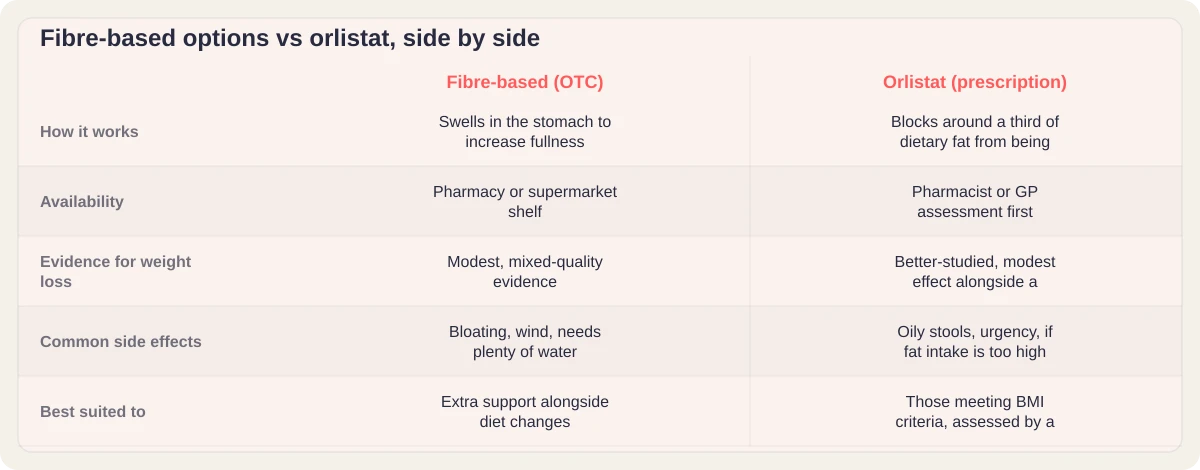
Fiber is the most evidence-based natural appetite suppressant. It works by absorbing water and expanding in the digestive tract, which triggers the vagus nerve to tell the brain the stomach is full.
- Glucomannan: Derived from the konjac root, this water-soluble dietary fiber can absorb up to 50 times its weight in water. It is one of the few OTC supplements with a recognized EFSA claim for weight reduction when used in the context of an energy-restricted diet.
- Psyllium Husk: A common fiber supplement that forms a viscous gel in the stomach, slowing digestion and prolonging the feeling of fullness after a meal.
Metabolic Stimulants and Natural Extracts
Many "fat burner" supplements claim to suppress appetite, though their effects are often modest and linked to caffeine content.
- Caffeine: Acts as a mild appetite suppressant by increasing thermogenesis and influencing the levels of hunger hormones like ghrelin for a short duration.
- Green Tea Extract (EGCG): May help regulate appetite by influencing dopamine levels and supporting metabolic rate, though the effect is secondary to its antioxidant benefits.
- 5-HTP: A precursor to serotonin, which is a neurotransmitter involved in mood and satiety. Some studies suggest 5-HTP can help reduce carbohydrate cravings in specific populations.
Comparison of Effective Appetite Suppressants
The following table summarizes the primary categories of suppressants based on their mechanism, administration, and relative efficacy as observed in 2026 clinical standards.
| Option Name | Type | Primary Mechanism | Administration | Relative Efficacy |
|---|---|---|---|---|
| Tirzepatide | Prescription | GLP-1 & GIP Dual Agonist | Injectable (Weekly) | Very High |
| Semaglutide | Prescription | GLP-1 Receptor Agonist | Injectable/Oral | High |
| Phentermine | Prescription | CNS Stimulant | Oral Tablet | Moderate |
| Qsymia | Prescription | Stimulant + Satiety Agent | Oral Capsule | High-Moderate |
| Contrave | Prescription | Reward Pathway Modulator | Oral Tablet | Moderate |
| Glucomannan | OTC/Natural | Gastric Bulking (Fiber) | Oral Capsule/Powder | Low-Moderate |
| Caffeine | OTC/Natural | Stimulant/Thermogenic | Oral/Beverage | Low |
The Role of Lifestyle and Dietary Choices
No pharmacological or supplemental intervention is entirely effective without a foundation of satiety-focused nutrition. Certain macronutrients have a higher "satiety index" than others, meaning they keep you full for longer on fewer calories.
The Protein-Leverage Hypothesis
Research consistently shows that protein is the most satiating macronutrient. Consuming high-quality protein (lean meats, legumes, Greek yogurt) reduces levels of ghrelin (the hunger hormone) and increases levels of peptide YY, a hormone that signals fullness. Aiming for 1.2 to 1.6 grams of protein per kilogram of body weight is often a more effective "natural suppressant" than many commercial supplements.
Hydration and Pre-loading
The brain often confuses thirst signals with hunger. Drinking 500ml of water 30 minutes before a meal has been clinically shown to reduce the amount of food consumed during that meal by inducing mechanical stretch in the stomach before the first bite is even taken.
Safety, Side Effects, and Medical Oversight
It is imperative to consult a healthcare professional before starting any appetite suppressant, especially prescription-strength options.
- Gastrointestinal Issues: GLP-1 medications frequently cause nausea, vomiting, or constipation as the body adjusts to slower digestion.
- Cardiovascular Risks: Stimulant-based suppressants like phentermine can exacerbate heart conditions or high blood pressure.
- Nutrient Deficiencies: Because these options reduce food intake, users must be diligent about the nutrient density of the calories they do consume to avoid malnutrition.
- Muscle Loss: Rapid weight loss driven by appetite suppression can lead to the loss of lean muscle mass (sarcopenia). Resistance training and adequate protein intake are essential countermeasures.
Disclaimer: This information is for educational purposes and does not constitute medical advice. For specific medical concerns or to start a weight management program, please consult a licensed physician or registered dietitian.
Frequently Asked Questions
Can I build a tolerance to appetite suppressants?
Yes, particularly with stimulant-based medications like phentermine. The body may adapt to the increased norepinephrine levels, requiring higher doses for the same effect, which is why they are usually limited to short-term use. GLP-1 medications do not typically show the same type of tolerance, though weight loss may plateau as the body reaches a new metabolic equilibrium.
Are natural appetite suppressants as effective as prescriptions?
Generally, no. Natural options like fiber and green tea extract provide subtle support and are excellent for general health, but they do not alter the hormonal signaling of the gut-brain axis to the same degree as clinical medications like Semaglutide or Tirzepatide.
Will insurance cover prescription appetite suppressants in 2026?
Coverage varies significantly by provider and plan. While more insurers have begun covering these medications due to their effectiveness in preventing chronic diseases like Type 2 diabetes and cardiovascular disease, many still require a specific BMI threshold or proof of failed lifestyle interventions.
Do appetite suppressants work if I don't change my diet?
While they will reduce the amount of food you want to eat, they do not change the quality of the food. For long-term health and weight maintenance after stopping the medication, establishing a nutrient-dense diet and consistent exercise routine is essential.
Is it safe to take OTC suppressants with prescription weight-loss drugs?
Mixing different types of suppressants can be dangerous. For example, taking a stimulant-based "fat burner" with a prescription stimulant like phentermine can lead to dangerously high blood pressure or heart palpitations. Always disclose all supplements to your doctor.
Practical Recommendation
If you are struggling with significant weight management, your first action should be a consultation with a metabolic specialist or primary care physician to assess your hormonal profile. For most, the most effective path involves a multi-modal approach: using a GLP-1 or dual agonist to manage "food noise," prioritizing protein and fiber to maintain satiety, and engaging in resistance training to protect muscle mass during the weight loss process. Avoid "quick-fix" OTC stimulants and focus on evidence-based fiber supplements if your needs are mild.
Image Gallery