The Conjuring Universe: Understanding the Nun, Annabelle, and the Chronological Order
The Conjuring Universe, centered around the investigations of real-life paranormal researchers Ed and Lorraine Warren, is a complex tapestry of interconnected horror films. To view them in chronological order of their internal timeline...
The Conjuring Universe, centered around the investigations of real-life paranormal researchers Ed and Lorraine Warren, is a complex tapestry of interconnected horror films. To view them in chronological order of their internal timeline—rather than their theatrical release dates—one must weave together the origins of the demonic entities Valak and Annabelle with the timeline of the Warrens’ professional careers.
Contents
Defining the Conjuring Universe Timeline
The "Conjuring Universe" refers to a shared fictional world produced by New Line Cinema, which began with the 2013 film The Conjuring. Unlike many film franchises that follow a linear production schedule, this universe functions as a non-linear narrative, with prequels, spin-offs, and sequels jumping across different decades. Understanding the "order" requires distinguishing between the Production Order (the sequence in which films were released) and the Chronological Order (the sequence of the events as they occur within the universe's history).
The primary entities that anchor this universe are the demonic entities known as Valak—the titular "Nun"—and the possessed porcelain doll, Annabelle. By tracking their manifestations through the decades, viewers can assemble a narrative that begins in the 1950s and stretches into the early 1980s.
Chronological Order of Events
When organizing the films by the year the story takes place, the narrative arc starts with the origins of the demonic threats before focusing on the Warrens' specific cases.
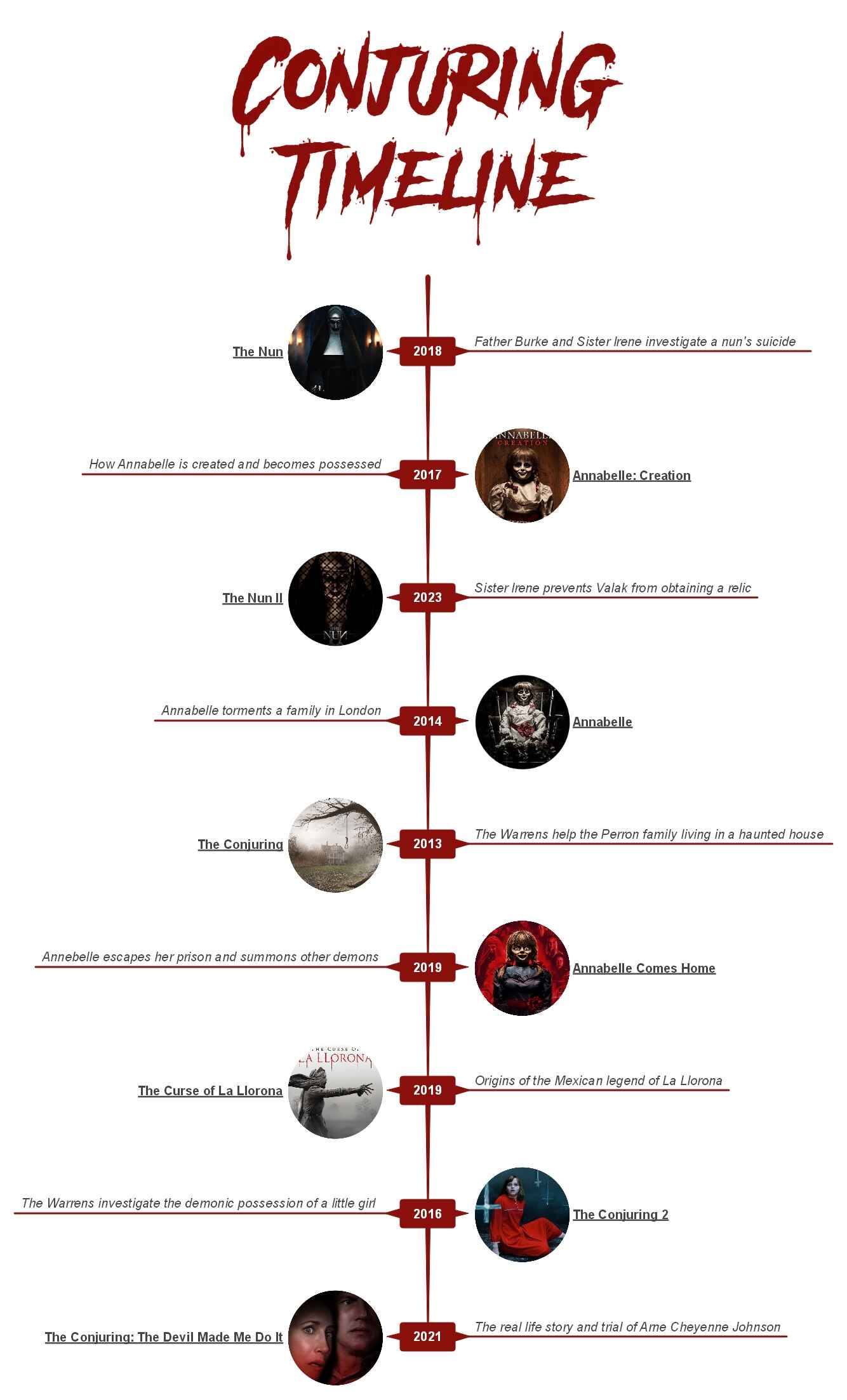
| Film Title | Setting (Approximate Year) | Primary Supernatural Entity |
|---|---|---|
| The Nun | 1952 | Valak (The Nun) |
| Annabelle: Creation | 1955 | Annabelle |
| The Nun II | 1956 | Valak (The Nun) |
| Annabelle | 1967 | Annabelle |
| The Conjuring | 1971 | Bathsheba Sherman |
| Annabelle Comes Home | 1972 | Annabelle / Various |
| The Curse of La Llorona | 1973 | La Llorona |
| The Conjuring 2 | 1977 | Valak / Bill Wilkins |
| The Conjuring: The Devil Made Me Do It | 1981 | The Occultist |
The Nun: Origins and Context
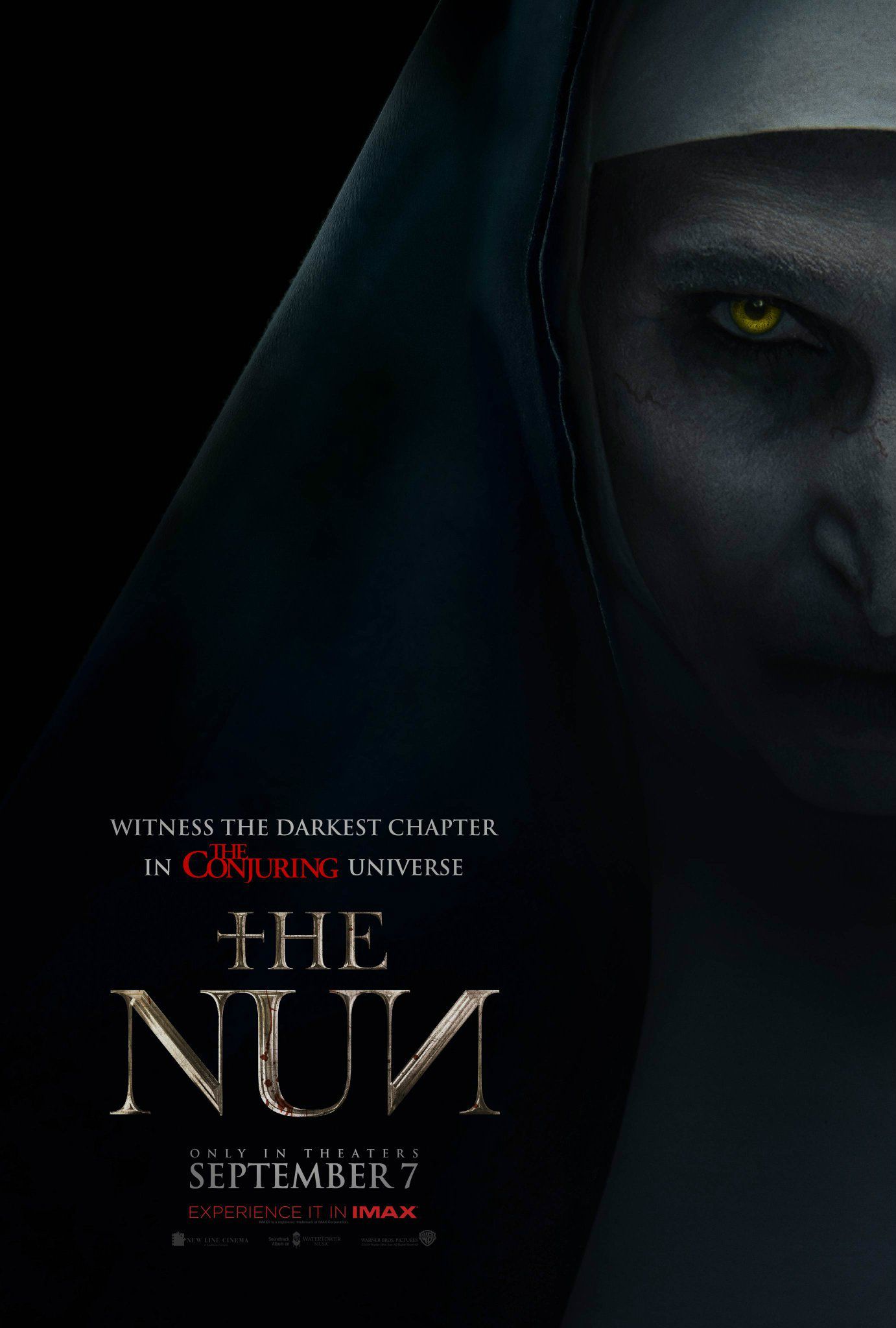
The entity known as the Nun is actually a demon named Valak. Introduced prominently in The Conjuring 2 (1977), the character’s backstory was expanded through its own dedicated films. The Nun (2018) serves as the earliest point in the timeline, set in 1952 at the Saint Cartha’s monastery in Romania.
The context here is essential: Valak is presented as a powerful demonic force that seeks to manifest in the human world through religious vessels. In The Nun II (2023), the story moves to 1956, further establishing the demon's reach across Europe. For viewers looking to understand the "Nun" arc, these films provide the foundational lore of the entity that eventually targets Lorraine Warren decades later.
The Annabelle Arc: Possession and Cursed Objects
The Annabelle doll functions as a conduit for demonic influence. Unlike Valak, who is a non-corporeal entity of immense power, Annabelle is a vessel—a physical object that allows demonic forces to latch onto human hosts.
- Annabelle: Creation (2017) provides the origin story of the doll’s craftsmanship in 1955.
- Annabelle (2014) captures the doll’s movement into the 1960s, showing its transition into the hands of the individuals who eventually call upon the Warrens.
- Annabelle Comes Home (2019) is unique in the timeline because it takes place in the Warrens' home, specifically within their artifacts room. This film emphasizes the "context" of the collection: the Warrens are not just investigators; they are custodians of dangerous spiritual objects that must be kept under constant lock and key.
The Warrens as the Narrative Anchor
The films featuring Ed and Lorraine Warren serve as the backbone of the franchise. While the spin-offs regarding Annabelle or the Nun provide the "monster of the week" context, the Warren films (specifically The Conjuring trilogy) provide the emotional and theological stakes.
In The Conjuring (1971), we see the Warrens at the height of their influence, tackling the Perron family haunting. By The Conjuring 2 (1977), the narrative shifts to the Enfield Poltergeist in England, which is where the Nun (Valak) is formally introduced as a primary antagonist to Lorraine Warren. This connection is critical; the franchise suggests that Valak has a personal interest in Lorraine, making the chronological viewing experience more cohesive by the time a viewer reaches the later films.
Why Chronological Order Matters
The experience of the Conjuring Universe changes significantly depending on the order of viewing. If a viewer watches in release order, the reveals of how the Nun or Annabelle function occur sporadically, often through flashbacks or exposition. By watching in chronological order, the viewer gains a "macro" perspective of the demonic incursions.
- Building Lore: Starting with The Nun allows the viewer to recognize Valak's influence in later films, such as the subtle hints dropped in The Conjuring 2.
- Contextualizing Artifacts: Seeing Annabelle: Creation first makes the "artifacts room" scenes in the later Conjuring films feel more significant, as the viewer recognizes the specific history of the cursed items on the shelves.
- Character Continuity: While the spin-offs focus on the demons, the core timeline highlights the physical and mental toll taken on the Warrens over thirty years of work.
Distinctions in Tone and Scope
It is important to note that the Conjuring Universe utilizes different sub-genres of horror. The Nun films lean heavily into Gothic horror and religious dread, utilizing the desolate setting of a monastery. The Annabelle films focus on "possession" and the domestic intrusion of evil, essentially turning a safe space (the home) into a site of terror. Meanwhile, the core Conjuring films prioritize the "investigative" procedural format, blending character drama with high-stakes supernatural confrontation.
Frequently Asked Questions
Does the order of the films impact the story comprehension? Yes, to an extent. While every film is designed to stand on its own, watching in chronological order helps identify recurring symbols and the overarching role of the Warrens. It eliminates confusion regarding why the Warrens treat certain entities with specific protocols.
Are the films based on true stories? The films are "inspired by" the cases of Ed and Lorraine Warren. While the Warrens were real-life paranormal researchers who famously investigated the Perron and Enfield cases, the cinematic depictions heavily fictionalize the events to heighten dramatic tension and horror elements.
Is The Curse of La Llorona part of the main Conjuring order? Yes, it is officially considered part of the franchise. It is set in 1973 and features a brief appearance by Father Perez, a character who appeared in Annabelle. It functions as a standalone entry that fits into the broader timeline between Annabelle and The Conjuring 2.
Should a first-time viewer watch them chronologically or by release date? For a first-time viewer, the release order is often recommended. This allows the audience to experience the films as the filmmakers intended, building the mystery of the Warrens’ collection and the specific entities gradually, rather than front-loading the lore.
Why does the timeline seem to overlap in some places? The timeline overlaps because the "Universe" was constructed as an expanding web. Spin-offs were developed to capitalize on the popularity of specific villains. As a result, the dates of these events were placed throughout the 20th century to create a sense of a decades-long struggle between the Warrens and supernatural forces.
Next Steps for Viewers
If you intend to start this journey, decide first on your preferred viewing style. If you prioritize "world-building," begin with The Nun (1952) and follow the chronological list provided. If you prefer the "mystery-reveal" structure of the original theatrical releases, start with The Conjuring (2013). Regardless of the path chosen, paying attention to the specific artifacts appearing in the background of the Warrens' home will yield the best understanding of the universe's internal context.
Image Gallery