How Much Is $13 an Hour Annually? Full Salary and Budget Breakdown for 2026
Earning $13 per hour results in a gross annual salary of $27,040 for those working a standard 40-hour work week across 52 weeks. This figure represents the total earnings before federal and state taxes, Social Security, or healthcare p...
Earning $13 per hour results in a gross annual salary of $27,040 for those working a standard 40-hour work week across 52 weeks. This figure represents the total earnings before federal and state taxes, Social Security, or healthcare premiums are deducted. On a monthly basis, this equates to approximately $2,253.33.
Contents
Understanding your annual income is the first step in effective financial planning. While $13 per hour is above the federal minimum wage, its purchasing power depends heavily on your geographic location, your household size, and your personal tax situation in 2026. This guide provides a comprehensive breakdown of what a $13 hourly wage looks like across various timeframes, tax brackets, and budgetary constraints.
The Standard Calculation: 2,080 Hours Per Year
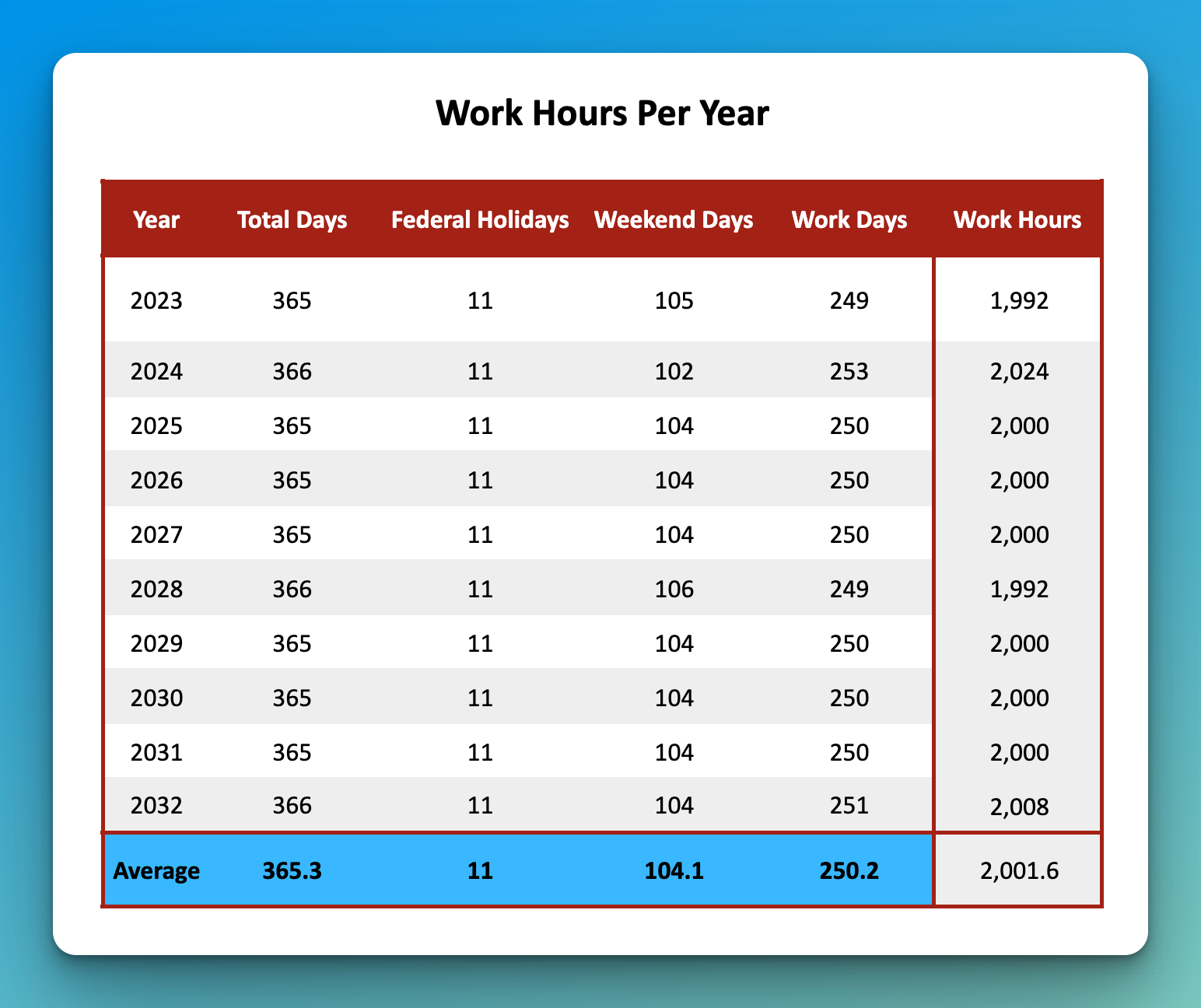
In the United States, the standard for full-time employment is generally calculated based on 2,080 work hours per year. This number is derived from working 40 hours per week for 52 weeks.
Full-Time Earnings Breakdowns
When you are paid $13 per hour, your gross pay (the amount before any deductions) follows this schedule:
- Daily Earnings (8-hour shift): $104
- Weekly Earnings (40-hour week): $520
- Bi-Weekly Earnings (every two weeks): $1,040
- Monthly Earnings (average): $2,253.33
- Annual Earnings (2,080 hours): $27,040
The 2,088-Hour Variation
In some years, the way the calendar falls results in 2,088 work hours (261 work days). For 2026, many employers may use this slightly higher figure for budget projections. At 2,088 hours, a $13 hourly wage results in an annual gross of $27,144. While the difference of $104 may seem small, it covers roughly one day’s wages, which can be significant for tight budgets.
Factoring in Taxes and Deductions in 2026
The $27,040 figure is your "top-line" or gross income. However, your take-home pay, or net income, is what actually lands in your bank account. In 2026, your tax liability is influenced by federal income tax brackets, the Federal Insurance Contributions Act (FICA), and potential state or local taxes.
Federal Income Tax
For a single filer in 2026, the standard deduction significantly reduces taxable income. If the standard deduction is approximately $15,000 (estimated for inflation adjustments by 2026), only about $12,040 of your $27,040 income would be subject to federal income tax. Most of this remaining amount would fall into the 10% tax bracket.
FICA Taxes (Social Security and Medicare)
FICA taxes are mandatory for almost all W-2 employees. These are calculated at a flat rate of your gross income:
- Social Security: 6.2% of $27,040 = $1,676.48
- Medicare: 1.45% of $27,040 = $392.08
- Total FICA: $2,068.56
State Income Taxes
Your location plays a massive role in your final take-home pay.
- No-Tax States: If you live in states like Texas, Florida, Washington, or Tennessee, you will not pay state income tax, meaning your net pay will be higher.
- High-Tax States: If you live in California, New York, or Oregon, you may see an additional 3% to 5% of your income withheld for state taxes.
Estimated 2026 Take-Home Pay
For a single filer with no dependents in a state with moderate income tax, the estimated net annual pay on $13 per hour might look like this:
- Gross Pay: $27,040
- Estimated Federal Tax: ~$1,200
- FICA Taxes: $2,069
- Estimated State Tax: ~$600
- Estimated Annual Take-Home: $23,171
- Estimated Monthly Take-Home: $1,931
Note: These are estimates. For precise calculations, individuals should consult the IRS Tax Estimator or a qualified tax professional.
Part-Time Earnings at $13 per Hour
Not everyone working for an hourly wage is employed full-time. Many students, retirees, or those with multiple jobs work part-time. Here is how $13 per hour scales for different weekly schedules:
| Hours Per Week | Weekly Gross | Monthly Gross (Avg) | Annual Gross |
|---|---|---|---|
| 10 Hours | $130 | $563.33 | $6,760 |
| 15 Hours | $195 | $845.00 | $10,140 |
| 20 Hours | $260 | $1,126.67 | $13,520 |
| 25 Hours | $325 | $1,408.33 | $16,900 |
| 30 Hours | $390 | $1,690.00 | $20,280 |
| 35 Hours | $455 | $1,971.67 | $23,660 |
| 40 Hours | $520 | $2,253.33 | $27,040 |
Impact of Benefits and Paid Time Off (PTO)
When evaluating a $13 per hour position, the "total compensation" package is often more important than the hourly rate alone.
Paid vs. Unpaid Time Off
If your employer offers Paid Time Off (PTO), your annual income remains stable even when you take a vacation or a sick day. However, if your position does not include PTO, your annual income will decrease for every hour you do not work. For example, taking two weeks of unpaid leave would reduce your annual gross income by $1,040, bringing your total to $26,000.
Health Insurance Premiums
If you receive health insurance through your employer, the premiums are usually deducted "pre-tax." While this reduces your taxable income (saving you a small amount in taxes), it also reduces your take-home pay. A $100 monthly premium would reduce your annual take-home pay by $1,200.
Overtime Opportunities
Under the Fair Labor Standards Act (FLSA), non-exempt employees must be paid "time and a half" for any hours worked over 40 in a workweek. At $13 per hour, your overtime rate is $19.50 per hour. Consistent overtime can significantly boost your annual earnings:
- 5 hours of overtime per week: +$5,070 per year.
- Total Annual with 5 hours OT: $32,110.
Budgeting on $13 per Hour in 2026
Living on $27,040 gross per year requires disciplined budgeting, especially as the cost of housing and utilities continues to evolve in 2026. A common framework is the 50/30/20 Rule, though at this income level, the "Needs" category often consumes a larger percentage.
The 50/30/20 Breakdown (Based on $1,931 Net Monthly)
- Needs (50% - $965): This includes rent, utilities, basic groceries, and transportation. In many urban areas, finding rent for under $800 is a challenge, which may require living with roommates or in lower-cost regions.
- Wants (30% - $579): This covers dining out, streaming services, hobbies, and non-essential shopping.
- Savings/Debt (20% - $386): This is allocated toward an emergency fund, 401(k) contributions, or paying down credit card or student loan debt.
Living Wage Considerations
According to the MIT Living Wage Calculator, a living wage for a single adult in the United States varies wildly. In rural areas, $13 per hour may be sufficient to cover basic needs. However, in major metropolitan areas like Seattle, New York, or Boston, $13 per hour falls significantly below the threshold required for self-sufficiency without assistance or multiple income streams.
Comparison to Minimum Wage Trends
By 2026, many states and municipalities have moved their minimum wages to $15 per hour or higher to keep pace with inflation. If you are earning $13 per hour in a state where the minimum wage is still $7.25 (the federal floor since 2009), you are earning nearly 80% more than the minimum. However, in states like California or Massachusetts, $13 per hour would be below the legal minimum for most employers.
Frequently Asked Questions
What is $13 an hour bi-weekly after taxes?
On a bi-weekly schedule, $13 per hour results in a gross check of $1,040. After estimated 2026 federal taxes and FICA (approximately 12-15% total), your net bi-weekly check would be roughly $880 to $915, depending on your state's tax laws and insurance deductions.
How many working days are in 2026?
There are 261 working days in 2026. This assumes a Monday-Friday schedule and does not account for federal holidays. If you work every one of those days at 8 hours per day, you would work 2,088 hours.
Can I afford a car on $13 an hour?
Affording a car on $13 an hour depends on your other expenses. If your rent is low, a modest car payment or maintaining a used vehicle is possible. However, when factoring in insurance, fuel, and maintenance, transportation can easily consume 20% of your net income at this wage level.
Is $13 an hour good in 2026?
"Good" is relative to the cost of living in your area. While it is a starting wage for many entry-level roles in retail or service industries, it is below the national median wage. In 2026, $13 an hour is generally considered a "survival wage" in many parts of the U.S., necessitating careful financial management.
Does $13 an hour provide a 401(k) match?
Whether you get a 401(k) match depends entirely on your employer, not your hourly rate. Some companies offer retirement benefits to all employees, while others restrict them to full-time staff or those who have been with the company for a year. If offered, you should attempt to contribute enough to get the full match, as this is essentially a raise.
Practical Steps to Increase Your Income
If $27,040 per year is not meeting your financial goals in 2026, consider these actionable steps:
- Skill Acquisition: Many community colleges and vocational schools offer certifications in high-demand fields like HVAC, phlebotomy, or basic IT that can move your hourly rate from $13 to $20+ in less than a year.
- Negotiate for Overtime: If your current employer is understaffed, volunteering for overtime is the fastest way to increase your gross pay without changing jobs.
- Internal Promotion: Look for "Shift Lead" or "Key Holder" positions within your current company, which typically offer a $1–$3 hourly increase.
- Geographic Arbitrage: If you are in a high-cost area, moving to a region with a lower cost of living can make a $13/hour wage go much further, though you must balance this with job availability.
Image Gallery