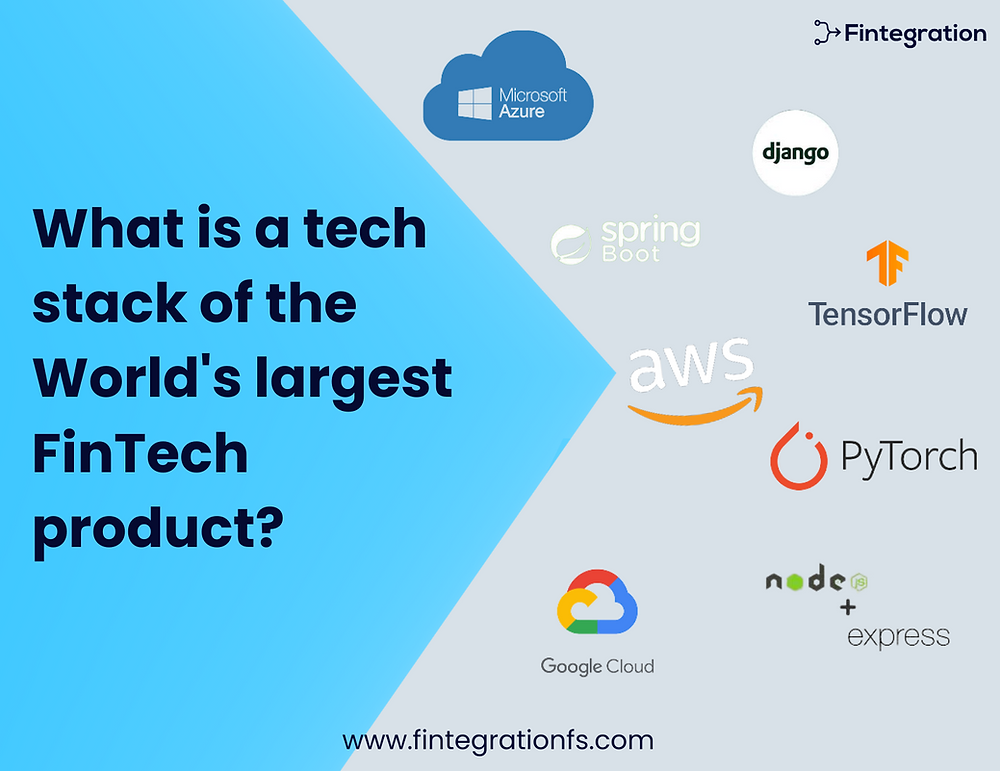
What the Whole Stack Means for Fintech: Navigating the 2026 Financial Infrastructure
In fintech, "the whole stack" refers to the end-to-end integration of financial services, encompassing everything from underlying cloud infrastructure and core ledgers to regulatory compliance and front-end user interfaces. Owning the...
In fintech, "the whole stack" refers to the end-to-end integration of financial services, encompassing everything from underlying cloud infrastructure and core ledgers to regulatory compliance and front-end user interfaces. Owning the whole stack allows firms to control their unit economics, accelerate product innovation, and ensure data sovereignty without relying on third-party banking intermediaries.
Contents
For years, the fintech industry operated on a modular "lego-block" philosophy. Companies would lease a banking license from one partner, use a third-party ledger for record-keeping, and connect to payment rails via an orchestration layer. However, by 2026, the industry has shifted toward vertical integration. As regulatory scrutiny on Banking-as-a-Service (BaaS) models intensified and consumer expectations for real-time processing peaked, the concept of the "whole stack" evolved from a technical luxury to a strategic necessity for market leaders.
The Architecture of a 2026 Fintech Stack
To understand what the whole stack means for fintech today, we must deconstruct the layers that constitute a modern financial institution. Unlike the legacy stacks of the early 2000s, which were monolithic and localized, the 2026 stack is cloud-native, AI-integrated, and built for high-concurrency real-time settlement.
The Foundation: Infrastructure and Data Sovereignty
At the bottom of the stack lies the hardware and cloud infrastructure. In 2026, many fintechs have moved away from generic public clouds to "sovereign cloud" solutions or specialized financial clouds that meet strict data residency and security requirements. This layer ensures that every byte of financial data is encrypted and stored in compliance with local regulations, such as the EU’s updated data privacy frameworks or the U.S. financial data standards.
The Core: The Modern Ledger
The core banking system (CBS) or ledger is the heartbeat of the stack. Historically, these were legacy systems that processed transactions in batches overnight. A modern "whole stack" fintech utilizes a real-time, event-driven ledger. This allows for instantaneous updates to account balances, which is essential for supporting real-time payment rails like FedNow or the Eurosystem’s TIPS. Owning this ledger means the fintech can create complex financial products—such as multi-currency accounts or hybrid credit-debit instruments—without waiting for a partner bank to update their antiquated software.
The Middleware: Orchestration and Compliance
This layer connects the core ledger to the outside world. It includes API gateways, payment orchestration engines, and, most importantly, the compliance engine. In 2026, compliance is no longer an external "check." It is embedded directly into the stack. Automated Anti-Money Laundering (AML) and Know Your Customer (KYC) protocols analyze transactions in milliseconds using machine learning models to prevent fraud before a transaction is even authorized.
The Surface: User Experience and AI Interactivity
The top of the stack is the interface—the mobile apps, web portals, and increasingly, the AI agents that interact with customers. In a full-stack model, the data from the ledger flows directly into the UI without latency, allowing for hyper-personalized financial advice and real-time spending insights that modular systems struggle to provide.
Why Fintechs Are Moving Toward Vertical Integration
The primary driver behind the "whole stack" movement is the pursuit of autonomy. When a fintech relies on a partner bank for its ledger or license, it is subject to that partner's risk appetite, technical limitations, and fee structures. This is often referred to as the "sandwich effect," where the fintech’s margins are squeezed by infrastructure providers on one side and customer acquisition costs on the other.
Improved Unit Economics
By owning the whole stack, fintechs eliminate the "middleman tax." Every transaction processed through a third-party provider carries a fee. For a high-volume payments company or a neobank, these pennies add up to millions of dollars. Controlling the infrastructure allows firms to capture the full value of the interchange and interest income, which is critical for achieving long-term profitability.
Agility and Speed to Market
In a modular environment, launching a new feature—like a high-yield savings account or a crypto-integrated wallet—requires approval from multiple partners. This can take months or even years. A full-stack fintech, however, can prototype, test, and deploy new financial instruments in a matter of weeks. In the competitive landscape of 2026, this speed is often the difference between market dominance and obsolescence.
Regulatory Resilience
The mid-2020s saw a significant crackdown by regulators on the BaaS model, with the Office of the Comptroller of the Currency (OCC) and the Federal Reserve issuing numerous consent orders against partner banks. Regulators increasingly demand that fintechs have a direct "line of sight" into their compliance and risk management. Owning the stack provides this transparency, making it easier to undergo audits and maintain regulatory standing.
Comparison: Modular vs. Full-Stack Fintech Models
| Feature | Modular (BaaS/API-led) | Full-Stack (Vertically Integrated) |
|---|---|---|
| Capital Requirement | Low to Moderate | Very High |
| Time to Market | Fast (Initial Launch) | Slow (Initial Setup) |
| Product Flexibility | Limited by Partner Capabilities | Near Infinite |
| Regulatory Burden | Shared / Indirect | Direct and Comprehensive |
| Profit Margin | Lower (due to provider fees) | Higher (direct capture) |
| Technical Control | Dependent on API stability | Total control over uptime/latency |
| Data Ownership | Often fragmented | Centralized and holistic |
The Role of Artificial Intelligence in the Modern Stack
In 2026, a "whole stack" is incomplete without an integrated AI layer. AI is no longer just a chatbot on top of the app; it is woven into the very fabric of the ledger and compliance systems.
Generative AI models are now used to perform "synthetic testing" of the stack, simulating millions of transactions to find edge-case bugs before they affect real users. On the consumer side, the stack uses real-time data to offer "just-in-time" financial products. For example, if the ledger detects a large upcoming bill and a low balance, the AI can automatically offer a micro-loan or suggest a transfer from a linked investment account—all within the same proprietary ecosystem.
Furthermore, AI-driven risk engines have replaced traditional credit scoring. By analyzing the "whole stack" of user data—including transaction history, social behavior (where permitted), and even real-time economic indicators—fintechs can lend to "thin-file" customers with a high degree of accuracy, expanding their addressable market.
Challenges of Managing the Whole Stack
Despite the benefits, the "whole stack" approach is not without its perils. The most significant barrier is the sheer complexity of maintaining a proprietary financial infrastructure.
- Cybersecurity Risk: When you own the stack, you own the target. A breach at any level—from the database to the API—is the sole responsibility of the fintech. The cost of maintaining "bank-grade" security 24/7 is astronomical.
- Regulatory Complexity: Obtaining and maintaining a banking charter or a specialized license (like the VASP for virtual assets or EMI for electronic money) requires a massive legal and compliance team. Many fintechs have found that the "whole stack" means spending more on lawyers than on engineers.
- Technical Debt: Unlike modular systems that can be swapped out as better technology emerges, a proprietary stack can become a "legacy system" surprisingly quickly. Continuous reinvestment is required to ensure the stack remains compatible with new standards like ISO 20022.
Strategic Recommendation for Fintech Leaders
For companies evaluating their infrastructure in 2026, the "whole stack" should be viewed as a destination rather than a starting point. Startups should still leverage modular components to achieve product-market fit. However, once a firm reaches a significant scale—typically defined by transaction volume or customer count—the transition to owning the core layers of the stack becomes a defensive necessity.
The goal is to achieve "stack sovereignty." This doesn't necessarily mean building every single line of code from scratch, but it does mean having the legal and technical right to control the data, the ledger, and the regulatory relationship.
Frequently Asked Questions
1. Does "the whole stack" mean a fintech must have a banking license?
Not necessarily, but it often trends in that direction. A fintech can own the "technical stack" (the ledger and software) while still using a partner for the "regulatory stack" (the license). However, in 2026, the most successful firms are those that eventually secure their own charters to gain full independence from third-party banks.
2. How does the "whole stack" affect consumer fees?
Generally, full-stack fintechs can offer lower fees because they have lower operating costs. By eliminating the fees they would otherwise pay to bank partners and core providers, they can pass those savings to the customer in the form of zero-commission trades, higher interest on savings, or lower loan rates.
3. Is the whole stack model relevant for B2B fintechs?
Yes, arguably more so. B2B fintechs providing payroll, treasury management, or cross-border payments require extreme reliability and high-speed settlement. Owning the stack allows these firms to offer SLAs (Service Level Agreements) that modular providers simply cannot guarantee.
4. How does blockchain fit into the 2026 fintech stack?
Many modern stacks use blockchain-inspired technology—specifically distributed ledgers or private sidechains—for internal record-keeping and instant settlement. While not all fintechs are "crypto" companies, the "whole stack" in 2026 often includes gateways to Central Bank Digital Currencies (CBDCs) and stablecoin rails for international transfers.
5. What is the biggest mistake firms make when building their own stack?
The most common mistake is underestimating the "maintenance tail." Building a ledger is difficult, but maintaining it through decades of regulatory changes, security patches, and scaling requirements is the true challenge. Firms often fail by not budgeting enough for the long-term operational costs of being their own provider.
Image Gallery