Complete Guide to Foundation Repair Near Columbus, IN
Property owners in Columbus, Indiana, face unique geological and environmental conditions that can compromise structural integrity over time. Recognizing early warning signs of settlement, bowing walls, and moisture intrusion is the fi...
Property owners in Columbus, Indiana, face unique geological and environmental conditions that can compromise structural integrity over time. Recognizing early warning signs of settlement, bowing walls, and moisture intrusion is the first step toward preserving structural safety. Addressing these issues promptly prevents minor cracks from evolving into catastrophic structural failures that require extensive reconstruction.
Contents
Understanding the Geological Context of Columbus, Indiana
The local soil composition around Columbus, Indiana, plays a massive role in the frequency and severity of structural foundation issues. Bartholomew County features a complex mix of glacial till, outwash plains, and alluvial deposits associated with the East Fork of the White River.
Soil Types and Moisture Dynamics
Much of the native soil in the region contains high concentrations of clay. Clay soils are notoriously expansive, meaning they swell significantly when saturated with water during wet spring seasons and shrink dramatically during hot, dry summer months. This constant cycle of volumetric expansion and contraction exerts immense hydrostatic pressure against subterranean concrete and masonry walls.
When soil dries out, it pulls away from the foundation, leaving voids that cause sections of the structure to sink or settle unevenly. Conversely, when heavy rains saturate the ground, the swelling soil pushes inward, leading to lateral wall movement, shearing, and severe cracking. Understanding this cyclical stress helps property owners anticipate when their structures are most vulnerable and underscores why proper site drainage is just as critical as structural stabilization.
Common Signs Your Foundation Needs Immediate Professional Attention
Identifying foundation failure early can save thousands of dollars in secondary structural repairs. Homeowners and commercial property managers should regularly inspect both the interior and exterior of their buildings for specific, reliable indicators of shifting foundations.
| Exterior Warning Signs | Interior Warning Signs |
|---|---|
| Stair-step cracks in brick/block | Doors and windows sticking or jamming |
| Gaps around window and door frames | Diagonal drywall cracks near corners |
| Chimney tilting away from structure | Uneven or sloping floors |
| Water pooling against foundation | Separation between walls and ceilings |
Exterior Indicators
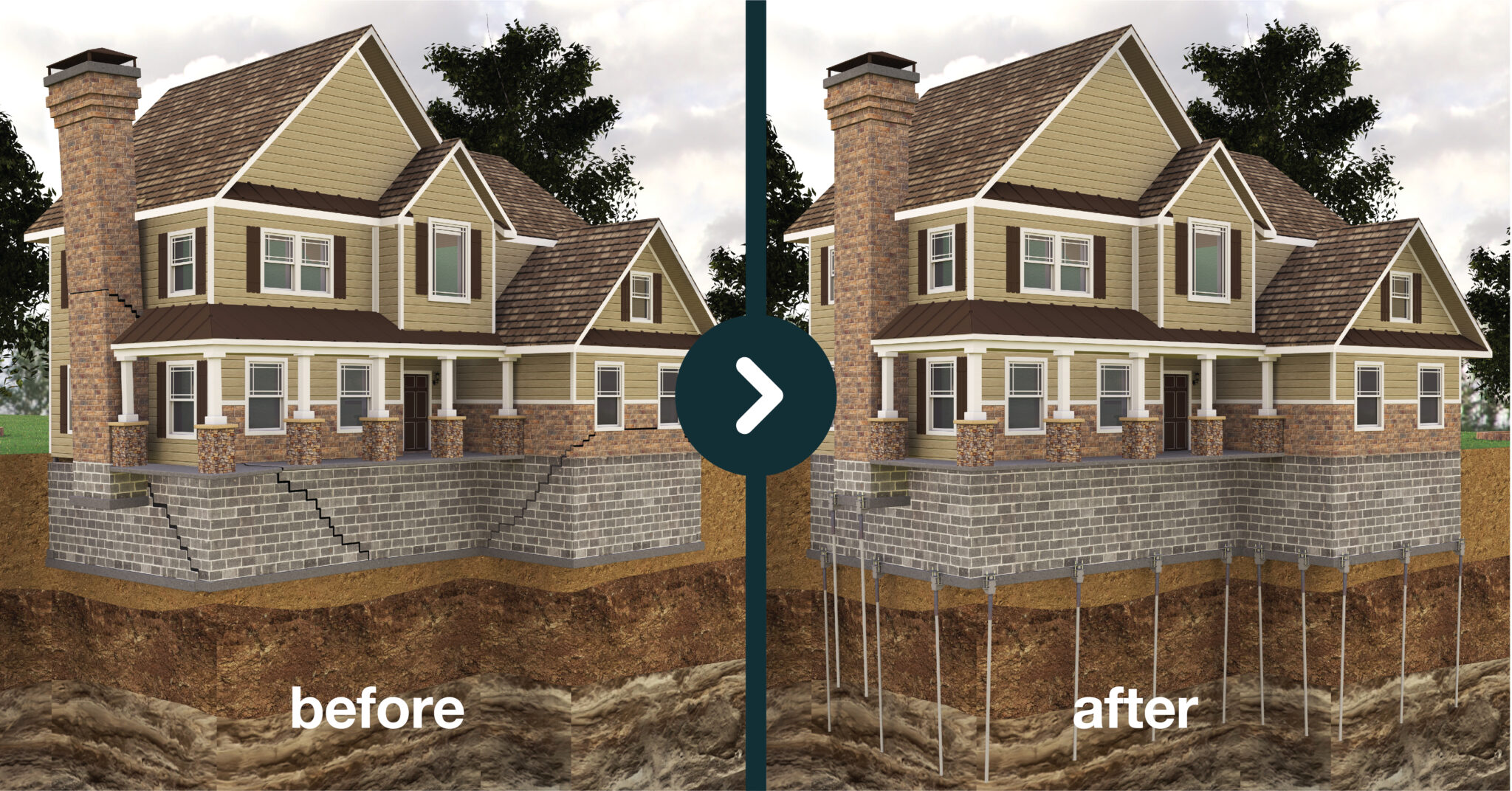
Exterior warning signs are often visible along the brick veneer, concrete block, or poured foundation walls. Stair-step cracking running through mortar joints is a classic sign of differential settlement. Additionally, gaps appearing around exterior window frames, doors, or fascia boards indicate that the building envelope is shifting out of square. If an exterior chimney begins to tilt away from the main house structure, it usually means the footing supporting that specific load is sinking into compromised soil.
Interior Indicators
Inside the structure, structural movement manifests as operational issues with doors and windows. If interior doors suddenly fail to latch or develop wide gaps at the top or bottom, the frame has likely distorted due to shifting subfloors. Diagonal drywall cracks radiating outward from the upper corners of doors and windows are another red flag. Furthermore, visibly sloping floors or a noticeable bounce when walking across a room indicate that floor joists and support girders are losing their structural backing.
Proven Foundation Repair Methods and Technologies
Modern structural engineering offers several sophisticated techniques to lift, stabilize, and reinforce residential and commercial foundations. Selecting the right method depends entirely on the specific type of failure, soil conditions, and structural load.
Push Piers and Helical Piers
For structures experiencing downward settlement, steel piers provide a permanent load-transfer solution. Push piers are driven hydraulically deep into the earth past unstable upper soil layers until they reach competent load-bearing strata or bedrock. The weight of the structure is then transferred onto the piers, and heavy-duty brackets can often lift the structure back toward its original elevation.
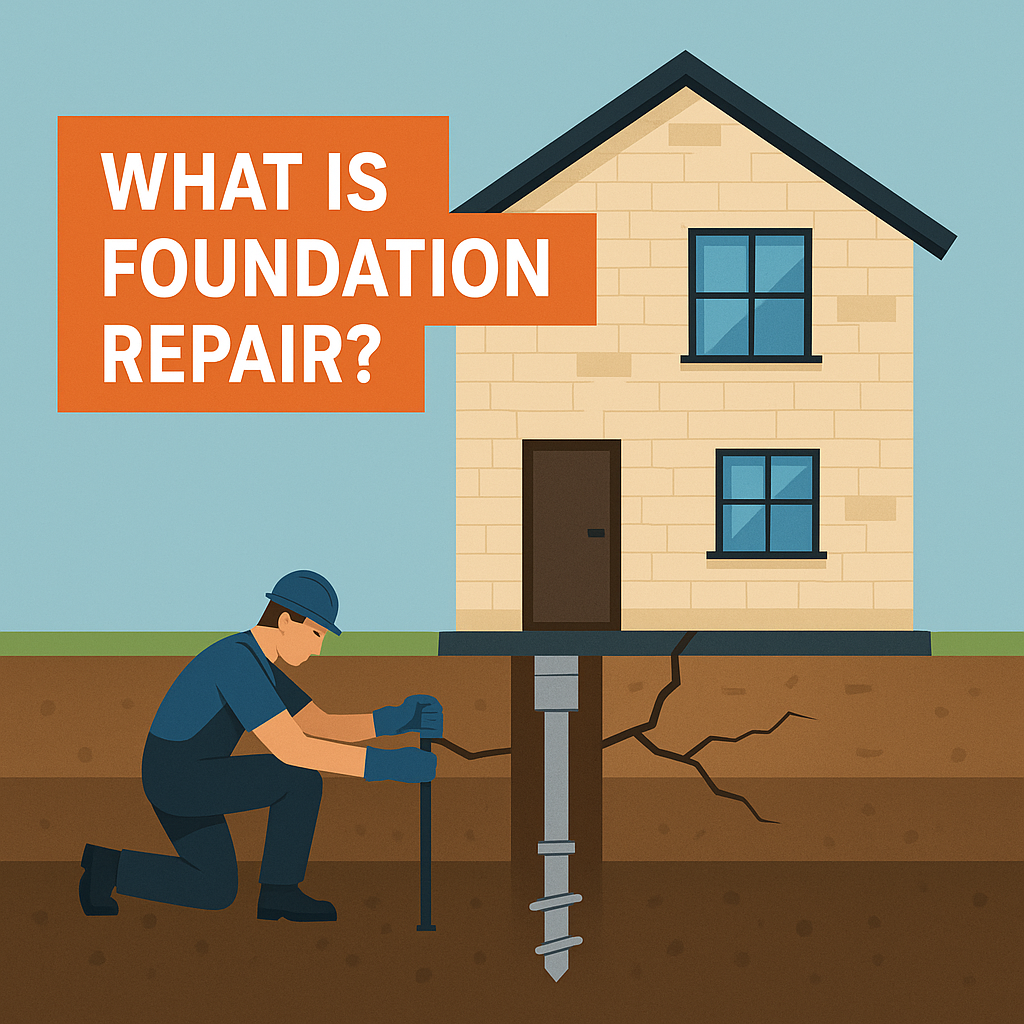
Helical piers function similarly but feature screw-like steel plates welded to the shaft. They are mechanically torqued into the ground, making them ideal for lighter structures, porches, or situations where precise torque monitoring is required during installation.
Carbon Fiber Straps and Steel Wall Plate Anchors
When lateral forces push basement walls inward, stabilization systems are required to halt further movement. Carbon fiber straps are epoxied directly to cracked or bowing concrete walls, providing incredible tensile strength that prevents the wall from bowing further. For walls experiencing severe inward displacement, steel wall plate anchors are installed. These involve driving an earth anchor into stable soil away from the excavation site and connecting it via a steel rod to a heavy-duty plate mounted on the interior basement wall, allowing stabilization and eventual straightening over time.
Evaluating and Selecting a Local Specialist
Choosing the right contractor for foundation work in Columbus requires careful vetting, as structural repairs demand specialized engineering knowledge, heavy equipment, and rigorous safety protocols. Property owners should look for specific credentials before signing any service agreements.
Licensing, Insurance, and Engineering Support
Reputable structural repair companies operating in Indiana should carry comprehensive general liability insurance and active workers' compensation coverage to protect property owners from liability during excavation and lifting operations. Furthermore, top-tier contractors frequently employ or partner with registered professional engineers (PE) to evaluate complex structural damage, design custom stabilization plans, and sign off on engineered repair blueprints.
Warranties and Financing Options
Because foundation repairs represent a substantial capital investment, verified warranties are essential. Look for contractors that offer transferable lifetime warranties on structural stabilization products, ensuring that if the property is sold, the warranty protection passes seamlessly to the new owner. Additionally, because these unexpected projects rarely fit neatly into monthly household budgets, inquire about structured financing plans with low-interest promotional periods.
Preventative Maintenance and Water Management
Mitigating future foundation distress requires proactive property management, particularly regarding water control around the perimeter of the structure. Water is the single greatest catalyst for soil movement and hydrostatic pressure.
- Extend downspouts at least 5 to 10 feet away from exterior foundation walls.
- Grade exterior soil so it slopes away from the structure at a rate of 6 inches over the first 10 feet.
- Clean gutters seasonally to prevent overflow from saturating perimeter soils.
- Maintain proper functioning interior sump pumps with functional battery backups.
Implementing these foundational drainage steps drastically reduces the moisture volatility of local clay soils, stabilizing the subterranean environment surrounding your home or business.
Frequently Asked Questions
How much does foundation repair typically cost in Columbus, Indiana?
Repair costs vary widely based on the severity of the damage and the repair method required. Minor crack epoxy injections may cost a few hundred dollars, while comprehensive stabilization using push piers or wall anchors typically ranges from several thousand to over fifteen thousand dollars for extensive structural stabilization.
Will home insurance cover the cost of foundation repair?
Standard homeowner's insurance policies generally do not cover foundation repairs caused by normal settling, wear and tear, or soil expansion. However, coverage may apply if the structural damage resulted from a specifically covered peril, such as a plumbing leak or sudden catastrophic event explicitly detailed in the policy.
How long do steel push piers last?
High-grade steel push piers coated with corrosion-resistant polymers are engineered to last the lifetime of the structure. When driven into competent bedrock or load-bearing strata, they provide permanent structural support.
Can foundation repairs be performed during the winter months?
Yes, most professional structural contractors operate year-round. While extreme freezing temperatures can complicate exterior excavation, interior basement stabilization, wall anchoring, and pier installation can generally be performed successfully in any season.
How can I tell the difference between cosmetic cracks and structural cracks?
Cosmetic cracks are typically hairline fractures limited to surface plaster or drywall tape, often caused by normal drying and curing. Structural cracks are wider (usually exceeding 1/8 inch), often exhibit displacement where one side is higher than the other, run diagonally or in stair-step patterns, and continue through brick, concrete block, or foundation footings.
Image Gallery