Why Vivint or ADT Is the Smart Choice for Most Homeowners
When evaluating modern home security ecosystems, choosing between Vivint and ADT often comes down to finding the balance between professional installation, advanced smart home automation, and reliable 24/7 monitoring. Both companies do...
When evaluating modern home security ecosystems, choosing between Vivint and ADT often comes down to finding the balance between professional installation, advanced smart home automation, and reliable 24/7 monitoring. Both companies dominate the residential security landscape, offering robust equipment packages and nationwide professional service that appeals to homeowners seeking turnkey protection rather than complex do-it-yourself setups.
Contents
Navigating the home security market requires understanding how Vivint and ADT differentiate themselves in hardware integration, mobile applications, contract terms, and customer support. While both brands protect millions of homes, their business models cater to slightly different user preferences—Vivint leaning heavily into proprietary smart home ecosystems and AI-driven cameras, and ADT emphasizing long-standing industry reliability, Google Nest hardware integrations, and multiple monitoring options.
Understanding the Modern Home Security Landscape
The home security market has evolved far beyond traditional loud sirens and basic perimeter door contacts. Modern smart security systems function as central automation hubs for residential properties, integrating video doorbells, smart locks, climate control, environmental hazard detectors, and high-definition surveillance into a unified interface. For most homeowners, building a cohesive system piece by piece through uncoordinated retail purchases can lead to compatibility issues, integration gaps, and lack of reliable emergency response infrastructure.
Professional security providers solve this fragmentation by delivering end-to-end solutions. When a homeowner invests in a professionally installed and monitored system, they purchase peace of mind backed by redundant cellular communication pathways and trained monitoring center operators. Vivint and ADT represent the pinnacle of this industry segment, having established nationwide infrastructures capable of dispatching police, fire, or medical emergency services within seconds of an alarm trigger.
Choosing between these two industry leaders involves examining how their core philosophies align with individual household needs. Factors such as upfront equipment costs, monthly service tiers, smart home compatibility, and contract commitments dictate which provider offers the optimal long-term value.
Vivint: The Smart Home and Automation Powerhouse
Vivint has built its reputation on cutting-edge smart home integration and proprietary hardware designed to work seamlessly together. Rather than relying heavily on third-party devices, Vivint manufactures and programs its own line of touchscreens, security cameras, and environmental sensors, creating a tightly controlled ecosystem that minimizes software glitches and configuration headaches.
Proprietary Hardware and the Vivint Smart Hub
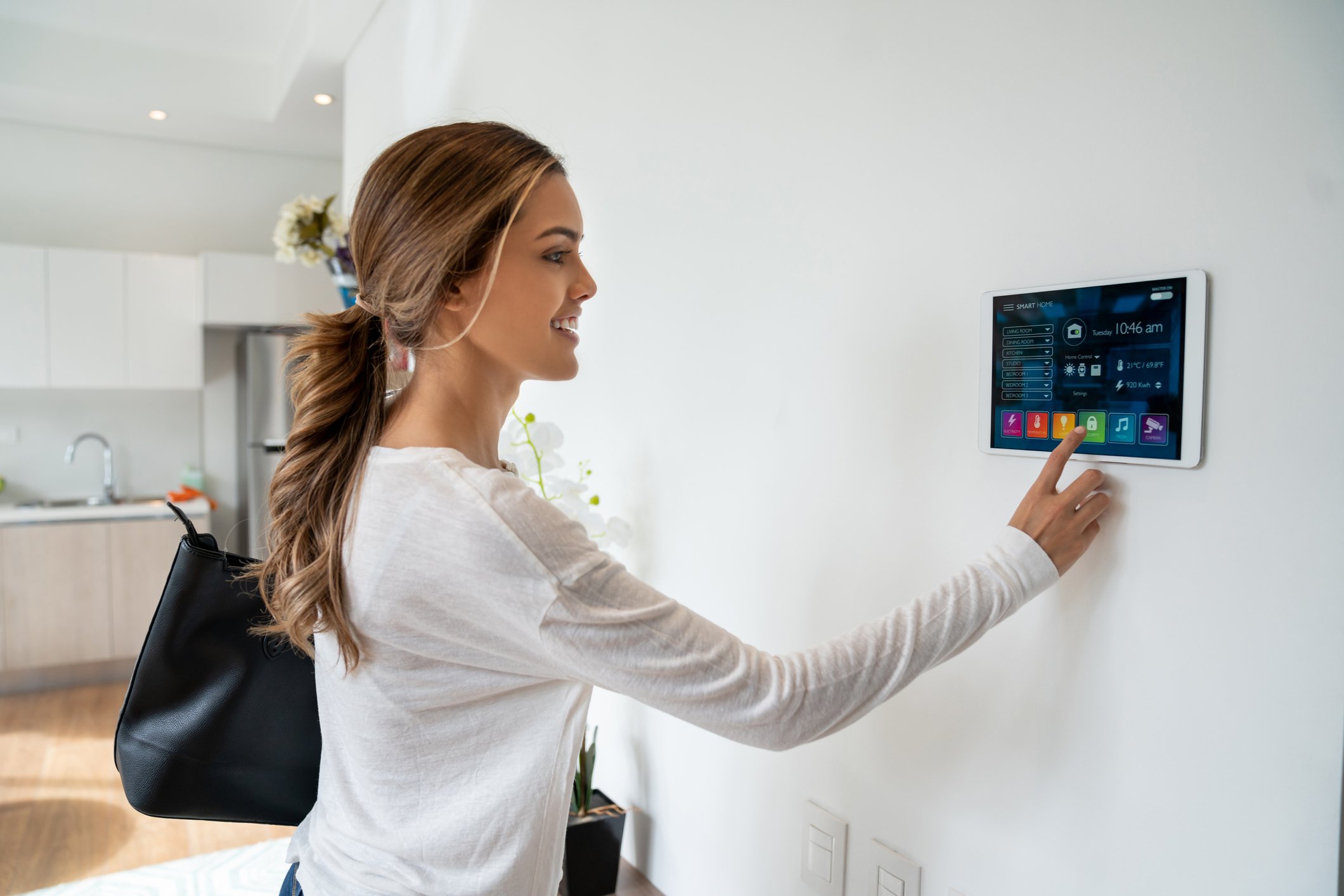
At the center of every Vivint installation is the Vivint Smart Hub, a wall-mounted touchscreen tablet that serves as the command center for the entire property. Unlike basic keypads, the hub allows users to view live camera feeds, speak directly with monitoring agents, control connected Z-Wave smart home devices, and manage user access codes.
Vivint’s equipment lineup includes:
- Vivint Doorbell Camera Pro: Features active deter technology that automatically detects packages and potential prowlers, playing a sound and illuminating an LED ring to discourage theft before it occurs.
- Outdoor Camera Pro: Utilizes smart deter analytics to distinguish between people, animals, and swaying trees, reducing false alarms while actively protecting property perimeters.
- Smart Thermostat: Learns household routines to optimize heating and cooling schedules, reducing energy consumption while maintaining indoor comfort.
- Flood, Smoke, and Carbon Monoxide Detectors: Professionally monitored environmental sensors that trigger immediate emergency response even when the home is unoccupied.
Professional Installation and Ecosystem Control
Vivint maintains a strict model requiring professional installation for all core components. A certified technician assesses the property, runs necessary wiring concealed from view, mounts exterior cameras at optimal angles, and programs the Smart Hub and mobile application. This ensures that every sensor communicates properly with the central panel and eliminates installation errors common with amateur setups.
The downside to this controlled ecosystem is hardware lock-in. Vivint equipment is proprietary, meaning users generally cannot easily migrate Vivint cameras or touchscreens to another monitoring provider if they cancel their service contract. However, for homeowners who want a completely integrated, zero-hassle smart home experience managed by a single app and a dedicated support team, Vivint provides an exceptionally polished user journey.
ADT: Industry Longevity, Flexibility, and Google Integration
ADT is the most recognizable name in North American home security, boasting over a century of operational history. This longevity translates into deep industry expertise, massive monitoring infrastructure redundancy, and widespread brand trust. In recent years, ADT has modernized its product portfolio through a strategic partnership with Google, integrating Google Nest cameras, displays, and smart home software directly into its security packages.
ADT Self-Setup vs. Professional Installation
Unlike Vivint's mandatory professional installation model, ADT offers dual pathways for new customers: traditional professional installation and the ADT Self Setup (formerly Blue by ADT) system.
- Professional Installation: Ideal for larger homes, complex property layouts, or homeowners who prefer a technician to handle hardware placement and configuration. Backed by the ADT Money-Back Service Guarantee.
- Self Setup: A modular, DIY alternative designed for renters, apartment dwellers, or budget-conscious homeowners who want professional-grade monitoring without technician fees or long-term contracts.
The Google Nest Integration Advantage
Through its collaboration with Google, ADT provides access to industry-leading artificial intelligence and video analytics. Google Nest cameras utilize advanced facial recognition, familiar face alerts, and intelligent motion categorization without requiring complex on-premise hardware hubs. Homeowners who already utilize Google Home ecosystems can seamlessly manage their ADT security system alongside smart lighting, speakers, and streaming devices within the familiar Google Home or ADT mobile applications.
Furthermore, ADT offers tiered monitoring packages that accommodate various budgets, ranging from basic cellular alarm monitoring to comprehensive smart home automation and video storage plans.
Head-to-Head Comparison: Vivint vs. ADT
To determine which provider suits a specific household, examining their core operational differences side by side clarifies where each brand excels.
| Feature / Consideration | Vivint | ADT |
|---|---|---|
| Installation Model | Professional installation required for all systems | Offers both professional installation and DIY self-setup options |
| Primary Ecosystem | Proprietary Vivint hardware and Smart Hub | Google Nest integration alongside traditional security sensors |
| Equipment Financing | 0% APR financing options over 42 or 60 months, or upfront purchase | Upfront equipment purchase or monthly financing options |
| Contract Terms | Typically 42 to 60-month monitoring agreements | 36-month standard monitoring agreements (shorter or month-to-month for self-setup) |
| Monitoring Centers | Multiple redundant, U.L.-listed monitoring stations | Nationwide network of redundant monitoring centers |
| Mobile App Rating | High-rated proprietary app with advanced automation rules | Integrates with ADT+ app and Google Home ecosystem |
Pricing, Contracts, and Financial Commitments
Investing in a monitored security system requires careful evaluation of upfront costs versus long-term monthly obligations. Both Vivint and ADT structure their pricing around two primary components: the cost of the physical hardware package and the monthly fee for 24/7 professional monitoring and cellular service.
Equipment Costs and Financing
Because professional-grade security hardware—including high-definition cameras, touchscreens, and glass-break sensors—requires significant capital, both companies offer zero-interest financing plans.
- Vivint typically rolls equipment costs into monthly installments bundled alongside the monitoring fee over a 42 or 60-month term.
- ADT provides flexible purchasing options, allowing customers to buy equipment upfront or finance it through monthly payments over a 36-month period.
Monitoring Contracts and Cancellation Policies
Contractual commitments are a critical factor when choosing a security provider. Vivint agreements generally lock users into 42 to 60-month terms if they finance expensive equipment packages. Breaking a Vivint contract early typically requires paying off the remaining balance of the equipment financing agreement.
ADT standard contracts run for 36 months for professionally installed systems, though certain promotional packages or self-setup tiers offer greater flexibility. Homeowners should always read the fine print regarding relocation policies, as both companies allow customers to transfer service when moving to a new home, subject to specific terms.
Common Mistakes Homeowners Make When Choosing a Security System
Selecting a home security provider involves navigating complex sales pitches and technical jargon. Avoiding common missteps ensures long-term satisfaction and prevents unexpected expenses.
- Underestimating Equipment Needs: Buying a bare-bones starter kit often leaves vulnerable entry points unprotected. Homeowners should evaluate ground-floor windows, sliding doors, and detached garages before finalizing a package.
- Ignoring Internet and Cellular Redundancy: A security system relying solely on Wi-Fi is vulnerable during power outages or internet service interruptions. Always verify that the chosen system includes a cellular backup module and battery backup inside the main control panel.
- Overlooking Smart Home Compatibility: Homeowners who already use Amazon Alexa or Google Assistant should verify whether their chosen security ecosystem supports voice control and routine automation without requiring awkward third-party bridges.
- Failing to Read Contract Fine Print: Assuming a system can be canceled at any time without penalty is a frequent oversight. Always clarify equipment payoff terms and moving policies before signing an agreement.
Frequently Asked Questions
Which system is better for smart home automation, Vivint or ADT?
Vivint generally offers a more cohesive and tightly integrated smart home experience because its proprietary hardware and software are built from the ground up to work together inside a single application. However, ADT's partnership with Google makes it the superior choice for homeowners who are already deeply invested in the Google Nest and Google Home hardware ecosystem.
Do I own the security equipment after my contract ends?
With both Vivint and ADT, once your equipment financing agreement or purchase contract is fully paid off, you own the physical hardware. However, if you cancel monitoring service, proprietary systems like Vivint may have restricted local functionality unless reprogrammed, whereas self-setup ADT equipment often retains basic local usability.
Can I install Vivint or ADT myself?
Vivint requires professional installation by a certified technician to ensure proper wiring, camera placement, and system calibration. ADT, on the other hand, offers both professional installation and an ADT Self Setup option for homeowners who prefer a DIY approach without technician scheduling fees.
What happens to my security system if my internet goes down?
Both Vivint and ADT systems feature built-in cellular communicators and backup batteries. If your home loses power or internet connectivity, the system continues communicating with the monitoring center over cellular networks, ensuring uninterrupted emergency protection.
Do home security systems lower homeowner insurance premiums?
Yes. Most major insurance providers offer discounts ranging from 5% to 20% for homes equipped with monitored security systems, smoke detectors, and water leak sensors. Homeowners should request an insurance certificate from their security provider to submit to their insurance carrier.
Conclusion and Next Actions
Choosing between Vivint and ADT depends entirely on your household's specific technological preferences and financial structure. Homeowners seeking a heavily integrated, proprietary smart home ecosystem with advanced AI cameras and mandatory professional installation will find Vivint to be an exceptional, polished choice. Conversely, those who value brand heritage, flexible self-setup options, and seamless integration with Google Nest hardware will find ADT to be the most reliable and adaptable partner.
To take the next step, evaluate your property's vulnerable entry points, determine your budget for upfront and monthly costs, and contact both providers to request customized quotes tailored to your specific floor plan.
Image Gallery